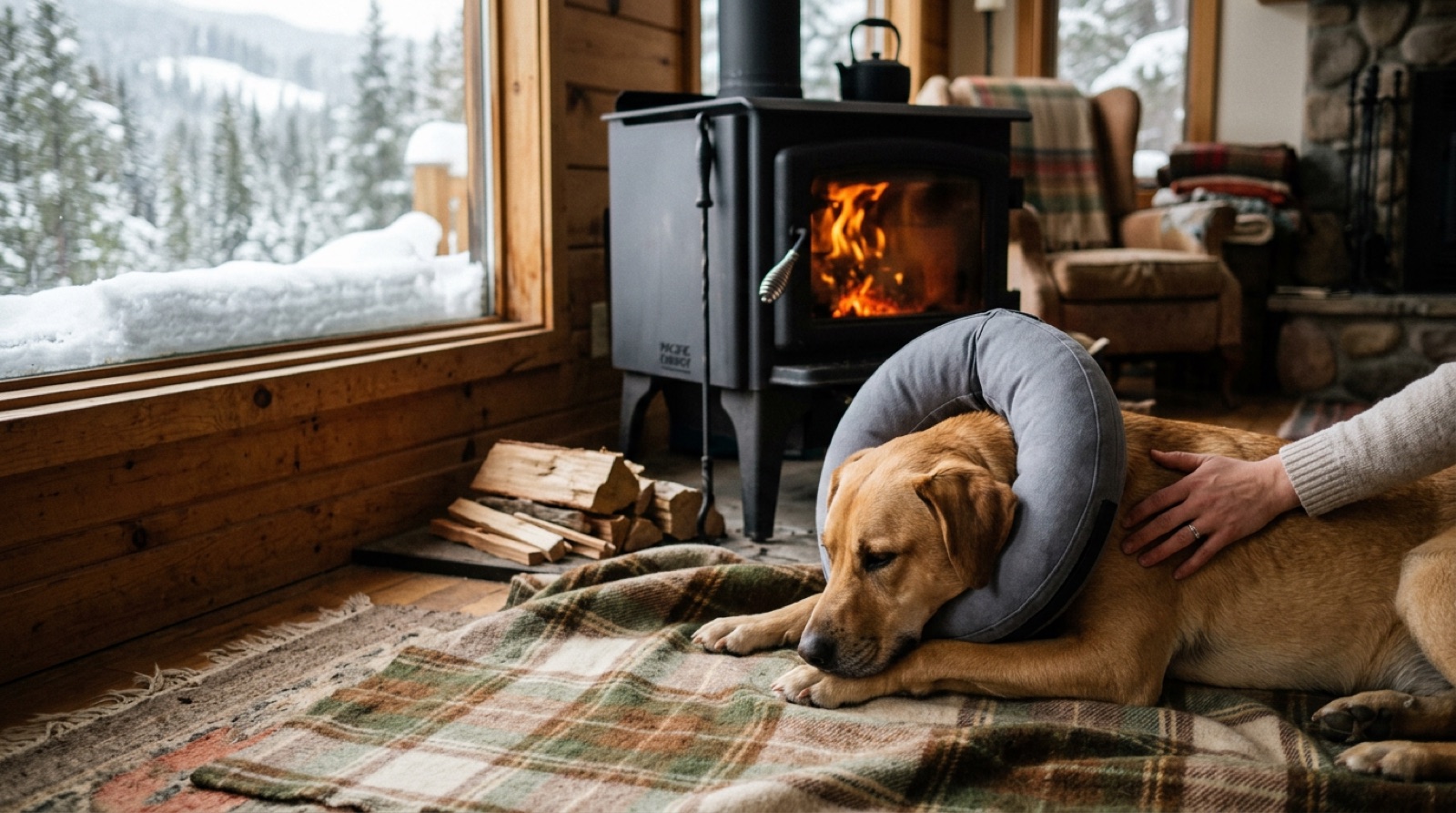
The short answer
Most adopted dogs arrive already spayed or neutered, because the fee covers it. If yours is not, book with a Cochrane clinic and phone two or three for quotes, since none publish surgical pricing. Weight and sex drive the cost. Recovery is ten to fourteen days of genuinely restricted activity with a cone or recovery suit. Doing it drops your Town licence from $70 to $35 a year, every year.
Start by checking your adoption paperwork. Cochrane & Area Humane Society lists spay or neuter surgery among the services its adoption fee can cover, and the Calgary rescues operate the same way. For most people reading this, the job is done and the paperwork just needs filing.
The exception is a young puppy. Some rescues place puppies before they are old enough for surgery and instead provide a voucher or a scheduled appointment, with a contractual obligation on you to follow through. If that is your situation, treat the date as a real commitment rather than a suggestion.
Everyone else reading this either bought a dog privately, took one on from a friend, or inherited an unaltered adult. The rest of this guide is for you.
Where to go in Cochrane
Small animal clinics in Cochrane
| Clinic | Address | Phone |
|---|---|---|
| Arrowhead Veterinary Centre | 118 2nd Avenue West | 403-932-2370 |
| River Path Veterinary Clinic | 50 Fireside Gate, in Fireside | 403-981-0051 |
| Cochrane Animal Clinic | 124 River Avenue | 403-932-5875 |
Details as published by each clinic. Confirm hours and services by phone, since surgical scheduling varies.
Ring two or three before booking. You are not just price shopping, you are finding out what the quote includes, and clinics bundle differently. Ask whether pre-anaesthetic bloodwork is standard or extra, whether take-home pain medication is included, whether a recheck appointment is part of the price, and what monitoring is used during the procedure.
A clinic quoting a higher number that includes bloodwork, pain relief and a follow-up is often better value than a lower quote that bills each of those separately. Ask the question directly and write the answers down.
What it costs, honestly
No Cochrane clinic publishes surgical pricing on its website. We are not going to invent a range, because a number pulled from a blog written about another province is worse than no number at all when you are budgeting.
What we can tell you is what moves the price. Weight is the dominant factor, because anaesthetic and medication are dosed by body weight, so an 80 pound dog costs meaningfully more than a 20 pound one. A spay costs more than a neuter, since it is an abdominal procedure rather than an external one. Age and existing health conditions can add monitoring or bloodwork requirements. A dog in heat, pregnant, or with an undescended testicle will cost more because the surgery is more complicated.
On low-cost options, one correction matters. The City of Calgary runs a no-cost spay and neuter program, and Cochrane residents cannot use it. It requires Calgary residency and currently covers cats only. It comes up constantly in local conversation and it does not apply to you.
Cochrane & Area Humane Society does operate a preventative spay and neuter program, but it is targeted at rural communities and the Stoney Nakoda Nation rather than being a general public low-cost clinic. If cost is a genuine barrier for you, call them at 403-932-2072 and ask what they can point you toward. Shelters usually know what exists locally better than any website does.
The recovery fortnight
Ten to fourteen days of restricted activity. Owners consistently underestimate this, and the reason is simple: the dog feels better long before the incision has healed. Day three is when most problems start, because the dog is bright and bouncy and you relax.
What the recovery week looks like
| When | What to expect and do |
|---|---|
| Surgery day | Groggy, possibly shivery from the anaesthetic. Quiet, warm, dark space. Small meal only if your vet says so. |
| Days 1 to 3 | Appetite returns, energy climbs. Cone or suit stays on. Short leashed toilet breaks only. |
| Days 4 to 7 | The dog feels fine and you will be tempted. Hold the line. Check the incision twice daily. |
| Days 8 to 14 | Still no running, jumping or off-leash time. Mental enrichment instead of physical exercise. |
| Recheck | Your vet clears the incision and tells you when normal activity can resume. Wait for that. |
Two weeks of a bored dog is genuinely hard, so replace physical exercise with mental work. Snuffle mats, food puzzles, scatter feeding, short training sessions and chew items will tire a dog out surprisingly well without a single step of running.
There is a Cochrane-specific trap here. The trails are the whole reason many people live here, and the terrain toward Glenbow Ranch and Big Hill Springs is anything but flat. Add a chinook, where a January afternoon suddenly feels like spring, and the pull to get out for a proper hike is strong. Two weeks of level, boring, on-leash walking. The hills will still be there.
Never give human pain medication. Several common household painkillers are toxic to dogs, and the dose margin on others is narrow enough that guessing is dangerous. If you think your dog is uncomfortable, phone the clinic. That call is free and they would far rather take it than treat the consequences.
Cochrane has no 24 hour emergency vet
Every clinic in town keeps regular business hours, so an after-hours emergency means driving to Calgary. River Path Veterinary Clinic refers its own after-hours emergencies to Trinity Hills 24 Hour Pet Hospital at 240 Na'a Plaza SW in west Calgary, 403-233-2888, which is roughly a 30 to 40 minute drive. Save that number now. Call while you are driving so triage can start by phone. This matters most for deep-chested dogs, where bloat is a life-threatening emergency measured in hours: a hard swollen abdomen with unproductive retching means you leave immediately.
Browse adoptable Cochrane dogs
Adopting skips this entirely. Rescue dogs arrive already altered, and your licence starts at the $35 tier. Refreshed regularly.
See Available Cochrane Dogs →Frequently Asked Questions
Does my adopted Cochrane dog already need spaying or neutering?
Where can I get a dog spayed or neutered in Cochrane?
How much does it cost to spay or neuter a dog in Alberta?
Is there a low-cost spay and neuter program in Cochrane?
Does spaying or neutering reduce my Cochrane dog licence fee?
What age should a dog be spayed or neutered?
What does recovery look like after a spay or neuter?
How do I stop my dog licking the incision?
When should I call the vet after my dog has surgery?
Where do I go for an after-hours emergency in Cochrane?
Does walking in the foothills affect my dog after surgery?
Are there behaviour benefits to spaying or neutering?
Related Cochrane Guides
Adopt and Skip This Step
Rescue dogs come already spayed or neutered. One less thing to book, and one less bill.
Browse Available Cochrane Dogs →Spay & Neuter Cost Across Canada
What the surgery costs by province, what subsidised clinics charge, and how to find one near you.
New dog? Start with these care guides
Everything a new adopter needs to set up a safe, happy home.