The short answer
Border Collies are over-represented in Edmonton rescue and the most-mismatched breed for typical Edmonton suburban condo life. SCARS pulls Alberta farm-line BCs from northern intake. EHS, AARCS Edmonton fosters, Zoes, GEARS, Hope Lives Here, and AHHRB list BC mixes regularly. Fees $400 to $700. Working-line BCs need 90+ minutes daily physical exercise plus 30 minutes of mental work. Most surrenders are 1 to 3 year old adolescents whose families could not match the working drive. Sport homes (agility, flyball, herding) win most placements. Apply prepared with housing, schedule, exercise plan, and sport intent sorted before the dog lists.

Why Border Collies are over-represented in Edmonton rescue
Two intake streams feed Edmonton rescue. The first is the Alberta and Saskatchewan farm pipeline. Working sheep and cattle operations across both provinces have used Border Collies as their primary stockdogs for generations, and the surplus from working litters, plus retired working dogs whose stock-handling days are over, routes into rescue. SCARS sees this most clearly. Working farm BCs arrive at SCARS with strong stock-handling instinct, often with limited indoor-household experience, and frequently with handler-focused but high-drive temperaments that need real work to stay balanced.
The second stream is suburban adolescent surrender. A family in a Riverbend or Windermere house buys a BC puppy on the appeal of the breed reputation: smart, trainable, family-friendly. The puppy hits the high-drive adolescent stage somewhere between 8 and 18 months, and the household discovers what working drive actually looks like in a domestic setting. The dog circles and nips at running kids. It herds the cat through the kitchen. It tears through the house at 9 PM after a 30 minute walk because the walk did not touch the working drive. The household contacts a rescue. EHS, Zoes, and AARCS see this pattern constantly.
Both streams converge into a steady flow of Border Collies through Edmonton rescue. Most dogs in care are 1 to 3 years old and stuck in the adolescent surrender stage. The dogs themselves are typically sound, structurally healthy, and intelligent. The original placement decision was the mismatch. For a properly prepared adopter, a rescue BC in this age window is often a brilliant dog in their prime years with a decade of life ahead.
Edmonton suburban condo and apartment life is genuinely a poor match for a working-line Border Collie. The breed is built for moving, problem-solving, and working a handler through long days outdoors. A 700 square foot condo with two short walks a day is the most-cited reason Edmonton BCs end up in rescue. This guide is honest about that mismatch because the dogs deserve adopters who can deliver what the breed actually needs, not a second placement that repeats the same problem.
Edmonton rescues that consistently list Border Collies and BC mixes
Seven Edmonton-area rescues carry Border Collies and BC mixes on a regular basis. Inventory rotates fast because sport homes (agility, flyball, herding, scent work) watch listings actively, so set up alerts where you can and check current Edmonton listings before fixating on a single rescue.
- SCARS (Second Chance Animal Rescue Society): the most consistent source of Border Collies and BC mixes in Edmonton-area rescue. SCARS intake pulls heavily from northern Alberta and Saskatchewan farm communities, and Border Collies route through the network regularly. SCARS dogs often arrive with limited indoor-household experience but strong work ethic and handler focus. The foster network houses dogs across a wide geographic area, so meet-and-greet logistics sometimes require travel. SCARS write-ups disclose working-line behaviour, kid tolerance, and any flagged conditions.
- Edmonton Humane Society (EHS): the city largest shelter and a steady source of urban owner-surrendered BCs, primarily adolescents in the 1 to 3 year window. The centralised facility lets adopters meet the dog in person, and the EHS behaviour team writes detailed assessments covering energy level, kid tolerance, dog reactivity, and any flagged conditions. BC turnover at EHS is fast because sport-home applicants apply same-day.
- AARCS (Alberta Animal Rescue Crew Society): headquartered in Calgary with Edmonton-area foster homes. AARCS tags each dog with its current foster location, so Edmonton-foster BCs surface on Edmonton listings. AARCS foster notes explicitly cover kid tolerance, multi-pet compatibility, sport potential, and any known medical history. BCs at AARCS often come from rural southern Alberta surrenders or from urban Calgary intake that routes through the Edmonton foster network.
- Zoes Animal Rescue: long-running Edmonton foster-based rescue. Lower volume than EHS or SCARS but a steady source for BCs and BC mixes, particularly adolescents from urban surrenders. Zoes write-ups are among the most thorough in Edmonton, which matters for a working breed where the temperament read is the key data. The application emphasises long-term fit over speed.
- GEARS (Greater Edmonton Animal Rescue Society): Edmonton-area rescue with smaller rotating inventory. BC mixes appear here more often than purebreds. The foster network covers Edmonton and surrounding communities, and write-ups cover the practical questions sport-home and family applicants ask.
- Hope Lives Here Animal Rescue: Edmonton foster-based rescue with smaller inventory. BC mixes appear from time to time, often as BC-Lab or BC-Cattle-Dog crosses from northern intake. Worth following alongside the larger rescues.
- Alberta Homeward Hound Rescue Bureau (AHHRB): Edmonton-area foster-based rescue. AHHRB lists every dog as Mixed Breed on paper, so BCs and BC-cross dogs are identified by photo and description rather than a breed tag. Worth checking even if a search for Border Collie returns nothing.
One additional option is worth adding to the search for sport-home applicants. The Canadian Kennel Club publishes breed-club listings for the Border Collie Club of Canada, which occasionally surfaces rehome referrals for retired sport dogs or adult dogs from working-line breeders whose original homes did not work out.
Adopters sometimes ask whether there is a dedicated Border Collie rescue based in Edmonton. As of writing we cannot verify an Edmonton-based BC-specific rescue with current adoptable listings. If you see a BC-rescue name on social media or in a search result, verify it through Canada Revenue Agency charitable registry, a real address, public-facing vet references, and a current adoptable-dog list before sending money. Most Edmonton BC adopters find their dog through the seven rescues above.
What an Edmonton rescue Border Collie actually costs
Edmonton rescue adoption fees for Border Collies and BC mixes generally land between $400 and $700. Working farm-line pups from SCARS sometimes price toward the lower end of the range. Sport-ready adolescents from EHS, Zoes, or AARCS often price toward the upper end because the rescue has invested in basic training and temperament assessment. Senior BCs (around nine years and up) often have reduced fees of $300 to $500 to prioritise placement. The fee is not a sale price; it is a partial recovery on the medical work the rescue has already absorbed. A typical Border Collie adoption fee covers:
- Spay or neuter surgery. Standalone at an Edmonton vet clinic, spay or neuter for a medium breed runs $300 to $550.
- Core vaccinations. DAPP and rabies at minimum. Bordetella often included if the dog has been boarded.
- Microchip implant and registration. Required for licensed dogs by the City of Edmonton Animal Care and Control Bylaw 21244.
- Deworming and flea and tick treatment. Standard intake processing.
- Basic vet workup. Physical exam, fecal screen, and any breed-specific assessments the rescue elects to run before listing.
- Foster temperament assessment. Most BC adoptions include several weeks of foster observation covering energy level, kid tolerance, dog reactivity, herding behaviour intensity, recall potential, and sport aptitude. For a working breed, this assessment is genuinely the most valuable part of the fee.
Stacked on their own, those services and the foster time cost $800 to $2,000 at retail Edmonton vet pricing. The rescue fee is a partial recovery; the rest is subsidised by donations and volunteer foster homes.
Beyond the adoption fee, plan on ongoing Border Collie costs of $1,800 to $3,500 per year. Food for a 30 to 50 pound BC runs $50 to $90 per month for a quality kibble. Routine vet care averages $400 to $800 per year (annual exam, vaccines, parasite prevention, and senior bloodwork from age eight). Pet insurance for a young adult BC in Edmonton runs $45 to $85 per month and is worth enrolling in the first week before any pre-existing conditions appear in vet records. Border Collies have an elevated rate of collie eye anomaly, hip dysplasia, epilepsy in some lines, and the MDR1 drug-sensitivity mutation that affects some herding breeds; coverage that includes diagnostic workups pays for itself when the condition appears.
Sport-home costs add up quickly. Agility classes in Edmonton run $200 to $400 per session of 6 to 8 weeks, with progression toward equipment fees and trial entries if the household competes. Flyball, scent work, and herding lessons price similarly. A sport-home BC easily absorbs $2,000 to $4,000 per year in training and competition costs on top of base care. Compare the adoption math to a working-line BC puppy from an ethical breeder, which runs $1,500 to $2,500 with parents whose hip, eye, and MDR1 status is documented. The breeder puppy comes with none of the temperament assessment the rescue dog already has, and the working drive is the same regardless of where the dog came from. The rescue path is cheaper and the dog often has the basic adolescent rough edges already smoothed out.
Working line vs show line: why the distinction matters
Border Collies split into two general types that diverged decades ago. Working-line BCs are bred for stockwork by farm and ranch operations across North America and the UK. The breeding selects for drive, focus, biddability, the breed-typical eye and crouch, and the body type built for endurance over long days. Show-line BCs are bred for conformation rings, with selection emphasising appearance, slightly softer drive, more relaxed off the clock, and often a heavier coat than working-line dogs carry.
Most Edmonton rescue BCs are working-line or working-cross because the intake pipeline pulls from Alberta and Saskatchewan farm communities, and because suburban surrenders are often dogs whose owners bought from working litters without realising the difference. A working-line BC in a typical Edmonton suburban household is the recipe for the surrender pattern described above. The drive is genetic. It does not soften with age or training. It needs a job, every day, in every season.
Show-line BCs are rarer in rescue but they do appear. They are usually a slightly easier fit for active family homes that want a smart dog without the full working-line intensity. A show-line BC still needs real daily exercise (an hour minimum) and mental work, but the drive level is more manageable for a household without a sport or working focus.
The foster note is the read. A foster who has lived with the dog for six weeks knows whether the dog defaults to off-switch behaviour after exercise or remains in working mode regardless. Ask the foster directly: how does the dog look at hour two of being indoors after a long walk? Working-line BCs are scanning for movement and ready to work. Show-line and softer BCs settle. The answer should shape your application.
BC mixes in Edmonton rescue
BC mixes are more common than purebreds in Edmonton rescue. The breed label on a cross is a guess; the foster temperament write-up is the real read. The common Edmonton BC mix patterns:
- BC-Lab cross (Borador): often the most family-friendly Edmonton BC mix. The Lab parent softens the BC drive and adds the breed-typical sociability and food motivation. Usually 40 to 60 pounds. Boradors often suit active family homes that want a smart dog with a manageable temperament. They still need real daily exercise (an hour plus) and mental work, but the working-line edge is moderated.
- BC-Australian-Shepherd cross: double-herding-drive. Often the most intense BC mix available in Edmonton rescue because both parent breeds carry strong working drive, eye, and herding instinct. These dogs are spectacular for sport homes and rough on casual pet homes. Foster notes will flag the energy level honestly.
- BC-Heeler or BC-Cattle-Dog cross: working farm cross common in northern Alberta intake. High drive plus heeler nipping tendency makes this combination particularly poor for households with young children. Excellent for active rural homes or sport homes with experience in high-drive breeds.
- BC-Husky cross: high drive plus escape risk. The Husky parent adds prey drive, vocal tendency, fence-clearing potential, and a coat heavier than most BC-only dogs carry. Rough combination for most homes; needs secure six-foot fencing and a household that can deliver real exercise through Edmonton winter.
- BC-Shepherd cross: handler-focused working cross. The Shepherd parent adds size and a slightly more protective instinct; the BC parent adds eye and herding focus. Often a great sport home dog or a serious working partner for an experienced handler. Foster notes capture whether the dog presents more BC or more Shepherd in temperament.
- BC-Pit Bull cross: rare in Edmonton intake but appears occasionally. The Pit parent moderates some BC obsessiveness; the BC parent adds focus and drive. These dogs face housing and insurance hurdles common to Pit Bull-type dogs (see our Edmonton Pit Bull housing and insurance guide), so housing approval is the first conversation.
- BC-Mixed-Breed of unknown: common in northern intake dogs where parentage is genuinely unknown but the BC head, eye, and herding behaviour are obvious. Foster temperament notes matter much more than the label.
The general rule for BC mixes is that temperament matters more than breed label. Two pups from the same litter can present completely differently in adult temperament. A foster who has lived with the dog for six weeks knows the dog. Read the write-up, watch any available videos, and ask the foster directly about exercise needs, household manners, herding behaviour intensity, and any flagged behaviours before applying.
What Edmonton rescues evaluate in a Border Collie application
BC applications are screened for working-drive-capable household fit. Edmonton rescues are not worried about whether you love the breed; everyone does. They are worried about whether the placement will last. Most Edmonton BCs in care are second-time surrenders or third-time at worst, and the rescue is trying to break the cycle. The screening typically covers:
- Daily exercise capacity. Adult working-line BCs need 90 minutes of real physical exercise per day, often more. The rescue will ask what your typical weekday looks like, who exercises the dog, and what your plan is through Edmonton winter. A specific answer (morning 45 minute long-line run, midday training session, evening river valley walk at Mill Creek Ravine) reassures more than “we are active.”
- Mental work plan. Real exercise plus mental work is the BC requirement. The rescue will ask about training, puzzle feeders, scent games, trick chains, or sport intent. Households with a plan for both sides of the equation pass screening; households with a plan for only physical exercise often do not.
- Sport intent or working purpose. Agility, flyball, scent work, herding, or a working role on an acreage all reassure that the dog will have a real outlet. Sport homes win a disproportionate share of Edmonton BC placements for this reason. Pet-home applicants are not excluded but face more scrutiny on the exercise-plus-mental-work plan.
- Time alone. BCs are companion working dogs and bond closely with their handler. A 50-hour-a-week work-from-office schedule with no midday check is a harder fit than a work-from-home, hybrid, or multi-adult household. The rescue will ask directly.
- Kid age. Most Edmonton rescues prefer to place adult BCs into homes where children are at least eight years old and capable of structure around the dog. The herding instinct frequently expresses as nipping at running children, circling, and over-arousal. Some specific BCs with documented kid tolerance are exceptions. Foster notes will say.
- Multi-pet household. BCs vary widely in dog tolerance and cat tolerance. Many can coexist with cats with management. Some cannot. The herding drive can express around cats and small dogs as stalking and chasing. Foster notes capture this honestly.
- Fence and yard. A secure yard is preferred but not always required. BCs are agile and intelligent, so fence height matters less than supervision; the dog will not casually fence-jump like a Husky, but a determined BC can clear most fences if motivated. The bigger question is the exercise plan beyond the yard.
- Prior working-breed experience. First-time owners are not excluded but face more scrutiny. The rescue will ask about prior dogs, training experience, and willingness to engage a reputable Edmonton trainer within the first month.
- Housing approval. If you live in a condo or rent, the rescue will ask for written confirmation from your board or landlord that the dog is approved. Smaller dwellings face additional questions about the off-property exercise routine.
- Long-term commitment. BCs live twelve to fifteen years. The rescue will ask about your life situation over that horizon. Major upcoming changes (a planned move, a new baby, a career change) come up in the conversation.
Specificity wins applications. “We work from home four days a week, plan to start agility classes within the first month, walk every morning along Mill Creek Ravine, and have a savings buffer for vet emergencies plus pet insurance lined up before bringing the dog home” is much stronger than “we love BCs and will take great care of the dog.” The rescue is trying to determine whether the placement will last the dog full life. A specific plan signals a realistic commitment.
Browse adoptable Edmonton Border Collies and BC mixes
Current Edmonton listings from SCARS, EHS, AARCS Edmonton fosters, Zoes, GEARS, Hope Lives Here, and AHHRB in one place. BC inventory rotates fast because sport homes apply same-day; set up listing alerts so you catch them the moment they appear.
See Edmonton Adoptable Dogs →The honest lifestyle check: is a Border Collie right for your household?
This section is the part most adoption guides skip. Border Collies are the most intelligent dog breed by most working measures, and the breed appeal is real. The mismatch problem is that the average Edmonton household is not the right home for a working-line BC, and the breed reputation as a smart family pet causes adopters to underestimate what the working drive actually requires. The questions below are the honest filter:
- Can you commit 90 minutes of real physical exercise per day, in every season? Not walking around the block twice. Real off-leash running, structured fetch, frisbee, or sport work. Edmonton January at -25 C does not change this requirement. If the answer is “most days” or “weather permitting,” the breed will probably not work in your home.
- Can you commit 30 minutes of structured mental work per day? Training sessions, puzzle feeders, trick chains, scent games. A BC that gets the physical exercise without the mental work is still an under-stimulated BC. Skipping either side is the most common surrender trigger.
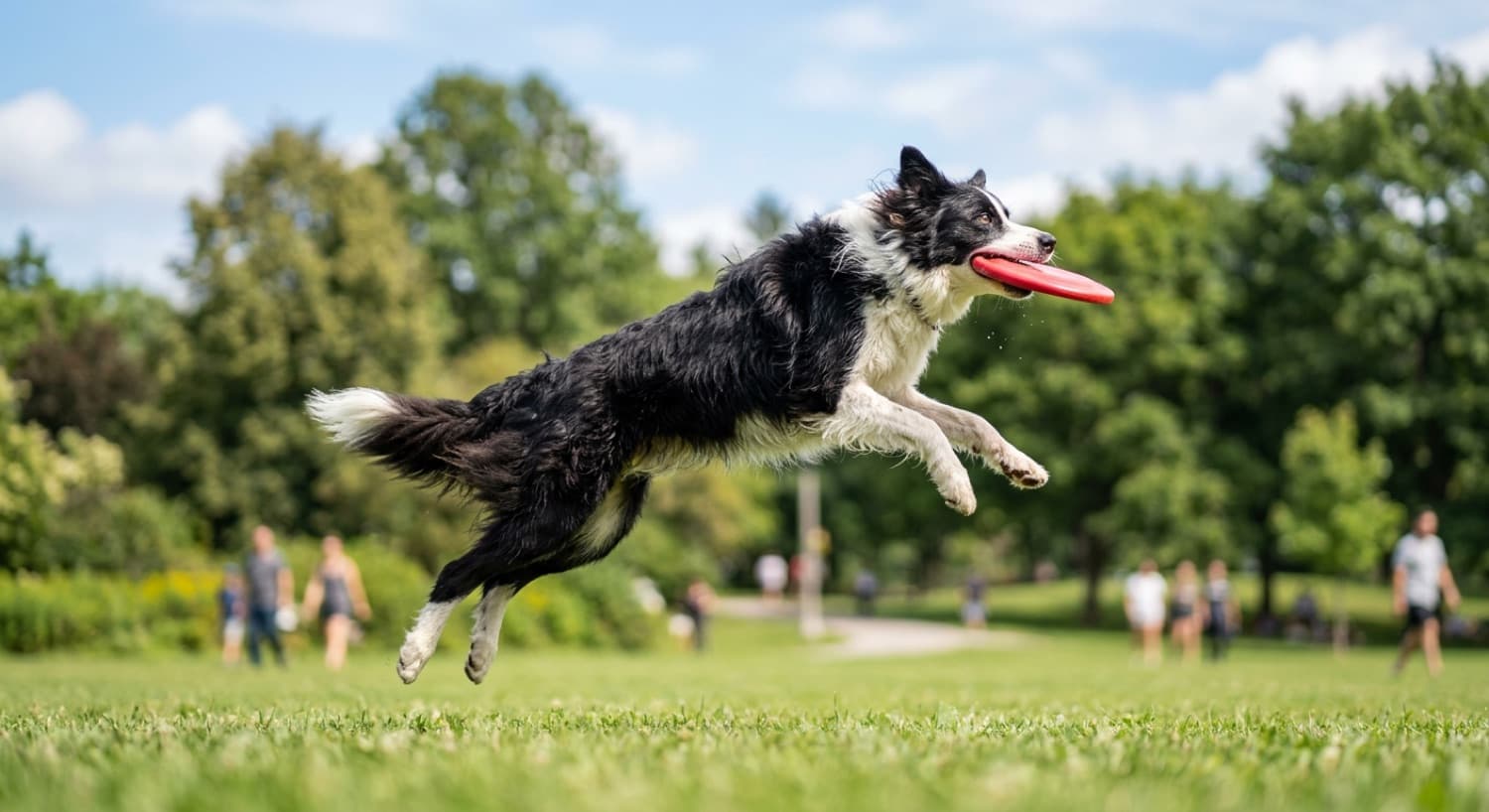
- Do you have a sport plan or working outlet in mind? Agility, flyball, herding, scent work, dock diving, or a working role on an acreage. A BC with a real job is a balanced BC. A pet-home BC without a sport plan often becomes a backyard problem within the first year.
- Are you home or available for the dog most weekdays? Work-from-home, hybrid schedule, retiree household, or a multi-adult household with overlapping schedules all work. A nine-hour work-from-office day with the dog alone is a known surrender driver.
- If you have kids, are they at least eight years old and capable of structure around the dog? The herding instinct around running young children is genuinely a management problem. Some BCs settle into family life perfectly. Many do not without a long acclimation that requires patience from the adults and structure from the kids.
- Are you prepared for a 1 to 3 year old adolescent? Most Edmonton BCs in rescue are exactly this age. The puppy is past, the calm adult is not yet here. The adolescent BC is at peak drive and at peak need for structure. Adolescence often runs until around 24 to 30 months for the breed.
- Are you willing to work with a reputable Edmonton trainer from week one? First-time BC owners especially benefit from a force-free trainer experienced in working breeds. The investment in the first six months pays for itself across the dog whole life.
If most of those answers are honest yes responses, a rescue Border Collie may be one of the most rewarding partnerships in dogs for your household. If several are no or uncertain responses, the breed will likely lead to the same outcome that filled the rescue: an under-stimulated BC, a frustrated family, and another surrender at the adolescent stage.
Many Edmonton applicants are better suited to a BC-Lab cross or a calmer BC mix than a purebred working-line BC. The Lab parent moderates the working drive enough to suit a busy active family home that does not have a sport plan. Foster notes are again the read. If a BC-Lab cross is described as moderately active rather than high-drive, that dog probably suits a wider range of homes than the BCs on either end of the energy spectrum.
How to apply prepared and apply fast
Edmonton Border Collie adoptions move fast because sport-home demand is concentrated and rescue inventory is in constant rotation. Most placements go to applicants who applied within hours of the listing going live. The serious applicants have everything ready before a BC lists, not after. The typical sequence:
- Confirm your housing and lifestyle fit honestly. If you live in a small condo and work nine hours a day from the office, a working-line BC is not the right placement and the rescue will see that on the application. Match the dog to your actual life, not the version of your life you intend to have someday.
- Set up listing alerts on every Edmonton rescue. Register on SCARS, EHS, AARCS, Zoes, GEARS, Hope Lives Here, and AHHRB. Alerts catch listings the day they appear. Sport-home applicants follow listings actively, and 24 hours of delay often costs the placement.
- Get your application materials ready in advance. Have your vet name and contact ready if you have other pets, your landlord or condo board approval in writing if you rent or live in a condo, pet insurance research done with a specific provider in mind, two non-family references with current phone numbers, a written summary of your typical weekly schedule and exercise plan, and a clear answer on sport intent or working outlet. BCs get applied for the day they list; preparation in advance is what wins.
- Find a specific dog you want to apply for. Edmonton rescues apply per-dog, not on a general waitlist. Read the entire foster write-up: energy level, kid tolerance, dog tolerance, herding behaviour, known medical history, and any flagged conditions. Watch any available videos.
- Submit the application same day. Expect 45 to 90 minutes for a thorough BC application. Same-day applications are reviewed first.
- Phone screen with the foster or shelter. This is the conversation that decides most placements. Be honest about your schedule, exercise capacity, sport intent, and household structure. The foster has lived with the dog and will tell you what they see. Working breeds need handlers who can take honest feedback.
- Meet-and-greet. At the foster home, the shelter, or a neutral location. Bring everyone in the household, including kids and other dogs if relevant. For SCARS placements, the meet-and-greet sometimes requires travel to a foster location outside Edmonton.
- Reference and home check. Most rescues call two references. Smaller foster-based rescues sometimes do a brief home visit before approval, especially for working-line BCs going into pet homes.
- Adoption contract and fee. Standard contracts specify return-to-rescue terms if you cannot keep the dog. Read it before signing. Many BC adoption contracts include a specific clause requiring return to the rescue rather than rehoming privately if the placement does not work out.
Realistic timeline from application to dog-in-your-house is one to four weeks for a BC placement, sometimes faster when the foster is ready to move the dog and the application is exceptionally strong. Multiple applications on the same dog are normal; if you are not selected, ask the rescue to keep your application on file for similar dogs. BCs come through Edmonton rescue regularly, so a near-miss on one dog is often followed by a closer match within a few weeks.
The first month with an Edmonton rescue Border Collie
The 3-3-3 decompression principle (three days to start settling, three weeks to learn the routine, three months to fully bond) applies to BCs, but the breed often skips the early surface decompression and instead spends the first month watching, learning the household patterns, and figuring out who the handler is. Working dogs read their people quickly. The first weeks are when the relationship structure gets set, intentionally or not. Practical week-one priorities for an Edmonton rescue BC:
- Start the exercise and mental work routine immediately. Two real exercise sessions a day, with at least one off-leash or long-line opportunity in a safe space several times a week. Add a structured mental work session daily: training, puzzle feeders, trick chains, or scent games. The Edmonton river valley system (Terwillegar, Mill Creek Ravine, Hawrelak, Capilano, Whitemud) and dedicated off-leash zones fit BC needs.
- Set the household structure on day one. Where the dog sleeps, where the dog eats, where the dog is allowed and not allowed, and what the handler cue is for settle, place, and crate. BCs are quick to learn structure when it is consistent and quick to invent their own structure when it is not.
- Crate train from night one. Even BCs who arrive house-trained benefit from crate routine for the first month. The crate becomes the off-switch spot, which is genuinely useful for a working breed that does not naturally settle in a household environment.
- License the dog with the City of Edmonton. Required for any dog over six months under the Animal Care and Control Bylaw 21244. Tags should be visible on the collar from day one. Information is on the City of Edmonton dogs page.
- Microchip registration verification. Confirm the chip is registered to your contact information. Most rescues handle the transfer, but verify directly with the chip registry.
- Pet insurance enrolment. Enrol in the first week if possible, before any pre-existing conditions appear in vet records. BC coverage that includes eye conditions, hip dysplasia, and orthopaedic work is worth comparing across providers.
- Vet check in week one. Establish your relationship with an Edmonton vet and a baseline for the dog. Ask about breed-specific health risks (collie eye anomaly, hip dysplasia, MDR1 drug sensitivity, epilepsy in some lines). This visit is also the right moment to set up pet insurance with current records.
- Trainer engagement. Book a force-free trainer experienced in working breeds for an initial session within the first month. Group classes can wait until week three or four; an initial private session in week one or two helps set the handler-dog communication and establish the early routine on the right footing.
- Same routes, same routine for the first two weeks. Predictability speeds settling. Save dog parks, new friends, and travel for after week three. Working dogs settle faster when the early environment is consistent.
- Watch for over-arousal triggers. Children running, cats moving, bicycles, joggers, and shadow-chasing patterns. The herding instinct expresses around movement. Early management plus structured training is what shapes the long-term behaviour.
By week three the routine is established and you will see the real dog under the working drive. By month three the bond is solid and the household has adapted to the breed-specific care. Use the first 90 days as a non-decision window. Most early concerns resolve with consistency, structure, and the right exercise outlet. The BCs that thrive in Edmonton rescue placements are the ones whose adopters got the structure right in the first month and stayed consistent through adolescence.
Frequently asked questions
Where can I adopt a Border Collie near me in Edmonton?
Border Collies and BC mixes show up across most Edmonton-area rescues because the intake pipeline pulls from working farm lines plus urban adolescent surrenders. SCARS is the most consistent source through northern Alberta intake. The Edmonton Humane Society sees BCs primarily through urban owner-surrender during the adolescent stage. AARCS tags its Edmonton-foster dogs, and BCs surface on those listings regularly. Zoes Animal Rescue carries lower volume but lists BCs and BC mixes from time to time. GEARS, Hope Lives Here, and AHHRB see BC mixes more often than purebreds. Inventory rotates quickly because demand from sport homes is competitive. Applicants who prepare in advance and apply same-day win most placements.
Why are Border Collies over-represented in Edmonton rescue?
Two intake streams feed Edmonton rescue. Alberta and Saskatchewan have a working farm tradition where BCs are bred for sheep and cattle work, and surplus farm pups or retired working dogs route into rescue through northern intake. SCARS sees this pattern most. The second stream is suburban adolescent surrenders: families who bought a BC puppy as a pet, hit the high-drive adolescence between 8 and 18 months, and could not match the breed needs. Both streams converge on Edmonton rescues. Most Edmonton BCs in care are 1 to 3 years old and stuck in the adolescent surrender stage. The dogs are usually sound; the original purchase decision was the mismatch.
How much does it cost to adopt a Border Collie in Edmonton?
Edmonton rescue adoption fees for Border Collies and BC mixes generally run $400 to $700. Working farm-line pups from SCARS sometimes price toward the lower end of that range; sport-ready adolescents from EHS or AARCS often price toward the upper end. Senior BCs (around nine years and up) often have reduced fees of $300 to $500 to prioritise placement. The fee covers spay or neuter, core vaccinations, microchip, deworming, flea and tick treatment, and a basic vet workup. Many BC adoption fees also cover a basic temperament assessment by the foster, which is meaningful for a working breed. The number is a partial recovery on costs already absorbed by the rescue, not a sale price.
What is the working-line vs show-line distinction and why does it matter?
Working-line BCs are bred for stockwork: high drive, intense focus, strong eye, sensitivity to handler cues, and a body built for endurance over speed. Show-line BCs are bred for conformation and pet companionship: slightly softer drive, more relaxed off the clock, often heavier coat. Most Edmonton rescue BCs are working-line or working-cross because the intake pipeline pulls from farms and from buyers who bought puppies from working litters without realising the difference. Working-line BCs need more exercise, more mental stimulation, and more structure than show-line BCs to stay balanced. They are excellent for sport homes (agility, flyball, herding, scent work) and rough on casual pet homes. Foster temperament notes matter here. Read carefully and ask the foster directly which lineage the dog presents like.
What BC mixes appear in Edmonton rescue and how do they compare?
BC mixes are more common than purebreds in Edmonton rescue. Common Edmonton patterns: BC-Lab (often the most family-friendly because the Lab parent softens the BC drive), BC-Australian-Shepherd (double-herding-drive, often the most intense mix you can adopt), BC-Heeler or BC-Cattle-Dog (working farm cross common in northern intake, high drive plus nipping tendency), BC-Husky (high drive plus escape risk, rough combination for most homes), BC-Shepherd (handler-focused working cross, often a great sport home dog), and BC-Mixed-Breed of unknown lineage where the BC head and herding behaviour are obvious. The breed label is a hint; the foster temperament write-up is the read. Energy level, herding behaviour intensity, kid tolerance, and multi-pet compatibility vary widely across mixes and even within the same litter.
Are Border Collies good for Edmonton families with young kids?
Generally no without preparation. The herding instinct frequently expresses as nipping at running children, circling and stalking, and over-arousal around fast movement. Many BCs do learn to coexist with kids over time, but the early weeks involve constant management. Most Edmonton rescues prefer to place adult BCs into homes where children are at least eight years old and capable of following structure around the dog. Some specific BCs with documented kid-tolerance in their foster notes are exceptions. Read the foster write-up carefully. A BC that already lives calmly with a family in foster is a much safer bet than an untested adult.
Are Border Collies good first dogs?
Generally no. The drive, intensity, and problem-solving of a Border Collie overwhelm most first-time owners. The breed needs a handler who can read body language, set clear structure, and deliver real daily mental and physical work through every season. Some calmer BC mixes (especially BC-Lab crosses) are more forgiving and occasionally suit experienced first-time owners. If a BC is your first dog, work with a reputable Edmonton trainer from week one, start a structured class within 30 days, and pick a dog whose foster notes flag a softer temperament. Most Edmonton rescues will steer first-time-owner applicants toward those specific dogs.
How much exercise does a Border Collie actually need?
The honest number is 90 minutes of real physical exercise per day minimum, paired with at least 30 minutes of mental work. That is the floor for an adult working-line BC. Many need more. Walking around the block twice does not count. Real exercise means off-leash running, structured fetch, agility, scent work, frisbee, or herding-ball games where the dog is using the working drive. Mental work means training sessions, puzzle feeders, trick chains, and skill building. A BC that gets the physical without the mental is still an under-stimulated BC. The breed needs both. Skipping either side is the most common reason Edmonton BCs end up in rescue at the adolescent stage.
Can Border Collies live in Edmonton condos or apartments?
Possible for the right dog and the right owner, but rarely a good default. The breed needs space to move and a household that can deliver consistent off-leash exercise outside the home every day. Senior BCs with lower exercise needs can adapt to apartment life if the owner walks them well. Working-line BCs in their prime years usually struggle in small spaces because the under-stimulation accumulates. Most Edmonton rescues screen apartment applicants closely and look for a specific exercise plan, work-from-home or hybrid schedule, and clear off-leash routine before approving. A specific weekday answer (morning long-line run, midday training session, evening river valley walk) reassures more than a general intent.
How long do Border Collies wait in Edmonton rescue?
It varies sharply by drive level and age. Young adult BCs with sport potential often place within one to two weeks because Edmonton agility, flyball, and herding sport homes follow rescue listings actively. Calmer BC mixes (especially BC-Lab crosses) often place within two to three weeks because they reach the broader family-pet market. Higher-drive working-line dogs and BCs with flagged kid intolerance or dog reactivity wait longer, sometimes two to three months, because the suitable home pool is small. Senior BCs (nine years and up) often place within four to six weeks because quiet households specifically look for them. Dogs flagged for serious resource guarding or fear reactivity may wait six months or more.
Related Edmonton Border Collie guides
Edmonton Adoptable Dogs
Current Edmonton-area Border Collie, BC mix, and working-breed listings from SCARS, EHS, AARCS Edmonton fosters, Zoes, GEARS, Hope Lives Here, and AHHRB.
Border Collie Health Issues: Eyes, Epilepsy, MDR1
Border Collie health issues to plan for: Collie eye anomaly, epilepsy, hip dysplasia, EPI, exercise collapse and the MDR1 drug-sensitivity test, and what to ask your vet.
Border Collie Exercise and Mental Stimulation
Why brain work matters as much as running: daily structure, ball obsession, bad-weather games, dog sports and signs of boredom.
Border Collie Adolescence Survival Edmonton
The 8-to-24-month adolescent stage that fills Edmonton rescue, working-drive escalation, structure and management for the high-arousal months, and how to break the adolescent surrender cycle.
Find your Edmonton rescue Border Collie
Browse current Edmonton-area Border Collie and BC mix listings. Inventory rotates fast for this breed because sport homes apply same-day; alerts and a prepared application win.
Browse All Edmonton Dogs →New dog? Start with these care guides
Everything a new adopter needs to set up a safe, happy home.