The short answer
Cane Corsos are giant mastiffs with the predictable giant-breed disease pattern plus mastiff-specific extras. Hip and elbow dysplasia and cruciate rupture are the orthopaedic load. Gastric dilatation-volvulus (bloat) is a deep-chested emergency, and prophylactic gastropexy is one of the highest-value preventive surgeries available for the breed. Cherry eye, entropion, and ectropion drive the eye conditions. Idiopathic epilepsy, moderate cardiac disease, and an elevated cancer load (osteosarcoma, lymphoma, mast cell) round out the picture. The American College of Veterinary Internal Medicine credentials the cardiology and oncology specialists you will likely need. Enrol in pet insurance week one: catastrophic risks stack and pre-existing exclusions are universal.
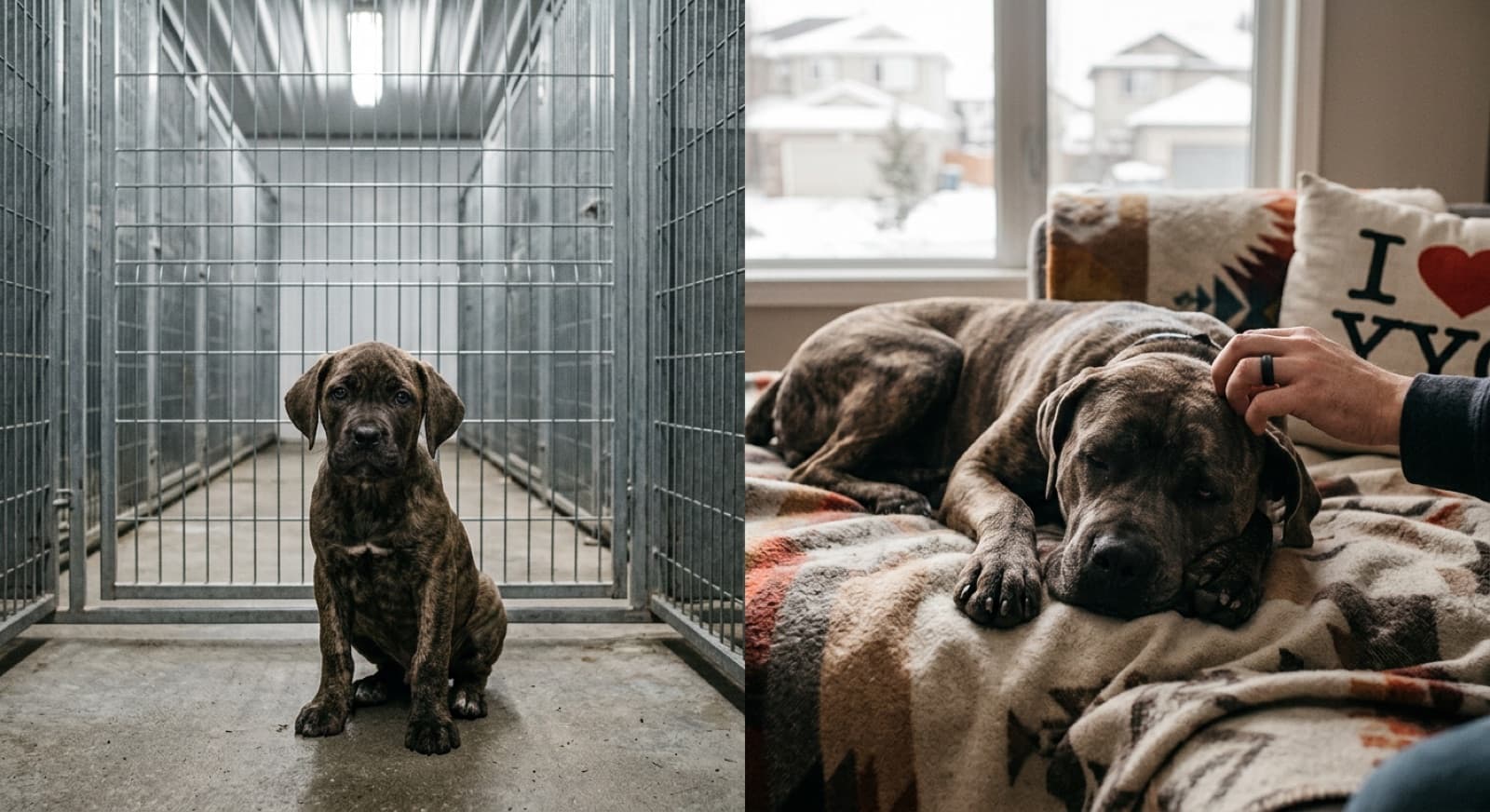
The Cane Corso breed health picture, briefly
Cane Corsos are a giant working mastiff breed with the predictable giant-breed inherited disease load plus mastiff-typical extras around the eyes and a Corso-noted seizure pattern. Lifespan averages 9 to 12 years, shorter than most breeds primarily because of giant-frame orthopaedic disease, GDV risk, and an elevated overall cancer rate. The breed combines giant-frame orthopaedic load, mastiff conformation eye conditions, a deep-chested anatomy that elevates bloat risk, and a moderate cardiac and cancer burden in a way that makes proactive screening and week-one pet insurance the foundation of responsible ownership.
The Cane Corso prioritisation list is long. Hip and elbow dysplasia are very common giant-breed orthopaedic conditions. Bloat (GDV) is a deep-chested emergency. Cherry eye is high prevalence and often bilateral. Entropion and ectropion are common eyelid conformation issues. Idiopathic epilepsy is noted in the breed at moderately elevated rates. Cruciate ligament rupture affects the heavy-frame body. Cardiac disease (mitral valve, dilated cardiomyopathy) shows a moderate load. Osteochondritis dissecans (OCD) affects rapidly growing young Corsos. Hypothyroidism is common. Demodicosis appears in juvenile Corsos. Atopic dermatitis adds chronic skin and ear work. Lymphoma, osteosarcoma, and mast cell tumours fill out the cancer load. A giant-breed anaesthesia profile means every surgical event needs pre-op planning.
The other reality every Edmonton Cane Corso owner should know: pet insurance enrolled in week one is the single highest-leverage health decision you make. The Corso combination of giant-frame orthopaedic disease, predictable eye surgical needs, GDV risk, and a moderate cancer burden produces meaningful lifetime medical spending. Every Canadian provider excludes pre-existing conditions, and skipping insurance is a valid choice only if you can self-insure $30,000 to $60,000 in lifetime out-of-pocket vet costs.
Hip dysplasia: the giant-breed orthopaedic foundation
Hip dysplasia has very high prevalence in Cane Corsos because the breed carries the giant-frame, heavily-muscled body type most associated with the condition. Abnormal hip joint development progresses to arthritis with age. Edmonton winter makes the picture worse: cold-stiffened joints flare up after rest, and ice and snow add fall risk for an arthritic giant-breed dog.
Presentation and recognition
Signs include a bunny-hopping gait (using both hind legs together to spare the affected hip), reluctance to climb stairs or jump into vehicles, stiffness after rest, weight-shifting away from the affected hip, and visible muscle wasting in the hindquarters over time. Some Cane Corsos hide pain well into middle age; a careful vet orthopaedic exam catches subclinical dysplasia before the dog flags it.
Diagnosis
Diagnosis is by hip radiographs graded under the Orthopedic Foundation for Animals (OFA) or PennHIP systems, typically $300 to $600 at an Edmonton clinic. PennHIP measures hip laxity quantitatively and can be done from 16 weeks of age; OFA uses subjective grading on standardised projections and the official score is given at age two. For rescue Cane Corsos, baseline hip radiographs in the first year are reasonable, particularly before any high-impact exercise programme.
Conservative management
- Lean body weight (the single most important variable in arthritis progression)
- Joint supplements (glucosamine, chondroitin, omega-3 fatty acids)
- Hydrotherapy for low-impact muscle building
- Prescription anti-inflammatories during flares (carprofen, meloxicam, robenacoxib)
- Physical therapy and underwater treadmill where available
- Soft orthopaedic bedding off cold floors
- Traction rugs on hardwood for senior Edmonton homes
Surgical options
Surgical options for severe cases include femoral head ostectomy (FHO, removes the femoral head to eliminate bone-on-bone pain, $3,000 to $5,000) and total hip replacement (THR, replaces the joint with a prosthesis, $6,000 to $9,000 per hip). FHO works well for smaller dogs but is more variable in giant breeds; THR is the more durable solution for Cane Corsos when the financial commitment is available. The American College of Veterinary Surgeons credentials the orthopaedic surgeons who perform total hip replacement.
Elbow dysplasia
Elbow dysplasia is the umbrella term for several developmental abnormalities of the elbow joint (fragmented coronoid process, ununited anconeal process, osteochondritis dissecans, elbow incongruity). Cane Corsos carry moderate to high prevalence as a giant-frame breed. Signs include intermittent or progressive front-leg lameness, reluctance to extend the elbow fully, stiffness after rest, and visible muscle wasting in the front limbs.
Diagnosis is by radiograph plus CT scan in difficult cases. Surgical management ranges from arthroscopic fragment removal ($2,500 to $4,500) to more involved corrective osteotomies ($5,000 to $8,000) at specialty practice. Lean body weight, joint supplements, and prescription anti-inflammatories form the conservative-management foundation. For rescue Cane Corsos with documented front-leg lameness, an orthopaedic specialty referral in month one is often the right call rather than wait-and-see.
Bloat (gastric dilatation-volvulus, GDV)
GDV is a life-threatening emergency where the stomach distends with gas and twists on its axis, cutting off blood supply to the stomach wall and major abdominal vessels. Without surgical correction within hours it is fatal. Cane Corsos are deep-chested giant breeds at elevated GDV risk. Symptoms to recognise immediately:
- Visibly distended or hard abdomen, sometimes drum-tight to the touch
- Non-productive retching (tries to vomit but nothing comes up; the most reliable early sign)
- Restlessness or inability to settle, pacing
- Drooling and frothy saliva
- Pale gums (check by lifting the lip)
- Rapid shallow breathing that does not match the activity
- Progressive weakness or collapse
If you see any combination of these in a Cane Corso, drive directly to a 24-hour Edmonton emergency veterinary clinic without calling first. Minutes matter. Bloat surgery at an Edmonton emergency hospital typically runs $5,000 to $10,000 including post-op care; survival improves dramatically the earlier the dog arrives.
Prophylactic gastropexy
Prophylactic gastropexy is a surgery that tacks the stomach to the body wall to prevent the volvulus (twist) component of GDV. The stomach can still dilate but cannot rotate, which dramatically reduces emergency lethality. The procedure adds $1,500 to $3,000 when done at the time of spay or neuter and can be performed laparoscopically (less invasive, similar cost). For a deep-chested giant breed like the Cane Corso, prophylactic gastropexy is one of the highest-value preventive surgeries available. If your rescue Corso was spayed or neutered without gastropexy, ask your Edmonton vet whether a separate elective procedure is worth scheduling. Pre-save the contact info for at least one 24-hour Edmonton emergency vet before you need it. The American College of Veterinary Surgeons publishes owner-facing GDV resources.
Cherry eye: the Cane Corso eye signature
Cherry eye is prolapse of the third-eyelid (nictitating membrane) gland, producing a visible red rounded mass in the inner corner of the eye. The Cane Corso is one of the highest-prevalence breeds for the condition, often presenting in puppies and young adults under two years old. Both eyes can prolapse, sometimes simultaneously and sometimes weeks to months apart, so any Corso owner who sees one cherry eye should plan for the possibility of a second.
Why surgical replacement matters
The prolapsed third-eyelid gland produces a substantial portion of the eye's aqueous tear film. Excising the gland (the older approach) often leads to chronic dry-eye (keratoconjunctivitis sicca) and lifelong topical treatment, which is why most modern veterinary surgeons avoid excision. The modern standard is a tucking or pocket procedure that anchors the gland back in place rather than removing it.
Edmonton surgical correction
Edmonton surgical correction runs $500 to $1,200 per eye at a general-practice clinic and $1,500 to $2,500 per eye at an ophthalmology specialty practice. Specialty ophthalmology gives the best long-term outcome for a giant-breed Corso because the third-eyelid gland is larger and the tissue planes are different from a smaller dog. Recurrence rate is low with modern tucking techniques (under 10 percent) and higher with simpler approaches.
Practical recognition
Any new red rounded mass in a Cane Corso's inner eye warrants a vet visit within two weeks. Chronic prolapse increases secondary conjunctivitis, mucoid discharge, and corneal irritation. Rescue Cane Corsos with documented prior cherry eye repair on one side should have the other side monitored monthly for the first year; a foster contact or rescue intake exam often catches the early presentation before adoption. The American College of Veterinary Ophthalmologists credentials the specialists who perform the higher-end Corso eye work.
Entropion and ectropion
Cane Corsos carry elevated rates of several eyelid conformation issues because of the loose mastiff facial structure. Entropion is inward rolling of the eyelid margin so the eyelashes rub the cornea, causing chronic irritation, ulceration, and pain. Ectropion is outward rolling of the eyelid margin (more common in the lower lid) that leaves the conjunctiva exposed and predisposes to chronic conjunctivitis. Some Corsos have a combination (diamond eye) requiring more involved reconstruction.
Signs include squinting, tearing, mucoid discharge, redness, rubbing the face on furniture, and visible eyelid roll on examination. Untreated entropion progresses to corneal ulceration and (in severe cases) vision loss, so early surgical correction is the right call when a young Corso shows these signs. Diagnosis is by ophthalmology examination ($150 to $300 at an Edmonton clinic, more at a specialty ophthalmology practice).
Surgical correction runs $1,500 to $3,500 per eye at general practice and $2,500 to $4,500 at specialty ophthalmology practice. For young puppies, some surgeons stage the procedure: a temporary lid tacking at four to six months to give the face time to mature, then definitive correction once growth slows. For rescue Cane Corsos, an ophthalmology baseline in the first 60 days catches any pre-existing eyelid problem before it worsens, particularly important if no medical records came with the dog.
Browse adoptable Edmonton Cane Corsos
Current Edmonton Cane Corso and Corso-mix listings. Foster notes flag any documented eye conditions (cherry eye, entropion), orthopaedic history, or seizure activity. Plan a first-month vet workup that establishes the ophthalmic, orthopaedic, cardiac, and thyroid baseline.
See Available Dogs →Cruciate ligament rupture
Cranial cruciate ligament rupture is moderate to high in Cane Corsos because the heavy frame loads the stifle joint heavily over a lifetime. The cruciate ligament can rupture acutely (mid-stride during play or after a slip on ice) or chronically (progressive partial tears over months). Cane Corsos that rupture one cruciate have a substantially elevated risk of rupturing the contralateral cruciate within 12 to 18 months because the underlying biomechanical predisposition affects both stifles.
Signs include acute non-weight-bearing or toe-touching lameness on a hindlimb, sometimes progressing to chronic stiffness as scar tissue forms. The drawer sign and tibial compression test on physical exam suggest the diagnosis; radiographs and joint palpation under sedation confirm. Diagnosis at an Edmonton clinic runs $300 to $600.
Surgical correction is the standard of care for Cane Corso-sized dogs because the joint cannot stabilise with conservative management alone. Tibial plateau levelling osteotomy (TPLO) is the most common procedure for giant breeds and typically runs $5,000 to $8,000 per stifle at an Edmonton specialty practice. Tibial tuberosity advancement (TTA) is an alternative at similar cost. Recovery involves 8 to 12 weeks of strict activity restriction followed by gradual return to normal exercise. Post-operative rehabilitation (underwater treadmill, controlled exercise) improves outcomes. Plan financially for the possibility of contralateral cruciate rupture: many Corso owners end up paying for two TPLOs over the dog's lifetime.
Idiopathic epilepsy: the Cane Corso-noted condition
Idiopathic epilepsy (seizures with no identifiable underlying cause) is noted in the Cane Corso in veterinary neurology literature at moderately elevated rates. Onset is typically between one and five years of age. The condition is diagnosed by exclusion after structural causes have been ruled out.
Seizure recognition
- Sudden loss of consciousness or awareness
- Stiffening followed by paddling limb movements
- Drooling, urination, or defecation during the event
- Vocalisation or chewing motion
- A post-ictal phase of disorientation, blindness, or restlessness for minutes to hours after the event
- Cluster seizures (two or more in 24 hours) or status epilepticus (a seizure lasting more than five minutes, or back-to-back seizures with no recovery between) are life-threatening emergencies
Workup and diagnosis
A first seizure in a young adult Cane Corso warrants neurology workup to rule out structural causes (bloodwork, blood pressure, MRI to evaluate for tumour or structural disease, sometimes cerebrospinal fluid analysis) before idiopathic epilepsy is diagnosed by exclusion. Edmonton bloodwork runs $200 to $400; MRI requires referral and runs $1,500 to $3,000; CSF analysis adds $400 to $800. WCVM Saskatoon handles complex neurology referrals beyond local capacity.
Treatment and monitoring
Treatment is daily anti-epileptic medication. Common first-line drugs include phenobarbital (proven and inexpensive, requires liver monitoring), potassium bromide (longer half-life, often added to phenobarbital), levetiracetam (gentler side-effect profile, more frequent dosing), and zonisamide (newer option). Monthly medication cost ranges from $30 to $120 depending on drug and dose. Periodic bloodwork monitors liver function and drug levels.
Practical owner planning
Most epileptic Cane Corsos live a full lifespan with controlled seizures. The practical owner habits that matter: keep a seizure log (date, time, duration, what the dog was doing, post-ictal duration), film the next event on your phone for your vet, identify safe sleeping zones away from stairs or pools, pre-save the contact info for at least one 24-hour Edmonton emergency clinic, and discuss rescue medications (rectal diazepam, intranasal midazolam) with your vet for cluster-seizure home management. Cluster seizures or status epilepticus are emergencies: drive to the 24-hour emergency clinic, do not wait.
Cardiac disease: mitral valve and dilated cardiomyopathy
Cane Corsos carry a moderate cardiac load that includes mitral valve disease and idiopathic dilated cardiomyopathy. The risk is well below the Doberman or Great Dane but well above the average breed. Annual cardiac auscultation by a vet who knows what a Cane Corso heart should sound like is the screening foundation.
Mitral valve disease typically presents later in life (six years and older) as a left-sided systolic murmur on routine auscultation. Progression is usually slow over years, with later-stage signs including exercise intolerance, cough, and (eventually) signs of congestive heart failure (laboured breathing, restless nights, abdominal distension). Dilated cardiomyopathy can present at any age with exercise intolerance, fainting, or sudden collapse.
Any documented murmur, arrhythmia, or unexplained exercise intolerance warrants Doppler echocardiogram referral to a board-certified veterinary cardiologist. Edmonton echocardiogram runs $500 to $800; cardiologist consultation adds $150 to $300. For senior Cane Corsos, annual echo from age seven is a reasonable plan if any murmur is documented or family history is known. Treatment varies by stage: ACE inhibitors, pimobendan, diuretics, and beta-blockers are common options. The American College of Veterinary Internal Medicine credentials the cardiology specialists.
Cancer load (osteosarcoma, lymphoma, mast cell, hemangiosarcoma)
Cane Corsos carry a moderate to high overall cancer burden. The breed does not have one defining cancer like the Rottweiler's osteosarcoma, but several common canine cancers appear at elevated rates.
Osteosarcoma
Osteosarcoma (bone cancer) shows moderate to high prevalence in giant breeds, including the Cane Corso. The tumour most commonly affects the long bones of the front legs (distal radius or proximal humerus). The classic presentation is a persistent single-limb lameness that does not resolve with rest. For middle-aged and senior Cane Corsos, any persistent single-limb lameness gets radiographs rather than wait-and-see. Standard treatment is amputation followed by carboplatin chemotherapy at an Edmonton specialty oncology practice, total cost roughly $8,000 to $15,000 with median survival of 10 to 14 months from diagnosis. WCVM Saskatoon handles limb-sparing surgery for selected cases ($15,000 to $25,000).
Lymphoma
Lymphoma is cancer of the lymphocytes. Multicentric lymphoma (the most common form) presents as painless generalised lymph node enlargement (under the jaw, in front of the shoulders, behind the knees) often discovered on routine examination. Diagnosis is by lymph node aspirate or biopsy. Standard treatment is multi-drug chemotherapy (CHOP protocol) with median survival of 12 to 14 months. Total chemotherapy cost at an Edmonton specialty oncology practice runs $6,000 to $10,000. Without treatment, median survival is four to six weeks.
Mast cell tumours
Mast cell tumours are the most common skin cancer in dogs, and Cane Corsos have moderately elevated rates. Presentation varies from small raised nodules to large ulcerated masses. Any new skin lump in a Corso should be aspirated rather than watched; mast cell tumours have variable grade and behaviour, and early excision of low-grade tumours is often curative. Aspirate runs $80 to $150; surgical excision $800 to $2,500 depending on size and location; chemotherapy for higher-grade tumours $2,000 to $5,000.
Hemangiosarcoma
Hemangiosarcoma is cancer of the blood vessel lining, most commonly affecting the spleen. The classic presentation is sudden collapse from internal bleeding when a splenic tumour ruptures. Diagnosis is by abdominal ultrasound and post-operative biopsy. Splenectomy plus chemotherapy gives median survival of four to six months; without treatment most dogs die from re-bleed within weeks. Splenectomy at an Edmonton emergency or specialty clinic runs $4,000 to $7,000; chemotherapy adds $3,000 to $6,000. For senior Cane Corsos, any unexplained collapse, pale gums, or unexplained weakness gets abdominal ultrasound rather than wait-and-see.
Osteochondritis dissecans (OCD) in young Cane Corsos
OCD is a developmental joint disease where a fragment of cartilage and underlying bone fails to ossify properly and becomes loose within the joint, causing pain and inflammation. Cane Corsos are among the giant breeds at elevated risk, particularly in the shoulder joint (less commonly the elbow, stifle, or hock). Onset is typically in growing puppies and young adults between four and 10 months of age.
Signs include progressive front-leg lameness in a young Corso, often worse after exercise. The pain can be subtle at first and is sometimes dismissed as growing-puppy clumsiness. Any persistent lameness in a young Cane Corso warrants radiographs at an Edmonton clinic ($200 to $500). Treatment ranges from controlled rest and anti-inflammatories for small lesions to arthroscopic fragment removal ($2,500 to $4,500) for larger lesions causing chronic lameness.
Prevention focuses on controlled puppy growth: large-breed puppy food formulated for slow controlled growth, lean body weight throughout puppyhood, no high-impact exercise (no jumping from trucks, no forced jogging, no agility work) before growth plates close around 12 to 18 months, and gradual exercise progression that builds muscle without stressing developing joints. The temptation to take a growing Cane Corso on long runs is one of the worst things you can do for a young giant-breed dog.
Hypothyroidism: common and easily misread
Hypothyroidism is common in Cane Corsos and frequently misread. The condition presents as a constellation of symptoms that look like normal ageing, weight gain from overfeeding, or anxiety behaviour. A middle-aged Corso whose temperament noticeably shifts (more anxious, more reactive, less tolerant of handling) deserves a full thyroid panel before training adjustments.
Symptoms cluster around metabolism:
- Weight gain despite stable diet and exercise
- Lethargy, reduced exercise tolerance, slowness to recover from activity
- Dull, dry, or thinning coat (often symmetrical hair loss on the flanks or tail)
- Cold intolerance (which Edmonton winter makes obvious)
- Recurrent skin or ear infections
- Behaviour changes: increased anxiety, reduced sociability, new-onset reactivity
Diagnosis is by full thyroid panel including TSH and free T4 by equilibrium dialysis. Baseline total T4 alone has limited diagnostic value because many euthyroid sick dogs have low T4 and many early hypothyroid dogs have normal total T4. Treatment is daily levothyroxine at $25 to $50 per month plus periodic rechecks at four to six weeks initially, then annually once stable. Most hypothyroid Cane Corsos recover normal energy, coat, and temperament within four to eight weeks of starting medication.
Allergies, atopic dermatitis, and demodicosis
Atopic dermatitis (environmental allergies) affects Cane Corsos at moderately elevated rates. Signs include itchy skin (especially paws, ears, belly, and face), recurrent skin and ear infections, hair loss in chronically inflamed areas, and seasonal flare patterns. Diagnosis is clinical with intradermal or blood-based allergy testing for specific allergens.
Management combines targeted treatments: Apoquel (oclacitinib) or Cytopoint (lokivetmab) for itch control, allergen-specific immunotherapy (allergy shots customised to the dog), topical anti-inflammatory shampoos, and prompt treatment of secondary skin and ear infections. Monthly maintenance often runs $80 to $200. Severe cases benefit from veterinary dermatology referral; Edmonton has dermatology specialty capacity for difficult cases.
Demodicosis (demodectic mange) is overgrowth of Demodex mites that normally live in low numbers in dog skin. Juvenile-onset demodicosis appears in puppies under 18 months and typically responds to topical and oral treatments (isoxazoline parasiticides have transformed demodicosis treatment in recent years). Generalised adult-onset demodicosis is more concerning because it usually reflects an underlying immune problem (hypothyroidism, cancer, immunosuppressive medication, or stress) and warrants full workup. Diagnosis is by skin scraping ($60 to $150); treatment runs $40 to $120 per month for the duration of therapy plus follow-up scrapings.
Anaesthesia profile for giant Cane Corsos
Giant-breed body composition matters for anaesthesia planning. Cane Corsos have a lower lean body mass per kilogram of body weight than smaller, more muscular breeds, which affects drug dosing for fat-soluble agents. Most Edmonton vets calculate anaesthesia doses based on lean body weight rather than total body weight for giant breeds to avoid overdose, particularly with thiopental and propofol.
Practical points for any Cane Corso surgical event:
- Pre-anaesthetic bloodwork is non-negotiable (CBC, chemistry panel, sometimes thyroid panel)
- Any documented heart murmur or arrhythmia needs cardiology clearance before non-emergency surgery
- Pre-anaesthetic chest radiographs are reasonable for any senior Cane Corso (over age six) to screen for occult pulmonary disease or metastasis
- Intravenous fluid support throughout the procedure
- Active warming during and after surgery (giant breeds cool faster than expected on the surgical table)
- Multimodal pain management including opioids and anti-inflammatories
- Post-operative monitoring for at least four hours before discharge
For elective procedures (spay, neuter, dental cleaning, mass removal), discuss the anaesthesia plan with your Edmonton vet ahead of time. For complex orthopaedic surgeries or any cardiac event, specialty practice with a dedicated anaesthesiologist is worth the extra cost.
The 9 to 12 year lifespan reality
Cane Corsos average 9 to 12 years, with the upper end requiring a lean body weight, joint-protective puppyhood, full vaccinations, and consistent senior care. The lifespan is shorter than most breeds primarily because of giant-frame orthopaedic disease that limits late-life mobility, an elevated overall cancer burden, GDV risk, and a moderate cardiac load.
The honest planning reality for prospective adopters: a Cane Corso is a 10-year commitment, not a 15-year one, and the senior years often involve mobility support, joint medication, cancer screening, and end-of-life decisions. The trade-off is one of the most intensely devoted and family-bonded mastiff breeds. Many Edmonton Corso adopters describe the relationship as a compressed but profound arc.
Practical implications: budget for a 10-year vet spend rather than a 15-year one (which means insurance ROI compresses across fewer years, increasing the value of week-one enrolment), plan family schedule and travel for a dog that may need mobility help in years seven to 10, and have honest quality-of-life conversations with your vet early rather than under pressure. Adopting a senior Cane Corso (six and up) compresses the arc further but rewards the home that takes one in with a calmer, deeply bonded dog. Many Edmonton rescue volunteers describe senior Corso placements as among the most emotionally rewarding work they do.
Edmonton specialty veterinary access reality
Edmonton has solid general-practice veterinary coverage for Cane Corsos. For routine care (annual physical, vaccinations, dental, bloodwork, weight management), any reputable Edmonton clinic is a fine starting point. For Cane Corso-specific work, particularly ophthalmology, orthopaedics, oncology, and neurology, the picture is more nuanced.
Edmonton ophthalmology, orthopaedics, oncology, cardiology
Edmonton has board-certified veterinary ophthalmology, orthopaedics, oncology, and cardiology capacity adequate for routine Cane Corso work. Cherry eye surgical repair, entropion correction, hip and elbow radiographic grading, TPLO surgery, chemotherapy administration, cardiac echocardiography, and routine neurology workup all happen locally. The specialty network is smaller than Calgary's.
WCVM Saskatoon
The Western College of Veterinary Medicine at the University of Saskatchewan is the closest full veterinary teaching hospital, about five and a half hours each way from Edmonton. WCVM handles complex Cane Corso referrals beyond local capacity: limb-sparing osteosarcoma surgery, advanced oncology protocols, complex orthopaedic revisions, advanced neurology and MRI workup, and rare-disease investigation. The University of Alberta does not have a veterinary school, which is why Saskatoon is the closest academic referral. Your general-practice or specialty vet initiates the referral.
Calgary specialty centres
Some Edmonton Cane Corso owners drive to Calgary specialty centres for oncology consultations with shorter wait times, for cardiac procedures not offered locally, for advanced ophthalmology cases, or for orthopaedic surgery with specific expertise. The drive is about three hours each way. This pattern is more common for elective work than emergencies. Ask your local specialty practice whether the case genuinely benefits from a Calgary referral or whether Edmonton can handle it well.
Building your network in month one
The practical move when you adopt a Cane Corso: establish a primary Edmonton vet in the first month, ask specifically which ophthalmologist, orthopaedic surgeon, and oncologist they refer Corsos to, and write the answers down. Pre-save at least one 24-hour Edmonton emergency clinic in your phone. Many Edmonton Cane Corsos will need ophthalmology referral at some point, and a meaningful minority will need oncology or neurology. Knowing the pathway before you need it cuts friction out of the process.
Pet insurance for an Edmonton Cane Corso
Week-one pet insurance enrolment is the single highest-leverage health decision for any rescue Cane Corso. Every Canadian provider excludes pre-existing conditions, which means the day a vet documents anything (a heart murmur, a low T4, a skin lesion, an arthritic hip, a small skin lump, a cherry eye, a documented seizure), that condition becomes a permanent exclusion on any policy enrolled afterward. The clock starts the day you adopt.
The Cane Corso-specific value math is strong because the catastrophic and predictable risks stack:
- Hip replacement: $6,000 to $9,000 per hip
- Cruciate (TPLO) surgery: $5,000 to $8,000 per stifle, often two over a lifetime
- Bloat (GDV) emergency surgery: $5,000 to $10,000
- Prophylactic gastropexy (preventive): $1,500 to $3,000
- Cherry eye repair: $500 to $2,500 per eye (both eyes common over a lifetime)
- Entropion correction: $1,500 to $4,500 per eye
- Lifelong epilepsy management: $30 to $120 per month plus periodic bloodwork
- Osteosarcoma amputation plus chemotherapy: $8,000 to $15,000
- Lymphoma CHOP chemotherapy protocol: $6,000 to $10,000
- Hemangiosarcoma splenectomy plus chemotherapy: $7,000 to $13,000
- Cardiac workup, ongoing cardiology, and medication: $500 to $2,000 per year for moderate to severe cases
A Cane Corso that develops cancer plus a single orthopaedic surgery and a bloat event can easily generate $30,000 to $60,000 in out-of-pocket medical costs across a decade. A typical pet insurance policy for a young healthy Cane Corso in Edmonton runs $80 to $140 per month depending on deductible, reimbursement percentage, and coverage limits. Over a 10-year lifespan, premiums total $10,000 to $17,000.
What to look for in a Cane Corso policy:
- Hereditary and congenital conditions explicitly covered (policies that exclude these are useless for a giant breed)
- Annual coverage caps rather than per-condition caps
- Annual caps of $20,000 or more (multiple orthopaedic and oncology events stack quickly)
- Explicit coverage of cancer including chemotherapy and radiation
- Coverage of diagnostic imaging including CT and MRI
- Reasonable wait times for cancer and orthopaedic coverage (typically 14 to 30 days)
- Lifetime caps high enough to absorb multiple major events
- Coverage of chronic condition management (epilepsy medications, cardiac medications)
Compare three to four providers before enrolling. The American Animal Hospital Association publishes general guidance on pet insurance evaluation; the checklist applies to Canadian providers. Your Edmonton vet and your rescue foster contact can share which providers other Cane Corso adopters have used and what their claim experience has been.
Adoption health workup: what the rescue covers vs what you re-screen
Edmonton rescues do a baseline vet workup before adoption, but the depth varies by rescue and by individual dog. Understanding what is and is not covered helps you plan the first-month vet visit, which for a Cane Corso should explicitly establish ophthalmic, orthopaedic, cardiac, and thyroid baselines.
What most Edmonton rescues cover
- Physical exam by a vet at intake including cardiac auscultation
- Core vaccinations (DAPP and rabies, sometimes Bordetella if boarded)
- Spay or neuter surgery
- Microchip implant and registration
- Deworming and flea and tick treatment
- Basic adult bloodwork (CBC and chemistry panel) in many cases
- Treatment of any acute concerns identified at intake
What is usually NOT covered (and what to plan for)
- Ophthalmology baseline (cherry eye and entropion screening)
- Hip and elbow radiographs (OFA or PennHIP grading)
- Doppler echocardiogram if a murmur is suspected
- Full thyroid panel for dogs over two
- Baseline cancer screening (chest radiographs, abdominal ultrasound)
- Neurology workup for any documented seizure activity
- Prophylactic gastropexy
Plan a first-month vet visit with your chosen Edmonton vet that establishes the Cane Corso baseline you can build on. The standard ask: a careful cardiac auscultation by a vet who knows what a Corso heart should sound like, a thorough orthopaedic exam, baseline thyroid panel, ophthalmic evaluation (specifically including third-eyelid and eyelid conformation), and a frank conversation about the ophthalmology, orthopaedic, and oncology referral pathways. If the dog is younger than two, schedule baseline hip and elbow radiographs at the same visit. If the rescue can share intake imaging, bloodwork, or vet notes, bring them.
For senior Cane Corsos (six years and up), the first-month workup is more involved: full senior bloodwork including liver enzymes, urinalysis, baseline thyroid panel, careful cardiac auscultation with low threshold to refer for echocardiogram, dental evaluation, a thorough lump check, eyelid evaluation, and (depending on findings) baseline chest radiographs and abdominal ultrasound to establish a cancer-screening baseline. Budget $800 to $1,800 for the senior intake workup at an Edmonton clinic.
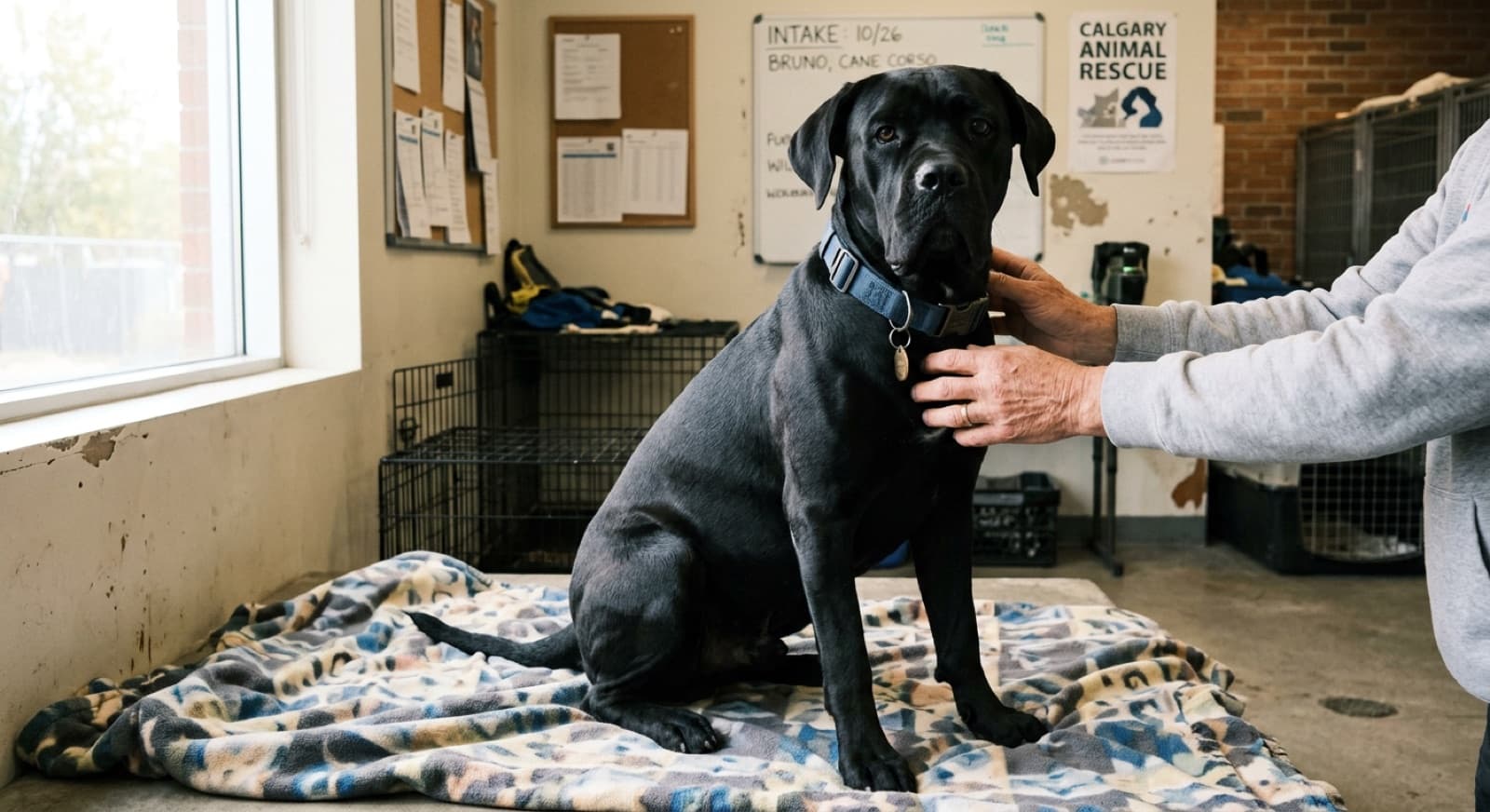
Senior Cane Corso health after age six
Cane Corsos age fast. Senior care begins in earnest around age six because the 9 to 12 year lifespan compresses the senior arc into the last third of life. The trade-off for adopting an older Corso is shorter overall companionship in exchange for a calmer, deeply bonded dog that has aged out of the adolescent intensity of the breed. Many Edmonton rescue volunteers describe senior Cane Corso adoptions as among the most emotionally rewarding placements they handle.
Reasonable senior-care adjustments, all guided by your Edmonton vet:
- Biannual vet exams instead of annual
- Full annual senior bloodwork including liver enzymes and urinalysis
- Annual cardiology recheck for any dog with a previously documented murmur
- Periodic thyroid panel rechecks
- Annual chest radiographs for cancer surveillance
- Periodic abdominal ultrasound for splenic and abdominal mass screening from age six or seven
- Annual ophthalmology check
- Routine dental care including professional cleanings every 18 to 24 months
- Joint support (glucosamine, chondroitin, omega-3) and prescription anti-inflammatories during arthritis flares
- Tight weight monitoring (overweight Cane Corsos do worse on every front)
- Aggressive lump monitoring (any new skin mass aspirated, not watched)
- Mobility aids if needed: orthopaedic bed, traction rugs on hardwood, ramps for stairs and vehicles
- Climate comfort through Edmonton winter (warm bed, no sleeping on cold floors)
Some Cane Corsos develop canine cognitive dysfunction in their later years, with disorientation, anxiety, or sleep changes. Your vet can advise on management options ranging from environmental adjustments to prescription medications.
Pet insurance becomes harder and more expensive to obtain for first-time enrolment past age six, and some providers will not enrol senior Cane Corsos at all (particularly those with documented cardiac or cancer findings). If you adopt a senior Corso, price-compare carefully and consider whether a dedicated savings account makes more sense than insurance. Talk through the math with your vet at the first visit, and discuss honest quality-of-life conversations early. For many senior Cane Corsos, the choice is calm comfortable years rather than aggressive intervention. End-of-life care plans matter for the breed because the conversations come sooner than they do for most dogs. The Canadian Kennel Club and the Cane Corso Association of Canada both publish breed-stewardship guidance that informs ethical adoption and senior care.
Frequently asked questions
Where can I find a vet for a Cane Corso near me in Edmonton?
Start with a general-practice Edmonton vet for routine care (annual physical, vaccinations, weight management, dental, bloodwork) and ask which board-certified ophthalmologist, orthopaedic surgeon, and internist they refer Cane Corsos to. Edmonton has adequate ophthalmology and orthopaedic specialty capacity for routine Corso work, but the network is smaller than Calgary's. For complex cases (advanced cruciate revision, severe entropion reconstruction, advanced oncology protocols, neurology referral for epilepsy workup), some Edmonton owners drive to Calgary specialty centres or route to the Western College of Veterinary Medicine in Saskatoon. Establish the orthopaedic and ophthalmology pathway in month one. Budget for annual orthopaedic palpation from puppyhood and senior bloodwork from age five.
What are the main Cane Corso health issues to know before adopting?
Cane Corsos carry the giant-breed disease pattern with mastiff-specific extras. In rough order of practical importance: hip dysplasia (very high prevalence in giant frames); elbow dysplasia (moderate to high); gastric dilatation-volvulus (bloat or GDV, deep-chested emergency); cherry eye (high prevalence, often bilateral); entropion and ectropion (eyelid conformation issues); idiopathic epilepsy (Cane Corso noted in veterinary literature); cruciate ligament rupture (heavy frame); idiopathic dilated cardiomyopathy and mitral valve disease (moderate cardiac load, less than Doberman but still meaningful); osteosarcoma, lymphoma, and mast cell tumours (moderate to high cancer load); hypothyroidism (common in the breed); demodicosis (juvenile-onset mites); osteochondritis dissecans (young Corsos with rapid growth); allergies and atopic dermatitis; and a giant-breed anaesthesia profile. Lifespan averages 9 to 12 years. Week-one pet insurance enrolment is essentially mandatory.
How serious is hip dysplasia in Cane Corsos?
Hip dysplasia has very high prevalence in Cane Corsos because the breed carries the giant-frame, heavily-muscled body type most associated with the condition. Abnormal hip joint development progresses to arthritis with age. Signs include a bunny-hopping gait, reluctance to climb stairs or jump into vehicles, stiffness after rest (especially in Edmonton winter), weight-shifting away from the affected hip, and visible muscle wasting in the hindquarters. Diagnosis is by hip radiographs graded under the Orthopedic Foundation for Animals (OFA) or PennHIP systems, typically $300 to $600 at an Edmonton clinic. PennHIP measures hip laxity quantitatively and can be done from 16 weeks of age. Conservative management with lean body weight, joint supplements, hydrotherapy, and prescription anti-inflammatories defers or replaces surgery in many cases. Severe cases benefit from femoral head ostectomy ($3,000 to $5,000) or total hip replacement ($6,000 to $9,000 per hip) at a specialty practice.
How do I recognise bloat in a Cane Corso, and what should I do?
Bloat (gastric dilatation-volvulus, or GDV) is a life-threatening emergency where the stomach distends with gas and twists on its axis, cutting off blood supply. Without surgical correction within hours it is fatal. Cane Corsos are deep-chested giant breeds at elevated GDV risk. Symptoms to recognise immediately: a visibly distended or hard abdomen, non-productive retching (the most reliable early sign), restlessness or pacing, drooling, pale gums, rapid shallow breathing, and progressive weakness or collapse. If you see any combination of these in a Corso, drive directly to a 24-hour Edmonton emergency veterinary clinic without calling first. Bloat surgery at an Edmonton emergency hospital typically runs $5,000 to $10,000 including post-op care; survival improves dramatically the earlier the dog arrives. Prophylactic gastropexy at the time of spay or neuter adds $1,500 to $3,000 and dramatically reduces lifetime GDV risk. For a deep-chested giant Corso, gastropexy is one of the highest-value preventive surgeries available.
What is cherry eye in a Cane Corso?
Cherry eye is prolapse of the third-eyelid (nictitating membrane) gland, producing a visible red rounded mass in the inner corner of the eye. The Cane Corso is one of the breeds with the highest documented prevalence, often presenting in puppies and young adults under two years old. Both eyes can prolapse, sometimes simultaneously and sometimes weeks to months apart. The prolapsed gland produces a substantial portion of the eye's tear film, so surgical replacement is preferred over removal. The modern standard is a tucking or pocket procedure that anchors the gland back in place rather than excising it. Edmonton surgical correction runs $500 to $1,200 per eye at a general-practice clinic and $1,500 to $2,500 per eye at an ophthalmology specialty practice. Excision (the older approach) often leads to chronic dry-eye (keratoconjunctivitis sicca) and lifelong topical treatment, so most modern surgeons avoid it. Any new red mass in a Corso's inner eye warrants a vet visit within two weeks; chronic prolapse increases secondary conjunctivitis and corneal irritation.
What is entropion or ectropion in a Cane Corso?
Entropion is inward rolling of the eyelid margin so the eyelashes rub the cornea, causing chronic irritation, ulceration, and pain. Ectropion is outward rolling of the eyelid margin (more common in the lower lid) that leaves the conjunctiva exposed and predisposes to chronic conjunctivitis. Cane Corsos can show either condition or a combination (diamond eye) because of the loose facial conformation typical of the breed. Signs include squinting, tearing, discharge, redness, rubbing the face on furniture, and visible eyelid roll on examination. Diagnosis is by ophthalmology examination ($150 to $300 at an Edmonton clinic, more at a specialty ophthalmology practice). Surgical correction runs $1,500 to $3,500 per eye at general practice and $2,500 to $4,500 at specialty practice. Untreated entropion progresses to corneal ulceration and (in severe cases) vision loss, so early correction is the right call when a Corso puppy or young adult shows any of these signs.
Do Cane Corsos get epilepsy?
Idiopathic epilepsy (seizures with no identifiable underlying cause) is noted in the Cane Corso in veterinary neurology literature at moderately elevated rates. Onset is typically between one and five years of age. A first seizure in a young adult Corso warrants neurology workup to rule out structural causes (bloodwork, MRI, sometimes cerebrospinal fluid analysis) before idiopathic epilepsy is diagnosed by exclusion. Treatment is daily anti-epileptic medication (phenobarbital, potassium bromide, levetiracetam, or zonisamide) at $30 to $120 per month depending on drug and dose, plus periodic bloodwork to monitor liver function and drug levels. Most epileptic Cane Corsos live a full lifespan with controlled seizures, but cluster seizures or status epilepticus are life-threatening emergencies that need immediate 24-hour emergency vet care. For any Corso owner: keep a seizure log (date, time, duration, what the dog was doing), film the next event on your phone for the vet, and pre-save the contact info for at least one 24-hour Edmonton emergency clinic.
Why are Cane Corsos prone to cardiac disease?
Cane Corsos carry a moderate cardiac load that includes mitral valve disease and idiopathic dilated cardiomyopathy. The risk is well below the Doberman or Great Dane but well above the average breed. Mitral valve disease typically presents later in life (six years and older) as a left-sided systolic murmur on routine auscultation, sometimes progressing to exercise intolerance and congestive heart failure. Dilated cardiomyopathy can present at any age with exercise intolerance, fainting, or sudden collapse. Annual cardiac auscultation by a vet who knows what a Cane Corso heart should sound like is the screening foundation. Any documented murmur, arrhythmia, or unexplained exercise intolerance warrants Doppler echocardiogram referral to a board-certified veterinary cardiologist. Edmonton echocardiogram runs $500 to $800; cardiologist consultation adds $150 to $300. The American College of Veterinary Internal Medicine credentials the cardiology specialists. For senior Corsos, annual echo from age seven is a reasonable plan if any murmur is documented or family history is known.
Should I get pet insurance for an Edmonton rescue Cane Corso?
Yes, and enrol in week one. The Cane Corso insurance math is strong because catastrophic risks stack and pre-existing exclusions are universal across Canadian providers. The clock starts the day you adopt: a heart murmur, a low T4, a skin lesion, an arthritic hip, or a small skin lump documented at any vet visit becomes a permanent exclusion on any policy enrolled afterward. Cane Corso lifetime cost drivers add up: hip replacement $6,000 to $9,000 per hip; cruciate (TPLO) surgery $5,000 to $8,000 per stifle (often two over a lifetime); bloat surgery $5,000 to $10,000; entropion correction $1,500 to $3,500 per eye; cherry eye repair $500 to $2,500 per eye; lymphoma chemotherapy $6,000 to $10,000; lifelong epilepsy management; cardiac workup and ongoing cardiology. Monthly premiums for a young healthy Cane Corso in Edmonton typically run $80 to $140 depending on deductible and reimbursement percentage. Look for explicit hereditary and congenital coverage, annual caps of $20,000 or more, and reasonable wait times for cancer and orthopaedic coverage.
What is the Cane Corso lifespan and why is it shorter than some breeds?
Cane Corsos average 9 to 12 years, with the upper end requiring a lean body weight, joint-protective puppyhood, full vaccinations, and consistent senior care. The lifespan is shorter than most breeds primarily because of giant-frame orthopaedic disease that limits late-life mobility, an elevated overall cancer burden (osteosarcoma, lymphoma, hemangiosarcoma, mast cell), GDV risk, and a moderate cardiac load. The honest planning reality for prospective adopters: a Cane Corso is a 10-year commitment, not a 15-year one, and the senior years often involve mobility support and end-of-life cancer or cardiac decisions. The trade-off is one of the most intensely devoted and family-bonded mastiff breeds. Many Edmonton Corso adopters describe the relationship as a compressed but profound arc. Plan financially and emotionally for a shorter arc than smaller breeds give you.
How do I prepare for senior Cane Corso care?
Senior Corso care begins in earnest around age six because the 9 to 12 year lifespan compresses the senior arc into the last third of life. Reasonable adjustments, all guided by your Edmonton vet: biannual vet exams instead of annual, full annual senior bloodwork including liver enzymes and urinalysis, annual cardiology recheck for any dog with a documented murmur, periodic thyroid panel rechecks, annual chest radiographs for cancer surveillance, periodic abdominal ultrasound for splenic and abdominal mass screening, annual ophthalmology check, routine dental care including professional cleanings every 18 to 24 months, joint support (glucosamine, chondroitin, omega-3) and prescription anti-inflammatories during arthritis flares, tight weight monitoring, aggressive lump monitoring (any new skin mass aspirated, not watched), mobility aids if needed (orthopaedic bed, traction rugs on hardwood, ramps), and climate comfort through Edmonton winter. Pet insurance becomes harder and more expensive to obtain for first-time enrolment past age six. End-of-life care conversations come sooner for the breed than they do for most dogs; have them early with your vet rather than under pressure.
Related Edmonton Cane Corso guides
Edmonton Adoptable Dogs
Current Edmonton-area Cane Corso and Corso-mix listings from SCARS, Zoe's, EHS, GEARS, Hope Lives Here, AHHRB, and AARCS Edmonton fosters.
Cane Corso Adoption Edmonton
Rescue sources, real adoption costs, Cane Corso vs Corso-mix availability, surrender patterns, and the breed-vs-buy reframe for Edmonton adopters.
Cane Corso Housing & Insurance Edmonton
Edmonton landlord and condo board considerations, home insurance carrier patterns, and how to verify housing and coverage before applying.
Cane Corso Adolescence & Training Edmonton
The 12 to 30 month adolescent stage for guardian mastiffs, force-free training pathway, and the structure a young Corso needs to mature into a stable adult.
Find your Edmonton rescue Cane Corso
Browse current Edmonton-area Cane Corso and Corso-mix listings. Foster temperament notes help you flag any documented eye condition, orthopaedic history, or seizure activity before you apply, and your first-month vet workup builds the ophthalmic, orthopaedic, cardiac, and thyroid baseline.
Browse All Edmonton Dogs →New dog? Start with these care guides
Everything a new adopter needs to set up a safe, happy home.