The short answer
Cavaliers carry two breed-defining conditions. Mitral Valve Disease is a progressive heart valve degeneration that reaches most of the breed by age 10; staging by echocardiogram (the American College of Veterinary Internal Medicine system) tells you when to start pimobendan and how often to recheck. Syringomyelia (with Chiari-like malformation) affects roughly half the breed and produces phantom scratching, neck pain, and yelping; MRI confirms it and gabapentin manages most cases. Episodic falling, dry eye, PSOM glue ear, and patellar luxation round out the picture. Enrol in pet insurance week one: every Canadian provider excludes pre-existing conditions, and a documented murmur or scratching pattern becomes a permanent exclusion.

The Cavalier breed health picture, briefly
Cavaliers are a gentle, affectionate toy spaniel breed weighing 13 to 18 pounds, with a published median lifespan of roughly 9 to 12 years. That lifespan is shorter than most comparable small breeds, and the reason is concentrated in two conditions. Mitral Valve Disease (also written MMVD, for myxomatous mitral valve disease) is the breed-defining cardiac concern: published prevalence data show roughly half of Cavaliers have a heart murmur by age 5, and the rate climbs to near-universal by age 10. Syringomyelia and Chiari-like malformation are the breed-defining neurological concerns: most Cavaliers have Chiari-like malformation visible on MRI, and roughly half develop clinical signs of syringomyelia in their lifetime.
Beyond those two dominant conditions, the breed carries a defined inherited disease load that an Edmonton owner needs to plan for. Episodic falling syndrome is a Cavalier-specific paroxysmal movement disorder with a known genetic test. Dry eye (keratoconjunctivitis sicca) and corneal dystrophy are common ophthalmology findings. Primary secretory otitis media, or PSOM (also called glue ear), is overrepresented in the breed and complicates the syringomyelia differential. Patellar luxation and hip dysplasia are present at moderate prevalence. The Cavalier is also mildly brachycephalic (a shorter, flatter face than non-brachy breeds but much less extreme than Pugs or French Bulldogs), which produces some heat intolerance and occasional dental crowding.
The other reality every Edmonton Cavalier owner should know: pet insurance enrolled in week one is the single highest-leverage health decision you make. The Cavalier combination of high-probability cardiac disease, high-probability neurological disease, and predictable ophthalmology costs produces unusually predictable lifetime medical spending. Every Canadian provider excludes pre-existing conditions, and skipping insurance is a valid choice only if you can self-insure $20,000 to $50,000 in lifetime out-of-pocket vet costs. The Canadian Kennel Club publishes the Cavalier breed standard; the American College of Veterinary Internal Medicine governs the cardiology and neurology specialty boards your vet will work with.
Mitral Valve Disease (MVD): the breed-defining cardiac concern
MVD is the medical reality that defines Cavalier ownership in middle to old age. The mitral valve sits between the left atrium and the left ventricle. In a healthy heart it closes tightly during ventricular contraction. In MVD the valve leaflets thicken and degenerate, the valve closure becomes incomplete, and a portion of each heartbeat's blood volume leaks backward into the left atrium instead of moving forward into the body. Over months and years the left atrium dilates to accommodate the regurgitated volume, the left ventricle works harder, and the disease progresses through predictable stages until eventually the heart cannot keep up with demand. The endpoint is congestive heart failure.
In Cavaliers the condition is unusually early-onset and unusually common. Published breed surveys show that roughly half of Cavaliers have an audible heart murmur by age 5; the prevalence climbs to near-universal by age 10. The progression from first murmur to clinical heart failure varies widely between individuals: some Cavaliers stay in early stages for years, others progress more rapidly. The job of annual cardiac monitoring is to catch the progression early enough to start medication at the right point.
The ACVIM staging system
The American College of Veterinary Internal Medicine uses a four-stage classification system for MVD that drives every treatment decision. Stage A: at risk because of breed (every Cavalier is automatically stage A from birth), no murmur, no treatment. Stage B1: murmur present, echocardiogram shows the valve leak but the heart chambers are still normal size; no medication required, annual recheck. Stage B2: murmur with measurable enlargement of the left atrium or left ventricle on echocardiogram; this is when pimobendan starts, and the pivotal EPIC trial showed that starting medication at this stage delays the onset of clinical heart failure. Stage C: clinical heart failure, controlled with combination medical therapy. Stage D: refractory heart failure, requires advanced management.
Annual monitoring protocol
The breed standard of care for Cavaliers:
- Annual cardiac auscultation by your Edmonton general-practice vet from puppyhood onward. The first job is to detect when the murmur appears.
- Baseline echocardiogram once a murmur is first detected. Performed by a board-certified veterinary cardiologist with specialist interpretation. Edmonton echocardiogram runs $600 to $1,000.
- Stage B1 recheck: annual echocardiogram to track for progression to B2.
- Stage B2 recheck: every 6 months, plus pimobendan started.
- Stage C recheck: every 3 to 6 months, with medication adjustments and bloodwork to monitor kidney function on diuretics.
- Chest X-rays at each cardiology visit from stage B2 onward to monitor for early pulmonary congestion.
Stage B2 and the EPIC trial
The EPIC trial (2016, published in the Journal of Veterinary Internal Medicine) is the single most important study for Cavalier owners. It showed that starting pimobendan (brand name Vetmedin) at stage B2 (asymptomatic but with measurable heart enlargement) extends the time before clinical heart failure develops by roughly 15 months on average. This is the central reason annual cardiology monitoring matters: catching the transition from B1 to B2 and starting pimobendan at the right point changes the trajectory. Without monitoring, many Cavaliers transition to stage B2 silently and reach stage C before pimobendan is started, losing the protective window.
Clinical heart failure management (stage C)
Cavaliers that progress to clinical heart failure are managed with a combination of pimobendan, a loop diuretic (furosemide or torsemide), an ACE inhibitor (benazepril or enalapril), and sometimes spironolactone. Monthly medication costs for clinical heart failure typically run $80 to $200. Quality of life can be reasonable for months to over a year with good management. Mitral valve repair surgery exists at a small number of specialty centres internationally (notably in the UK and Japan), but it is not routinely available in Canada and runs in the $30,000 to $60,000 range when pursued. For nearly all Edmonton Cavalier families, medical management is the realistic plan.
Syringomyelia and Chiari-like malformation
Syringomyelia (SM) is a neurological condition where fluid-filled cavities, called syrinxes, form within the spinal cord. In Cavaliers it almost always coexists with Chiari-like malformation (CM), a structural condition where the back of the skull is too small for the brain. The cerebellum and brainstem are pushed downward and partially herniate into the opening at the base of the skull, disrupting normal cerebrospinal fluid flow. The disrupted CSF dynamics produce syrinxes in the cervical spinal cord, and the syrinxes produce the clinical signs.
Published Cavalier MRI studies show that the great majority of the breed has Chiari-like malformation visible on imaging by adulthood. Not all dogs with CM develop syringomyelia; not all dogs with syringomyelia develop clinical signs. Published surveys put the rate of clinically affected Cavaliers at roughly 50 percent over a lifetime, though estimates vary by study methodology. Most affected dogs show signs between 1 and 4 years of age, but onset can occur at any time. The condition is progressive in most cases.
Signs to recognise
- Phantom scratching: the classic and most specific sign. The dog scratches at the air near the neck or shoulder, often while walking, often without the foot making contact. Usually one-sided. This is the strongest single indicator and a reason to seek a workup.
- Neck pain and yelping: sudden yelping when the head moves a certain way, when picked up under the chest, or seemingly at random.
- Head shyness: reluctance to be touched on the head or neck, ducking away from the hand.
- Reluctance to lower the head: particularly when eating or drinking from a floor-level bowl. Many affected Cavaliers benefit from raised food and water bowls.
- Sleeping with the head elevated: using soft objects to prop the head up.
- Pawing at the mouth or face as if trying to relieve sensation.
- In severe cases: ataxia (uncoordinated movement), weakness in the limbs, and rarely partial paralysis.
MRI diagnosis
Definitive diagnosis requires MRI of the skull and cervical spinal cord at a specialty practice. Edmonton MRI for a Cavalier neurological workup runs $2,500 to $4,500 including specialist neurology interpretation. The MRI confirms the presence and severity of the syrinx, identifies any complicating factors (such as concurrent PSOM, which is on the differential), and guides treatment decisions. The American College of Veterinary Internal Medicine Neurology specialty board credentials the veterinary neurologists who handle these cases.
Treatment
Treatment is staged by severity. Most affected Cavaliers do well on medical management for years:
- Mild signs: gabapentin for nerve pain ($30 to $80 per month), environmental adjustments (raised bowls, harness instead of collar, soft bedding, avoiding head-down activities), and trigger management.
- Moderate signs: add omeprazole (which reduces cerebrospinal fluid production) and sometimes anti-inflammatory steroids during flares. Pregabalin is an alternative to gabapentin for some dogs.
- Severe signs failing medical management: candidate for foramen magnum decompression surgery, which removes a portion of the back of the skull to relieve pressure on the brainstem and improve CSF flow. Available at a small number of Canadian and US specialty neurology centres. Typically $7,000 to $12,000. Surgical outcome is best when intervention happens earlier in the disease course.
For most Edmonton Cavaliers with syringomyelia, well-managed medical therapy produces years of good quality of life. The cases that demand surgical consideration are the minority. Working with a vet who recognises the breed pattern and refers for MRI when signs appear is the difference between a managed condition and one that progresses unrecognised.
Browse adoptable Edmonton Cavaliers
Current Edmonton Cavalier and Cavalier-mix listings. Foster notes flag any documented cardiac murmur, scratching pattern, or neurological signs. Plan a first-month vet workup that establishes the cardiac baseline and the neurological baseline. A cardiology pathway in month one matters more than almost any other Cavalier health decision.
See Available Cavaliers →Episodic falling syndrome (EFS)
Episodic falling syndrome is a Cavalier-specific paroxysmal movement disorder caused by an inherited recessive genetic mutation in the BCAN gene. The disorder produces episodes triggered by exercise, excitement, or stress, in which the muscles become rigid and the gait becomes hopping or bunny-like; severely affected dogs may fall over and freeze in an extended posture for a few seconds to a minute before recovering. Throughout the episode the dog remains fully alert, with no loss of consciousness and no post-episode confusion. Between episodes the dog is completely normal.
EFS is often misdiagnosed as epilepsy or behaviour. The diagnostic pattern that distinguishes it from a seizure: triggered onset (not random), brief duration, full alertness throughout, hopping or rigid posture rather than tonic-clonic jerking, and immediate normal behaviour after recovery. A DNA test is available from veterinary genetics labs and costs $80 to $150; the test reports clear, carrier, or affected status.
Most affected Cavaliers live normal lives with management: avoid known triggers (high excitement, vigorous exercise on hot days), keep exercise moderate and at cool times of day in Edmonton summer, and reduce overall stress where possible. Pharmacologic options for severe cases include clonazepam or acetazolamide on a vet's direction. The condition does not shorten lifespan and is not life-threatening, though severe episodes can be alarming to witness. Document EFS status if known; for rescue Cavaliers without documentation, testing is reasonable if any suspicious episodes are reported.
Eye disease: dry eye, corneal dystrophy, cataracts
Three ophthalmology conditions are notably present in the breed and worth a baseline check.
Dry eye (keratoconjunctivitis sicca, KCS)
Dry eye is caused by reduced tear production, producing chronic conjunctivitis, ocular discharge, redness, and corneal damage if untreated. Severe untreated KCS leads to permanent corneal scarring and reduced vision. Diagnosis is by Schirmer tear test ($50 to $100), which measures the volume of tears produced over one minute. Treatment is lifelong: topical cyclosporine or tacrolimus eye drops, plus artificial tears for comfort. Monthly cost roughly $40 to $80. Caught early, vision is preserved indefinitely. For rescue Cavaliers, request a baseline Schirmer test at the first-month vet visit.
Corneal dystrophy
Corneal dystrophy produces bilateral white or hazy spots in the cornea caused by lipid or calcium deposits. The condition is usually cosmetic and not vision-impairing, but severe deposits occasionally cause discomfort or recurrent ulceration. Most cases need no treatment beyond annual monitoring. A board-certified veterinary ophthalmologist confirms the diagnosis and rules out other corneal conditions that look similar but require different treatment. The American College of Veterinary Ophthalmologists credentials these specialists.
Cataracts
Cataracts can develop at any age but are more common in middle-aged and senior Cavaliers. Vision-impairing cataracts are correctable by surgical removal at a specialty ophthalmology practice, typically $3,500 to $5,500 per eye. Annual ophthalmology check by a board-certified veterinary ophthalmologist is reasonable for any Cavalier from age 3 onward. Catching cataracts early gives the best surgical outcome if vision becomes affected.
Primary secretory otitis media (PSOM, glue ear)
PSOM, sometimes called glue ear, is a Cavalier-overrepresented middle-ear condition where thick mucus accumulates behind an intact eardrum. The mucus creates pressure on the middle ear structures and produces signs that look strikingly similar to syringomyelia: head shyness, scratching at the ears or neck, yelping when the head is touched, head tilt, and reluctance to chew. The outer ear canal often looks completely normal on routine otoscopy, which is why PSOM is missed in general-practice exams.
PSOM matters most clinically because it is on the differential for any Cavalier presenting with neurological-looking signs. Distinguishing PSOM from syringomyelia changes both the workup and the treatment plan. The diagnostic workup requires advanced imaging (MRI or CT) to visualise the middle-ear fluid, plus otoscopic examination under anaesthesia. Some specialty practices identify both PSOM and syringomyelia on the same MRI, which simplifies decision-making.
Treatment is myringotomy: a small incision in the eardrum to drain the accumulated material, often combined with medical management (steroids, sometimes antibiotics if secondary infection is present). Edmonton or referral myringotomy at specialty practice runs $1,500 to $3,000. The condition can recur and may need repeat procedures. Many Cavaliers with PSOM are well-managed long-term. For a Cavalier showing neurological-looking signs, getting PSOM ruled in or out as part of the workup is part of the standard pathway.
Patellar luxation and hip dysplasia
Two orthopaedic conditions are present at moderate prevalence in Cavaliers.
Patellar luxation
Patellar luxation, where the kneecap slips out of its normal groove, is moderately prevalent in small toy breeds including Cavaliers. The condition is graded 1 through 4, with grade 1 being intermittent self-resolving slip and grade 4 being permanent dislocation. Many Cavaliers have grade 1 or 2 luxation that produces an occasional skipping gait but no functional impairment. Grade 3 or 4 cases benefit from surgical correction at an Edmonton or Calgary specialty practice, typically $3,000 to $5,000 per knee, performed by a board-certified veterinary surgeon. The American College of Veterinary Surgeons credentials these specialists. A patella check is part of every Cavalier physical exam.
Hip dysplasia
Hip dysplasia is present at moderate prevalence in the breed. Abnormal hip joint development progresses to arthritis with age. Signs include a bunny-hopping gait, reluctance to climb stairs or jump, stiffness after rest, and visible muscle wasting in the hindquarters. Diagnosis is by hip radiographs graded under the Orthopedic Foundation for Animals or PennHIP systems, typically $300 to $600 at an Edmonton clinic. Conservative management with lean body weight, joint supplements, hydrotherapy, and prescription anti-inflammatories handles most cases. Severe cases occasionally need femoral head ostectomy or hip replacement at specialty practice.
Mild brachycephalic profile and heat intolerance
Cavaliers have a mildly brachycephalic head structure: a shorter and flatter face than non-brachycephalic breeds, but much less extreme than Pugs, Bulldogs, or French Bulldogs. The breed is not typically diagnosed with severe Brachycephalic Obstructive Airway Syndrome (BOAS), but the mild profile produces some heat intolerance, occasional snoring, and dental crowding in the small jaw. Edmonton summer heat is the practical concern: avoid midday walks on hot days, never leave a Cavalier in a parked vehicle, and watch for excessive panting or reluctance to keep moving in warm weather.
Edmonton winter is the easier part of the year for Cavaliers, though their silky single coat does not insulate well in deep cold. A warm sweater or light coat helps for outings below freezing, and short outings rather than long ones suit the breed's modest exercise needs. The mild brachycephalic profile does not compound the cold sensitivity meaningfully; the breed handles Edmonton winter better than it handles Edmonton summer.
Other conditions: obesity, diabetes, allergies, dental
Several additional conditions deserve mention in the breed.
Obesity
Cavaliers are highly food-motivated and easy to overfeed. Excess body weight worsens every other condition the breed carries: MVD progresses faster, knees and hips strain more, heat intolerance worsens, and lifespan shortens. Body Condition Score 4 to 5 of 9 is the target. Weekly weight checks at home and lean body composition decisions at every meal are the practical work.
Diabetes mellitus
Cavaliers have somewhat elevated risk for diabetes mellitus in middle to old age, particularly in overweight dogs. Signs include increased thirst and urination, weight loss despite normal appetite, and lethargy. Treatment is twice-daily insulin injections plus prescription diet, with monthly costs of $80 to $200 plus periodic glucose curve monitoring. Weight management is the dominant prevention.
Atopic dermatitis (allergies)
Allergic skin disease is moderately prevalent in the breed. Signs include chronic itching, recurrent ear infections, paw licking, and skin redness. Edmonton seasonal allergies (pollen, grass) and indoor allergens (dust mites) are both common triggers. Treatment ranges from antihistamines and medicated baths in mild cases to Apoquel, Cytopoint injections, or formal allergy testing and immunotherapy in moderate to severe cases. Monthly cost ranges widely depending on protocol.
Dental disease
Like other small breeds, Cavaliers are prone to periodontal disease driven by a small jaw, crowded teeth, and a genetic susceptibility to gum disease. Daily toothbrushing with vet-approved toothpaste, dental chews, and annual professional cleanings under anaesthesia (typically $800 to $1,500 at an Edmonton clinic, more if extractions are needed) are the standard. The American Animal Hospital Association publishes dental care guidelines your Edmonton vet uses. For Cavaliers with documented MVD, anaesthesia for dental cleaning requires careful planning with the cardiologist and is best done at a clinic comfortable with cardiac patients.
Edmonton specialty veterinary access reality
Edmonton has solid general-practice veterinary coverage for Cavaliers. For routine care (annual physical, vaccinations, dental, bloodwork, weight management), any reputable Edmonton clinic is a fine starting point. For Cavalier-specific work, particularly cardiology and neurology, the picture is more nuanced.
Edmonton cardiology
Edmonton has board-certified veterinary cardiology capacity adequate for routine Cavalier MVD monitoring (echocardiogram, ACVIM staging, pimobendan management, congestive heart failure care). The cardiology network is smaller than Calgary's. For most Cavalier cardiac work your general-practice vet refers locally and the workup happens here. For advanced procedures (mitral valve repair surgery, pacemaker placement, complex congenital cardiac surgery), some Edmonton owners drive to Calgary specialty centres or, for some procedures, route internationally through specialty referral pathways.
Edmonton neurology
Veterinary neurology specialty capacity is more limited in Edmonton than cardiology. MRI is available locally for syringomyelia diagnosis, but specialist neurology interpretation may route through Calgary or via teleconsultation with specialists at other centres. For severe syringomyelia cases that need foramen magnum decompression surgery, the procedure is offered at a small number of Canadian and US specialty neurology centres; your local neurologist or cardiologist will guide the referral.
WCVM Saskatoon
The Western College of Veterinary Medicine at the University of Saskatchewan is the closest full veterinary teaching hospital, about five and a half hours each way from Edmonton. WCVM handles complex Cavalier referrals beyond local capacity: difficult cardiac cases, advanced neurology workups including syringomyelia surgical evaluation, complex ophthalmology, and rare-disease investigation. The University of Alberta does not have a veterinary school, which is why Saskatoon is the closest academic referral. Your general-practice or specialty vet initiates the referral.
Calgary specialty centres
Some Edmonton Cavalier owners drive to Calgary specialty centres for cardiology consultations with shorter wait times, neurology referrals not available locally, or ophthalmology evaluations with specific expertise. The drive is about three hours each way. This pattern is more common for elective work than emergencies. Ask your local specialty practice whether the case genuinely benefits from a Calgary referral or whether Edmonton can handle it well.
Building your network in month one
The practical move when you adopt a Cavalier: establish a primary Edmonton vet in the first month, ask specifically which cardiology specialist they refer Cavaliers to, and write the answer down. Pre-save at least one 24-hour Edmonton emergency clinic in your phone. Most Edmonton Cavaliers will need cardiology referral at some point in their lives, often by middle age. Knowing the pathway before the murmur appears cuts friction out of the process and ensures the staging echocardiogram happens promptly when it is needed.
Pet insurance for an Edmonton Cavalier
Week-one pet insurance enrolment is the single highest-leverage health decision for any rescue Cavalier. Every Canadian provider excludes pre-existing conditions, which means the day a vet documents anything (a heart murmur, an abnormal Schirmer test, a head tilt, a scratching pattern, an episode of yelping, a luxating patella note), that condition becomes a permanent exclusion on any policy enrolled afterward. The clock starts the day you adopt.
The Cavalier-specific value math is exceptionally strong because the catastrophic risks are unusually predictable:
- Annual cardiology monitoring once MVD stage B begins: $600 to $1,000 per year for echocardiogram plus specialist visit
- MVD stage C medical management: $80 to $200 per month in medications, plus quarterly rechecks
- Syringomyelia MRI workup: $2,500 to $4,500
- Syringomyelia medical management: $30 to $150 per month long-term
- Foramen magnum decompression surgery (severe SM cases): $7,000 to $12,000
- Mitral valve repair surgery (if pursued, international referral): $30,000 to $60,000
- Dry eye lifelong treatment: $40 to $80 per month
- PSOM myringotomy: $1,500 to $3,000, sometimes repeated
- Cataract surgery: $3,500 to $5,500 per eye if pursued
- Patellar luxation surgery: $3,000 to $5,000 per knee
A Cavalier who develops MVD in middle age, syringomyelia in young adulthood, and dry eye at any point can easily generate $20,000 to $50,000 in out-of-pocket medical costs across a decade. A typical pet insurance policy for a young healthy Cavalier in Edmonton runs $50 to $90 per month depending on deductible, reimbursement percentage, and coverage limits.
What to look for in a Cavalier policy:
- Hereditary and congenital conditions explicitly covered (policies that exclude these are useless for a Cavalier)
- Annual coverage caps rather than per-condition caps
- Annual caps of $20,000 or more (combined cardiac and neurological costs add up)
- Explicit coverage of cardiac conditions, including ongoing medication for heart failure
- Coverage for diagnostic imaging including MRI (essential for syringomyelia diagnosis)
- Coverage of ongoing medications for chronic conditions (dry eye drops, gabapentin, pimobendan)
- Reasonable wait times for cardiac and neurological coverage (typically 14 to 30 days)
Compare three to four providers before enrolling. The American Animal Hospital Association publishes general guidance on pet insurance evaluation; the checklist applies to Canadian providers. Your Edmonton vet and your foster contact can both share which providers other Cavalier adopters have used and what their claim experience has been.
Adoption health workup: cardiac and neurological baselines
Edmonton rescues do a baseline vet workup before adoption, but the depth varies by rescue and by individual dog. Understanding what is and is not covered helps you plan the first-month vet visit, which for a Cavalier should explicitly establish cardiac and neurological baselines.
What most Edmonton rescues cover
- Physical exam by a vet at intake including cardiac auscultation
- Core vaccinations (DAPP and rabies, sometimes Bordetella if boarded)
- Spay or neuter surgery
- Microchip implant and registration
- Deworming and flea and tick treatment
- Basic adult bloodwork (CBC and chemistry panel) in many cases
- Treatment of any acute concerns identified at intake
What is usually NOT covered (and what to plan for)
- Baseline echocardiogram (the core Cavalier cardiac staging if a murmur is detected)
- Specialty cardiology consultation
- Schirmer tear test for dry eye baseline
- Patella grading exam
- Hip radiographs (OFA or PennHIP grading)
- MRI for any suspicious scratching pattern or neurological signs
- Ophthalmology consult with a board-certified veterinary ophthalmologist
- Episodic falling syndrome DNA test
Plan a first-month vet visit with your chosen Edmonton vet that establishes the Cavalier baseline you can build on. The standard ask: careful cardiac auscultation by a vet who knows what an early MVD murmur sounds like, a thorough neurological screening exam including assessment for phantom scratching and head shyness, a Schirmer tear test, a patella check, and a frank conversation about the cardiology referral pathway. If the dog has any reported neurological signs or a documented murmur, schedule the appropriate specialty referral within the first 60 days. If the rescue can share intake imaging, bloodwork, or vet notes, bring them.
For senior Cavaliers (eight years and up), the first-month workup is more involved: full senior bloodwork including renal and liver enzymes, urinalysis, careful cardiac auscultation with low threshold to refer for echocardiogram, dental evaluation, ophthalmology screening, neurological screening, and a thorough musculoskeletal exam. Budget $700 to $1,500 for the senior intake workup at an Edmonton clinic. Many senior rescue Cavaliers arrive already in some stage of MVD; getting the baseline echocardiogram done in the first 30 to 60 days establishes where you are on the staging system and what the recheck cadence should be.
Senior Cavalier health after age eight
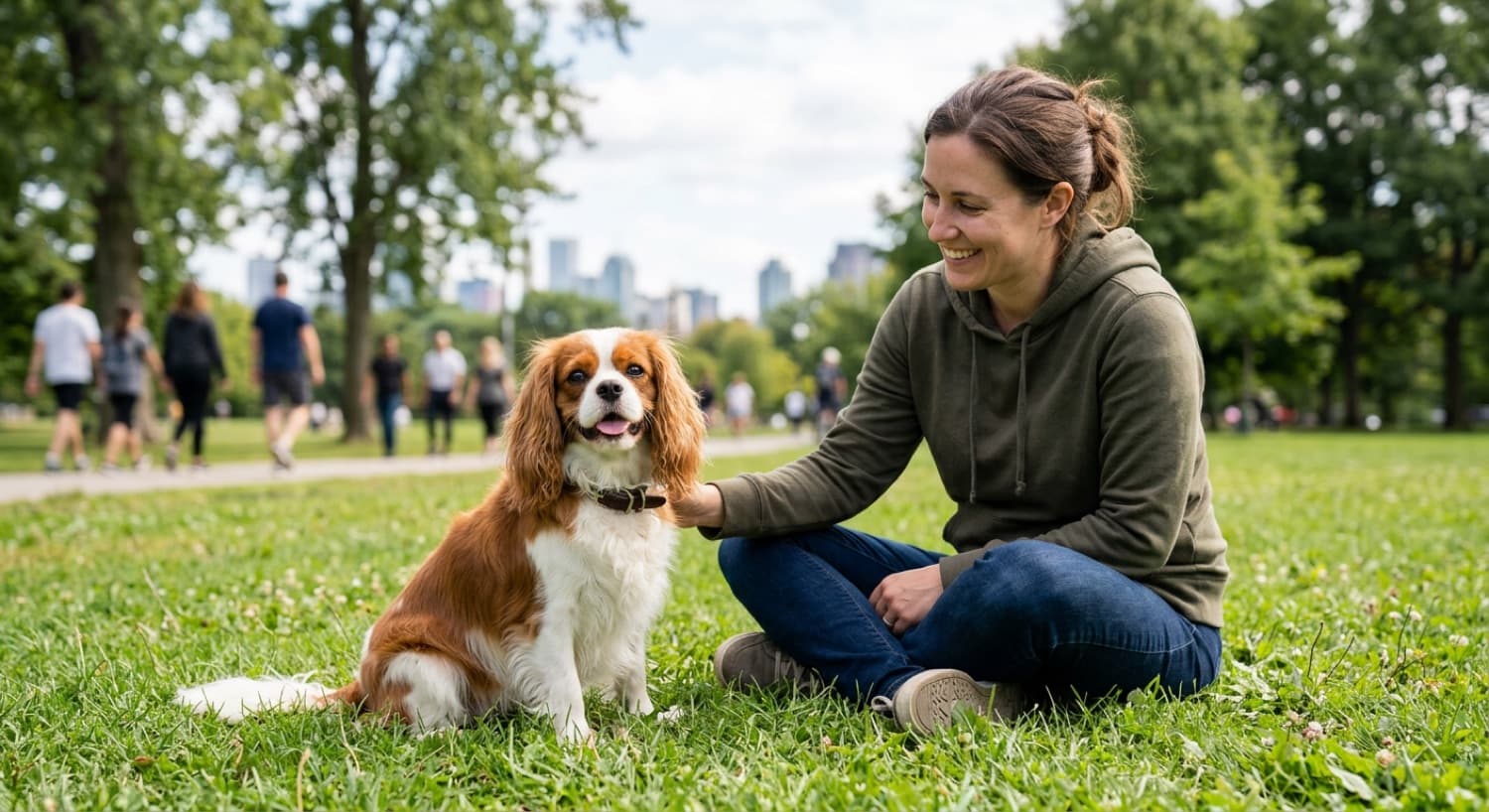
Cavaliers are at the shorter end of small-breed lifespan, with a published median around 9 to 12 years, so senior care begins in earnest around age six to seven. The trade-off for adopting an older Cavalier is shorter overall companionship in exchange for a calm, deeply bonded dog who fits Edmonton apartment life beautifully. Many Edmonton rescue volunteers will tell you senior Cavalier adoptions are among the most rewarding placements they see, particularly because the breed is so people-oriented that the dog often bonds immediately with a new attentive home.
Reasonable senior-care adjustments, all guided by your Edmonton vet:
- Biannual vet exams instead of annual
- Full annual senior bloodwork including renal and liver enzymes and urinalysis
- Cardiology recheck cadence dictated by MVD stage (stage B1 annual, stage B2 every 6 months, stage C every 3 to 6 months)
- Annual chest X-rays once at stage B2 or beyond
- Annual ophthalmology check (dry eye, cataracts, and corneal conditions all progress through senior years)
- Routine dental care with cardiac-aware anaesthesia planning if MVD is staged
- Joint support (glucosamine, chondroitin, omega-3) and prescription anti-inflammatories during arthritis flares
- Tight weight monitoring (overweight Cavaliers do worse on every front, especially the cardiac trajectory)
- Increased lump monitoring (mast cell tumours, lipomas, and other neoplasia all increase in frequency from middle age)
- Mobility aids if needed: orthopaedic bed, traction rugs on hardwood, ramps for couches and beds, no jumping from height
- Climate comfort: a warm bed and sweater for Edmonton winter, a cool refuge for summer
Some senior Cavaliers develop canine cognitive dysfunction with disorientation, anxiety, or sleep changes. Your vet can advise on management options ranging from environmental adjustments to prescription medications.
Pet insurance becomes harder and more expensive to obtain for first-time enrolment past age eight, and some providers will not enrol senior Cavaliers at all (particularly those with documented cardiac findings). If you adopt a senior Cavalier, price-compare carefully and consider whether a dedicated savings account makes more sense than insurance. Talk through the math with your vet at the first visit, and discuss honest quality-of-life conversations early; for many senior Cavaliers, the choice is calm comfortable years on well-managed medication rather than aggressive intervention.
Frequently asked questions
Where can I find a cardiologist for a Cavalier near me in Edmonton?
Start with your general-practice Edmonton vet, who refers to local board-certified veterinary cardiologists for echocardiogram and routine Mitral Valve Disease staging. Edmonton has cardiology coverage adequate for most Cavalier cardiac monitoring; the network is smaller than Calgary's. For complex cases (advanced congestive heart failure management, pacemaker placement, or mitral valve repair surgery if pursued), some Edmonton Cavalier owners drive to Calgary specialty centres or route to the Western College of Veterinary Medicine in Saskatoon. Establish a primary vet in month one, ask which cardiologist they refer Cavaliers to, and budget for annual cardiac monitoring once a murmur is detected. The American College of Veterinary Internal Medicine Cardiology specialty board credentials these specialists.
What are the main Cavalier King Charles Spaniel health issues?
Cavaliers are dual-defined by two conditions that affect most of the breed. Mitral Valve Disease (MVD or MMVD) is a progressive heart valve degeneration: roughly half of Cavaliers have a murmur by age 5, and most reach an asymptomatic murmur by age 10. Syringomyelia and Chiari-like malformation are skull and spinal cord conditions that produce neck pain, phantom scratching, and yelping; published Cavalier MRI studies report that most of the breed has Chiari-like malformation visible on imaging and roughly half develop syringomyelia signs. Beyond those two, plan for episodic falling syndrome, dry eye (keratoconjunctivitis sicca), corneal dystrophy, primary secretory otitis media (PSOM or glue ear), patellar luxation, hip dysplasia, and the mild brachycephalic profile of the breed. Week-one pet insurance enrolment is essentially mandatory.
What is Mitral Valve Disease in Cavaliers?
MVD is the progressive degeneration of the mitral valve, the valve between the left atrium and the left ventricle. The valve thickens and leaks, the left atrium dilates to compensate, and eventually the heart progresses to congestive heart failure. In Cavaliers the condition starts unusually early and progresses faster than in other small breeds. The American College of Veterinary Internal Medicine uses a four-stage classification (A through D, with B subdivided into B1 and B2) that drives treatment decisions. Stage A: at risk, no murmur. Stage B1: murmur present, heart still normal on echo. Stage B2: murmur with measurable heart enlargement on echo; this is when pimobendan starts. Stage C: clinical heart failure controlled with medication. Stage D: refractory heart failure. Most Cavaliers reach stage B at some point, many reach stage B2, and a significant portion reach stage C in their later years.
How is MVD monitored in Cavaliers?
Annual cardiac auscultation from your Edmonton vet is the baseline for all Cavaliers. Once a murmur is detected (commonly between ages 4 and 8 but possible earlier), the standard is referral to a board-certified veterinary cardiologist for echocardiogram to stage the disease and decide when to start medication. Edmonton echocardiogram with cardiologist interpretation runs $600 to $1,000. After the baseline echo, the recheck cadence depends on stage: stage B1 typically gets annual recheck, stage B2 every 6 months, stage C every 3 to 6 months. The pivotal EPIC trial showed that starting pimobendan at stage B2 (asymptomatic but with measurable heart enlargement) delays the onset of clinical heart failure. This is the central reason staging matters: the timing of medication start changes the trajectory.
What is syringomyelia in Cavaliers?
Syringomyelia is a neurological condition where fluid-filled cavities (syrinxes) form within the spinal cord. In Cavaliers it almost always coexists with Chiari-like malformation: the skull is too small for the brain, the back of the brain herniates into the foramen magnum, cerebrospinal fluid dynamics are disrupted, and the pressure produces syrinxes in the cervical spinal cord. Most affected Cavaliers show signs between 1 and 4 years of age. Symptoms include phantom scratching (the dog scratches at the air near the neck or shoulder while walking, often without the foot making contact), neck pain or sensitivity, yelping when picked up or when the head moves a certain way, reluctance to lower the head to drink, and head shyness. Severe cases progress to ataxia or partial paralysis. Published Cavalier MRI studies suggest most of the breed has Chiari-like malformation visible on imaging; roughly half develop clinical signs.
How is syringomyelia diagnosed and treated?
Definitive diagnosis requires MRI of the skull and cervical spine at a specialty practice. Edmonton MRI for a Cavalier neurological workup runs $2,500 to $4,500 including specialist interpretation. Treatment is staged by severity. Mild cases: gabapentin for nerve pain, gradual environmental adjustments (raised food and water bowls, harness instead of collar, soft bedding, avoiding head-down activities). Moderate cases add omeprazole (which reduces cerebrospinal fluid production) and sometimes anti-inflammatory steroids during flares. Severe cases that fail medical management are candidates for foramen magnum decompression surgery at a specialty neurology practice, typically $7,000 to $12,000 and only available at a small number of Canadian and US specialty centres. Outcome depends heavily on severity at the time of intervention. Many mild to moderate cases live well for years on medical management. The American College of Veterinary Internal Medicine Neurology specialty board credentials veterinary neurologists.
What is episodic falling syndrome in Cavaliers?
Episodic falling syndrome is a Cavalier-specific paroxysmal movement disorder caused by an inherited recessive genetic mutation. Affected dogs experience episodes triggered by exercise, excitement, or stress: the muscles become rigid, the gait becomes hopping or bunny-like, the dog may fall over and freeze with extended limbs, then recover within seconds to minutes with no loss of consciousness and no post-episode confusion. The condition is often misdiagnosed as epilepsy or behaviour, but the pattern (triggered, brief, fully alert throughout, normal between episodes) distinguishes it. A DNA test is available and costs $80 to $150. Most affected Cavaliers live normal lives with management: avoid known triggers, keep exercise moderate and at cool times of day, and consider clonazepam or acetazolamide during severe flares on your vet's direction. The condition does not shorten lifespan.
What is PSOM (glue ear) in Cavaliers?
Primary secretory otitis media, also called glue ear, is a Cavalier-overrepresented middle-ear condition where thick mucus accumulates behind the eardrum, causing pressure, pain, and sometimes neurological signs that mimic syringomyelia. Symptoms include head shyness, scratching at the ears or neck, yelping when the head is touched, head tilt, and reluctance to chew. PSOM is easy to miss because the outer ear canal looks normal; diagnosis requires advanced imaging (MRI or CT) and otoscopic examination under anaesthesia. Treatment is myringotomy (a small incision in the eardrum) to drain the material, often combined with medical management. The condition can recur and may need repeat procedures. PSOM matters most because it is on the differential whenever a Cavalier presents with neurological-looking signs: distinguishing PSOM from syringomyelia changes both the workup and the treatment plan, and the workup typically requires a specialty referral.
What eye conditions affect Cavaliers?
Three eye conditions are notably present in the breed. Dry eye (keratoconjunctivitis sicca, or KCS) reduces tear production and causes chronic conjunctivitis, corneal damage, and discomfort if untreated; diagnosis is by Schirmer tear test ($50 to $100), treatment is lifelong topical cyclosporine plus artificial tears, roughly $40 to $80 per month. Corneal dystrophy produces bilateral white or hazy spots on the cornea, typically not vision-impairing but worth noting. Cataracts can develop, with surgical correction available at specialty practice if vision is affected ($3,500 to $5,500 per eye). Annual ophthalmology check by a board-certified veterinary ophthalmologist is reasonable for any Cavalier from age 3 onward. The American College of Veterinary Ophthalmologists credentials these specialists, and your general-practice Edmonton vet refers when needed.
Should I get pet insurance for an Edmonton rescue Cavalier?
Yes, and enrol in week one. The Cavalier breed-specific insurance math is exceptionally strong because the catastrophic risks are unusually predictable: MVD affects most of the breed, syringomyelia affects roughly half, and the cost trajectory for each is substantial. Every Canadian provider excludes pre-existing conditions and the clock starts the day you adopt. A heart murmur, an abnormal Schirmer test, a mild head tilt, a documented scratching pattern, or any neurological note becomes a permanent exclusion. Monthly premiums for a young healthy Cavalier in Edmonton typically run $50 to $90 depending on deductible and reimbursement percentage. Look for explicit hereditary and congenital coverage, annual caps of $20,000 or more (combined cardiac and neurological management can exceed lower caps), coverage of diagnostic imaging including MRI, and reasonable wait times for cardiac and neurological coverage.
What is the typical lifespan of a Cavalier?
Cavalier lifespan is shorter than most small breeds, with median lifespan published in breed-health surveys around 9 to 12 years (versus 13 to 16 years for many comparable small breeds). The shortened lifespan is driven primarily by MVD progression to clinical heart failure in middle to old age, with a smaller contribution from neurological disease and other inherited conditions. Cavaliers in well-managed homes with weekly weight checks, annual cardiac monitoring, prompt response to early MVD changes, and quality preventive care tend toward the upper end of that range. Knowing the realistic ceiling at adoption helps families plan financially and emotionally for the breed.
Related Edmonton Cavalier guides
Edmonton Adoptable Dogs
Current Edmonton-area Cavalier and Cavalier-mix listings from EHS, Zoe's, SCARS, GEARS, Hope Lives Here, AHHRB, and AARCS Edmonton fosters.
Cavalier Adoption Edmonton
Rescue sources, real adoption costs, breed-specific rescue verification, surrender patterns, and the breed-vs-buy reframe for Edmonton adopters.
Cavalier MVD Management Edmonton
Daily MVD disease management for Edmonton Cavalier owners: ACVIM staging deep dive, medication regimens, exercise modifications, monitoring at home, and end-of-life planning.
Cavalier Winter Care Edmonton
Edmonton winter playbook for a thin-coated companion breed: temperature thresholds, coat and bootie protocol, short-outing strategy, indoor exercise, and cardiac-aware cold weather planning.
Find your Edmonton rescue Cavalier
Browse current Edmonton-area Cavalier and Cavalier-mix listings. Foster temperament notes help you flag any documented cardiac, neurological, or eye history before you apply, and your first-month vet workup builds the cardiac and neurological baseline.
Browse All Edmonton Dogs →New dog? Start with these care guides
Everything a new adopter needs to set up a safe, happy home.