The short answer
Corgis are a chondrodysplastic (dwarf) breed, so the long back on short legs makes intervertebral disc disease (IVDD) the defining health concern: a herniated disc can cause severe pain or paralysis, and surgery with MRI can run $6,000 to $10,000 or more. Degenerative myelopathy (a progressive, painless spinal-cord disease that Pembroke Welsh Corgis are overrepresented for, with an SOD1 genetic test available), hip dysplasia, progressive retinal atrophy, and von Willebrand disease round out the breed picture. Above all, obesity multiplies every spinal and joint risk, so keeping a Corgi lean is the most important thing you do. Enrol in pet insurance week one: every Canadian provider excludes pre-existing conditions, and one disc surgery makes the case on its own.
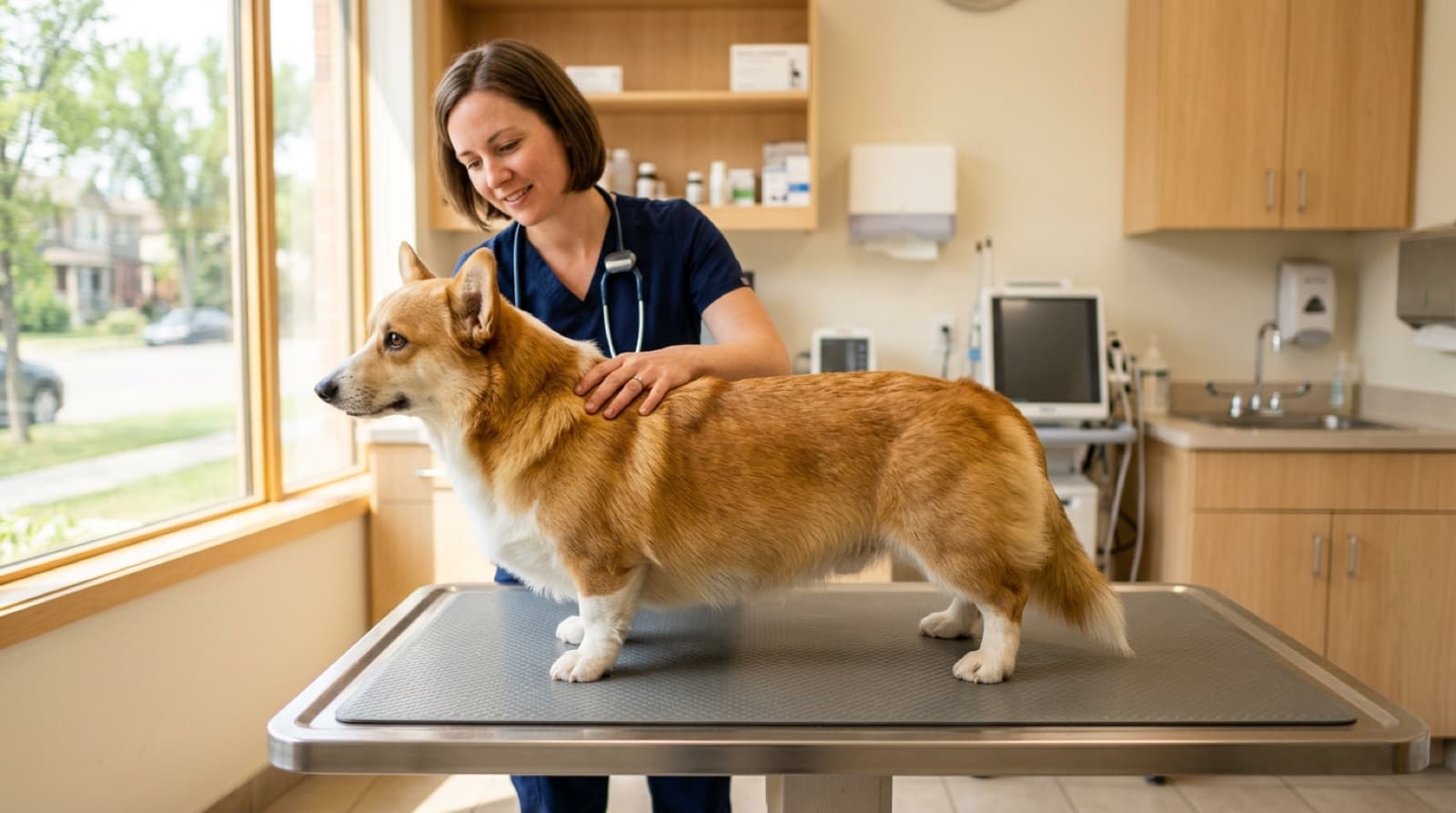
The Corgi breed health picture, briefly
The Corgi (both the Pembroke Welsh and the Cardigan Welsh) is a chondrodysplastic breed, which is the polite term for a deliberate dwarfism: a normal-length spine carried on short, slightly bowed legs. That single design fact drives most of the breed-specific health picture, because the long back is mechanically vulnerable in ways a square-built dog's is not. Lifespan is good, commonly 12 to 15 years, so the goal is protecting that long, low frame across a long life.
The Corgi prioritisation list is led by the spine. Intervertebral disc disease (IVDD) is the breed-defining concern (covered at depth below). Degenerative myelopathy is the other major spinal condition, progressive and painless, with Pembrokes overrepresented and an SOD1 genetic test available. Hip dysplasia appears even in this small dwarf breed. Eye disease, principally progressive retinal atrophy, has a genetic test. Von Willebrand disease is an inherited bleeding disorder that matters most before surgery. Epilepsy, hypothyroidism, and urinary stones appear at lower rates. And weaving through all of it is obesity, which is not a disease so much as a multiplier that makes every spinal and joint problem more likely and more severe.
The other reality every Edmonton Corgi owner should internalise: weight control and back protection are daily habits, not occasional concerns, and pet insurance enrolled in week one is the financial backstop. The breed's headline risk, a herniated disc needing surgery, is exactly the kind of sudden five-figure event insurance exists for. The American Animal Hospital Association publishes general pet-insurance and weight-management guidance that applies to Canadian owners.
Intervertebral disc disease (IVDD): the breed-defining concern
IVDD is the spinal reality that defines Corgi ownership. The cushioning discs between the vertebrae degenerate and can herniate, pressing on the spinal cord. In chondrodystrophic breeds like the Corgi, the disc material tends to calcify and harden early in life, which makes a sudden, forceful herniation (Hansen Type I) more likely than the slow bulging seen in other dogs. The long back simply gives more discs the chance to fail and more leverage when they do.
What an episode looks like
Signs range from mild to emergency. A mild episode shows as back pain: reluctance to move, a hunched posture, yelping when picked up, shivering, or unwillingness to jump or climb stairs the dog used to manage. A severe episode shows neurological deficits: wobbliness, dragging or knuckling a back paw, weakness, or full hind-limb paralysis with loss of the ability to urinate. The single most important thing to know is that loss of motor function or loss of deep pain sensation is a true surgical emergency where the window to preserve function is measured in hours, not days. If your Corgi suddenly cannot use its back legs, that is an immediate emergency-vet trip, not a wait-and-see.
Diagnosis and treatment
Your general-practice Edmonton vet assesses the neurological grade and manages pain, and refers to a neurologist or surgeon when deficits are present. Advanced imaging (MRI, sometimes CT) localises the herniation; Edmonton-area MRI runs roughly $1,800 to $3,000, and some owners travel to Calgary specialty centres or the WCVM in Saskatoon for imaging and surgery. Treatment splits two ways:
- Conservative (medical) management: for pain-only or mild cases, strict crate rest for several weeks plus pain relief and anti-inflammatories under vet guidance. The crate rest is non-negotiable and harder than it sounds; cutting it short is a common cause of relapse.
- Surgical decompression: for dogs with significant or worsening neurological deficits, surgery (commonly a hemilaminectomy) removes the herniated material pressing on the cord. With MRI, surgery, and aftercare at a specialty practice, total cost commonly runs $6,000 to $10,000 or more. Outcomes are often very good when surgery happens promptly, especially while the dog still has deep pain sensation.
Recovery from either path includes rehabilitation, and many Corgis go on to live full lives. But disc disease can recur at other sites, which is why the prevention habits (weight, ramps, no jumping, good traction) matter for the rest of the dog's life, not just after an episode. The American College of Veterinary Internal Medicine credentials the neurologists who manage these cases.
Degenerative myelopathy (DM) and the SOD1 test
Degenerative myelopathy is the other major spinal condition in the breed, and Pembroke Welsh Corgis are among the breeds overrepresented for it. It is a progressive degeneration of the spinal cord, usually beginning in older dogs (often eight and up), and the crucial feature that distinguishes it from a disc problem is that it is painless. It starts subtly: hind-end weakness and wobbliness, the back paws scuffing or knuckling over, worn toenails on the back feet, a gradual loss of coordination that ascends up the body over months.
A genetic test for the SOD1 mutation classifies a dog as clear, a carrier, or at risk. An at-risk result does not mean the dog will certainly develop DM, but it raises the likelihood and, just as usefully, gives your vet context if hind-end decline shows up years later. Because DM is painless and IVDD, arthritis, and hip disease are not, the test plus a proper veterinary workup helps tell treatable problems apart from this one.
There is currently no cure for DM, but it is not a reason to despair over a diagnosis. Physical rehabilitation slows functional decline, harnesses and wheeled carts restore mobility, and good nursing care (managing the skin, bladder, and footing) preserves a good quality of life for a long time. Any older Corgi developing progressive hind-end problems deserves a full vet assessment rather than an assumption, precisely because several of the alternatives are treatable.
Browse adoptable Edmonton Corgis
Current Edmonton Corgi and Corgi-mix listings from SCARS, Zoe's, EHS, GEARS, Hope Lives Here, AHHRB, and AARCS Edmonton fosters. Foster notes flag any documented back, hip, or eye history. Plan a first-month vet workup that sets a body-condition target, builds the back-protection routine, and discusses genetic testing.
See Available Corgis →Hips, eyes, and the bleeding disorder
Hip dysplasia
It surprises people that a small dog gets hip dysplasia, but the dwarf conformation and the breed's history make it relevant. Hip dysplasia is a malformation of the hip joint that leads to arthritis, stiffness, and pain over time. It is managed, not cured: weight control (again the central lever), appropriate exercise, joint support such as omega-3 and prescription anti-inflammatories during flares, and in severe cases surgical options. The Orthopedic Foundation for Animals maintains the hip-grading schemes vets use; radiographs at an Edmonton clinic run roughly $300 to $600.
Eye disease
Progressive retinal atrophy (PRA) is the main inherited eye concern, a gradual degeneration of the retina that leads to vision loss and eventually blindness. It is painless and not treatable, but dogs adapt remarkably well to gradual sight loss in a familiar home. A DNA test exists for the common Corgi form, and a board-certified veterinary ophthalmologist (credentialed through the American College of Veterinary Ophthalmologists) can examine the eyes directly. Cataracts and other lens changes also appear in the breed. Any Corgi showing night-vision trouble, bumping into things, or cloudy eyes deserves an eye exam.
Von Willebrand disease
Von Willebrand disease is an inherited disorder that impairs normal blood clotting, and it is documented in the breed. Most of the time it is silent; it becomes important around injury or, critically, surgery, where impaired clotting raises the bleeding risk. A DNA test identifies affected and carrier dogs, and knowing the status before a planned procedure (including spay or neuter) lets the surgical team prepare. For a rescue Corgi of unknown background, this is one of the genetic results most worth having on file before any anaesthetic event.
Obesity: the multiplier that defines daily care
If there is one number an Edmonton Corgi owner should obsess over, it is the dog's weight. Corgis are food-obsessed, persuasive beggars, and built on a frame where every extra pound does outsized damage. Excess weight directly worsens the risk and severity of IVDD, hip dysplasia, and arthritis, and adds metabolic and cardiac strain on top. Studies of dogs in general consistently link leanness to longer, healthier lives, and for a long-backed breed the spinal stakes are higher still.
The practical trap is that the thick double coat hides the body, so owners routinely do not realise their Corgi has crept overweight until the vet points it out. The fixes are unglamorous and effective: ask your vet for a target body condition score and how to assess it by feel, measure meals with an actual cup or scale rather than eyeballing, count treats inside the daily calorie budget (training treats can be the dog's own kibble), skip the table scraps, and weigh the dog on a schedule. In Edmonton, winter is the danger season, when deep cold cuts activity while the appetite does not.
None of this is about appearance. A lean Corgi is a back-protecting, joint-sparing, longevity decision, and it is the single most protective thing within your daily control. If you take one thing from this guide, make it this.
Other concerns and the anaesthesia note
A few conditions appear at lower rates and are worth knowing without alarm. Epilepsy (recurrent seizures) occurs in some lines and is usually well managed with medication once a vet has worked up the cause. Hypothyroidism (an underactive thyroid) shows up as weight gain, coat changes, and lethargy, is easy to diagnose with bloodwork, and is inexpensive to treat. Urinary stones occur in some Corgis and present as straining, frequent urination, or blood; they need prompt veterinary attention because a blockage is an emergency.
On anaesthesia, Corgis are not brachycephalic and generally handle sedation and anaesthesia normally, which is a relief compared with flat-faced breeds. The one breed-specific flag is the von Willebrand bleeding-disorder status: knowing it before any planned surgery lets the team prepare. As always, share any known history with your vet, and for a rescue dog of unknown background, a thorough first-month exam establishes the baseline the rest of the dog's care builds on.

The first-month Edmonton vet workup
A rescue adoption fee typically covers the basics: spay or neuter, core vaccines, deworming, a microchip, and treatment of any acute issue found at intake. What it usually does not cover, and what you should plan to build, is the breed-specific baseline that makes the next decade easier to manage.
Plan a first-month visit with your chosen Edmonton vet that establishes the Corgi baseline:
- An honest body-condition assessment and a target weight, with a feeding plan in measured amounts
- An orthopaedic and spinal exam, and a conversation about back-protection habits (ramps, no jumping, traction, safe lifting)
- A baseline eye check, with referral to a veterinary ophthalmologist if anything looks off
- A discussion of genetic testing (SOD1 for DM, PRA, and von Willebrand), and which results are worth having on file
- Baseline thyroid testing where age-appropriate, and adult bloodwork
- A frank talk about pet insurance and the IVDD-driven case for enrolling now
- An after-hours emergency plan, so you know where to go fast if a disc ever goes
For senior Corgis (roughly nine and up), the first-month workup is more involved: full senior bloodwork and urinalysis, thyroid panel, a careful neurological exam to baseline any early hind-end changes, an eye exam, dental evaluation, and a thorough joint and spine assessment. Budget $500 to $1,200 for a senior intake workup at an Edmonton clinic, and bring any vet notes the rescue can share.
Senior Corgi health
Corgis are long-lived for a dog, commonly reaching 12 to 15 years, so the senior years are a real and rewarding chapter. The trade-off for adopting an older Corgi is fewer total years in exchange for a calmer, often already-trained dog past the busy herding-breed adolescence. Many Edmonton rescue volunteers will tell you senior Corgi placements are some of the most satisfying they see.
Reasonable senior-care adjustments, all guided by your Edmonton vet:
- Biannual vet exams instead of annual, with full senior bloodwork and urinalysis
- Close attention to any hind-end weakness, scuffing, or coordination change, which can signal DM, IVDD, or arthritis and needs a vet to tell apart
- Tight weight monitoring (an overweight senior Corgi does worse on every front)
- Joint support and prescription anti-inflammatories during arthritis flares, on vet advice
- Mobility aids as needed: orthopaedic bed, traction runners on hardwood, ramps for furniture and the car, and a supportive harness
- Annual eye checks as PRA and cataract risk progress
- Routine dental care, including professional cleanings as advised
- Climate comfort: reasonable for Edmonton winter given the double coat, but watch footing and winter weight gain
Pet insurance is harder and pricier to obtain for first-time enrolment in a senior dog, and some providers will not cover pre-existing back or eye findings. If you adopt a senior Corgi, price-compare carefully and weigh a dedicated savings account against a policy. Talk the math through with your vet at the first visit.
Frequently asked questions
Where can I find a vet for Corgi back surgery (IVDD) near me in Edmonton?
Start with your general-practice Edmonton vet, who diagnoses the acute back episode, manages pain, and refers to a board-certified veterinary neurologist or surgeon when there are neurological deficits. IVDD with loss of motor function or deep pain is a surgical emergency where hours matter, so know your pathway before you need it. Edmonton has a smaller neurology and advanced-imaging network than Calgary; some Edmonton Corgi owners travel to Calgary specialty centres or to the Western College of Veterinary Medicine (WCVM) in Saskatoon for MRI and spinal surgery. Establish a primary vet in month one, ask which neurology service they refer disc dogs to, and keep an after-hours emergency plan on the fridge. The American College of Veterinary Internal Medicine credentials the neurology specialty board.
What are the main Corgi health issues to know before adopting?
Corgis are a chondrodysplastic (dwarf) breed: a long spine on short, slightly bowed legs, which shapes the whole health picture. In rough order of practical importance: intervertebral disc disease (IVDD, the breed-defining spinal concern, with herniation risk that can cause pain or paralysis); degenerative myelopathy (DM, a progressive adult-onset spinal cord disease that Pembroke Welsh Corgis are overrepresented for, with an SOD1 genetic test available); hip dysplasia (present even in a small dwarf breed); progressive retinal atrophy and other eye disease (a DNA test exists); von Willebrand disease (an inherited bleeding disorder that matters before any surgery); obesity (the single biggest day-to-day risk because it multiplies the spinal and joint load); plus epilepsy, hypothyroidism, and urinary stones at lower rates. Weight control is the most protective thing an owner does, and week-one pet insurance is strongly worth it because a single IVDD surgery can run five figures.
What is degenerative myelopathy (DM) in Corgis?
Degenerative myelopathy is a progressive, non-painful disease of the spinal cord that Pembroke Welsh Corgis are among the overrepresented breeds for. It typically begins in older dogs (often eight and up) with hind-end weakness and wobbliness, scuffing or knuckling of the back paws, and a gradual loss of coordination that ascends over months. It is painless, which helps distinguish it from a disc problem, but it is currently incurable and eventually robs the dog of hind-limb function. A genetic test for the SOD1 mutation identifies dogs that are clear, carriers, or at risk; an at-risk result does not guarantee the dog develops DM, but it raises the likelihood and helps your vet interpret later symptoms. There is no cure, but physical rehabilitation, harnesses and carts, and attentive nursing care preserve quality of life for a long time. Any older Corgi with progressive hind-end decline needs a vet workup, because the differential includes IVDD, arthritis, and other treatable conditions.
How do I protect a Corgi's back and lower IVDD risk?
Three levers matter most, and the first is weight. A lean Corgi carries far less load through its long spine than an overweight one, so keeping the dog trim is the single most protective thing you do. Second is limiting the high-impact spinal movements that a long-backed dog is built poorly for: discourage repeated stair use, jumping on and off furniture and in and out of vehicles, and rough twisting play. Ramps or steps for the couch and car, baby gates at staircases, and a no-jumping rule are cheap insurance. Third is supporting the body correctly: pick a Corgi up with one hand under the chest and one under the hindquarters so the spine stays level, never by the front legs or in a way that lets the back dangle. Good traction on slippery floors (runners and rugs) and sensible exercise that builds core support without high impact round it out. None of this guarantees you avoid IVDD, which has a strong genetic and chondrodystrophic component, but it meaningfully lowers the risk and the severity.
Why is obesity such a big deal for Corgis specifically?
Corgis are intensely food-motivated, easily overfed, and built on a long spine carried by short legs, which makes excess weight unusually damaging for the breed. Every extra pound increases the load and leverage through the back and joints, worsening the risk and severity of intervertebral disc disease, hip dysplasia, and arthritis, and adding strain to the heart and metabolism. The hard truth most new Corgi owners hear from their vet is that their dog is heavier than it should be, often without realising it, because the fluffy coat hides the body condition. Work with your Edmonton vet to set a target body condition score, measure meals rather than free-feeding, account for treats in the daily total, and weigh the dog regularly. Keeping a Corgi lean is not cosmetic. It is the most important long-term health decision you make for the breed.
Should I get pet insurance for an Edmonton rescue Corgi?
Yes, and enrol in week one. The Corgi case rests largely on one number: a single intervertebral disc disease surgery with MRI and aftercare at a specialty practice can run roughly $6,000 to $10,000 or more, and disc episodes can recur. Add the potential for hip management, eye care, and the bleeding-disorder consideration before any surgery, and the math favours insurance for most owners. Every Canadian provider excludes pre-existing conditions, and the clock starts the day you adopt, so a back episode, a heart murmur, or a documented lump before enrolment becomes a permanent exclusion. Monthly premiums for a young healthy Corgi in Edmonton are typically moderate (smaller breeds usually cost less to insure than giant breeds), and the policy pays for itself the first time a disc goes. Look for explicit hereditary and congenital coverage, a reasonable annual cap, and acceptable wait times. If you would struggle to fund a sudden five-figure spinal surgery out of pocket, insurance is the responsible call.
Do Corgis need genetic testing?
It is worth knowing the status for a few breed-relevant conditions, and many reputable sources publish DNA panels covering them: the SOD1 mutation linked to degenerative myelopathy, progressive retinal atrophy, and von Willebrand disease are the headline ones for Corgis. For a rescue Corgi of unknown background, a breed DNA panel in the first months is reasonable and inexpensive relative to the value of the information. A result does not change the dog you love, but it helps your vet interpret future symptoms (an at-risk DM result reframes later hind-end weakness, for example) and flags the von Willebrand status before any planned surgery so the surgical team can prepare. Discuss which tests are worthwhile with your Edmonton vet, who can recommend a reputable veterinary genetics laboratory.
Do Corgis handle Edmonton winter?
Better than most short-coated breeds, with a couple of caveats. Corgis are a double-coated herding breed bred for outdoor work, so they tolerate cold reasonably well and many enjoy snow. The breed-specific issues are about the body, not the coat. Their low ground clearance means the belly and undercarriage sit close to cold, salted, icy ground, so watch for salt irritation between the toes and on the belly, rinse paws after walks, and consider booties on heavily salted paths. Icy footing is a genuine concern for a long-backed dog because a slip or a hard landing can stress the spine, so favour good traction and avoid letting the dog leap on slick surfaces. Keep winter weight in check, since reduced activity in deep cold plus a food-motivated Corgi is a recipe for winter weight gain that loads the back. Otherwise, a healthy Corgi is well suited to an Edmonton winter.
Related Edmonton Corgi guides
Edmonton Adoptable Dogs
Current Edmonton-area Corgi and Corgi-mix listings from SCARS, Zoe's, EHS, GEARS, Hope Lives Here, AHHRB, and AARCS Edmonton fosters.
Corgi Adoption Edmonton
Rescue sources, real adoption costs, Pembroke vs Cardigan, the mini-Corgi welfare warning, common Corgi mixes, and the shedding and herding reality.
Dachshund IVDD Prevention Edmonton
The other long-backed dwarf breed. The same disc-disease prevention playbook, in depth, applies closely to Corgis.
Spay & Neuter Edmonton
Low-cost clinics, timing, and the von Willebrand consideration to raise with your vet before a Corgi's surgery.
Find your Edmonton rescue Corgi
Browse current Edmonton-area Corgi and Corgi-mix listings. Foster temperament notes help you flag any documented back, hip, or eye history before you apply, and your first-month vet workup sets the weight target and back-protection routine that keep a Corgi sound for life.
Browse All Edmonton Dogs →New dog? Start with these care guides
Everything a new adopter needs to set up a safe, happy home.