The short answer
Adopt from Edmonton rescue ($300 to $700). Corgis appear regularly through SCARS, Edmonton Humane Society, Zoe's Animal Rescue, AHHRB, and AARCS Edmonton fosters but place quickly because of high adopter demand. Pembroke vs Cardigan: separate breeds since 1934. Pembroke is the more famous (Queen Elizabeth II breed), 25 to 30 lbs, no tail; Cardigan is the rarer older breed, 25 to 38 lbs, full long tail, broader colour range including merle. Mini-Corgi and teacup-Corgi listings are welfare red flags (not recognised CKC standards; produced by harmful breeding practices). IVDD risk management is breed-defining (no stairs, no jumping on furniture, use ramps, lean body condition). Substantial year-round shedding plus heavy coat-blow seasons. Common Corgi mixes (Corgador, Horgi, Auggie, Cojack, Corgipoo) appear more frequently and are equally well-suited adoption candidates. 12 to 15 year lifespan.
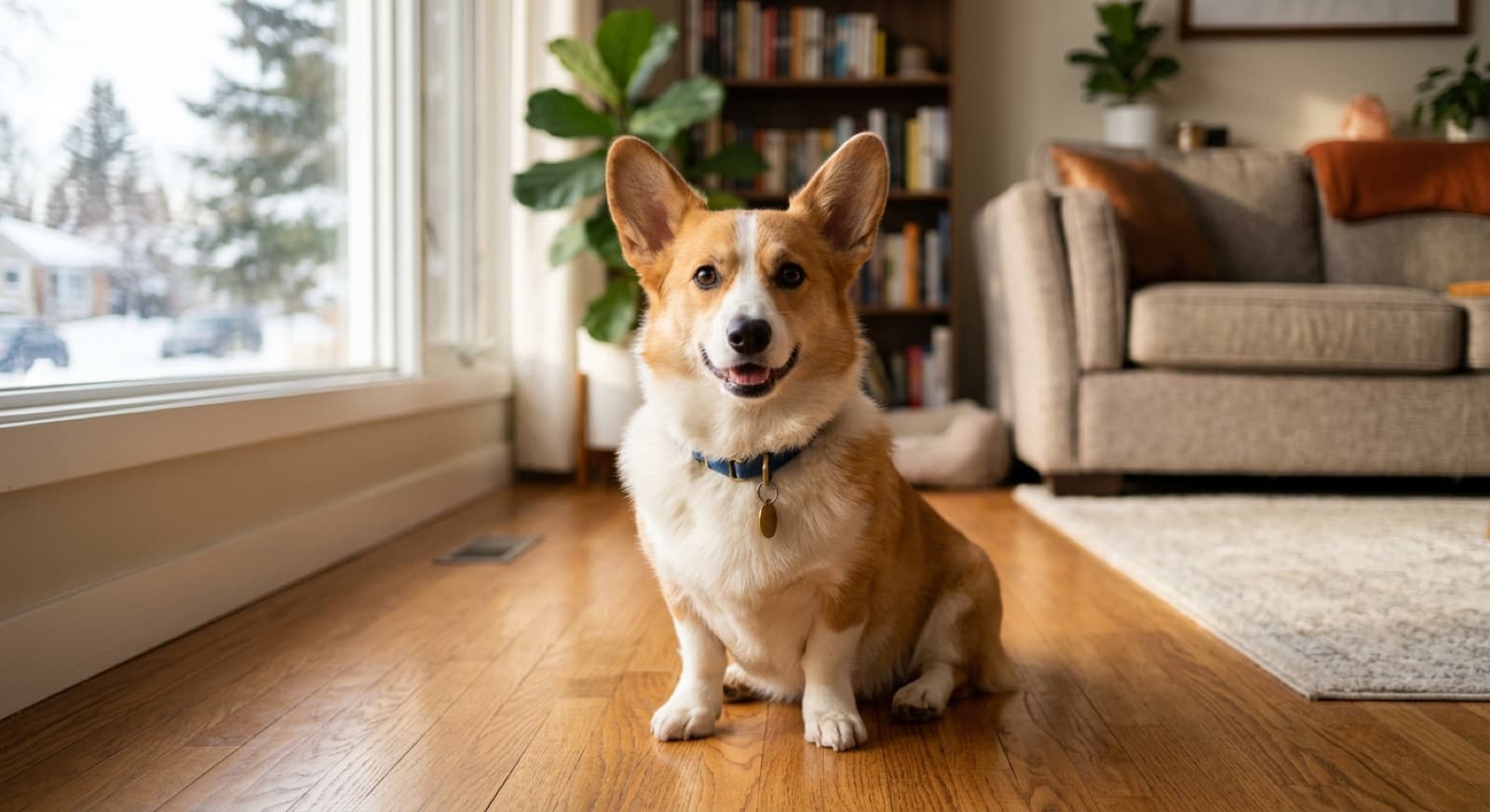
Pembroke vs Cardigan: which is which?
| Feature | Pembroke Welsh Corgi | Cardigan Welsh Corgi |
|---|---|---|
| Adult weight | 25 to 30 lbs | 25 to 38 lbs |
| Tail | No tail or docked short | Full long tail, slight curl |
| Ears | Pointed, stand up | Larger, rounder |
| Coat colours | Red, sable, fawn, black-and-tan + white | All Pembroke colours + brindle + blue merle |
| Origin | Pembrokeshire, Wales | Cardiganshire, Wales (older) |
| Recognised separate | 1934 (Kennel Club split) | 1934 (Kennel Club split) |
| Edmonton rescue availability | More common (Pembroke is the famous one) | Rarer (Cardigan is less numerous overall) |
| Lifespan | 12 to 15 years | 12 to 15 years |
Both breeds share the long-back-short-leg body structure (chondrodystrophic conformation) and the herding-breed temperament. The differences matter for adopter expectations but both are excellent companions.
The mini-Corgi and teacup-Corgi warning
Mini Corgi and teacup Corgi are NOT recognised variations in any CKC, AKC, or international kennel club standard. Listings using these terms are welfare red flags.
The standard Pembroke Welsh Corgi is 25 to 30 lbs; the standard Cardigan is 25 to 38 lbs. “Mini” or “teacup” listings advertise dogs marketed as smaller-than-standard. The breeding practices behind these listings are dangerous:
- Deliberately breeding runts together, which compounds genetic disorders and results in compromised health
- Breeding for the achondroplastic dwarfism gene the breed already carries combined with size reduction, which makes IVDD and skeletal problems WORSE not better
- Some “mini Corgi” listings are actually Corgi-Chihuahua or Corgi-Dachshund crosses marketed as Corgis
Ethical breeders do not produce mini or teacup Corgis. The standard 25 to 30 lb Pembroke is already a smaller-medium dog; the mini or teacup size adds substantial harm with no benefit. The Canadian Kennel Club and American Kennel Club standards are unambiguous on size; any “mini” or “teacup” framing is outside the standard.
Browse adoptable Corgis in Edmonton
Corgis place quickly. Flexibility on mix vs purebred and Pembroke vs Cardigan substantially shortens the wait.
See Available Dogs →IVDD: the breed-defining health risk
IVDD (Intervertebral Disc Disease) is the defining health concern of the long-back-short-leg breeds. The Corgi spine carries the same general elevated IVDD risk as Dachshund and other chondrodystrophic breeds.
Prevention strategy:
- Avoid stairs as much as practical. Use baby gates if you live in a multi-storey home.
- No jumping on or off furniture. Use ramps for couches and beds; train the dog to use them.
- Use a ramp or step stool for vehicle entry. Lifting the dog by the chest (not by the belly or back legs) for transfers.
- Maintain lean body condition. Overweight Corgis stress the spine substantially.
- Provide soft bedding.
- Avoid rough play that involves twisting the spine.
- Use a harness, not a collar with leash attached, for walks.
IVDD symptoms to watch for: sudden reluctance to walk, holding head low, yelping when picked up, weakness or paralysis in hind legs, loss of bladder or bowel control. These are veterinary emergencies; go directly to an Edmonton 24-hour ER vet.
IVDD diagnosis and surgical correction is a specialty veterinary procedure typically referred to Edmonton specialty orthopedic and neurology practices, with complex cases going to WCVM Saskatoon. Pet insurance enrolled at adoption matters because IVDD surgery is one of the higher-cost veterinary surgical procedures and the breed predisposition is well-documented. Talk to your Edmonton vet about IVDD prevention specific to your dog's body condition and lifestyle.
Frequently Asked Questions
Where can I adopt a Corgi in Edmonton?
Corgis appear in Edmonton rescue occasionally but are highly desired and place quickly when listed. SCARS (Second Chance Animal Rescue Society), Edmonton Humane Society, Zoe's Animal Rescue, AHHRB (Alberta Homeward Hound Rescue Bureau), and AARCS Edmonton fosters all see Corgis and Corgi mixes through the year. Corgi-specific rescue networks coordinate placement across Canada when foster homes are available. The breed surged in popularity around 2015 following high-profile royal coverage and remains in high demand, so Edmonton adopters typically wait 2 to 6 months for a Corgi or Corgi mix and longer for purebred Pembroke or Cardigan with documented pedigree. Corgi mixes (Corgador, Horgi, Auggie, Cojack, Corgipoo) appear more frequently than purebreds and are equally well-suited adoption candidates.
What is the difference between Pembroke and Cardigan Welsh Corgi?
Two separate breeds, both originating from Wales but with distinct breeding histories. Pembroke Welsh Corgi is the more famous of the two (the breed associated with Queen Elizabeth II), typically 25 to 30 lbs, no tail or docked short tail, ears stand up, common colours include red, sable, fawn, black-and-tan, all with white markings. Cardigan Welsh Corgi is the older breed, typically 25 to 38 lbs (slightly larger and heavier-boned), full long tail that curls slightly, larger rounder ears, broader colour range including brindle and blue merle. The two breeds were considered variants of one Welsh Corgi until 1934 when the Kennel Club formally split them into separate breeds. Cardigan is rarer in Edmonton rescue than Pembroke. Both share the long-back-short-leg body structure and the herding-breed temperament, with Cardigan slightly more reserved than Pembroke on average.
How much does it cost to adopt a Corgi in Edmonton?
Edmonton rescue adoption fees for Corgis typically run $300 to $700 covering spay/neuter, current vaccinations, microchip, and a baseline vet workup. The fee is well below ethical breeder pricing ($2,000 to $4,000 for a properly health-tested Pembroke or Cardigan puppy from a CKC-registered breeder with parents OFA hip and elbow tested, eye certified, and DM DNA tested). Initial setup costs after adoption: medium-dog harness ($40 to $70), 6-ft leash, slicker brush and undercoat rake ($30 to $60), food bowls, winter coat ($40 to $80 for sub-zero Edmonton walks; the breed has some cold tolerance but benefits from a coat below -15C). Annual ownership cost $1,800 to $2,800: quality food ($400 to $600), routine veterinary care ($400 to $700), pet insurance ($400 to $700), grooming optional (no professional grooming needed for short-coated Pembroke; long-coated "fluffy" Corgis benefit from occasional professional grooming), Edmonton dog licence (confirm current fee with the City of Edmonton), seasonal gear.
Should I worry about "mini Corgi" or "teacup Corgi" listings?
Yes, treat these listings with extreme skepticism. Mini Corgi and teacup Corgi are NOT recognised variations in any CKC, AKC, or international kennel club standard. Standard Pembroke Welsh Corgis are 25 to 30 lbs; standard Cardigans are 25 to 38 lbs. "Mini" or "teacup" listings advertise dogs marketed as smaller-than-standard. The breeding practices behind these listings are dangerous: either deliberately breeding runts together (which compounds genetic disorders, results in compromised health), or breeding for the achondroplastic dwarfism gene the breed already carries combined with size reduction (which makes IVDD and skeletal problems worse, not better). Some "mini Corgi" listings are actually Corgi-Chihuahua or Corgi-Dachshund crosses marketed as Corgis. Ethical breeders do not produce mini or teacup Corgis. Most Edmonton listings using these terms on Kijiji or Facebook Marketplace are either marketing manipulation, scams, or compromised-health dogs. The standard 25 to 30 lb Pembroke is already a smaller-medium dog; the mini/teacup size adds substantial harm with no benefit.
What about Corgi IVDD risk?
IVDD (Intervertebral Disc Disease) is the defining health concern of the long-back-short-leg breeds (Corgi, Dachshund, Basset Hound, similar). The Corgi spine carries the same general elevated IVDD risk as other chondrodystrophic breeds. Prevention strategy: avoid stairs, jumping on or off furniture, and rough play that involves twisting the spine. Use ramps to access furniture and vehicles. Maintain lean body condition (overweight Corgis stress the spine substantially). Provide soft bedding. Watch for IVDD symptoms: sudden reluctance to walk, holding head low, yelping when picked up, weakness or paralysis in hind legs, loss of bladder or bowel control. IVDD diagnosis and surgical correction is a specialty veterinary procedure typically referred to Edmonton specialty orthopedic practices or WCVM Saskatoon. Pet insurance enrolled at adoption matters because IVDD surgery is one of the higher-cost veterinary surgical procedures and the breed predisposition is well-documented. Talk to your Edmonton vet about IVDD prevention specific to your dog's body condition and lifestyle.
Are Corgis good first dogs for Edmonton families?
Yes for households who understand the herding-breed reality. Corgis are generally affectionate, intelligent, trainable, family-oriented, friendly with most children when properly introduced, sociable with other dogs, and adaptable to apartment or house living (compact size, moderate energy in adulthood). Realistic considerations: the breed is a herding dog and the nipping instinct is real (Corgis evolved to nip at the heels of cattle to move them; the same instinct shows up nipping at children, joggers, and other dogs unless redirected through training), shedding is substantial year-round with two heavy coat-blow seasons, exercise needs are moderate to high (60 to 90 minutes daily including mental enrichment), and IVDD risk management is part of breed care. Adult Corgis from Edmonton rescue (3+ years) often skip the most intense puppy phase and arrive with documented temperament; nipping habits may need redirection through force-free training. Edmonton force-free trainers (CCPDT, KPA, IAABC, or Fear Free certified) can help establish redirected herding behaviours within the first 4 weeks of adoption.
How much do Corgis shed?
A lot, year-round, with two heavy coat-blow seasons. The Corgi double coat (dense soft undercoat plus longer guard coat) sheds steadily and substantially. Year-round shedding produces moderate to heavy fur on furniture and clothing. Twice yearly (spring March-April and fall September-October) the Corgi "blows coat" similar to other double-coated breeds; daily brushing during these 2 to 4 week periods is essential to prevent matting and reduce indoor fur accumulation. Weekly brushing year-round (15 to 30 minutes with an undercoat rake plus slicker brush) is baseline. Never shave a Corgi (same rule as Husky, Samoyed, German Shepherd: shaving destroys the temperature-regulating double coat). The breed is NOT hypoallergenic. Edmonton dry winter (5-6 months of furnace-heated indoor air) can flare skin and coat issues; a humidifier helps. Underestimating Corgi shedding is one of the most common reasons the breed is surrendered to rescue.
What are common Corgi mixes in Edmonton rescue?
Corgador (Corgi + Labrador, 30 to 50 lbs, often with longer legs than purebred Corgi, friendly family temperament, common in Edmonton rescue), Horgi or Siborgi (Corgi + Siberian Husky, 30 to 50 lbs, often dramatic coat colouring, high energy, requires more exercise than purebred Corgi), Auggie (Corgi + Australian Shepherd, 25 to 40 lbs, intelligent and herding-oriented, often blue or red merle coat), Cojack (Corgi + Jack Russell Terrier, 15 to 30 lbs, more terrier-influenced temperament, higher energy), Corgipoo (Corgi + Poodle, 12 to 30 lbs depending on Poodle size, low-shedding wavy coat for households with mild dog allergies). All these mixes appear in Edmonton rescue at the same $300 to $700 fee range. Mixed-breed Corgis often have slightly fewer breed-specific health risks (IVDD risk varies depending on body structure of the mix) but inherit risks from both parents. Foster home should disclose coat type, body structure, and behavioural observation during the adoption phone screen.
How do Corgis handle Edmonton winters?
Reasonably well thanks to the double coat, but they benefit from a coat in deep cold. Healthy adult Corgis tolerate -10C to -15C walks for 20 to 30 minutes without a jacket; below -20C wind chill they benefit from a coat or sweater. Booties help on heavily salted Edmonton sidewalks. The short legs mean Corgis are closer to cold pavement than larger breeds; pavement temperature affects them more than tall dogs. Edmonton dry winter (indoor humidity 15-25% from furnace heat) can flare skin and coat issues; a humidifier helps. The breed enjoys snow and most Corgis are enthusiastic about winter play. Structured walks of 20 to 40 minutes plus indoor enrichment is the breed-appropriate winter routine; pure outdoor running in -25C+ wind chill is not appropriate even with a coat. Watch for ice-ball buildup between paw pads after walks; paw balm or booties prevent this.
What are common Corgi health issues to plan for?
The breed lifespan is 12 to 15 years. Breed-specific health concerns: IVDD (Intervertebral Disc Disease, the breed-defining concern as a chondrodystrophic long-back-short-leg breed), hip and elbow dysplasia (both breeds; OFA-tested parents are responsible breeding), degenerative myelopathy (DM DNA testing of parents is critical for ethical breeding), progressive retinal atrophy in some lines, von Willebrand disease in some Cardigan lines, allergies common, obesity tendency (the breed loves food and gains weight easily; lean-body-condition management matters substantially for spine health), patellar luxation in some lines, epilepsy in some lines. Pet insurance enrolled at adoption is valuable; the breed-specific IVDD risk and orthopedic concerns mean potential surgical costs are real. Edmonton specialty orthopedic and neurology referrals available; WCVM Saskatoon handles complex surgical cases.
How long does it take to adopt a Corgi in Edmonton?
Typically 2 to 6 months for a Corgi or Corgi mix; 4 to 12 months for a specifically purebred Pembroke from a reputable Edmonton-area rescue; longer for purebred Cardigan (the rarer of the two breeds). Set up email alerts at multiple rescues (SCARS, Edmonton Humane Society, Zoe's Animal Rescue, AARCS, AHHRB) with broad keywords: Corgi, Corgi mix, Pembroke Welsh Corgi, Cardigan Welsh Corgi, Welsh Corgi, Corgador, Horgi, Auggie, Cojack, Corgipoo. Apply within 24 to 48 hours when a match appears because Corgis place quickly. Adult Corgis (5+ years) often have shorter wait times than puppies because puppy demand is highest. Foster home temperament notes are gold for matching dog to household; ask explicitly about herding nipping observation, IVDD-prevention compatibility (no stairs, ramp tolerance), shedding tolerance, and dog-park behaviour.
Bottom line for Edmonton Corgi adoption?
Corgis are wonderful Edmonton companions for households who accept the breed-specific reality. Affectionate, intelligent, family-oriented, adaptable to apartment or house living, 12 to 15 year lifespan, friendly with most children and other pets when properly introduced. The breed-specific demands that determine fit: substantial year-round shedding plus heavy coat-blow seasons, herding-breed nipping instinct requires force-free training redirection, IVDD risk management means no stairs and no jumping on furniture, moderate-high exercise needs (60 to 90 minutes daily including mental enrichment), obesity tendency requires lean-body-condition management. Adopt from SCARS, Edmonton Humane Society, Zoe's, AHHRB, AARCS Edmonton fosters; $300 to $700 fee covers spay/neuter, vaccines, microchip, baseline workup. Corgi mixes (Corgador, Horgi, Auggie, Cojack, Corgipoo) are equally well-suited adoption candidates with shorter wait times. Treat all mini or teacup Corgi listings as red flags. Pembroke and Cardigan are separate breeds since 1934; both are excellent companions with different physical and temperament profiles.
Adoptable Dogs in Edmonton
Live listings from SCARS, EHS, Zoe's, AHHRB, and AARCS Edmonton fosters.
Dachshund Adoption Edmonton
Another chondrodystrophic breed with similar IVDD risk profile and management approach.
Basset Hound Adoption Edmonton
Long-back breed with similar IVDD considerations and exercise management.
Australian Shepherd Adoption Edmonton
Herding breed cousin; Auggie is a common Corgi + Aussie cross. Similar herding-instinct training.
New dog? Start with these care guides
Everything a new adopter needs to set up a safe, happy home.