The short answer
Edmonton Doberman adoption is a 6 to 12 month project. Local rescue intake is low, working-line drive requires experienced adopters, and a meaningful share of Edmonton condos, landlords, and insurance carriers flag the breed. Edmonton Humane Society sees the most local volume, plus occasional listings at AARCS Edmonton fosters, AHHRB, Zoe's, and SCARS. Fees $400 to $700. Apply to national breed-specific Doberman rescue networks in parallel; confirm condo, landlord, and insurance approval before you apply.

Why Dobermans surrender to Edmonton rescue
Dobermans are not common in Edmonton rescue intake. The breed itself is not a high-volume Alberta breed the way Labradors, Huskies, and Shepherds are, and the people who own Dobermans tend to be more committed to the breed than average. When a Doberman does surrender, three patterns dominate, and understanding them helps an adopter read foster notes more accurately.
The most common pattern is the adolescent reactivity surrender, usually at 12 to 30 months of age. A Doberman raised without consistent structure, early socialisation, and force-free training hits the working-breed adolescent phase and starts showing leash reactivity, resource guarding, barrier frustration at fences or windows, or over-arousal in public spaces. The dog is not broken; the dog is a teenage working breed whose early development missed important pieces. Owners who underestimated the time and structure the breed needs often surrender at this stage. These dogs are highly placeable into the right experienced home, but they are not easy dogs.
The second pattern is the medical surprise surrender. Dobermans carry meaningful breed-prevalent risk for dilated cardiomyopathy, von Willebrand disease, hip dysplasia, and other conditions. When a young adult dog is diagnosed with a serious condition and the family lacks pet insurance or financial cushion, the rescue surrender is sometimes the only path. These dogs come into rescue with a medical history and an active vet plan. The adopter needs to be financially prepared for the ongoing care.
The third pattern is the owner death or owner illness surrender, where a well-adjusted adult Doberman of any age comes into rescue because the family can no longer keep them. These are often the best-prepared rescue Dobermans because they were raised properly and lived stable lives. The foster home gets a settled, well-mannered dog who only needs help grieving the loss of their person. These dogs move quickly through the system.
A small fourth pattern exists: the working-home washout, where a Doberman bought or imported for protection sport or schutzhund training did not have the drive or nerve the handler wanted, and the dog ends up needing a pet home. These dogs are often well-trained, socially well-adjusted, and a real find for an experienced pet adopter who can give them daily mental work.
Edmonton rescues that occasionally list Dobermans
Because Doberman intake is low, no single Edmonton rescue carries a steady inventory of the breed. The realistic search strategy is to monitor all six Edmonton-area rescues that occasionally list Dobermans plus the national breed-specific networks, and be ready to act when the right dog appears.
- Edmonton Humane Society: the highest-volume Edmonton intake source and the most likely place to see a Doberman or Doberman mix in any given month. EHS sees the breed through owner surrender, transfer, and stray intake. The centralised facility means you can meet the dog in person before applying, and the EHS behaviour team produces detailed temperament assessments. EHS does not rush Doberman placements; the screening is more thorough than for many other breeds by design.
- AARCS (Alberta Animal Rescue Crew Society): headquartered in Calgary, with Edmonton-area foster homes. AARCS tags each dog with its current foster location, so Edmonton-foster Dobermans surface on Edmonton listings. AARCS foster temperament write-ups are among the most detailed in the province and are explicit about which dogs suit kid homes, cat homes, and multi-dog households. Doberman intake at AARCS is rare but real.
- Alberta Homeward Hound Rescue Bureau (AHHRB): Edmonton-area foster-based rescue intaking from northern Alberta. AHHRB lists every dog as Mixed Breed on paper as a matter of policy, so Doberman-types are identified by photo and description rather than a breed tag. Worth checking even if a breed search returns nothing, because Doberman crosses are often in their listings under generic descriptions.
- Zoe's Animal Rescue: long-running Edmonton foster-based rescue with rotating intake. Doberman volume is low but real, and Zoe's temperament assessments are thorough. The application emphasises fit and prior breed experience.
- SCARS (Second Chance Animal Rescue Society): the largest northern-Alberta intake rescue. SCARS pulls steadily from northern communities; Dobermans are uncommon in that pipeline but cross-breeds do appear. Lower Doberman volume than EHS, but worth watching.
- GEARS and Hope Lives Here: smaller Edmonton foster-based rescues with limited Doberman intake. Worth following for inventory updates but not the primary search target.
Beyond the local list, national and Western-Canadian breed-specific Doberman rescues are often the more reliable path. These networks exist precisely because Doberman intake at a single shelter is low, and they coordinate transport, foster placement, and adoption across multiple provinces. The application process is more rigorous than at a general-intake shelter, the wait can be months, and transport from another province may be involved, but the matching quality is typically excellent. Search for an active breed-specific rescue with a current adoptable list, a published address or named foster network, public-facing vet references, and a Canada Revenue Agency charitable registry record. Verify the same way you would verify any pet transaction.
The Canadian Kennel Club publishes breed-club listings that include the Doberman Pinscher Club of Canada, which occasionally surfaces rehome referrals for retired show or sport dogs and for adult dogs from ethical breeders whose original homes did not work out. The path is slow, but the dogs are typically well-raised and well-documented. Worth being on the list as a backup channel alongside the rescue applications.
American Doberman vs European Doberman: what an adopter needs to know
The line distinction matters more in breeder conversations than in rescue conversations, but adopters who have read about the breed online often ask about it, so it is worth being clear. Almost all Edmonton rescue Dobermans are American-line or American-European mixes. Pure European working-line dogs are very rare in Alberta rescue because the people who import European dogs are typically experienced handlers with a working purpose for the dog, and those dogs rarely end up in rescue.
The American Doberman has been bred for several decades toward a refined, elegant show-ring structure and a calmer family-companion temperament. The dog is typically 60 to 90 pounds with a lighter bone structure, a more angular head, and a softer overall demeanour. American Dobermans still need experienced owners, structured exercise, and consistent training, but the drive level is more manageable for a committed pet home.
The European Doberman has been bred toward protection sport (IPO and schutzhund) and police-and-military work. The dog is typically 70 to 105 pounds with a heavier bone structure, a blockier head, more muscle mass, and significantly higher drive, nerve, and intensity. European Dobermans need an experienced handler with a genuine job for the dog, daily structured mental work, and ideally protection-sport or scent-work training. They are not pet-home-only dogs.
The practical takeaway for an Edmonton adopter is that the line label matters less than the foster description of the dog in front of you. Most foster temperament write-ups will describe the dog in plain language: how the dog handles strangers at the door, how the dog walks on leash, how the dog responds to other dogs, how the dog plays, how the dog settles in the house, what kind of exercise the dog wants. That description is more useful than any line label. Ask the foster directly about drive, nerve, recovery from stress, and prior training. Match the dog you are reading about, not the breed concept you are reading about.
Mixes are common in Edmonton rescue. Doberman-Lab crosses tend to soften the protectiveness with Lab easygoingness; Doberman-Shepherd crosses combine two working breeds and want a job; Doberman-Rottweiler crosses (sometimes called the Doberman Rottie informally) produce large guardian-type dogs that need experienced handling; Doberman-Pit crosses combine two muscular athletic breeds and tend to be intense and loyal. None of these mix labels is precise; they are foster best-guesses based on appearance and behaviour. Read the temperament notes.
What an Edmonton rescue Doberman actually costs
Edmonton rescue adoption fees for Dobermans generally land between $400 and $700. The fee is a recovery on costs the rescue has already incurred, not a sale price. A typical Doberman adoption fee covers:
- Spay or neuter surgery. Standalone, this is $400 to $700 at an Edmonton vet clinic for a large-breed dog.
- Core vaccinations. DAPP and rabies at minimum. Bordetella is often included if the dog has been boarded.
- Microchip implant and registration. Required by City of Edmonton bylaw for licensed dogs.
- Deworming and flea and tick treatment. Standard intake processing.
- Cardiac auscultation. Given the breed's dilated cardiomyopathy risk, many rescues include a baseline cardiac listen from the intake vet. A full echocardiogram and Holter monitor workup adds $300 to $600 if the auscultation flags concern.
- Basic vet workup. Physical exam, dental check, assessment of any chronic conditions, and a behaviour assessment from the foster home.
Stacked at retail Edmonton vet pricing, those services cost $1,200 to $1,900 for a large-breed rescue intake, not including the cardiac workup. The rescue fee is a partial recovery. Senior Dobermans (around seven years and up) often have reduced fees of $200 to $400 because the rescue prioritises placement and senior dogs of any breed are harder to home.
Beyond the fee, plan on ongoing Doberman costs of $2,800 to $4,500 per year for a healthy adult. Food costs more than for a medium dog (Dobermans eat 3 to 5 cups of quality kibble daily). A proper orthopaedic bed matters from puppyhood given the breed's lean build. Pet insurance for a young healthy Doberman in Edmonton typically runs $80 to $140 per month, and is genuinely worth the math given dilated cardiomyopathy risk, hip dysplasia risk, and gastric dilatation-volvulus (bloat) risk. Enrol in week one before any condition becomes pre-existing.
For comparison, a Doberman puppy from an ethical Alberta breeder runs $2,500 to $4,500 for pet-quality with health-tested parents (cardiac, hip, vWD, and thyroid clearances). The breeder puppy comes with health testing and a known pedigree, but with none of the spay or neuter work, vaccinations, or microchip the rescue dog already has. The cost gap to the rescue path is real, and the local rescue dogs need homes.
Edmonton Doberman adopter readiness check
Before applying, work through this honestly. Most failed Edmonton Doberman placements come back to one or two of these questions not being answered before the dog moves in.
- Prior large-breed working-dog experience? Not strictly required, but the application strengthens when you have lived with a Shepherd, Rottweiler, Mal, working-line Lab, or Doberman before. First-time large-breed owners are not automatically excluded, but the application benefits from real preparation: training-class commitments, breed reading, and references from a force-free trainer who knows working breeds.
- Time at home? Dobermans are velcro dogs. The breed bonds intensely and does badly left alone for long stretches. Owners working from home or with a flexible schedule are a better fit than 10-hour-out-of-house households.
- Daily exercise capacity? 60 to 90 minutes of structured daily activity plus mental work. Not vague answers about walks. Specific: duration, route, what happens on -25 C days, what the daily mental work looks like.
- Financial cushion for medical surprises? Dilated cardiomyopathy treatment, hip surgery, or bloat surgery can each run $4,000 to $12,000. Pet insurance from week one substantially de-risks this; an emergency fund is the backstop.
- Housing approval in writing? Condo bylaws confirmed, landlord pet addendum that specifically names the breed, or owned home. Verbal approval is not enough.
- Insurance carrier confirmed? Call your broker, ask the breed question, get the confirmation in writing.
- Edmonton vet identified, ideally one who knows the breed? Dobermans benefit from a vet who is comfortable with cardiac auscultation and willing to refer to a cardiologist promptly. Many large Edmonton vet clinics have associate vets with working-breed experience.
- Force-free trainer relationship planned? Even an experienced owner benefits from a class with a new rescue Doberman. The Certification Council for Professional Dog Trainers publishes a credentialed-trainer directory you can filter to Edmonton.
- Household consensus? Every adult in the household commits to the dog. Working-breed adoptions fail fastest when one person wanted the dog and the rest of the household did not.
- Realistic about reactivity work? Many adolescent rescue Dobermans come with some leash reactivity, resource guarding, or barrier frustration. Plan on six months of consistent training to work through it. Are you prepared for that?
If most of these check out, you are a strong candidate. If a few do not, the rescue may steer you toward a more settled adult dog or recommend you wait until your situation is ready. Either way, honesty in the application strengthens it.
Browse adoptable Edmonton Dobermans and Doberman mixes
Current Edmonton listings from EHS, AARCS Edmonton-foster dogs, AHHRB, Zoe's, SCARS, GEARS, and Hope Lives Here in one place. Doberman intake is low; check listings and read foster temperament notes carefully when a dog appears.
See Edmonton Adoptable Dogs →What Edmonton rescues evaluate for Doberman placement
Edmonton Doberman applications are screened more carefully than for many other breeds. The reasons are practical: the rescue has seen Doberman placements fall apart at move-in when housing was not confirmed, at six months when the adolescent reactivity hit and the adopter had no trainer relationship, and at one year when a medical diagnosis stressed the household. The thorough screening protects both the dog and the adopter.
The eight criteria most Edmonton rescues weigh:
- Housing verification. Written condo-board approval or written landlord pet addendum that specifically names the breed. Verbal approval is not enough.
- Insurance confirmation. The application or foster phone screen will ask which carrier covers your home and whether you have confirmed breed coverage.
- Prior large-breed working-dog experience. Not required, but valued. First-time owners are not excluded if the prep work is real.
- Schedule. How many hours the dog will be alone on a typical day. Working-from-home situations are preferred; daycare or dog-walker plans for full-time-out households can be acceptable.
- Exercise plan. Specific duration, route, and what happens in deep winter. Most rescues want 60 to 90 minutes of daily activity plus mental work.
- Existing pets compatibility. Documented introduction with any existing dog, clear answer on cat compatibility if applicable. Some rescue Dobermans are dog-selective.
- Kid age and household structure. Most rescues will place Dobermans into households with kids over six or seven depending on the individual dog. Households with toddlers see more scrutiny because of the breed's size and the supervision needed.
- Trainer relationship. Most Edmonton rescues will ask whether you have identified a force-free trainer, and many will require enrolment in a class within the first month.
Specificity wins applications. If your yard is small but you have a strong daily exercise plan at Mill Creek Ravine or Terwillegar Park, say so. If you have never owned a Doberman but have been reading rescue temperament write-ups for six months and have already booked a consultation with a force-free trainer, say so. The rescues are not looking for a perfect adopter; they are looking for an honest adopter whose situation matches the dog in front of them.
The ear cropping question
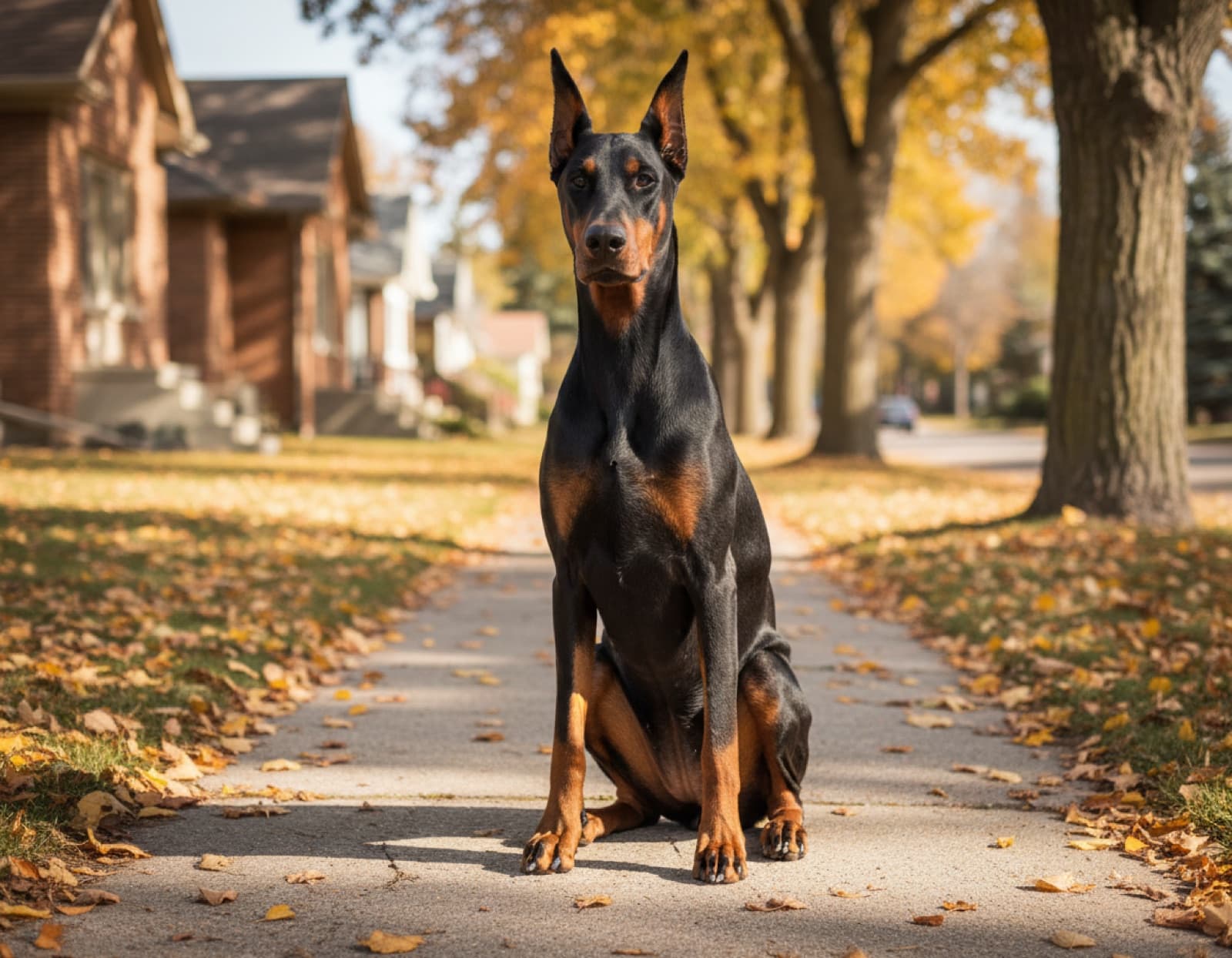
Ear cropping is the cosmetic surgical procedure that gives Dobermans the upright pointed ears people associate with the breed in movies and on guard-dog posters. Naturally, Doberman ears are folded and floppy. The procedure cuts and reshapes the ear cartilage, then posts the ears in a frame for weeks to set the upright shape. It serves no functional purpose for a pet dog.
The veterinary welfare position on cropping has shifted significantly in Canada. The Canadian Veterinary Medical Association has recommended against ear cropping as an elective cosmetic procedure for years. Several Canadian provinces, including British Columbia, Nova Scotia, Newfoundland and Labrador, Prince Edward Island, Quebec, and Saskatchewan, have banned the procedure outright. Alberta has not yet legislated a ban, but most reputable Edmonton vets will decline to perform the surgery on welfare grounds. Cropping in Alberta is mostly performed by a small number of vets or by unlicensed cosmetic operators outside the regulated veterinary system.
For an adopter, the practical question is how to think about a rescue Doberman whose ears are already cropped. Most Edmonton rescue Dobermans have natural ears, because most surrenders come from owners who did not crop. But cropped dogs do appear in rescue, typically when a backyard breeder produces a litter, crops them for resale value, and one of the dogs eventually ends up surrendered. Some Edmonton rescues will not intake from known cropping sources; others will, because the dog is already cropped and needs a home. The cropping is not the dog's fault.
If you are considering a cropped rescue Doberman, the dog is no less deserving of a home than a natural-eared dog. The welfare position on the surgery itself is settled; the welfare position on the individual rescue dog is to give them a good life. Read the dog's individual foster notes and meet the dog. If you are considering a Doberman puppy from any source and the breeder offers or recommends cropping, that is a strong signal to look at other breeders. Reputable Canadian Doberman breeders increasingly leave ears natural.
How to apply for an Edmonton Doberman adoption
Most Edmonton rescues run their Doberman adoption process online. The typical sequence:
- Find a specific dog you want to apply for. Edmonton rescues apply per-dog rather than maintaining a general waitlist. Browse current Edmonton listings and identify a specific Doberman or Doberman mix whose foster notes match your home situation. Read the entire write-up, including the parts about kid tolerance, dog tolerance, and energy.
- Confirm housing and insurance BEFORE applying. Call your condo board or landlord; get the breed-specific written approval in hand. Call your insurance broker and confirm coverage. Save the emails. This is the single step that delays most Doberman adoptions when skipped.
- Complete the online application. Expect 30 to 60 minutes for a thorough Doberman application. Have your housing approval ready to attach, insurance confirmation, your vet's name if you have other pets, and two non-family references.
- Phone screen with the foster. If the application clears the first review, the dog's foster home will call you. This conversation decides most applications. Be honest about prior breed experience, exercise capacity, schedule, and any concerns. Foster homes are looking for honesty, not perfection.
- Home check or virtual home tour. Edmonton rescues frequently do in-person home checks for Doberman placements. They look at the yard, fence height, gate latches, and general living space. For renters, they may want to see the written addendum.
- Meet-and-greet. Either at the foster's home, a neutral location, or the rescue facility. If you have other dogs, this is when the dog-dog introduction happens on neutral ground.
- Reference checks. Most Edmonton rescues call two references, including any prior vet if you have other pets. Give your references a heads-up so they pick up.
- Adoption contract and fee. Standard contracts specify the dog must be returned to the rescue if you can no longer keep them. Doberman contracts sometimes include additional clauses about not rehoming the dog independently and not allowing breeding.
Realistic timeline from application to dog-in-your-house is 2 to 4 weeks for a Doberman placement, sometimes longer because the housing and insurance verification is more involved. The wait is not rejection; it is the verification process doing its job. The realistic timeline from starting your search to bringing a dog home is 6 to 12 months because of low local intake.
The first 30 days with an Edmonton rescue Doberman
The 3-3-3 decompression principle applies to every rescue dog. With Dobermans the first three days are about survival mode and safety. The first three weeks are about routine and adjustment. The first three months are about real personality emerging and adolescent management hitting its stride. Plan around it rather than against it.
Shelter-stressed Dobermans often present quieter than the dog they actually are. A dog that seemed shut-down on day three is frequently more confident and more opinionated by week three. This is normal. The same pattern works in reverse for energy levels; the day-three calm dog may be a more demanding athlete by month two as the dog settles into the home.
Practical week-one priorities for an Edmonton rescue Doberman:
- Yard check first. Walk the fence line looking for gaps, loose boards, dig points, and gate-latch weaknesses. Dobermans can be determined athletes; six-foot minimum is preferred. Fix anything questionable before the dog goes out unsupervised.
- Stay on leash everywhere outside the yard. Recall is not yet established. Use a six-foot leash for transit and a 10 to 15 metre long-line for any open-space exploration. River-valley trails work for long-line walks; off-leash zones are not yet appropriate.
- License the dog with the City of Edmonton. Required for any dog over six months. Tags should be visible on the collar from day one. Information is on the City of Edmonton dogs page.
- Book a cardiac baseline. Within the first 30 days, have your Edmonton vet listen to the dog's heart and pull a baseline. If anything sounds off, request a referral to a veterinary cardiologist for an echocardiogram and Holter monitor. Early cardiac diagnosis substantially changes the management trajectory for dilated cardiomyopathy.
- Enrol pet insurance in week one. Any condition that appears after enrolment is covered; anything diagnosed before enrolment is pre-existing. Dobermans benefit enormously from early enrolment given the breed's cardiac, orthopaedic, and bloat risk.
- Establish structure. Twice-daily meals at consistent times, predictable walk windows, and clear house rules. Working-breed dogs settle into structure faster than most; they want to know what is expected.
- Start light exercise. Long leashed walks rather than off-leash sessions for the first two weeks. The dog needs to learn the neighbourhood, the routes, and your handling style. Forty-five to 60 minutes per day is the starting point; build from there.
- Add mental work early. A Doberman that gets only physical exercise is still under-stimulated. Puzzle feeders, basic obedience refreshers, chew enrichment, scent games, and structured training sessions burn brain energy in ways physical exercise cannot.
- Enrol in a force-free class. Within the first month. Even an experienced owner benefits from a class with a new working-breed dog. Use the CCPDT trainer directory filtered to Edmonton.
- Winter routine startup. Dobermans have a short single coat and feel the cold. A warm winter coat, booties on heavily salted sidewalks, shorter outings below -25 C, and indoor enrichment to make up the difference. The Edmonton Humane Society publishes a winter pet safety reference worth reading.
- Hold off on the dog park. Not for the first two weeks at minimum, and longer if the foster notes flag any dog-tolerance variability. The stimulation and dog density are too much for a still-decompressing rescue Doberman.
- Be ready for public reactions. A Doberman on leash draws attention. Some of that attention is admiration; some is wariness or rude questions. Your composure protects your dog. A calm dog walking calmly does more public-relations work for the breed than any argument will.
By week three, the real dog starts emerging. By month three, structure and exercise have done most of their work, and the foster-write-up dog is the dog living in your house. For Dobermans, this is when the loyal, velcro, leans-on-your-knee personality really emerges, and the work of the first 30 days pays off.
Frequently asked questions
Where can I adopt a Doberman near me in Edmonton?
Dobermans and Doberman crosses turn up infrequently in Edmonton-area rescues. The most visible local source is the Edmonton Humane Society, which sees a Doberman or Doberman mix every few months through owner surrender, transfer, or stray intake. AARCS, headquartered in Calgary, has Edmonton-area foster homes and occasionally lists a Doberman tagged to Edmonton. Alberta Homeward Hound Rescue Bureau (AHHRB) and Zoe's Animal Rescue carry the breed periodically. SCARS, Hope Lives Here, and GEARS see Dobermans rarely. Because local intake is low, many Edmonton adopters also apply to national or Western-Canadian breed-specific Doberman rescue networks alongside the local list. Plan for a 6 to 12 month timeline.
Are Dobermans legal in Edmonton?
Yes. Alberta has no breed-specific legislation, and the City of Edmonton Animal Care and Control Bylaw 21244 treats Dobermans the same as every other breed. The real-world friction is private. Some Edmonton condo boards list Dobermans on internal restricted-breed schedules alongside Pit Bulls and Rottweilers, some rental landlords do too, and a minority of home-insurance carriers either flag the breed or exclude dog-bite liability. The legal picture is clear. The housing and insurance picture is where Edmonton Doberman adopters spend most of their preparation.
How much does it cost to adopt a Doberman in Edmonton?
Edmonton rescue adoption fees for Dobermans typically run $400 to $700. The fee covers spay or neuter, core vaccinations, microchip, deworming, and a basic vet workup. Many rescues add a cardiac auscultation given the breed's dilated cardiomyopathy risk; a full Doberman cardiac workup including echocardiogram and Holter monitoring adds $300 to $600 if recommended. Senior Dobermans (around seven years and up) often have reduced fees of $200 to $400. Compare that to a breeder Doberman puppy in Alberta, which generally runs $2,500 to $4,500 for pet-quality with health-tested parents. The rescue path is significantly cheaper, and the rescue dog already has the vet work done.
American Doberman or European Doberman: which do Edmonton rescues see?
Almost all Edmonton rescue Dobermans are American-line or American-European mixes; pure European working-line dogs are very rare in Alberta rescue. American Dobermans are lighter, more refined, and bred more toward the show ring and family companion role. European Dobermans are heavier, more muscular, and bred toward protection-sport drive. The practical difference for an adopter is that an American or American-mix line tends to suit a family-companion home better, while a European-line dog needs an experienced handler with a job for the dog. Most foster temperament write-ups will describe the dog's drive and structure in plain language rather than line label, which is more useful than the label itself.
Why do Dobermans surrender to Edmonton rescue?
Three patterns dominate. First, the adolescent reactivity surrender at 12 to 30 months, when a Doberman raised without consistent structure or socialisation starts showing reactivity on leash, resource guarding, or barrier frustration that the owner cannot manage. Second, the medical surprise surrender: a young adult Doberman is diagnosed with dilated cardiomyopathy or another expensive condition, and the family cannot afford long-term care. Third, the owner-death or owner-illness surrender, where the dog comes in well-adjusted at any age. The first pattern is the most common; the third produces the best-adjusted rescue Dobermans.
Are Doberman mixes common in Edmonton rescue?
Mixes are more common than purebreds. The patterns you see most are Doberman-Lab (Lab influence softens the protectiveness), Doberman-Shepherd (high-drive working blend), Doberman-Rottweiler (the unofficial Doberman Rottie, large guardian temperament), and occasional Doberman-Pit crosses. Mix labels at intake are foster best-guess; what matters more is the foster write-up of the actual dog's temperament, energy, and compatibility. Read the notes, not the label.
Are Dobermans good first dogs in Edmonton?
Usually not. The breed's intelligence, drive, protectiveness, and need for closeness reward experience and consistent positive training. A first-time owner who is genuinely committed can succeed with the right individual dog and a force-free Edmonton trainer engaged from week one, but the application should be honest about prior experience. Most Edmonton rescues will steer first-time owners toward the calmer adult dogs in their foster network rather than the high-drive young adults. Ask the rescue which individuals would suit a less-experienced home.
Will home insurance in Edmonton cover a Doberman?
Most Alberta carriers cover Dobermans without issue, but a minority either decline coverage, surcharge the policy, or exclude dog-bite liability when the dog is on their internal restricted-breed list. Call your insurance broker before adopting, ask the breed question directly, and confirm in writing if there is any ambiguity. If your current carrier flags the breed, shop quotes; several major Canadian carriers do not flag Dobermans at all. Pet-bite liability claims can run into six figures, which is exactly what home insurance is supposed to cover, so an exclusion is a real exposure.
Should I adopt a Doberman with cropped ears?
Ear cropping is a cosmetic surgery the Canadian Veterinary Medical Association and many provincial associations advise against, and several Canadian provinces have banned it. Alberta has not banned cropping at the provincial level, but most reputable Edmonton vets will decline to perform it. Some Edmonton rescues will not intake a cropped dog from a backyard source; others will, because the dog is already cropped and needs a home. The cropping is not the dog's fault, and a cropped rescue Doberman is no less deserving of a home than a natural-eared one. The welfare position on the surgery itself is settled; the welfare position on the individual rescue dog is to give them a good life.
How long does Edmonton Doberman adoption take?
Realistically 6 to 12 months from starting the search to bringing a dog home, sometimes longer. Local intake is low; you may need to wait for the right individual dog to come through the local rescue list, or apply to national breed-specific Doberman rescue networks that can transport to Alberta. Once you find a specific dog you want to apply for, expect 2 to 4 weeks for the application, foster phone screen, home check, meet-and-greet, and reference checks. Edmonton rescues do not rush Doberman placements.
What if I see a free Doberman on Kijiji Edmonton?
Treat free-Doberman listings with caution. Common Edmonton patterns are owners bypassing formal rescue surrender (no behavioural disclosure, no vet history), backyard breeders using free as a hook before the price reveals at pickup, and flippers collecting free dogs to resell. A legitimate owner-rehoming with a modest fee can be fine, but verification matters: ask for vet records, see the dog in its current home, and ask blunt questions about why the dog is being rehomed and whether any bite history exists. If the answer is rushed or vague, walk. The Canadian Anti-Fraud Centre tracks pet scams in Canada.
Related Edmonton Doberman guides
Edmonton Adoptable Dogs
Current Edmonton-area Doberman, Doberman-mix, and working-breed listings from EHS, AARCS Edmonton fosters, AHHRB, Zoe's, SCARS, GEARS, and Hope Lives Here.
Doberman Health Issues: DCM, vWD, Wobbler
Doberman health issues to plan for: dilated cardiomyopathy and yearly heart screening, von Willebrand bleeding disorder, wobbler syndrome, bloat, bone cancer and coat loss.
Edmonton Housing & Insurance for Dobermans
Condo restricted-breed lists, written landlord addenda, insurance carriers that do and do not flag the breed, and how to clear the paperwork before applying.
Doberman Training & Adolescence Edmonton
The 12 to 30 month adolescent reactivity window, force-free training pathways, reactivity management, and the Edmonton force-free trainer landscape.
Find your Edmonton rescue Doberman
Browse current Edmonton-area Doberman and Doberman-mix listings. Foster temperament notes help you find the right match for your household, housing situation, and prior experience.
Browse All Edmonton Dogs →New dog? Start with these care guides
Everything a new adopter needs to set up a safe, happy home.