The short answer
Great Pyrenees are healthier than most giants. Median lifespan is 10 to 12 years, well above the 7 to 9 typical of Bernese and Bullmastiff. The main concerns are giant-breed orthopaedic disease (hip and elbow dysplasia, OCD in growing puppies, cruciate tears), bloat (GDV) as the deep-chested emergency, entropion and other eye conditions, and a documented breed-specific anaesthesia sensitivity that matters for any surgical event. Hypothyroidism is common. Addison's disease appears at moderate rates. Cancer load is moderate. Week-one pet insurance still matters; the orthopaedic and emergency math adds up fast. The American College of Veterinary Surgeons credentials the orthopaedic specialty.
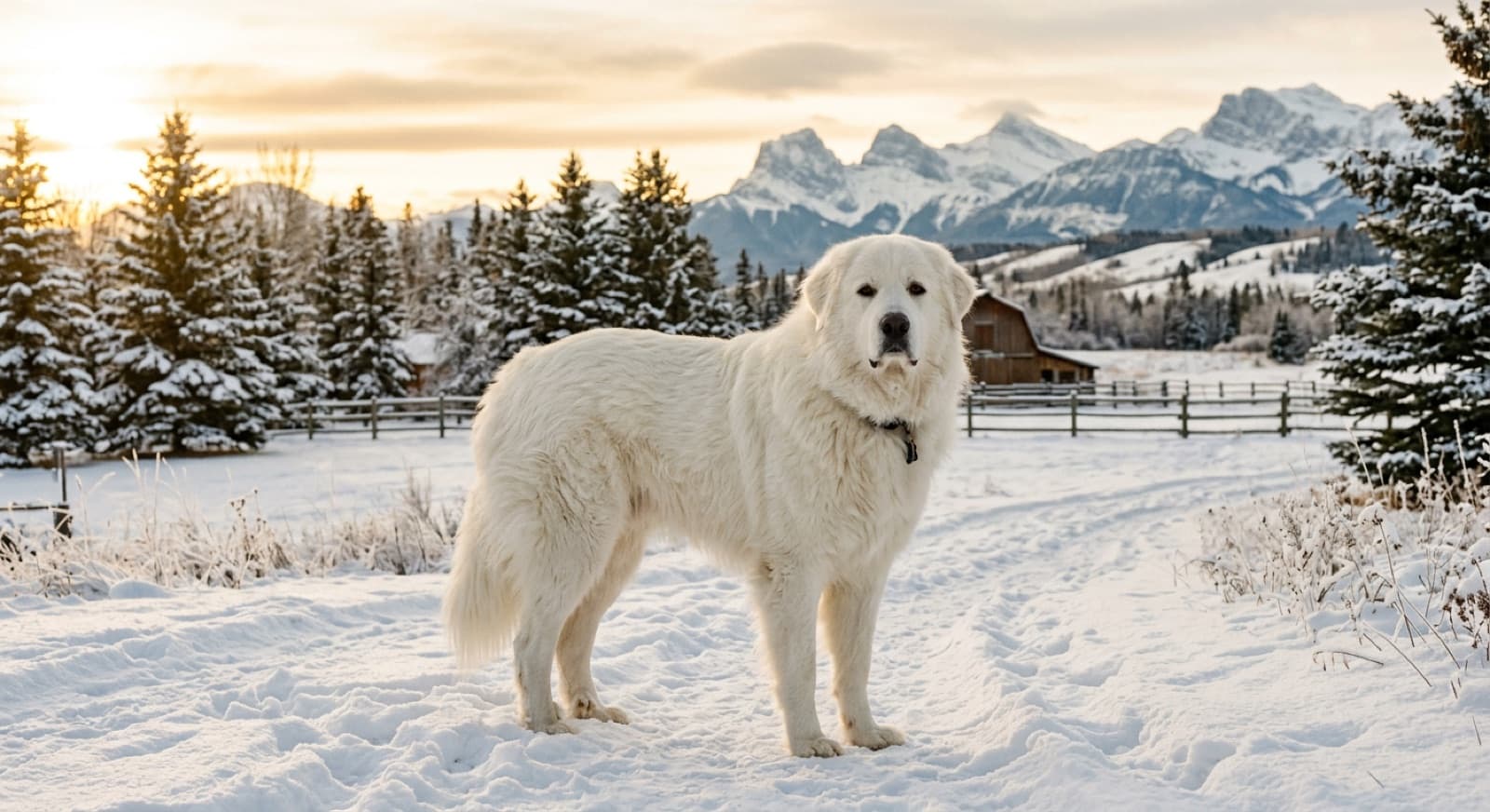
The Great Pyrenees health picture, briefly
Great Pyrenees are one of the more durable giant breeds. Median lifespan sits between 10 and 12 years in most published references, with some dogs reaching 13 or 14 with strong orthopaedic and cardiac care. That arc is meaningfully longer than Bernese (7 to 9), Bullmastiff (8 to 10), or Saint Bernard (8 to 10). Centuries of working selection as livestock guardians in the high Pyrenean passes produced a breed built for endurance and weather, not speed or athletic performance, and the result is a giant that often ages better than its peers.
The health load is still real. Giant-breed orthopaedic disease dominates: hip and elbow dysplasia are common, OCD shows up in growing puppies, and cruciate ligament tears appear in middle age. Bloat (GDV) is the deep-chested giant emergency every Pyrenees owner needs the emergency-vet number for. Entropion (inward rolling of the eyelid) is the most common eye condition. Anaesthesia sensitivity is well-documented and matters for any surgical event. Hypothyroidism is common. Addison's disease appears at moderate rates and can be missed at intake. Cancer load is moderate (osteosarcoma and hemangiosarcoma show up but at lower rates than in the most cancer-stacked breeds). Heat intolerance is real and limits Edmonton summer activity.
Pet insurance enrolled in week one remains the single highest-leverage health decision. Premiums for a Pyrenees run lower than for a Bernese because the cancer math is lighter, but the orthopaedic and emergency math still produces predictable five-figure costs over the dog's lifetime. Every Canadian provider excludes pre-existing conditions, and skipping insurance is defensible only if you can self-insure $25,000 to $50,000 in lifetime out-of-pocket vet costs. The American Animal Hospital Association publishes general pet insurance evaluation guidance that applies to Canadian providers.
Hip dysplasia, elbow dysplasia, and orthopaedic care
Great Pyrenees are giant-breed dogs, and the orthopaedic load is meaningful. Both hip and elbow dysplasia are common, and the cruciate ligament becomes a middle-age concern.
Hip dysplasia
Hip dysplasia involves abnormal hip joint development that progresses to arthritis with age. Signs include a bunny-hopping gait, reluctance to climb stairs or jump into vehicles, stiffness after rest, weight shifting away from the affected hip, and visible muscle wasting in the hindquarters. Diagnosis is by hip radiographs graded under the Orthopedic Foundation for Animals or PennHIP systems, typically $400 to $700 at an Edmonton clinic. Conservative management with lean body weight, joint supplements, hydrotherapy, and prescription anti-inflammatories defers or replaces surgery in many cases. Severe cases need femoral head ostectomy ($3,500 to $6,000) or total hip replacement ($7,000 to $11,000 per hip) at specialty practice.
Elbow dysplasia
Elbow dysplasia is a collective term for several developmental conditions including fragmented coronoid process, osteochondritis of the elbow, and ununited anconeal process. Presentation is forelimb lameness, often bilateral, sometimes with a stiff or shortened forelimb gait. Diagnosis is by radiograph and sometimes CT or arthroscopy at specialty practice. Conservative management buys time in many cases. Arthroscopic surgery to address the specific lesion runs $3,500 to $6,500 per elbow at Edmonton specialty practice. The American College of Veterinary Surgeons governs the surgical specialty board.
Cruciate ligament tears
Cranial cruciate ligament rupture is common in Pyrenees given the giant body weight and joint stress. Presentation is acute hindlimb lameness, often during play or after a slip. Diagnosis is by physical exam (cranial drawer sign) and radiograph. Surgical correction with TPLO (tibial plateau levelling osteotomy) at an Edmonton specialty practice runs $5,000 to $8,000 per knee. Bilateral cruciate disease is common; one side blows and the other often follows within 12 to 18 months. Budget mentally for that possibility. Conservative management is less satisfactory in a 100 to 130 pound Pyrenees than in smaller dogs.
Bloat (gastric dilatation-volvulus, GDV)
Gastric dilatation-volvulus is a life-threatening emergency where the stomach distends with gas and twists on its axis, cutting off blood supply. Without surgical correction within hours it is fatal. Great Pyrenees are deep-chested giants, placing them at elevated GDV risk. Symptoms to recognise immediately:
- Visibly distended or hard abdomen, sometimes drum-tight to the touch
- Non-productive retching (tries to vomit but nothing comes up; this is the most reliable early sign)
- Restlessness or inability to settle, pacing
- Drooling and frothy saliva
- Pale gums (check by lifting the lip)
- Rapid shallow breathing that does not match the activity
- Progressive weakness or collapse
If you see any combination in a Pyrenees, drive directly to a 24-hour Edmonton emergency veterinary clinic without calling first. Bloat surgery runs $5,000 to $10,000 including post-op care; survival improves dramatically the earlier the dog arrives.
Prophylactic gastropexy is a preventive surgery that anchors the stomach to the body wall, preventing the twist that makes GDV fatal. Performed at the time of spay or neuter (or as a standalone procedure) it runs $1,500 to $3,000 and dramatically reduces lifetime GDV risk. Most Edmonton specialty surgeons recommend it for giant breeds, and many rescues coordinate it before adoption when feasible. Pre-save the contact info for at least one 24-hour Edmonton emergency vet before you need it. Because Pyrenees are anaesthesia-sensitive, the gastropexy is a useful opportunity to establish an anaesthesia protocol with the vet who will manage future surgical events.
Browse adoptable Edmonton dogs
Current Edmonton-area listings. Pyrenees and Pyr crosses appear at SCARS, EHS, AARCS Edmonton fosters, Zoe's, and rural rescues regularly. Foster notes flag orthopaedic findings, cardiac status, and senior reality. Plan a first-month vet workup with hip and elbow assessment, cardiac auscultation, thyroid panel, ophthalmology referral if eyelids look loose, and an anaesthesia-protocol conversation.
See Available Dogs →Osteochondritis dissecans (OCD) in young Pyrenees
OCD is a developmental cartilage disease that affects large and giant breed puppies between 4 and 10 months old. A flap of cartilage detaches from the underlying bone, most often in the shoulder, elbow, or stifle, producing pain and lameness. Pyrenees are predisposed because of rapid growth rate and joint stress. The lesions are sometimes bilateral.
Prevention sits on three pillars. First, feed a large or giant breed puppy food formulated for controlled growth (not a generic high-calorie puppy formula). Slower growth reduces OCD risk substantially. Second, avoid repetitive high-impact exercise during the growth window. No forced running. No jumping out of vehicles. No long ball-chasing sessions. Free play and structured low-impact activity are fine; the joints just cannot tolerate repeated high-impact loading while still forming. Third, keep puppy weight strictly lean. Overweight giant breed puppies have dramatically worse orthopaedic outcomes.
Diagnosis is by radiograph and sometimes MRI at an Edmonton specialty practice. Treatment ranges from conservative management (rest, anti-inflammatories, weight control) for mild lesions to arthroscopic surgery for larger lesions. Surgical correction runs $3,500 to $6,000 per joint at specialty practice. Early diagnosis matters; a young Pyrenees with persistent unilateral lameness deserves prompt orthopaedic workup rather than wait-and-see. Adopters bringing home a Pyrenees puppy or young adolescent should ask the vet about a giant-breed puppy nutrition plan at the first visit.
Patellar luxation
Patellar luxation is a condition where the kneecap slips out of its normal groove on the femur. It is more commonly associated with small breeds, but Pyrenees and other giants are noted in the literature. The condition is graded 1 through 4 based on severity. Grade 1 reduces spontaneously and is often an incidental finding. Grade 2 luxates with manipulation and reduces spontaneously. Grade 3 luxates spontaneously and requires manual reduction. Grade 4 is permanently luxated. Grades 1 and mild Grade 2 are often managed conservatively. Grade 3 and 4 cases need surgical correction.
Signs include a skipping or hopping gait, sudden three-legged lameness that resolves when the kneecap pops back in, or persistent stiffness in one or both hind legs. Diagnosis is by physical exam plus radiograph. Surgical techniques include tibial tuberosity transposition, trochleoplasty (deepening the groove the kneecap sits in), and soft tissue rebalancing, often combined. Edmonton specialty surgical correction runs $3,500 to $5,500 per knee. Untreated severe luxation progresses to arthritis and chronic lameness.
Pyrenees with patellar luxation often also carry hip or elbow dysplasia, and the orthopaedic workup at adoption should look at all three joints rather than focus on the most obvious lameness. The same hydrotherapy, weight control, and joint supplement strategies that help dysplasia help mild patellar luxation.
Entropion and other eye conditions
Entropion
Entropion is the most common Pyrenees eye condition. The eyelid (most often the lower lid) rolls inward, allowing eyelashes and lid hair to rub the corneal surface. Signs include squinting, excessive tearing, recurrent discharge, and corneal irritation; left untreated it produces chronic corneal ulceration and progressive vision damage. Diagnosis is by ophthalmology exam. Surgical correction (Hotz-Celsus procedure or modified techniques depending on severity) at a board-certified veterinary ophthalmologist runs $1,500 to $3,000 per eye. The condition is often bilateral. Recovery is straightforward and the cosmetic result is typically excellent.
Cataracts
Cataracts (lens opacity progressively reducing vision) appear in Pyrenees at moderate rates and can be congenital, juvenile, or senior in onset. Diagnosis is by ophthalmology exam with slit-lamp evaluation. Treatment is phacoemulsification surgery at a veterinary ophthalmologist when vision restoration is the goal, running $3,500 to $5,500 per eye including pre-op evaluation and post-op monitoring. Many Pyrenees with bilateral cataracts adapt well to gradual vision loss when the home environment is stable and surgery is deferred or declined for unrelated reasons.
Progressive retinal atrophy (PRA)
PRA is a progressive degeneration of the retina causing eventual blindness. There is no treatment. Most affected dogs adapt remarkably well to vision loss when the home environment stays consistent (no rearranging furniture, predictable routes, clear verbal cues). Annual ophthalmology evaluation for adult Pyrenees is reasonable, especially after age six. The American College of Veterinary Internal Medicine credentials internal medicine specialists who handle systemic disease workup that often overlaps with eye findings.
Anaesthesia sensitivity: the breed-specific consideration
Great Pyrenees are noted in veterinary anaesthesia literature as having heightened sensitivity to several anaesthetic agents. The practical implication is that any surgical event (spay, neuter, gastropexy, dental cleaning, mass removal, orthopaedic surgery, eye surgery) benefits from a tailored anaesthesia protocol rather than the standard giant-breed default.
The specific concerns commonly cited:
- Heightened sensitivity to acepromazine (a commonly used pre-anaesthetic sedative), with prolonged sedation and occasional severe hypotension reported. Many vets familiar with the breed avoid acepromazine entirely for Pyrenees.
- Increased sensitivity to opioid sedation, requiring careful dose selection and choice of agent.
- Prolonged recovery times from injectable and inhalant anaesthetics, even at standard dosing.
- Dosing by lean body weight rather than total weight matters more than for many breeds; overweight Pyrenees can be functionally over-dosed if total weight is used.
- Heightened risk of intra-operative bradycardia (slow heart rate), which can require atropine or glycopyrrolate.
- Hypothermia risk during longer procedures (the heavy coat is misleading; the underlying tissue cools quickly under anaesthesia).
What this means in practice: when you book any anaesthetic procedure for a Pyrenees, ask the vet specifically whether their protocol accounts for breed sensitivity. Specialty practices and Edmonton vets familiar with giant breeds will use modified protocols including acepromazine avoidance, careful opioid selection, dose adjustment by lean body weight, longer post-op monitoring, and active warming during the procedure. This is not a reason to avoid necessary surgery; it is a reason to choose the vet carefully and have the protocol conversation in advance.
For elective procedures (prophylactic gastropexy, mass removal, dental), this conversation can happen weeks ahead. For emergencies (bloat surgery, traumatic injury), the protocol decision happens in real time at the emergency clinic, which is one more reason to choose your primary vet thoughtfully when you adopt and to identify a preferred 24-hour Edmonton emergency clinic before you need it.
Hypothyroidism, Addison's, and other systemic conditions
Hypothyroidism
Hypothyroidism is common in Pyrenees and frequently misread as behaviour problems or normal ageing. Symptoms cluster around metabolism: weight gain despite stable diet, lethargy, reduced exercise tolerance, dull or thinning coat, recurrent skin or ear infections, cold intolerance (notable in a cold-bred breed), and behaviour changes including increased anxiety or reduced sociability. The behaviour link is the most under-recognised piece. A Pyrenees that arrives at adoption looking older than its stated age, with a poor coat and low energy, may be hypothyroid rather than truly senior. Diagnosis is by full thyroid panel including TSH and free T4 by equilibrium dialysis. Baseline total T4 alone has limited diagnostic value. Treatment is daily levothyroxine at $25 to $50 per month plus periodic rechecks. Most hypothyroid Pyrenees recover normal energy, coat, and temperament within four to eight weeks of starting medication.
Addison's disease (hypoadrenocorticism)
Addison's disease (failure of the adrenal glands to produce adequate cortisol and aldosterone) appears at moderate rates in Pyrenees. The disease is sometimes called the great imitator because symptoms are non-specific and intermittent: vague lethargy, intermittent vomiting, intermittent diarrhoea, weakness, weight loss, increased thirst and urination. Dogs can look fine between episodes. The dangerous presentation is the Addisonian crisis (acute collapse with severe electrolyte abnormalities) which is a medical emergency. Diagnosis is by ACTH stimulation test. Treatment is lifelong, with monthly injections of desoxycorticosterone pivalate (DOCP) plus daily oral prednisone at $80 to $200 per month combined. Treated dogs typically live normal lifespans. Any Pyrenees with vague intermittent illness that does not have a clear diagnosis deserves an ACTH stim test on the differential list.
Tricuspid valve dysplasia
Tricuspid valve dysplasia is a congenital cardiac condition where the tricuspid valve (between the right atrium and right ventricle) develops abnormally, producing regurgitation and progressive right-sided heart enlargement. Pyrenees show moderate prevalence in cardiac screening data. Diagnosis starts with cardiac auscultation; an experienced vet hears a characteristic right-sided systolic murmur. Echocardiogram with Doppler confirms and grades severity. Mild cases need annual monitoring only. Moderate to severe cases benefit from cardiology specialist management. Annual cardiac auscultation with low threshold to refer for echocardiogram is the practical baseline for adult Pyrenees.
Polyarthritis
Polyarthritis (autoimmune-mediated inflammation of multiple joints, distinct from the wear-and-tear arthritis that follows dysplasia) is less common than the orthopaedic conditions above but is noted in the breed. Presentation is fever, lethargy, and shifting lameness affecting multiple joints, often without a clear injury history. Diagnosis is by joint fluid analysis at specialty practice. Treatment with immunosuppressive doses of prednisone, sometimes combined with other immunomodulating drugs, produces good response in many cases. Any Pyrenees with fever and multi-joint lameness needs specialist workup rather than empiric anti-inflammatory treatment.
Skin: hot spots, atopic dermatitis, and the heavy coat
The Pyrenees double coat is a thermoregulatory marvel and a moisture trap. Hot spots (acute moist dermatitis) are common, especially in summer when humidity and exercise combine to wet the undercoat. The pattern: a small irritation gets licked or scratched, moisture stays trapped under the dense coat, bacteria proliferate, and within hours a quarter-sized lesion has expanded to a palm-sized weeping wound. Daily skin checks during summer (run your hands through the coat, look for damp spots, smell for off odours) catch hot spots before they explode. Once present, treatment is shaving the hair around the lesion, cleaning with antiseptic, topical antibiotic, and often oral antibiotics plus anti-inflammatories. An Edmonton vet visit for a hot spot typically runs $100 to $250.
Atopic dermatitis (environmental allergies) is common and presents as recurrent ear infections, paw licking, face rubbing, and recurrent skin or skin-fold infections. Edmonton seasons drive the pattern: spring tree pollens, summer grass pollens, and indoor allergens during the long winter. Workup ranges from symptomatic management (medicated shampoos, anti-itch medications like oclacitinib or lokivetmab, dietary trials) up to formal allergy testing and immunotherapy at a veterinary dermatologist. Lifelong management is the norm. Plan for $400 to $2,000 per year on allergy management once a Pyrenees becomes symptomatic.
Never shave the double coat in an attempt to manage summer heat or skin issues. The dense undercoat is insulating, and shaving produces Post-Clipping Alopecia with patchy or woolly regrowth that takes 12 to 24 months and may not fully recover. Strategic de-shedding (thinning the undercoat with proper grooming tools while leaving the topcoat intact) is the correct alternative.
Cancer load, deafness, and the less common concerns
Cancer
Pyrenees carry a moderate cancer load, lower than the most cancer-stacked breeds (Bernese, Boxers, Golden Retrievers) but not negligible. The notable cancers:
- Osteosarcoma: the giant breed bone cancer. Presents as lameness or visible swelling, most often on a limb. Diagnosis by radiograph plus biopsy. Treatment is amputation plus chemotherapy or limb-sparing surgery plus chemotherapy at specialty practice. Edmonton amputation plus adjuvant chemotherapy runs $7,000 to $14,000 with median survival around 10 to 12 months.
- Hemangiosarcoma: aggressive cancer of blood vessel cells, often arising in the spleen, heart, or skin. Splenic and cardiac hemangiosarcoma may present as acute collapse from internal bleeding. Diagnosis by imaging plus biopsy. Treatment is splenectomy plus chemotherapy where feasible, with median survival often 4 to 7 months even with treatment.
- Lymphoma: peripheral lymph node enlargement, sometimes with weight loss or lethargy. Diagnosis by fine needle aspirate. CHOP chemotherapy at an Edmonton specialty oncology practice runs $5,000 to $15,000 with median survival around 12 to 14 months for B-cell disease.
- Mast cell tumours: present as skin lesions of variable appearance. Diagnosis by fine needle aspirate. Treatment depends on grade and stage.
Practical owner takeaway: build the monthly skin and lymph node check habit at home, schedule annual senior bloodwork starting at age six, and book aspirate cytology on every new lump rather than wait-and-see.
Deafness in some lines
Some Pyrenees lines carry congenital sensorineural deafness, more commonly bilateral, occasionally unilateral. The genetics overlap with white coat colour and merle patterns in some breeds; in Pyrenees the white coat is breed-standard so the colour association is less informative. BAER (Brainstem Auditory Evoked Response) testing is the only reliable diagnostic and is offered at the Western College of Veterinary Medicine in Saskatoon and some Edmonton specialty practices. If a rescue Pyrenees seems unresponsive to verbal cues, slow to wake when approached from behind, or extremely startle-prone, BAER testing is worth the trip. Deaf Pyrenees do well with visual cue training and hand signals; the deafness is a workable adaptation, not a deal-breaker.
Other less common concerns
Less common but breed-noted: degenerative myelopathy (progressive hindlimb weakness in senior dogs), neuronal degeneration (rare juvenile neurological disease), and umbilical hernias (often incidental). Most adopted Pyrenees will not encounter these, but flagging them with the vet at the first visit means the differential is broad when something unusual appears.
Edmonton specialty veterinary access reality
Edmonton has solid general-practice veterinary coverage for Pyrenees. For routine care (annual physical, vaccinations, dental, bloodwork, weight management), any reputable Edmonton clinic is a fine starting point. For Pyrenees-specific work, particularly orthopaedic surgery and anaesthesia for any procedure, the picture is more nuanced.
Edmonton orthopaedic and ophthalmology
Edmonton has board-certified veterinary surgeons handling hip and elbow procedures, cruciate repair, OCD arthroscopy, and patellar luxation correction. Total hip replacement is a more specialised procedure; some Edmonton owners travel for it. Veterinary ophthalmology coverage is adequate for entropion correction and cataract surgery. Internal medicine specialty access handles Addison's workup, hypothyroidism, and unusual systemic presentations.
Edmonton cardiology and oncology
Cardiology specialty capacity is adequate for routine echocardiogram, tricuspid valve dysplasia workup, and senior cardiac screening. Oncology specialty access handles routine cancer workup and chemotherapy protocols. Edmonton owners with complex cardiac cases or advanced oncology needs sometimes route to Calgary specialty centres or to the WCVM in Saskatoon.
WCVM Saskatoon
The Western College of Veterinary Medicine at the University of Saskatchewan is the closest full veterinary teaching hospital, about five and a half hours each way from Edmonton. WCVM handles complex Pyrenees referrals beyond local capacity: difficult orthopaedic revisions, advanced neurology, complex cardiac cases, BAER hearing testing, and unusual oncology. The University of Alberta does not have a veterinary school, which is why Saskatoon is the closest academic referral.
Building your network in month one
The practical move when you adopt a Pyrenees: establish a primary Edmonton vet in the first month, ask specifically which orthopaedic surgeon they refer giant breeds to, ask about the clinic anaesthesia protocol for Pyrenees-sensitive dogs, and write the answers down. Pre-save at least one 24-hour Edmonton emergency clinic in your phone. Most Pyrenees will need at least one specialty referral over their lifetime; knowing the pathway before you need it cuts friction at the worst possible moment.
Pet insurance for an Edmonton Great Pyrenees
Week-one pet insurance enrolment is the highest-leverage health decision for any rescue Pyrenees. Every Canadian provider excludes pre-existing conditions, which means the day a vet documents anything (a skin lump, a heart murmur, a slight hip subluxation, a low thyroid value, loose lower eyelids, a mild limp), that condition becomes a permanent exclusion on any policy enrolled afterward. The clock starts the day you adopt.
The Pyrenees-specific value math is more manageable than for Bernese (lower cancer load) but still real:
- Total hip replacement: $7,000 to $11,000 per hip
- Elbow arthroscopy: $3,500 to $6,500 per elbow
- TPLO cruciate surgery: $5,000 to $8,000 per knee (often bilateral over time)
- Bloat (GDV) emergency surgery: $5,000 to $10,000
- OCD arthroscopy: $3,500 to $6,000 per joint
- Patellar luxation surgery: $3,500 to $5,500 per knee
- Entropion correction: $1,500 to $3,000 per eye
- Cataract surgery: $3,500 to $5,500 per eye
- Osteosarcoma amputation plus chemotherapy: $7,000 to $14,000
- Lymphoma CHOP chemotherapy: $5,000 to $15,000
- Addison's disease lifelong management: $80 to $200 per month ongoing
- Hypothyroidism lifelong management: $25 to $50 per month ongoing
- Allergy management at the specialty dermatology end: $400 to $2,000 per year ongoing
A Pyrenees with bilateral hip dysplasia plus a single cruciate tear plus an entropion surgery can easily generate $20,000 to $35,000 in out-of-pocket costs across just a few years. Add Addison's or hypothyroidism on top and lifetime out-of-pocket costs reach $30,000 to $50,000. A typical pet insurance policy for a young healthy Pyrenees in Edmonton runs $70 to $130 per month depending on deductible, reimbursement percentage, and coverage limits. The premium is more manageable than for the highest-risk breeds because insurers price by breed risk and Pyrenees fall mid-pack rather than top-load.
What to look for in a Pyrenees policy:
- Hereditary and congenital conditions explicitly covered (policies that exclude these are useless for a giant breed)
- Explicit coverage of orthopaedic conditions including hip and elbow dysplasia, OCD, patellar luxation, and cruciate repair
- Annual coverage caps of $15,000 or more, ideally with no lifetime cap
- Explicit coverage of diagnostic imaging including CT and MRI
- Coverage for prescription medications including lifelong endocrine treatments
- Reasonable wait times for cardiac and orthopaedic coverage (typically 14 to 30 days)
Compare three to four providers before enrolling. The American Animal Hospital Association publishes general guidance on pet insurance evaluation. Your Edmonton vet and your foster contact can both share which providers other giant-breed adopters have used and what their claim experience has been.
Adoption health workup: what the rescue covers vs what you re-screen
Edmonton rescues do a baseline vet workup before adoption, but depth varies by rescue and by dog. Understanding what is and is not covered helps you plan the first-month vet visit, which for a Pyrenees should establish orthopaedic, thyroid, cardiac, and eyelid baselines plus the anaesthesia-protocol conversation.
What most Edmonton rescues cover
- Physical exam by a vet at intake including cardiac auscultation, lymph node palpation, and skin assessment
- Core vaccinations (DAPP and rabies, sometimes Bordetella if boarded)
- Spay or neuter surgery (often with prophylactic gastropexy at the same time for giant breeds, but confirm)
- Microchip implant and registration
- Deworming and flea and tick treatment
- Basic adult bloodwork (CBC and chemistry panel) in many cases
- Treatment of any acute concerns identified at intake
What is usually NOT covered (and what to plan for)
- Hip and elbow radiographs (OFA or PennHIP grading)
- Full thyroid panel including TSH and free T4 by equilibrium dialysis
- ACTH stimulation test (Addison's screening)
- Echocardiogram for any heart murmur noted on auscultation
- Ophthalmology consult for entropion or other eye findings
- BAER hearing test for dogs that seem startle-prone or unresponsive
- Anaesthesia protocol planning conversation for future surgical events
Plan a first-month vet visit with your chosen Edmonton vet that establishes the Pyrenees baseline you can build on. The standard ask: a careful physical with orthopaedic and ophthalmic survey, baseline thyroid panel, cardiac auscultation with low threshold to refer for echocardiogram, a frank conversation about the anaesthesia protocol they use for the breed, and a documented body condition score. If the rescue can share intake imaging, bloodwork, or vet notes, bring them.
For senior Pyrenees (eight years and up), the first-month workup is more involved: full senior bloodwork, urinalysis, baseline thyroid panel, ACTH stim test if there is any history of vague intermittent illness, careful cardiac auscultation with echocardiogram on any murmur, ophthalmology evaluation, dental evaluation, lymph node palpation, abdominal ultrasound if budget allows, and a thorough lump check with aspirate cytology on any suspicious lesion. Budget $1,000 to $2,000 for the senior intake workup at an Edmonton clinic. The Canadian Kennel Club publishes breed-standard reference material that helps orient the conversation.
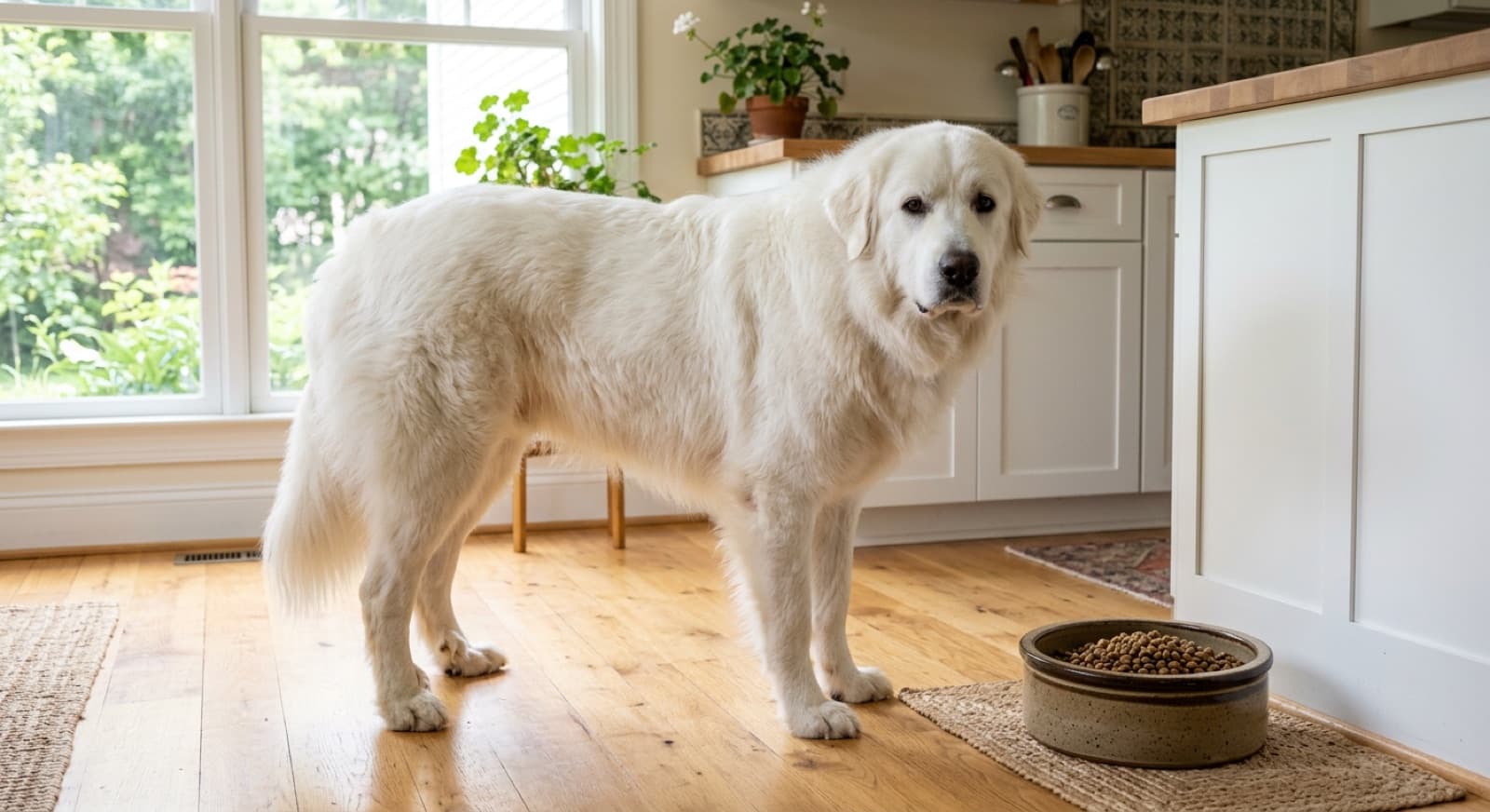
The Pyrenees lifespan and senior care after age eight
Pyrenees median lifespan sits at 10 to 12 years in most published references. Some reach 13 or 14 with strong orthopaedic and cardiac management. The longer arc compared to other giants is one of the more underappreciated facts about the breed: a six-year-old Pyrenees is functionally middle-aged with several good years ahead, where a six-year-old Bernese is already a senior. The reality matters at adoption planning. Many Edmonton rescue volunteers will tell you that adopting a senior Pyrenees is deeply rewarding; the dogs are calm, gentle, and bond hard.
Reasonable senior-care adjustments for a Pyrenees after age eight, all guided by your Edmonton vet:
- Biannual vet exams instead of annual
- Full annual senior bloodwork including thyroid panel and urinalysis
- Annual cardiac auscultation with low threshold to refer for echocardiogram (tricuspid valve disease can progress quietly)
- Annual ophthalmology check (cataracts and PRA risk both progress through these years)
- Routine dental care including professional cleanings every 18 to 24 months (each dental is an anaesthesia event; protocol matters)
- Joint support (glucosamine, chondroitin, omega-3) and prescription anti-inflammatories during arthritis flares
- Tight weight monitoring (overweight Pyrenees do worse on every front, especially orthopaedic and heat tolerance)
- Aggressive lump monitoring with aspirate cytology on every new lesion rather than wait-and-see
- Mobility aids: orthopaedic bed, traction rugs on hardwood, ramps for stairs and vehicles. These matter sooner for Pyrenees than for medium breeds
- Climate comfort: senior Pyrenees handle cold superbly but lose summer heat tolerance further; a cool refuge matters
Some senior Pyrenees develop canine cognitive dysfunction, with disorientation, anxiety, or sleep changes. Your vet can advise on management options ranging from environmental adjustments to prescription medications.
Pet insurance becomes harder and more expensive to obtain for first-time enrolment past age eight in this breed, and some providers will not enrol senior Pyrenees with documented orthopaedic, cardiac, or endocrine findings. If you adopt a senior Pyrenees, price-compare carefully and consider whether a dedicated savings account makes more sense than insurance. Talk through the math with your vet at the first visit, and have honest quality-of-life conversations early; for many senior Pyrenees, the choice is calm comfortable years rather than aggressive intervention.
Frequently asked questions
Where can I find a vet for a Great Pyrenees near me in Edmonton?
Start with your general-practice Edmonton vet, who refers to local board-certified veterinary surgeons, internal medicine specialists, and ophthalmologists for the workup a Great Pyrenees typically needs. Edmonton has solid general-practice and intermediate specialty coverage. For complex cases (advanced orthopaedic revision, neurology, unusual oncology, complex cardiac), some Edmonton owners route to the Western College of Veterinary Medicine in Saskatoon. The single most important step in month one is asking your vet to flag the anaesthesia plan for the breed: Pyrenees can be more sensitive to anaesthetic agents than many breeds, and any surgical event (spay, neuter, gastropexy, dental, mass removal) benefits from a tailored protocol. Establish a primary vet, ask which orthopaedic surgeon they refer Pyrenees to, and book a baseline workup with hip and elbow assessment, cardiac auscultation, thyroid panel, and ophthalmology referral if the eyelids look loose. The American College of Veterinary Internal Medicine credentials internal medicine and oncology specialties.
What is the lifespan of a Great Pyrenees?
Median lifespan sits at roughly 10 to 12 years, which is notably better than most giant breeds (Bernese median is 7 to 9, Bullmastiff and Saint Bernard sit similarly low). Some Pyrenees reach 13 or 14 with strong orthopaedic and cardiac management. The longer arc is meaningful at adoption: a six-year-old Pyrenees still has years of good life ahead with the right care, where a six-year-old Bernese is already a senior. Cancer load is moderate compared to the most cancer-stacked breeds, but osteosarcoma and hemangiosarcoma still appear. Orthopaedic and arthritis management drives most senior care.
How serious is hip dysplasia in Great Pyrenees?
Hip dysplasia is common in the breed, as it is in most giant breeds. The hip joint develops abnormally and progresses to arthritis with age. Signs include a bunny-hopping gait, reluctance to climb stairs or jump into vehicles, stiffness after rest, weight shifting away from the affected hip, and visible muscle wasting in the hindquarters. Diagnosis uses hip radiographs graded under the Orthopedic Foundation for Animals or PennHIP systems, typically $400 to $700 at an Edmonton clinic. Conservative management with lean body weight, joint supplements, hydrotherapy, and prescription anti-inflammatories defers or replaces surgery in many cases. Severe cases need femoral head ostectomy ($3,500 to $6,000) or total hip replacement ($7,000 to $11,000 per hip) at an Edmonton specialty practice. The American College of Veterinary Surgeons governs the surgical board.
Why is bloat (GDV) a Pyrenees emergency?
Gastric dilatation-volvulus (GDV, or bloat) is a life-threatening emergency where the stomach distends with gas and twists on its axis, cutting off blood supply. Without surgical correction within hours it is fatal. Great Pyrenees are deep-chested giants, placing them at elevated GDV risk. Recognise non-productive retching (the dog tries to vomit but nothing comes up; the most reliable early sign), visibly distended abdomen, restlessness, drooling, pale gums, and rapid shallow breathing. If you see any combination, drive directly to a 24-hour Edmonton emergency veterinary clinic without calling first. Bloat surgery runs $5,000 to $10,000 including post-op care. Prophylactic gastropexy at the time of spay or neuter, or as a standalone procedure, costs $1,500 to $3,000 and dramatically reduces lifetime GDV risk. Most Edmonton specialty surgeons recommend it for the breed. Pre-save the contact info for at least one 24-hour Edmonton emergency vet before you need it.
What is patellar luxation in Pyrenees?
Patellar luxation is a condition where the kneecap slips out of its normal groove on the femur, producing intermittent or persistent hindlimb lameness. It is graded 1 through 4 based on severity (Grade 1 reduces spontaneously, Grade 4 is permanently luxated). It is more often associated with small breeds, but Pyrenees and other giants are noted. Signs include a skipping or hopping gait, sudden three-legged lameness that resolves when the kneecap pops back in, or persistent stiffness in one or both hind legs. Diagnosis is by physical exam plus radiograph. Grade 1 and mild Grade 2 cases are often managed conservatively. Grade 3 and 4 cases need surgical correction, with techniques including tibial tuberosity transposition and trochleoplasty, running $3,500 to $5,500 per knee at Edmonton specialty practice. Untreated severe luxation progresses to arthritis.
Are Great Pyrenees sensitive to anaesthesia?
Yes, this is a real consideration. Pyrenees are noted in veterinary literature as having heightened sensitivity to some anaesthetic agents, particularly acepromazine and certain sedatives, with prolonged recovery times reported. The practical implication is that any surgical event (spay, neuter, gastropexy, dental cleaning, mass removal, orthopaedic procedure) benefits from a tailored anaesthesia protocol. When you book any anaesthetic procedure for a Pyrenees, ask the vet specifically whether their protocol accounts for breed sensitivity. Specialty practices and most Edmonton vets familiar with giant breeds will use modified protocols including careful opioid selection, avoidance of acepromazine, dose adjustments by lean body weight rather than total weight, and longer post-op monitoring. This is not a reason to avoid necessary surgery; it is a reason to choose the vet and have the protocol conversation in advance.
Should I get pet insurance for an Edmonton Great Pyrenees?
Yes, and enrol in week one. The Pyrenees insurance math is less catastrophic than for Bernese (lower cancer load and longer lifespan), but the orthopaedic and emergency surgical risk still adds up fast. A single TPLO cruciate surgery runs $5,000 to $8,000. Hip replacement runs $7,000 to $11,000 per hip. Bloat surgery runs $5,000 to $10,000. Entropion correction runs $1,500 to $3,000. Hypothyroidism management is cheap ($25 to $50 per month) but lifelong. Every Canadian provider excludes pre-existing conditions, and the clock starts the day you adopt. A lipoma noted on intake, a slight hip subluxation, a low thyroid value, or a loose lower eyelid becomes a permanent exclusion. Monthly premiums for a young healthy Pyrenees in Edmonton run $70 to $130, more manageable than Bernese premiums because insurers price by breed risk. Look for explicit hereditary and congenital coverage, annual caps of $15,000 or more, explicit orthopaedic coverage, and reasonable wait times for cardiac and orthopaedic coverage (typically 14 to 30 days).
What eye problems do Pyrenees have?
Entropion (inward rolling of the eyelid that allows eyelashes to rub the cornea) is the most common Pyrenees eye condition. Signs include squinting, excessive tearing, discharge, and corneal irritation; left untreated it produces chronic ulceration and vision damage. Surgical correction with a board-certified veterinary ophthalmologist runs $1,500 to $3,000 per eye. Cataracts (lens opacity reducing vision) and progressive retinal atrophy (PRA, a progressive retinal degeneration) both appear in the breed at moderate rates. Cataract surgery (phacoemulsification) at a veterinary ophthalmologist runs $3,500 to $5,500 per eye when vision restoration is the goal. PRA has no treatment; affected dogs slowly lose vision but most adapt well when the home environment is stable. Annual ophthalmology evaluation for adult Pyrenees is reasonable, especially if the lower eyelids look loose at adoption.
How do I manage Edmonton heat for a Pyrenees?
Pyrenees were bred as livestock guardians in the cold high passes of the French Pyrenean mountains and carry a heavy weatherproof double coat plus a large body that thermoregulates poorly in heat. They tolerate Edmonton winter superbly and struggle visibly in summer. Anything above roughly 22 degrees Celsius is borderline; above 25 degrees Celsius is risky. The practical reality is morning and evening exercise only on warm days, no midday activity above 22 degrees, constant access to water and shade, and a low threshold to skip a walk on a hot day. Never shave the double coat; the dense undercoat insulates against heat as well as cold, and shaving produces patchy regrowth and Post-Clipping Alopecia. Watch for excessive panting, drooling, gum colour changes from pink to deep red or pale, weakness, wobble, and progressive collapse. A heat-distressed Pyrenees needs immediate shade, water, and active cooling with cool (not ice) water on the belly and groin. For the deeper Edmonton summer protocol, see the cross-linked giant-breed heat resources.
What is hypothyroidism in Pyrenees and how is it treated?
Hypothyroidism is common in Pyrenees and frequently misread as behaviour problems or normal ageing. The thyroid gland under-produces thyroid hormone, slowing metabolism. Symptoms cluster around metabolism and skin: weight gain despite stable diet, lethargy, reduced exercise tolerance, dull or thinning coat, recurrent skin or ear infections, cold intolerance (unusual in a cold-bred breed and a useful signal), and behaviour changes including increased anxiety or reduced sociability. Diagnosis is by full thyroid panel including TSH and free T4 by equilibrium dialysis. Baseline total T4 alone has limited diagnostic value. Treatment is daily levothyroxine at $25 to $50 per month plus periodic rechecks. Most hypothyroid Pyrenees recover normal energy, coat, and temperament within four to eight weeks of starting medication.
How do I manage a senior Pyrenees after age eight?
Pyrenees age more gracefully than many giants because the breed lifespan is longer, but senior care still starts earlier than for medium breeds. By age eight, biannual vet exams, full annual senior bloodwork with thyroid panel, annual cardiac auscultation with low threshold to refer for echocardiogram, annual ophthalmology evaluation, and aggressive joint support become the baseline. Mobility aids matter: orthopaedic bed, traction rugs on hardwood, ramps for stairs and vehicles. Tight weight monitoring reduces stress on already-stressed joints. Climate comfort still matters in both directions; senior Pyrenees handle cold well but lose summer heat tolerance further. Aggressive lump monitoring with fine needle aspirate on every new lesion is reasonable given moderate cancer load. Quality of life conversations should happen when mobility starts to fail. Many Edmonton rescue volunteers will tell you senior Pyrenees adoptions are deeply rewarding placements; the dogs are calm, gentle, and bond hard. The American Animal Hospital Association publishes senior care guidelines that frame the visit.
Related Edmonton Pyrenees guides
Edmonton Adoptable Dogs
Current Edmonton-area listings from SCARS, Zoe's, EHS, GEARS, Hope Lives Here, AHHRB, and AARCS Edmonton fosters. Pyrenees and Pyr crosses appear regularly.
Great Pyrenees Adoption Edmonton
Rescue sources, real adoption costs, surrender patterns, common Pyr mixes, and the first 30 days for an Edmonton Pyrenees adopter.
Pyrenees Livestock Guardian Edmonton
The LGD instinct in a pet home: independence, perimeter patrol, working drive on acreage, and why Pyrenees rarely thrive in central Edmonton townhomes.
Pyrenees Barking and Noise Edmonton
Nocturnal barking, the LGD alert drive, Edmonton bylaw realities, and which Edmonton-area locations work for a Pyrenees and which produce noise complaints.
Find your Edmonton rescue Pyrenees
Browse current Edmonton-area listings. Pyrenees and Pyr crosses appear at SCARS, EHS, AARCS Edmonton fosters, Zoe's, and rural rescues regularly. Your first-month vet workup builds the orthopaedic, thyroid, cardiac, and eyelid baseline plus the anaesthesia-protocol conversation.
Browse All Edmonton Dogs →New dog? Start with these care guides
Everything a new adopter needs to set up a safe, happy home.