The short answer
Adopt, do not buy. Edmonton rescues see Huskies constantly because of northern-Alberta intake. Best starting points: SCARS, Zoe's Animal Rescue, and Edmonton Humane Society. Fees $400 to $700 and include spay/neuter, vaccines, microchip, vet check. A six-foot dig-proofed fence and 60 to 90 minutes of daily exercise are the table-stakes requirements. Skip free-Husky Kijiji listings without verification. Pomsky mixes are a designer-breeder buyer-regret trap, not a smaller Husky. Most rescue Huskies are 2 to 6 year old adolescents past the worst chewing phase.
Why so many Huskies end up in Edmonton rescue
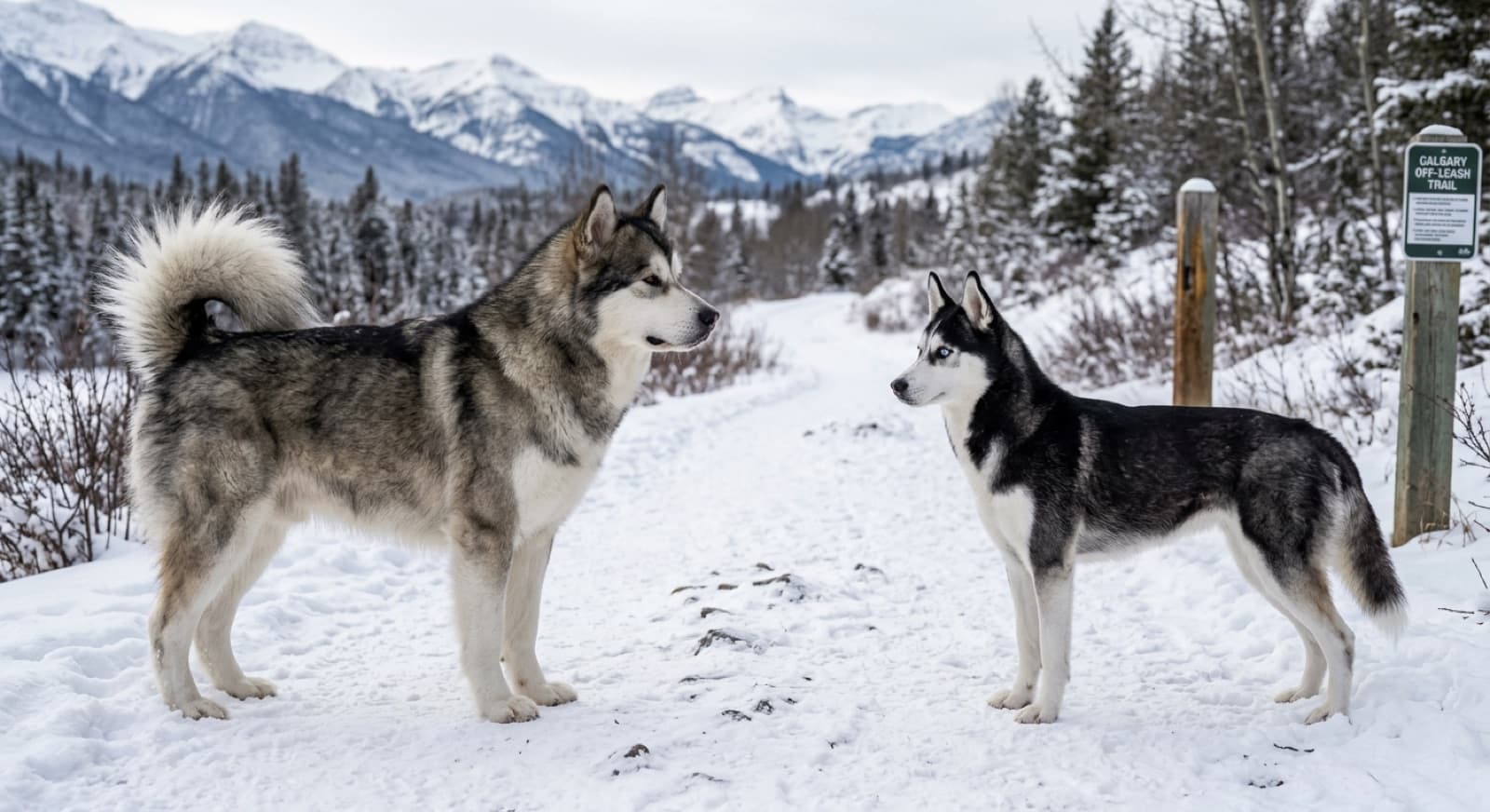
Huskies are over-represented in Edmonton and northern Alberta rescues. That is the canonical pattern most Edmonton rescue volunteers will tell you about, and it is the painful flip side of a breed perfectly built for this climate. A Husky is in its element during an Edmonton winter, but the same dog is an escape artist with a powerful prey drive and a need for serious daily mileage.
The northern-Alberta intake pipeline is the Edmonton-specific factor. SCARS in particular pulls many Huskies and Husky mixes from northern communities, where the breed is common and where rehoming infrastructure is thin. By the time those dogs reach Edmonton foster homes, many have spent time in larger northern shelters, and the SCARS foster network spends real effort assessing temperament and rehoming history. The result is a steady supply of adoptable Huskies in Edmonton most months.
Layered on top of that pipeline are the typical urban surrender reasons. Adolescents who started escaping the yard at eight months. Howling that triggered apartment complaints. Cat-killing incidents that ended a multi-pet household. Owners who bought a Husky for the look and could not sustain the exercise. These are not unique to Edmonton, but the volume here is genuinely high.
Edmonton rescues that consistently list Huskies
All six of these are Edmonton-area rescues that have Huskies or Husky mixes in their listings most months. Some of them are higher-volume than others, and the right starting point depends on what type of Husky home you can offer.
- SCARS (Second Chance Animal Rescue Society): the highest-volume Husky source in Edmonton, driven by northern Alberta intake. Foster-based, with detailed per-dog temperament notes from foster homes. Most SCARS Huskies are adolescents and adults; puppy availability is sporadic. Strong fit for adopters who want a foster-tested Husky and can wait for the right match.
- Zoe's Animal Rescue: a long-running Edmonton foster-based rescue. Huskies and Husky mixes appear regularly. Zoe's temperament assessments are thorough and the application process emphasises fit over speed.
- Edmonton Humane Society: the city's largest shelter. Huskies and Husky mixes appear here regularly as owner surrenders and transfers. Centralised facility intake means you can meet the dog in person before applying, which suits adopters who want a real-world read on energy and behaviour.
- GEARS (Greater Edmonton Animal Rescue Society): smaller foster-based rescue with rotating Husky and Husky-cross intake. Lower inventory but often well-matched, foster-evaluated dogs.
- Hope Lives Here Animal Rescue: Edmonton-area foster-based rescue. Huskies appear in their listings periodically; smaller scale than SCARS or EHS.
- Alberta Homeward Hound Rescue Bureau (AHHRB): Edmonton-area foster-based rescue that intakes from northern Alberta. AHHRB does not formally label breeds on their listings (every dog is “Mixed Breed” on paper), so Husky-type dogs are identified by description and photos. Worth checking if you are open to a Husky cross.
- AARCS (Alberta Animal Rescue Crew Society): headquartered in Calgary but with Edmonton-area foster homes. AARCS tags each dog with its current foster location, so Edmonton-foster Huskies surface on Edmonton listings. Lower Husky volume than the Edmonton-only rescues, but the foster-temperament write-ups are detailed.
Adopters sometimes ask about Halo Husky Haven specifically. As of writing we cannot verify an active organisation by that name operating in Edmonton or Alberta. If you find a rescue group by any breed-specific name, verify it the same way you would verify any pet transaction: a Canada Revenue Agency charitable registry check, a real address or named foster network, public-facing vet references, and a current adoptable-dog list. Most Edmonton Husky adopters find their dog through the major Edmonton rescues above; those have verified governance and steady Husky inventory.
What an Edmonton rescue Husky actually costs
Edmonton rescue adoption fees for Huskies generally land between $400 and $700. The fee is not a sale price; it covers the medical work the rescue has already done on the dog. That typically includes:
- Spay or neuter surgery. Standalone, this is $250 to $600 at an Edmonton vet clinic.
- Core vaccinations. DAPP and rabies at minimum. Bordetella is often included if the dog has been boarded.
- Microchip implant and registration. Required by City of Edmonton bylaw for licensed dogs.
- Deworming and flea/tick treatment. Especially important for northern-intake dogs.
- Basic vet workup. Physical exam, dental check, and assessment of any chronic conditions.
Stacked on their own, those services cost $700 to $1,200 at retail Edmonton vet pricing. The rescue fee is a recovery on costs, not a profit. Senior Huskies (eight years and up) often have reduced fees, sometimes as low as $200 to $350, because the rescue is prioritising placement.
For comparison, a breeder Husky puppy in Alberta runs $1,500 to $3,500 for pet-quality. Show or working lines can climb to $5,000 or more. A breeder puppy comes with none of the vet work the rescue dog already has, so add another $700 to $1,200 in first-year vet costs to get an apples-to-apples picture. The rescue path is significantly cheaper and the dog you adopt comes pre-vetted.
Beyond the fee, plan on ongoing Husky costs of $1,500 to $3,000 per year. Food is the biggest line because adult Huskies eat substantially. Grooming for the double coat (especially during the two annual coat blows) adds up if you outsource it. Pet insurance for a young healthy Husky in Edmonton typically runs $40 to $70 per month and is worth the math for hip and eye coverage.
The free-Husky Kijiji warning
Searching free Husky Edmonton brings up Kijiji posts, Facebook Marketplace listings, and the occasional Craigslist entry. Treat them with caution. The patterns Edmonton rescue volunteers see repeatedly:
- Backyard breeders using free framing as a hook. The post says free; the price reveals at pickup or after the first message. The dog is often an unvetted puppy from a parent with no health testing.
- Owners trying to bypass rescue surrender. Surrendering to a rescue means filling out forms, paying a surrender fee in some cases, and being honest about behavioural issues. Giving a dog away on Kijiji means none of that. The dogs that move this way often have undisclosed bite history, severe escape behaviour, or medical conditions the new owner inherits cold.
- Flippers collecting free Huskies. Someone scoops free Huskies, holds them briefly, and resells. The dog moves through hands without any continuity of care.
- Outright scams. The post is fake; the request for shipping or release fees is real.
A legitimate owner-rehoming with a modest fee ($100 to $300) is a different category and can be genuinely fine. The verification steps are simple: ask to see vet records and original adoption paperwork, meet the dog at its current home rather than a parking lot, ask blunt questions about why the dog is being rehomed and what behavioural issues exist, and take time. If anything feels rushed or evasive, walk. The Canadian Anti-Fraud Centre tracks pet scams in Canada and has reporting infrastructure if you encounter one.
Even the lowest Edmonton rescue fee covers spay/neuter, vaccines, microchip, and a vet exam at well below cost. The rescue route saves money in the first year and protects you from inheriting an unknown medical or behavioural situation.
The Pomsky problem in Edmonton
Pomskies are Husky-Pomeranian crosses produced almost exclusively through designer breeders. The size difference between a Husky mother and a Pomeranian father (or vice versa) makes natural breeding impossible, so Pomskies are bred through artificial insemination and embryo transfer. They are not a rescue breed; they are a product.
The Edmonton buyer-regret pattern is consistent. Someone buys a Pomsky expecting Husky aesthetics in a small, low-maintenance package. They get Husky personality in a 15 to 30 lb body. Pomskies vocalise the way Huskies vocalise, escape the way Huskies escape, and resist obedience the way Huskies resist obedience. Many end up in Edmonton rescue intake at eighteen months, after the cute-puppy stage gives way to adolescent Husky behaviour at small-dog scale.
If the appeal is a small Husky look, an actual Pomeranian is a completely different and more manageable breed. If the appeal is Husky personality, adopt an actual Husky from an Edmonton rescue. There is no shortage, and the rescue dog will have foster notes describing real behaviour rather than designer-breeder marketing.
Other common Husky crosses that turn up in Edmonton rescue: Husky-Lab (Huskador or Labsky, typically 40 to 60 lbs, often the most adoptable mix because the Lab influence adds trainability), Husky-German Shepherd (Gerberian Shepsky, intense and demanding), Husky-Cattle Dog crosses (very common in northern Alberta intake), and assorted Husky-northern-mix combinations where the second breed is best-guess. Read each rescue's foster notes carefully; the visual breed call on intake is not always accurate, and individual temperament matters more than label.
What Edmonton rescues evaluate in a Husky application
Edmonton Husky adoption applications are not pro-forma. Most rescues screen actively because the surrender rate on Huskies is real, and they would rather hold the dog longer than place it badly. The application questions cluster around a few areas:
- Fencing. Six-foot minimum, dig-proofed. Rescues will ask specifically about height, material, gate latches, and whether the dog will be supervised in the yard. Some will not approve to homes without a fenced yard at all. If you rent, your landlord needs to sign off on any fence modifications before approval.
- Exercise plan. Not vague answers about “walks every day,” but specific descriptions of route, duration, and what happens on -25 C days or after work meetings run long. A good answer mentions trail walks, river-valley off-leash sessions, and a backup indoor plan.
- Other pets. Prey drive screens out cat households for many Huskies, and small-animal homes (rabbits, chickens, guinea pigs) are almost always disqualifying. Existing dogs are usually fine if temperaments match; the rescue will arrange a meet-and-greet.
- Kids. Most Husky-savvy rescues will adopt to families with kids over five or six, depending on the dog. Kids under two get more scrutiny because of the size and energy mismatch.
- Work schedule. Rescues prefer adopters who can break up the day, either working from home, working flexible hours, or arranging midday dog-walker visits. A nine-to-five Husky alone all day is a destructive Husky.
- Experience level. Some Edmonton rescues will not adopt Huskies to first-time dog owners. Others will if the application demonstrates real homework: training class commitments, breed reading, references from a force-free trainer.
- Housing. Renters need written landlord approval, ideally specifying Husky vocalisation as a known and accepted noise issue. Apartment dwellers face the highest scrutiny.
The application is not a hurdle to clear; it is a conversation. If you do not have a fenced yard but you do have a daily plan for a long off-leash session in the river valley, say so. If you have never owned a Husky but you have been reading rescue temperament write-ups for six months, say so. Specificity wins applications.
Browse adoptable Edmonton dogs
Current Edmonton listings from SCARS, Zoe's Animal Rescue, Edmonton Humane Society, GEARS, Hope Lives Here, AHHRB, and AARCS Edmonton-foster dogs in one place. Filter by size, energy, and good-with-cats compatibility to find a Husky or Husky mix whose profile fits your home before you apply.
See Edmonton Adoptable Dogs →How to apply for an Edmonton Husky
Most Edmonton rescues run their application process online. The typical sequence:
- Find a specific dog you want to apply for. Edmonton rescues apply per-dog rather than maintaining a general waitlist (with some exceptions for puppies). Browse current listings and identify a specific Husky.
- Complete the online application. Expect 30 to 60 minutes for a thorough application. Have your landlord's contact information, your vet's name if you have other pets, and two non-family references ready.
- Phone screen with the foster. If the application clears the first review, the dog's foster home will call you. This is the conversation that decides most applications. Be honest about exercise, schedule, and experience.
- Home check or virtual home tour. Some Edmonton rescues do in-person home checks; others run a video walk-through. They are looking at the yard, the fence, and the general space.
- Meet-and-greet. Either at the foster's home, a neutral location, or the rescue facility. If you have other dogs, this is when the dog-dog introduction happens.
- Adoption contract and fee. Most rescues use a standard adoption contract that specifies the dog must be returned to the rescue if you can no longer keep them, ever. Read it.
Realistic timeline from application to dog-in-your-house is one to three weeks. Less in-demand dogs (adults, seniors, dogs with quirks) move faster. Puppies and popular adolescents take longer because more applicants compete for each.
The first month with a rescue Husky in Edmonton
The 3-3-3 decompression principle applies to every rescue dog, and Huskies are no exception. The first three days are about survival mode and safety. The first three weeks are about routine and adjustment. The first three months are about real personality emerging. Plan around it rather than against it.
Practical week-one priorities for an Edmonton rescue Husky:
- Yard check first. Walk the fence line looking for gaps, loose boards, dig points, low spots, and gate-latch weaknesses. Fix anything questionable before the dog goes out unsupervised. A new Husky tests the fence harder than a settled one.
- Stay on leash everywhere outside the yard. Recall is not yet established. Use a six-foot leash for transit and a 10 to 15 metre long-line for any open-space exploration. The river-valley trails are perfect for long-line work; the off-leash zones are not yet appropriate.
- License the dog with the City of Edmonton. Required for any dog over six months. Tags should be visible on the collar from day one. License information is on the City of Edmonton dogs page, along with the rest of the Animal Care and Control Bylaw rules. The off-leash-without-control fine is $250.
- Establish a feeding routine. Twice-daily meals at consistent times, not free-feeding. Huskies do better with structure.
- Start light exercise. Long leashed walks rather than full off-leash sessions. The dog needs to learn the neighbourhood, the routes, and your handling style.
- Hold off on the dog park. Not for the first two weeks at minimum. The stimulation, dog density, and unfamiliar smells are too much for a still-decompressing rescue.
- Enrol in a force-free class. Even an experienced dog owner benefits from a structured class with a new dog. Most Edmonton rescues will provide trainer recommendations during the foster phone screen.
By week three, you will start seeing the real dog. The first-three-days dog is rarely the dog you adopted. Expect more energy, more vocalisation, and more confident escape attempts as the dog settles in. This is normal and predictable.

The Edmonton-specific Husky reality
A few things are genuinely true about owning a Husky in Edmonton that may not be true elsewhere. Worth setting expectations on each:
The climate is on your side
Edmonton winters are exactly the climate Huskies were bred for. A healthy adult Husky is comfortable down to -25 C and below with daily acclimatisation, and many genuinely prefer winter over summer. The work is keeping the exercise going through January and February, not protecting the dog from cold. Booties are useful on heavily salted city sidewalks; coats are not needed for adult double-coated Huskies in most conditions.
The river valley is a real advantage
Edmonton's river-valley trail network is one of the largest urban park systems in North America. For an exercise-intensive breed like a Husky, that infrastructure matters. Terwillegar, Mill Creek Ravine, Hawrelak, Capilano, and Whitemud all support meaningful daily exercise sessions. See our Edmonton off-leash parks guide for the matrix of which park suits which dog. For a still-learning Husky, long-line work on these trails is appropriate before any off-leash session.
The off-leash recall conversation is brutal
Many Huskies will never have reliable off-leash recall. They were bred to run for hours on the trail and make their own decisions, not to check in with the human. Edmonton lost-Husky reports show up on local Facebook groups regularly, often within hours of an off-leash session that the owner thought was going fine. The honest baseline: assume off-leash recall will be unreliable; use long-lines indefinitely; and only release in genuinely contained areas like fully fenced off-leash zones.
The northern-intake context shapes the dogs
A Husky that came through SCARS from a northern community is not the same as a Husky that grew up in suburban Edmonton. The northern dog often has limited indoor experience, may not have lived with stairs, and may have a stronger prey drive from outdoor-life background. Foster homes work through these gaps before adoption, but the first month in your house involves a lot of learning. Patience is the right setting.
The bylaw enforcement is real
The City of Edmonton Animal Care and Control Bylaw fines $250 for failing to control a dog off-leash outside a designated zone. Bylaw officers patrol the popular river-valley parks regularly. A loose Husky chasing a coyote or running across a road is the worst-case Edmonton scenario, both for the dog and for the citation that follows.
Frequently asked questions
Where can I adopt a Husky near me in Edmonton?
Huskies and Husky mixes turn up constantly in Edmonton-area rescues. The highest-volume sources are SCARS (Second Chance Animal Rescue), which pulls heavily from northern Alberta communities, Zoe's Animal Rescue, and Edmonton Humane Society. Greater Edmonton Animal Rescue Society (GEARS), Hope Lives Here, and Alberta Homeward Hound Rescue Bureau (AHHRB) also list Huskies and Husky mixes regularly. AARCS, headquartered in Calgary, has Edmonton foster homes and tags Edmonton-area dogs accordingly. Inventory rotates, so check current Edmonton listings for what is actually available right now.
Why are there so many Huskies in Edmonton rescues?
Three reasons stacked together. First, Husky popularity created a generation of impulse adoptions and breeder purchases that hit the adolescent escape-and-howl phase together. Second, the breed's exercise, fencing, and recall demands defeat many owners who chose it for the look. Third, and this is the Edmonton-specific factor, SCARS and similar northern-intake rescues pull large numbers of Huskies and Husky-type dogs from northern Alberta communities where the breed is common and rehoming infrastructure is thin. The combined pipeline puts Huskies among the most-listed dogs in Edmonton rescue most weeks.
How much does it cost to adopt a Husky in Edmonton?
Edmonton rescue adoption fees for Huskies typically run $400 to $700. The fee covers spay or neuter, core vaccinations, microchip, deworming, and a basic vet workup. Senior Huskies (around eight years and up) often have reduced fees at most Edmonton rescues. Compare that to a breeder Husky puppy in Alberta, which generally runs $1,500 to $3,500 for pet-quality and higher for show or working lines. The rescue fee gap is even wider once you count the vet work already done.
Are there free Huskies on Kijiji Edmonton?
Treat free-Husky listings on Kijiji, Facebook Marketplace, and similar sites with caution. The common patterns are backyard breeders using free as a hook before the price reveals at pickup, owners trying to bypass rescue surrender by giving a dog away with no behavioural disclosure, or outright flipping where someone collects free Huskies to resell. A legitimate owner-rehoming with a modest fee can be fine, but verification matters: ask for vet records, see the dog in its current home, and ask blunt questions about why the dog is being rehomed. If the answer is vague or rushed, walk. The Canadian Anti-Fraud Centre tracks pet scams in Canada; their guidance applies.
What is a Pomsky and should I get one in Edmonton?
A Pomsky is a Husky crossed with a Pomeranian, almost always through artificial insemination because the size difference makes natural breeding impossible. Pomskies are produced by designer breeders, not rescues, and they show up in Edmonton rescue intake later when owners realise they bought a small-bodied Husky personality. Expect Husky vocalisation, Husky escape behaviour, and Husky stubbornness in a 15 to 30 lb body. They are not a low-maintenance Husky alternative. If you are drawn to a small Husky-look dog, an actual Pomeranian is a different and more manageable breed; if you want a Husky, adopt one from a rescue.
What does an Edmonton Husky home need for fencing?
Six-foot minimum fencing, dig-proofed at the base. Solid wood, vinyl, or chain-link with anti-dig wire buried or laid at the bottom of the run. Huskies clear four-foot fences routinely, dig under chain-link, and learn to open gate latches. Some Edmonton rescues will not adopt Huskies to homes without a fenced yard at all, and almost all will ask specific questions about fence height and dig-proofing. Acreage owners often add hot-wire at the top of the fence after the first escape. If you rent, your landlord will need to sign off on fence modifications before most rescues will approve.
Can Huskies handle Edmonton winters?
Huskies are one of the few breeds built for exactly this climate. A healthy adult Husky is genuinely comfortable down to -25 C and below with daily acclimatisation, and they would rather be outside in winter than summer. The catch is that a climate-comfortable dog still needs to run. Edmonton cold is not an excuse to skip exercise with this breed; under-exercised Huskies in January destroy houses. Watch paw pads on de-icing salt in city neighbourhoods, and pay attention to ice-balling between the toes on long river-valley walks.
Are Huskies good for first-time dog owners in Edmonton?
Generally no. Huskies combine high exercise need, low recall reliability, vocal habits, prey drive, and a genuine talent for escape. Experienced dog owners can manage these traits; first-time owners often cannot. Most Edmonton rescue Husky surrenders trace back to a first-time owner who underestimated the breed. If you are set on a Husky as your first dog, the realistic prerequisites are a six-foot dig-proofed fenced yard, a real plan for 60 to 90 minutes of daily exercise year-round, enrolment in a force-free training class from week one, and acceptance that off-leash recall may never be reliable.
Will an Edmonton Husky rescue adopt to apartment renters?
Some will, most prefer not to. The harder question is not square footage but exercise commitment and noise tolerance. A Husky that howls in an apartment generates noise complaints fast, and a Husky that does not get its daily exercise destroys the apartment. If you rent and want to adopt a Husky, your application strengthens with a documented exercise plan, landlord written approval that covers Husky vocalisation, and ideally a senior Husky whose energy and noise have already settled. Some rescues will home-check before approval.
How long does the Edmonton Husky adoption application take?
Most Edmonton rescues use an online application followed by a foster phone screen and an in-person or virtual meet-and-greet. Expect one to three weeks from application to approval and home placement, sometimes faster for less in-demand dogs and longer for puppies or popular adolescent Huskies. SCARS, with its higher Husky volume, sometimes moves faster on adults; EHS application timelines are often steadier. Read each rescue's application page carefully before applying so you do not get filtered out for a fixable reason.
Related Edmonton Husky guides
Edmonton Adoptable Dogs
Current Edmonton-area Husky and Husky-mix listings from SCARS, Zoe's, EHS, GEARS, Hope Lives Here, AHHRB, and AARCS Edmonton fosters.
Husky Health Issues: Eyes, Skin, Thyroid
Siberian Husky health issues to plan for: juvenile cataracts, corneal dystrophy and PRA, zinc-responsive skin disease, hypothyroidism, epilepsy and degenerative myelopathy.
Husky Winter Care Edmonton
Cold-weather exercise, paw care on de-icing salt, double-coat blow management, and how to actually keep a Husky tired in January.
Best Dog Rescues Edmonton
Every major Edmonton rescue compared by intake source, application process, and best-fit adopter profile.
Find your Edmonton rescue Husky
Browse current Edmonton-area Husky and Husky-mix listings. Foster temperament notes help you find the right match for your fencing, schedule, and home.
Browse All Edmonton Dogs →New dog? Start with these care guides
Everything a new adopter needs to set up a safe, happy home.