The short answer
Edmonton has several routes to affordable vet care. The Edmonton Humane Society's PALS subsidy program charges $40 for spay/neuter, microchip, and a cone for income-qualified owners. SCARS runs a mobile spay-neuter clinic. Vaccine clinics offer DHPP and rabies at half the full-service price. Standard wellness exams cost $70 to $130 at a full-service vet; $30 to $60 at a low-cost clinic. Payment plans through Scratchpay and VetBilling cover larger bills. Adopting an already-fixed dog from an Edmonton rescue is the lowest total-cost path to a fully-vetted dog.
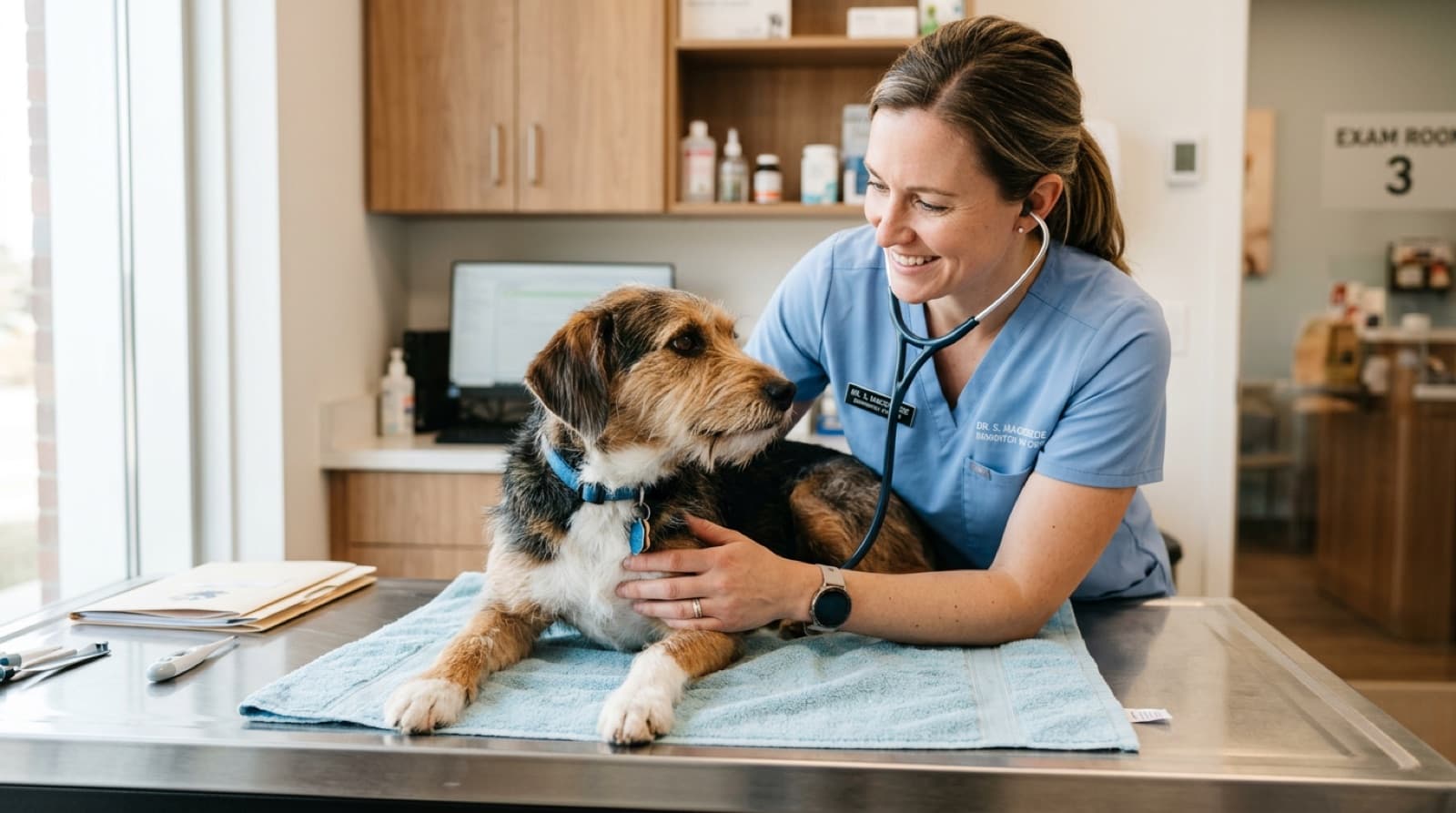
Heads up: This article is informational and is not veterinary advice. Always consult your Edmonton veterinarian about specific health concerns and treatment options for your dog. Pricing is current as of June 2026 and changes; confirm fees with the clinic or program before booking.
Vet care is the biggest ongoing cost of dog ownership, and it shouldn't be the reason a dog loses a loving home. Edmonton has more options than most owners realise. From the well-known PALS spay/neuter subsidy to vaccine clinics to third-party payment plans, the gap between “I can't afford the vet” and “my dog needs care” is usually bridgeable.
If you're weighing the costs before adopting, check our Edmonton spay/neuter cost breakdown. If you're already adopted and trying to budget for the year ahead, the cost comparison table below is a realistic Edmonton-based estimate.
Standard vs Low-Cost Vet Prices in Edmonton
| Service | Standard Edmonton Clinic | Low-Cost / Subsidy |
|---|---|---|
| Basic wellness exam | $70 to $130 | $30 to $60 |
| DHPP combination vaccine | $60 to $120 | $20 to $40 |
| Rabies vaccine | $30 to $60 | $15 to $30 |
| Microchip | $60 to $80 | $25 to $50 |
| Spay (female dog) | $300 to $600 | $40 (PALS) / $150 to $300 open |
| Neuter (male dog) | $250 to $500 | $40 (PALS) / $100 to $250 open |
| Annual fecal + heartworm test | $80 to $140 | $30 to $60 |
| Dental cleaning under anaesthesia | $500 to $1,200 | $250 to $500 |
Prices are estimates and vary by clinic, dog size, and complexity. The American Veterinary Medical Association maintains a general guide to routine pet ownership costs. Always confirm pricing before your appointment.
Major Low-Cost Programs in Edmonton
1. PALS (Prevent Another Litter Subsidy) at Edmonton Humane Society
The flagship low-cost program in Edmonton. Income-qualified owners pay a $40 administration fee that covers spay or neuter surgery, mandatory microchip, rabies and combination vaccines if needed, and a recovery cone. Eligibility: low-income residents of Edmonton and surrounding communities within 200 km. Dogs and cats aged 4 months to 6 years, healthy. Applications need government-issued proof of income; approval takes roughly 14 business days and appointments book about two months out.
Location: Edmonton Humane Society, 13620 163 Street NW.
2. SCARS Mobile Spay-Neuter-Return Clinic
SCARS (Second Chance Animal Rescue Society) operates a mobile spay-neuter-return clinic that travels to underserved Alberta communities. Primary focus is community cat populations and rescue inventory, with some availability for low-income public pet owners. Capacity is limited and rolling; the schedule shifts based on staffing and community demand. Worth contacting if you're in a rural area near Edmonton with limited access to a brick-and-mortar clinic.
Contact: SCARS website for current availability.
3. Alberta SPCA Animal Welfare Program
The Alberta SPCA runs an Animal Welfare Program focused on owners facing financial hardship. Available services vary by region and current funding, but historically have included subsidies for spay/neuter, vaccines, and basic care for owners on income assistance. Contact the Alberta SPCA directly to ask about Edmonton-area availability. This isn't a walk-in service; it's a referral and application process.
Contact: Alberta SPCA website.
4. Edmonton Low-Cost Vaccine Clinics
Edmonton Humane Society and other organizations periodically host vaccine clinics where DHPP, rabies, bordetella, and microchipping are offered at half the full-service price or less. No exam is included, so these are best for healthy adult dogs already established with a vet. Schedule changes by season; some pause for the deepest winter weeks. Call ahead for current dates.
Browse adoptable Edmonton dogs
The cheapest path to a fully-vetted dog is to adopt one that already is. Every Edmonton rescue dog arrives spayed/neutered, vaccinated, and microchipped at no extra cost.
See Available Edmonton Dogs →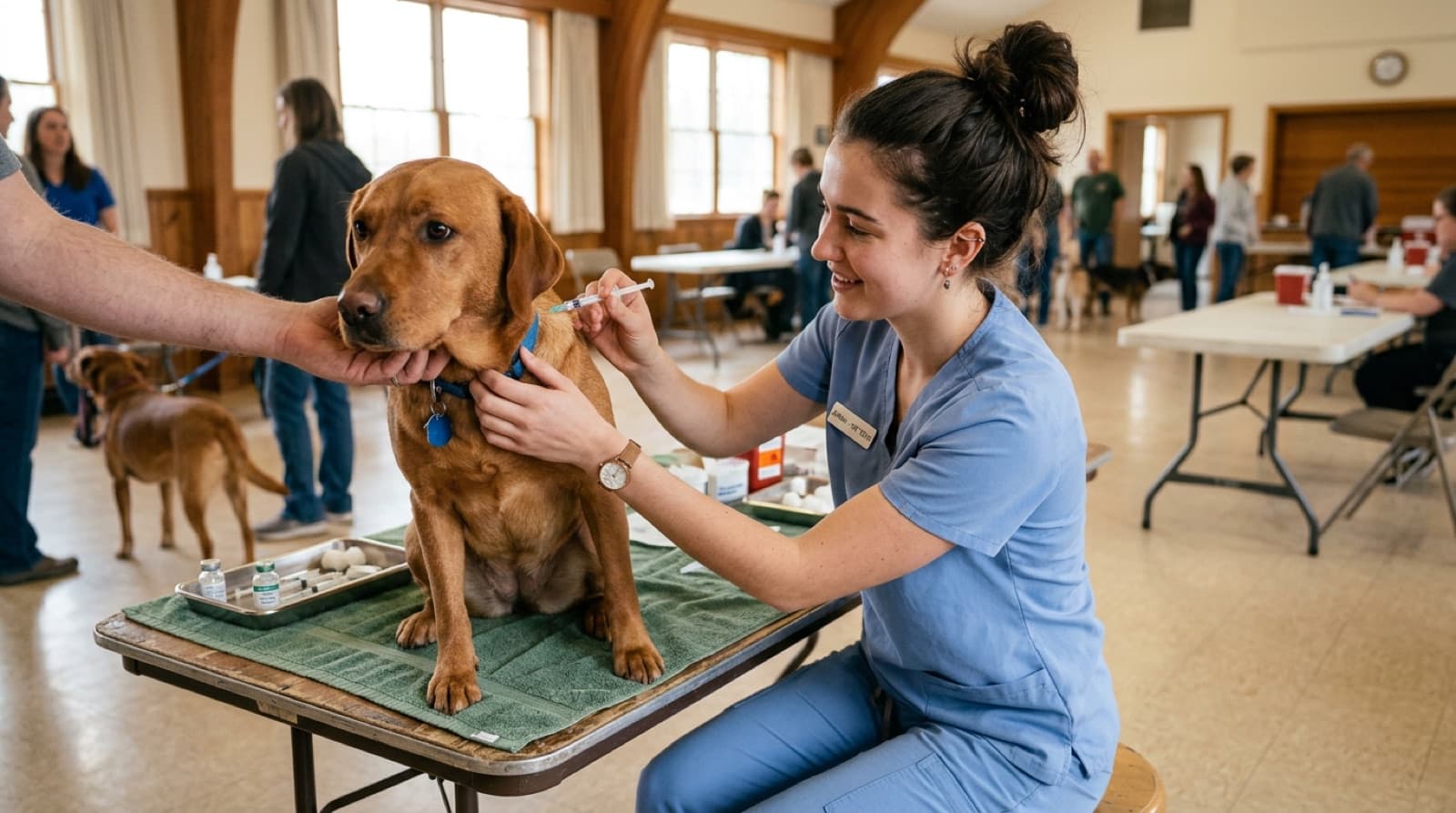
Payment Plans and Financial Aid
For larger or unexpected bills, payment plans and financial aid programs bridge the gap between “I can't pay this today” and walking away from care.
Scratchpay
A third-party financing service accepted at many Edmonton vet clinics. Splits a vet bill into 3 to 18 monthly payments. Approval is a soft credit check (no hit to your credit score). The no-interest 3-month plan is the cheapest if you can manage the higher monthly amount. scratchpay.com.
VetBilling
Similar to Scratchpay. Clinic-direct payment plans. Approval generally fast. Check with your clinic before the appointment to confirm acceptance.
In-house clinic payment plans
Many Edmonton vet clinics offer in-house payment plans, especially for established clients facing emergencies. Ask before the procedure: clinics rarely volunteer the option but most will work with owners who ask.
Farley Foundation (Ontario only)
A search for help with a vet bill almost always surfaces the Farley Foundation, so it is worth being direct. It subsidises care for low-income Ontario families through Ontario clinics, so an Alberta application does not go anywhere. We could not verify a province-wide Alberta equivalent. Alberta's help is local instead. The Edmonton Humane Society PALS subsidy and the SCARS mobile clinic above are the real routes here, and your own clinic is the place to ask about staging treatment over months.
Pet insurance (for future bills only)
Pet insurance doesn't cover bills you already have, but it caps your exposure for the next emergency. Enroll before your dog has any pre-existing conditions because those will be excluded for life. Plans start around $30 to $50 per month for accident and illness coverage and typically reimburse 70 to 90 percent of covered bills after a deductible.
University Teaching Hospital Referrals
The Western College of Veterinary Medicine (WCVM) at the University of Saskatchewan operates a teaching hospital that accepts referrals from Alberta vets for specialised cases. Teaching hospital fees often come in below private specialty hospital prices because residents and supervised students perform procedures under faculty oversight. The medical standards meet university accreditation requirements.
Best for: non-urgent specialty work like orthopedic surgery, oncology consults, neurology, cardiology, or complex internal medicine. WCVM is a 5 to 6 hour drive from Edmonton. For Edmonton dogs with chronic specialty needs, the savings vs Calgary or Edmonton private specialty hospitals can be meaningful, especially for multi-visit treatment plans.
How to access: your Edmonton vet has to make the referral. The teaching hospital does not accept walk-ins. Confirm referral availability before assuming this is an option for your dog.
Learn more at the WCVM Veterinary Medical Centre.
What “Low-Cost” Actually Means (Hint: Not Lower Quality)
A reasonable concern about low-cost vet care is whether the medical quality matches a private clinic. The honest answer is that the standards are the same. The Alberta Veterinary Medical Association sets the licensing requirements for every veterinarian practising in the province. Anaesthesia protocols, surgical technique, and sterilisation requirements don't change based on the price point.
Low-cost clinics achieve lower prices in three ways:
- Subsidised overhead. The Edmonton Humane Society absorbs facility costs through donations. PALS pricing reflects the subsidy, not the actual cost of the surgery.
- Focused service. A clinic that only does spay/neuter and vaccines is more efficient than a full-service hospital that handles emergencies, dental work, internal medicine, and specialty cases.
- Fewer bundled add-ons. A low-cost clinic may itemise the cone, take-home pain meds, or pre-anaesthetic bloodwork separately, where a full-service clinic bundles them into the quoted price. You pay for what you choose to add on.
The trade-offs are real but not about medical quality. Low-cost clinics typically have less appointment flexibility, longer waitlists, fewer add-on services available the same day, and limited follow-up appointment options. For a healthy adult dog needing routine care, the trade-offs are minor. For a complex case or an emergency, a full-service clinic with same-day access to imaging and specialists is the right choice.
Edmonton Winter Timing Caveats
Edmonton low-cost programs run on the same calendar as the rest of the city, which means winter holiday closures matter for planning:
- December and January slow down. The Edmonton Humane Society and most low-cost clinics reduce hours from mid-December through early January. Vaccine clinic events pause in the deepest winter weeks.
- PALS approval takes 14 business days, and business days don't count statutory holidays. If you apply in December, expect the approval to land in early February.
- Surgery scheduling in February and March tends to have shorter waitlists than peak summer. If your dog is on the PALS waitlist, winter appointments are usually easier to secure than May to August slots.
- Don't schedule elective surgery during a cold snap. Outdoor bathroom breaks during recovery are harder at -25°C. Plan recovery weeks for thaws or higher-temperature stretches when possible.
Ways to Reduce Vet Costs Long-Term
Preventive care saves more than it costs
Annual wellness exams catch problems early, when treatment is cheaper. Skipping the annual to save $100 often costs $500 to $2,000 in delayed diagnosis later.
Adopt instead of buy
Edmonton rescue dogs arrive already spayed/neutered, vaccinated, and microchipped. Adoption fees ($300 to $700) are less than the surgery alone.
Maintain a healthy weight
Overweight dogs face higher risk of diabetes, arthritis, and heart disease, which drive expensive senior years. Keeping your dog at a healthy weight is the single highest-ROI thing you can do for lifetime vet costs.
Comparison-shop for non-emergencies
For non-urgent procedures, call 2 or 3 Edmonton clinics for quotes. The price gap for the same procedure can be $200 to $400. The cheapest isn't always the best fit, but the gap is worth checking.
Frequently Asked Questions
Are there low-cost vet clinics in Edmonton?
Yes. Edmonton has several routes to affordable veterinary care. The Edmonton Humane Society runs the PALS (Prevent Another Litter Subsidy) program for income-qualified spay/neuter at $40, plus vaccine clinics at reduced rates. SCARS (Second Chance Animal Rescue Society) runs a mobile spay-neuter-return clinic. Several Edmonton clinics focus on spay/neuter and preventive care at below-standard prices. Adopting from a rescue is the cheapest route to a fully-vetted dog because the spay/neuter, vaccines, and microchip are already done.
How much does a standard vet visit cost in Edmonton?
A standard exam in Edmonton runs $70 to $130 at a full-service clinic. Annual wellness visits with vaccines typically total $250 to $450. At low-cost or vaccine-clinic events, basic vaccines run $20 to $40 each compared to $60 to $120 at a full-service clinic. The American Veterinary Medical Association notes annual routine care for a healthy dog generally totals $300 to $700, consistent with Edmonton pricing.
What does the PALS program at Edmonton Humane Society cover?
PALS (Prevent Another Litter Subsidy) covers spay or neuter surgery, a microchip, rabies and combination vaccines if needed, and a recovery cone. The administration fee is $40 per animal for income-qualified owners in Edmonton and surrounding communities within 200 km. Dogs and cats aged 4 months to 6 years are eligible if healthy. Applications need government-issued proof of income; approval takes roughly 14 business days and appointments book about two months out.
Can I get help paying for emergency vet bills in Edmonton?
A few options exist. Many Edmonton vet clinics offer in-house payment plans. Third-party financing services like Scratchpay and VetBilling let you split bills into monthly payments and are accepted at many Alberta clinics. The Farley Foundation is Ontario-only, so it is not a route from here. If you adopted from an Edmonton rescue, contact them about post-adoption support funds. Pet insurance only covers future bills, not current ones, so it doesn't help in the moment.
Where can I get cheap dog vaccines in Edmonton?
Periodic vaccine clinics in Edmonton run vaccines at $20 to $40 per shot, compared to $60 to $120 at a full-service vet. The Edmonton Humane Society runs reduced-cost vaccine clinics on an ongoing basis. Some rescue organizations host pop-up vaccine days during summer months. Call ahead to confirm dates and which vaccines are on offer. The American Society for the Prevention of Cruelty to Animals (ASPCA) maintains a guide to core vs non-core dog vaccines that can help you decide what your dog actually needs.
What does “low-cost” vet care actually mean? Is the quality lower?
Low-cost does not mean low-quality. Low-cost clinics typically achieve lower prices in three ways: subsidised overhead (the Edmonton Humane Society absorbs facility costs through donations), focused service offerings (a clinic that only does spay/neuter and vaccines is more efficient than a full-service hospital), and fewer add-ons in the base price (the cone or take-home pain meds may be itemised separately). The surgical and medical standards are the same. The licensed veterinarian and the anaesthesia protocols meet the same Alberta Veterinary Medical Association standards as any private clinic.
Does SCARS offer low-cost vet services in Edmonton?
SCARS (Second Chance Animal Rescue Society) operates a mobile spay-neuter-return clinic primarily focused on community cat populations and rescue inventory, with some availability for low-income public pet owners. Their mobile unit travels to underserved Alberta communities. Contact SCARS directly for current availability and eligibility because the program operates on a rolling capacity basis and fills quickly.
Can the Western College of Veterinary Medicine in Saskatoon help with referrals?
The Western College of Veterinary Medicine (WCVM) at the University of Saskatchewan operates a teaching hospital that accepts referrals from Alberta vets for specialised cases. Teaching hospital fees are often lower than private specialty hospitals because residents and supervised students perform procedures under faculty oversight. Your Edmonton vet has to make the referral. WCVM is a 5 to 6 hour drive from Edmonton, so it's best for non-urgent specialty work like orthopedic surgery or oncology consults.
How do payment plan services like Scratchpay work?
Scratchpay and VetBilling are third-party financing services that let you split a vet bill into monthly payments. The clinic gets paid up front; you pay the service back over 3 to 18 months. Approval is a soft credit check and is generally quick. Interest rates vary by plan; the no-interest 3-month plan is the cheapest if you can manage the payments. Many Edmonton clinics list these services on intake forms. Confirm acceptance before your appointment.
Does pet insurance cover routine vet care?
Most pet insurance plans cover accidents and illnesses but not routine wellness care like vaccines, dental cleaning, or spay/neuter. Some insurers offer wellness add-ons that cover preventive care, but the add-on monthly fee usually exceeds the savings on a single procedure. Insurance is most valuable for catastrophic costs (emergency surgery, cancer treatment, chronic conditions). Enroll before your dog has any pre-existing conditions or those conditions will be excluded for life.
Are vaccines cheaper at vaccine clinics than a full-service vet?
Yes, often by 50 to 70 percent. A DHPP combination vaccine costs $20 to $40 at a vaccine clinic vs $60 to $120 at a full-service clinic. Rabies costs $15 to $30 vs $30 to $60. Microchipping at a clinic event runs $25 to $50 vs $60 to $80 at a vet. The trade-off: vaccine clinics don't include the full exam, so any health concerns won't be caught. For a healthy adult dog with no symptoms, vaccine clinics are a reasonable budget option. For puppies, seniors, or sick dogs, a full exam visit is worth the extra cost.
When do Edmonton low-cost clinics close for holidays?
The Edmonton Humane Society and most low-cost clinics close for major statutory holidays (Christmas Day, Boxing Day, New Year's Day) and may have reduced hours over winter break. Vaccine clinic events also pause in the deepest winter weeks. Call ahead before any appointment between mid-December and early January. For ongoing PALS applications, the 14 business day approval timeline doesn't count holiday weekdays, so budget extra time if applying in December.
Do Edmonton rescues offer post-adoption vet support?
Many do. Edmonton Humane Society, Zoe's Animal Rescue, SCARS, and GEARS all offer some form of post-adoption support, which may include access to a discounted vet network, recovery vouchers for newly adopted dogs, or referrals to subsidy programs. If you adopted from an Edmonton rescue, contact your rescue coordinator before paying full vet prices. Each rescue runs its own support program with different rules.
Related Edmonton Guides
Skip the Vet Bill Entirely — Adopt
Every Edmonton rescue dog comes already spayed/neutered, vaccinated, and microchipped. Adoption fees are less than the routine first-year vet costs alone.
Browse Available Edmonton Dogs →New dog? Start with these care guides
Everything a new adopter needs to set up a safe, happy home.