The short answer
Edmonton dog spay/neuter recovery runs 10 to 14 days. The cone stays on the whole time, period. Activity is restricted to leash-only bathroom walks for the first 10 days. No baths, no off-leash, no stairs, no dog parks. Female spay (abdominal) recovery typically takes longer than male neuter (external). Edmonton winter adds risks: icy falls, salt irritation, and cold-snap bathroom break logistics. Use only the pain medication your vet prescribed. Never give Tylenol or ibuprofen, both are toxic to dogs. Call your vet immediately if the incision opens, swells significantly, discharges fluid, or smells off.
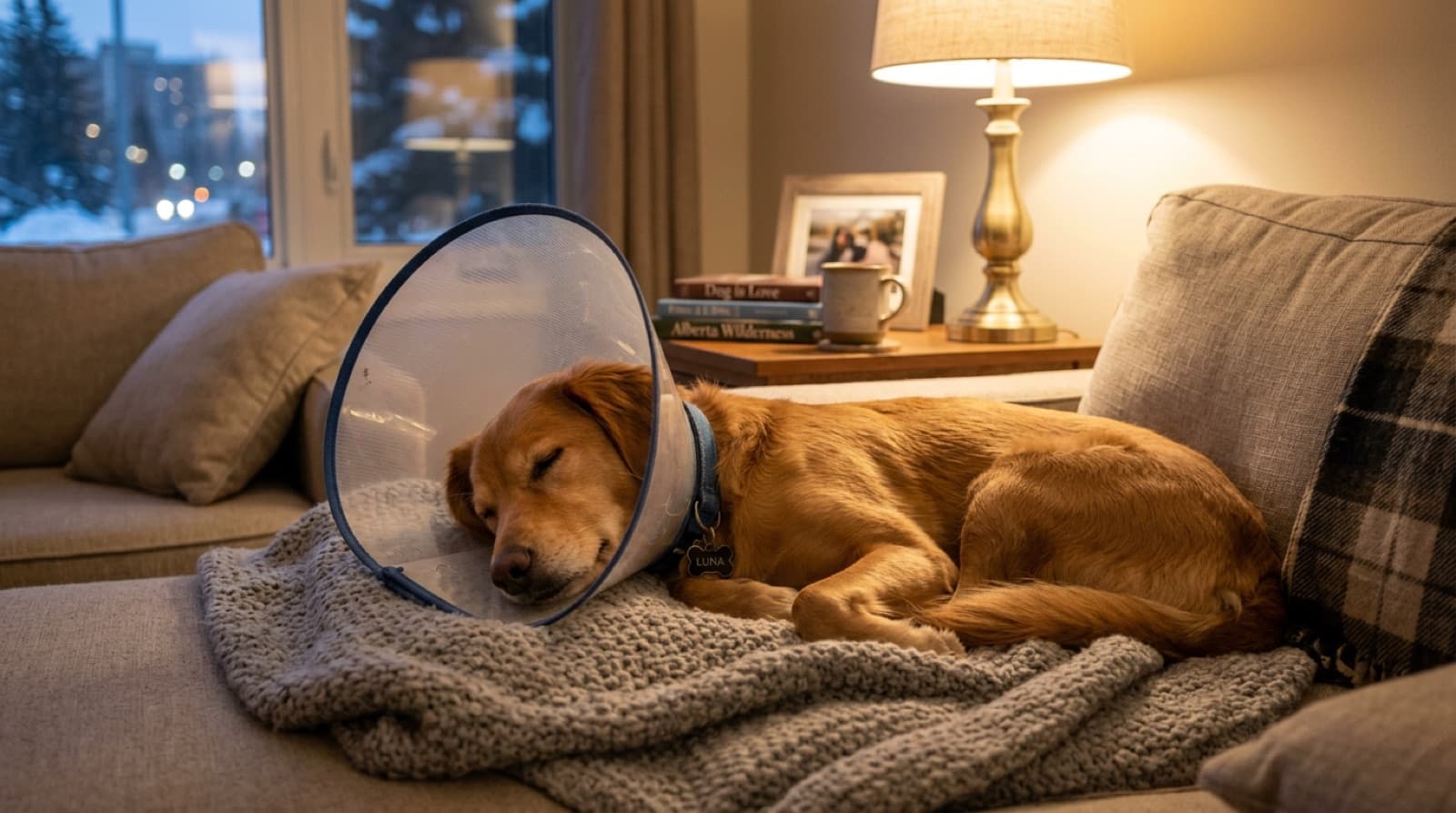
Heads up: This article is general information and is not veterinary advice. Always follow your Edmonton vet's specific discharge instructions for your dog. If something looks wrong with the incision or your dog's behaviour during recovery, call your vet first. The information here is a supplement to professional care, not a replacement for it.
Spay/neuter surgery is one of the most common procedures done at Edmonton vet clinics, but recovery is where things can go wrong. Most complications come from one thing: dogs being dogs and not knowing they just had surgery. They want to jump, run, lick the wound, and go back to normal life immediately. The recovery week is about preventing exactly that.
This guide walks through what to expect day by day, what the warning signs are, what Edmonton winter adds to the picture, and when to call the vet. If you're still planning the surgery, our Edmonton spay/neuter cost guide covers clinic prices and timing. For low-cost options including the PALS subsidy program, check our Edmonton low-cost vet guide.
Recovery Timeline: Day by Day
| Timeline | What Happens |
|---|---|
| Day 0 (Surgery day) | Drop-off in the morning, surgery during the day, same-day pickup in the late afternoon. Dog is groggy from anaesthesia and may sleep most of the evening. Cone goes on immediately. Small, easy-to-digest dinner. |
| Day 1 to 2 | Continued grogginess and reduced appetite. Quiet area, leash-only bathroom breaks, cone stays on. Pain medication on schedule. Incision check: look for early signs of redness or swelling. |
| Day 3 to 5 | Energy starts returning, which is when restriction gets hard. No running, jumping, stairs, or off-leash play. Leash walks for bathroom only. Daily incision check. Cone stays on. Pain medication usually tapers off in this window. |
| Day 5 to 10 | Incision looks closed and clean. Cone stays on. No baths. Continue daily checks for redness, discharge, or unusual swelling. Restricted activity continues. Most dogs are bored by this point; mental enrichment matters. |
| Day 10 to 14 | Suture removal (if not dissolvable) and post-op vet check. Vet confirms healing and clears the dog for gradual return to normal activity. Cone can usually come off after the check. |
| Week 2 to 4 | Gradual return to normal: leash walks lengthen, then off-leash returns, then dog parks and hiking. Female spay incisions may need the full 4 weeks before high-impact activity. Watch the incision area for any late issues. |
The Cone Is Non-Negotiable
The single most common reason recovery goes sideways is the cone coming off. Owners feel bad. The dog seems uncomfortable. “Just for an hour while we're watching.” And then the dog gets in 30 seconds of licking that introduces bacteria, and the incision opens or gets infected.
The cone stays on for the full 10 to 14 days, including:
- Overnight. Dogs lick more when alone at night.
- During supervised time. Dogs sneak licks the moment your attention moves.
- Meals. Cone off only briefly for the meal itself, then back on. Some owners use food bowls slightly raised so the cone clears.
Cone alternatives that work: inflatable donut collars work for some dogs, but only if the dog physically can't reach the incision past it. Test it before surgery if possible. Surgical recovery suits (onesie-style) cover the incision area and work well for female spay incisions on the abdomen. Some Edmonton pet stores carry both. The standard Elizabethan cone is the most reliable option.
The Cornell University College of Veterinary Medicine maintains a canine health resource centre with detailed post-surgical care guidance worth reading.
Activity Restriction: The Real Rules
For the full 10 to 14 days:
- No running, jumping, or stairs. Stairs in particular put strain on the abdominal wall for female spays. Carry small dogs up and down; use baby gates for large dogs to block stairs entirely.
- No off-leash anything. No yard time without leash control. A determined chase after a squirrel can pop sutures.
- No dog parks, daycare, or play dates. Other dogs jumping on the incision is a real risk.
- Leash walks for bathroom only. Short, calm, on-leash. The walk is functional, not exercise.
- Use a harness, not a collar. A collar puts pressure on the neck if the dog pulls, which doesn't affect the incision directly but adds general stress during recovery. Harness over the back is preferred. For female spays where the incision is on the lower abdomen, a back-clip harness keeps pressure away from the incision area.
- Crate or pen rest for high-energy dogs. If your dog is a runner, jumper, or zoomer, contained rest during the day is the safest option. Crate rest isn't punishment; it's the only realistic way to prevent the surgery being undone.
For mental enrichment during the activity ban: puzzle feeders, snuffle mats, frozen Kong-style toys, low-intensity training from a calm position. The American Veterinary Medical Association notes that strict activity restriction is the single biggest predictor of recovery success.
Edmonton Winter Recovery: The Specific Risks
Edmonton winter recovery has unique risks that don't exist in summer. If your dog's surgery is scheduled between November and March, plan for these:
- Icy sidewalks. A slip and fall on the incision area can open sutures. Use ice cleats on your boots so you can stabilise the dog. Walk on cleared, salted paths only. Avoid hilly streets where the dog has to brace.
- Salt and chemical de-icers. If the dog rolls in slush or sits on a salt-treated path, the salt can irritate the incision area on the abdomen. Wipe paws and belly with a damp cloth after every walk. Avoid the salted streets entirely if possible.
- Winter coats and the incision. Full belly-covering coats can rub the incision and trap moisture. Use a back-only blanket-style coat for the recovery period and let the abdomen breathe.
- Cold-snap bathroom logistics. If a cold snap hits during recovery (below -25°C), even healthy dogs shouldn't be out for long. With stitches, the calculation gets harder. Pee pads in the garage or a covered porch are reasonable backup for the worst few days.
- Schedule warmer slots. Outdoor bathroom breaks should happen in the warmest part of the day. Plan walks for late morning or early afternoon when possible.
- Booties optional but useful. Booties protect paws from salt and ice. If your dog tolerates them, this is the week to use them. If your dog hates them, don't force it during recovery; the stress isn't worth it.
Browse adoptable Edmonton dogs
Every Edmonton rescue dog arrives already spayed/neutered, so you skip the whole recovery week entirely. The rescue handles it.
See Available Edmonton Dogs →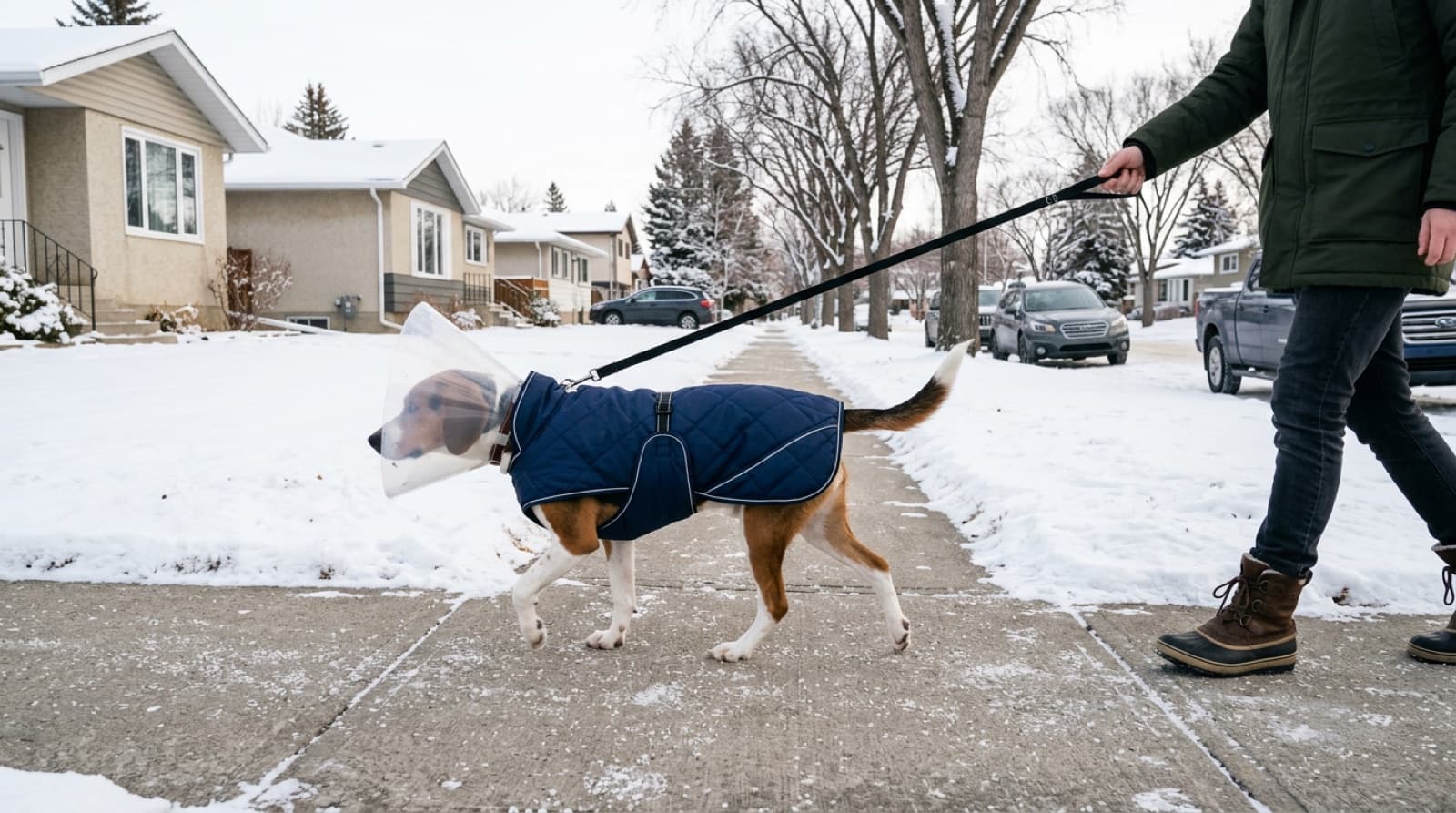
Daily Incision Check
Check the incision daily, ideally at the same time (morning is easiest). You're looking for the difference between normal healing and a warning sign.
Normal: the incision is closed, with slight pink colour around the edges, minimal swelling, no discharge. A small amount of bruising can develop in the first 48 hours and is normal. The skin around the incision may feel slightly warm to the touch (above the dog's general body temperature) in the first 2 to 3 days as inflammation peaks, then cools.
Watching closely: the incision is gaping slightly at one end, mild discharge of clear fluid, the dog seems more uncomfortable than expected. Call your vet to describe what you're seeing; they can advise whether it's normal healing or worth a check-in.
Call the vet now: the incision is open or bleeding, swelling is significant or growing, discharge is yellow, green, or has a bad smell, the dog has a fever, or the dog is lethargic past day 2.
What helps: take a photo of the incision on day 1, day 3, day 5, and day 7 from the same angle. If you have to call the vet and aren't sure whether something is normal, the photo series is the fastest way for the clinic to triage.
Red Flags — Call Your Vet Immediately
Any of the following warrant a same-day vet call. The Edmonton Humane Society and the major rescue organizations all back up their adopted dogs with vet support if needed; if you adopted from a rescue, contact them as well.
- Incision opening, gaping, or visible bleeding
- Strong odour, yellow or green discharge, or significant redness at the site
- Swelling much larger than day 1 or expanding rapidly
- Fever, vomiting, or lethargy that persists past 48 hours
- Refusal to eat or drink past 24 to 48 hours
- Dog repeatedly chewing or licking the incision (the cone is non-negotiable)
- Excessive panting, whimpering, or signs of significant pain after pain meds have been given
- Sutures or staples falling out before the post-op appointment
The ASPCA post-surgical guidance emphasises that catching problems early is what saves the recovery. A vet visit at day 4 for a minor issue is much cheaper and easier than emergency surgery at day 8.
Pain Management: What You Can and Can't Give
Use only what your vet prescribed. Most Edmonton vets send dogs home with a multi-day course of pain medication (often a dog-specific NSAID), sometimes preceded by a longer-acting injectable given at surgery. Follow the dosing schedule exactly. Don't double up if you miss a dose; just give the next one on time.
Never give human pain medication. The American Veterinary Medical Association lists acetaminophen (Tylenol), ibuprofen (Advil, Motrin), and aspirin as toxic to dogs. Even small doses can cause kidney failure, liver damage, or fatal poisoning. The dose that's safe for a human is far too much for a dog's system. If your dog seems uncomfortable beyond what the prescribed medication covers, call your vet; never reach for the human cabinet.
Signs of pain in dogs: excessive panting, whimpering, restlessness, hunched posture, reluctance to lie down, loss of appetite that doesn't resolve. Some discomfort in the first 48 hours is expected. Significant or worsening signs after pain meds have been given warrant a vet call.
What helps without medication: a quiet, dim space; a comfortable bed; calm voices; minimal stimulation. Some dogs find a soft blanket they can curl into reassuring. Avoid stressful events (visitors, other animals, loud noises) for the first 3 days when possible.
Female Spay vs Male Neuter: The Recovery Difference
Female Spay (Abdominal Surgery)
- ✓Recovery: 10 to 14 days for incision healing; 3 to 4 weeks for full abdominal-wall strength
- ✓Incision location: midline lower abdomen (or lateral flank for laparoscopic)
- ✓Activity restriction: longer, often full 14 days minimum
- ✓Risks: abdominal hernia if activity isn't restricted, seroma fluid collection
Male Neuter (External Surgery)
- ✓Recovery: 7 to 10 days for incision healing
- ✓Incision location: scrotum, small incision
- ✓Activity restriction: usually 10 days; vet may clear sooner
- ✓Risks: scrotal swelling, occasional bruising; both usually resolve on their own
Both surgeries use general anaesthesia and the same cone discipline applies. The biggest difference is the abdominal vs external incision, which changes how long the activity restriction needs to last.
Frequently Asked Questions
How long does dog spay/neuter recovery take?
Most dogs need 10 to 14 days for full recovery. Day 1 to 2 involves grogginess and reduced appetite from anaesthesia. Day 3 to 7 requires restricted activity with no running, jumping, or stairs. Day 7 to 10 is continued healing; the incision should look closed and clean. Day 10 to 14 is the suture-removal window and the follow-up vet appointment. Female spay recovery typically takes longer than male neuter because it's an abdominal surgery vs an external one.
Does my dog have to wear the cone the whole time?
Yes, for the full 10 to 14 days. The e-collar (Elizabethan cone or inflatable donut alternative) prevents the dog from licking or chewing the incision. Even one minute of licking can introduce bacteria and cause infection. Inflatable donut collars work for some dogs but check that yours physically can't reach the incision past it. Cone-off-for-meals is fine. Cone-off-during-supervision is risky because dogs sneak in licks the moment you look away. The Cornell University College of Veterinary Medicine recommends 100 percent cone coverage during recovery for exactly this reason.
When can my dog go for walks again?
Short leash walks for bathroom breaks only from day 1. Restricted, leash-only walks (no running, no off-leash, no dog parks) from day 3 through day 10 to 14. Most vets clear dogs to return to gradual normal activity at the post-op check. Full off-leash play, hikes, and dog-park visits resume at 2 to 4 weeks depending on the dog and surgery. Female spays often need the full 4 weeks because the abdominal wall takes longer to fully heal.
What are the warning signs after spay/neuter surgery?
Call your vet if you see incision opening, gaping, or bleeding; significant swelling, redness, or discharge (especially with a strong odour); fever, vomiting, or lethargy that persists past 48 hours; refusal to eat or drink past 24 to 48 hours; or repeated chewing/licking at the incision that you can't prevent with the cone. The ASPCA maintains a guide to post-surgical recovery warning signs that's worth bookmarking before the surgery date.
Can I bathe my dog after spay/neuter surgery?
No baths for the full 10 to 14 days. The incision must stay completely dry. Water introduces bacteria and softens the suture line. Use a damp cloth for spot cleaning if needed (avoid the incision area). After your vet clears the dog at the 10 to 14 day check and confirms the incision is fully closed, bathing can resume. If the dog gets muddy or rolls in something during recovery, towel them off and use a baby wipe for the worst spots, but skip the bath.
What about Edmonton winter walks during recovery?
Edmonton winter recovery has unique risks. Icy sidewalks raise the risk of falling on the incision. Salt and chemical de-icers irritate paw pads near surgical incisions on the abdomen if the dog rolls in slush. Winter coats can rub the incision; use a coat that has clearance around the abdomen (a back-only blanket-style coat works better than a full belly-covering coat). Schedule outdoor bathroom breaks for the warmest part of the day. If a cold snap hits during recovery (below -25°C), pee pads in the garage or a covered porch are a reasonable backup so the dog isn't out on cold concrete with stitches.
Can I give my dog human pain medication?
No. Never give human pain medication to a dog. Acetaminophen (Tylenol), ibuprofen (Advil, Motrin), and aspirin are toxic to dogs and can cause kidney failure, liver damage, or fatal poisoning depending on the dose. Use only what your Edmonton vet prescribed, on the schedule given. Most dogs receive a multi-day pain medication course (often an NSAID prescribed for dogs plus possibly a longer-acting injectable given at surgery). If your dog seems uncomfortable beyond the prescribed plan, call your vet, never reach for the human cabinet.
How is female spay recovery different from male neuter?
Female spay is an abdominal surgery: the abdominal wall is opened to remove the ovaries (and uterus in a traditional ovariohysterectomy). Recovery takes longer (typically 10 to 14 days for incision healing and up to 3 to 4 weeks for full abdominal-wall strength to return). Male neuter is an external surgery on the scrotum; recovery is typically 7 to 10 days. Female dogs are more likely to need the full restricted-activity window and pre-anaesthetic bloodwork. Both surgeries use the same anaesthesia protocols and need the same cone discipline.
What should my dog eat after spay/neuter?
For the first 24 hours after surgery, expect reduced appetite from anaesthesia. Offer small meals (about half the normal portion) of the regular food. Anaesthesia commonly causes nausea, so a smaller meal is less likely to come back up. From day 2 onward, return to normal feeding amounts unless the vet advises otherwise. If your dog refuses food past 24 hours, call the vet. Lack of appetite past 48 hours is a red flag. Some vets recommend a bland chicken-and-rice option for the first day; ask before surgery if that's the case at your clinic.
Are stitches always removed, or do some dissolve?
It depends on the suture material. Most modern Edmonton vets use dissolvable internal sutures and external skin staples or sutures that need removal at the 10 to 14 day check. Some use fully dissolvable sutures throughout, including the skin layer. The clinic will tell you which type your dog received. Either way, the post-op visit is part of the package and confirms the incision is healing properly. Don't skip the follow-up appointment even if everything looks fine to you.
How do I keep my dog calm during the recovery week?
For high-energy dogs, restricted activity is the hardest part of recovery. Plan mental enrichment to substitute for physical exercise: puzzle feeders, snuffle mats, frozen Kong-style toys, low-intensity training (sit, stay, leave-it practice from a calm position), and short sniff-only walks on leash. Crate rest or a pen during the day is the safest option for runners, jumpers, and zoomy dogs. A second person who can hand-feed dinner and provide calm attention can break up the boredom. The American Veterinary Medical Association notes that strict activity restriction is the single biggest predictor of recovery success.
What if my dog won't leave the incision alone even with a cone?
A few troubleshooting steps. First, check the cone fits snugly at the neck so it can't be pushed off by paws. The cone should extend past the nose. Second, check that the dog can't reach the incision past the cone edge by lying flat or twisting. A larger cone size may help. Third, consider an inflatable donut as backup, or in combination with the cone for stubborn dogs. Fourth, use a recovery suit or surgical onesie that covers the incision area with breathable fabric, available at most Edmonton pet stores. If none of these works and the dog is determined to lick, call your vet for additional options. Repeated licking can open the incision and require re-suturing.
Related Edmonton Guides
Skip the Recovery Week — Adopt
Every Edmonton rescue dog arrives already spayed/neutered, vaccinated, and microchipped. The rescue handles the surgery, the cone, and the recovery week.
Browse Available Edmonton Dogs →Spay & Neuter Cost Across Canada
What the surgery costs by province, what subsidised clinics charge, and how to find one near you.
New dog? Start with these care guides
Everything a new adopter needs to set up a safe, happy home.