The short answer
Shih Tzus are a brachycephalic toy breed, and the health picture follows the anatomy. The prominent eyes are the headline: corneal ulcers, dry eye (keratoconjunctivitis sicca), exposure damage, eyelid and eyelash problems, and, with trauma, proptosis, all common enough that any painful or cloudy eye is a same-day vet call. The flat-faced airway means some degree of compromised breathing and real heat intolerance, so Edmonton summer needs care. The crowded toy mouth makes dental disease close to universal without daily brushing and regular cleanings. Add patellar luxation, ear and skin allergies, and brachycephalic anaesthesia precautions. Enrol in pet insurance week one: every Canadian provider excludes pre-existing conditions, and the breed's steady stream of eye, dental, and allergy costs makes it pay off.
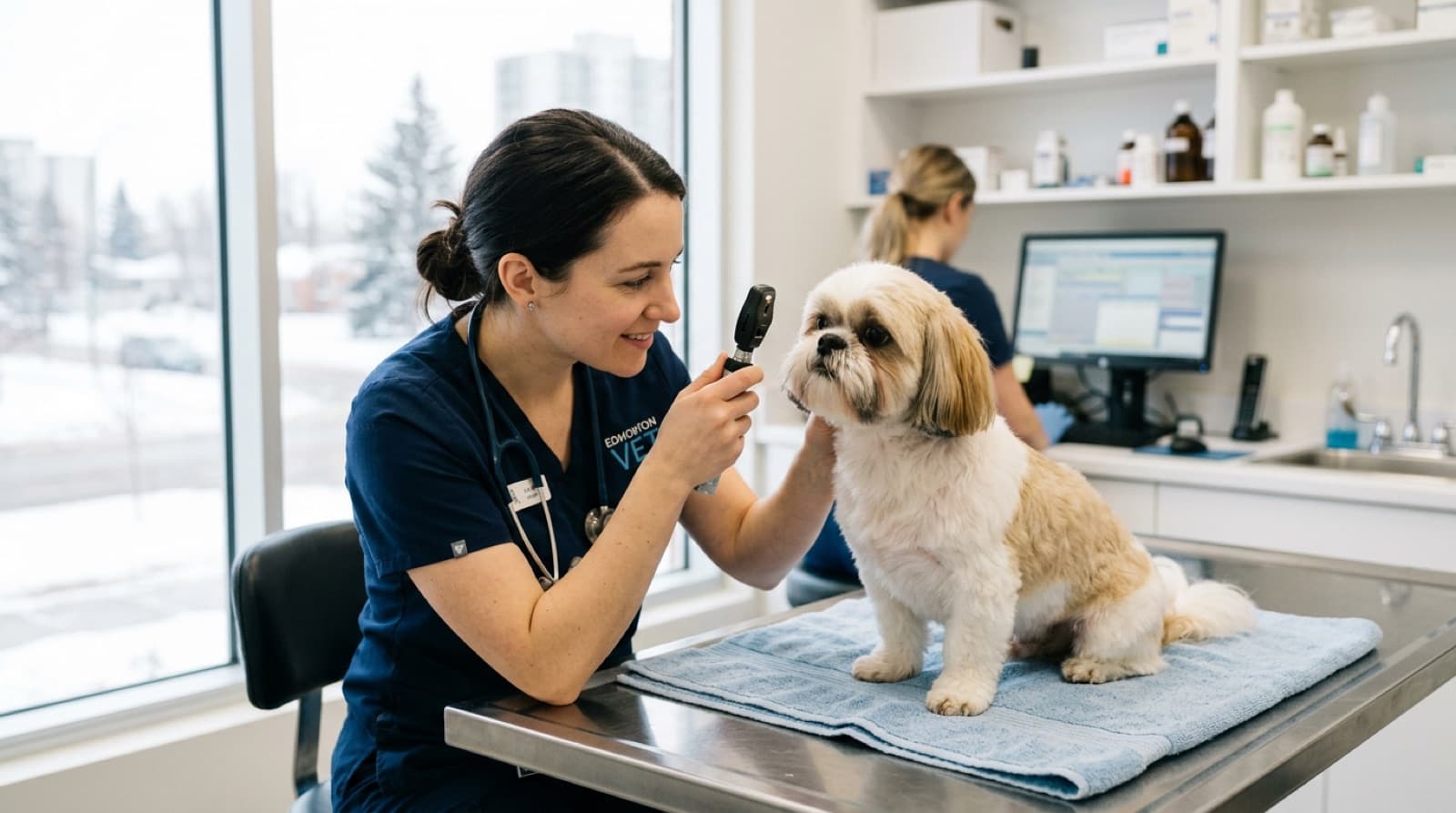
The Shih Tzu breed health picture, briefly
The Shih Tzu is an ancient toy companion breed built for the lap, not for work, and its health profile is shaped almost entirely by its brachycephalic (flat-faced) head and small toy body. Lifespan is good, commonly 12 to 16 years, so the goal is managing a set of predictable, mostly non-catastrophic conditions well across a long companion life.
The prioritisation list leads with the flat face. The prominent eyes are the most pressing vulnerability (covered first below) because eye problems can move fast and threaten sight. The brachycephalic airway brings variable breathing compromise and clear heat intolerance. Dental disease is close to universal in the crowded toy mouth and needs lifelong management. After that trio: patellar luxation, ear infections in the floppy hairy ears, skin and ear allergies, intervertebral disc disease at a moderate rate, hypothyroidism, urinary and kidney stones, and an inherited juvenile kidney condition (renal dysplasia) seen in some lines. Brachycephalic anaesthesia precautions apply to every sedated procedure.
The practical theme for an Edmonton Shih Tzu owner is routine attentive care rather than fear of disaster: daily eye and coat care, daily toothbrushing, heat caution in summer, and a good vet relationship. Pet insurance enrolled in week one is the financial backstop for the steady breed-typical costs. The American Animal Hospital Association publishes preventive-care and dental guidelines that frame the routine.
The eyes: the breed-defining vulnerability
The flat face sets the eyes prominently and shallowly in the skull, leaving the cornea exposed and less protected than in a longer-nosed dog. That single fact drives the breed's most pressing health concern, because eye problems are painful, can deteriorate quickly, and threaten vision. Every Shih Tzu owner should know the common ones and treat eye pain as urgent.
- Corneal ulcers: scratches or erosions on the eye surface, painful and potentially fast-worsening in an exposed eye. Signs are squinting, tearing, redness, cloudiness, and pawing at the face. These need prompt veterinary care; a small ulcer treated early usually heals, while a neglected one can deepen and threaten the eye.
- Dry eye (keratoconjunctivitis sicca): inadequate tear film leading to chronic irritation, mucus discharge, and surface damage. It is usually managed lifelong with medicated drops that stimulate or replace tears, and good control keeps the eye comfortable and clear.
- Eyelid and eyelash problems: entropion (eyelid rolling inward) and distichiasis (extra lashes) can rub the cornea and cause chronic irritation or ulcers, sometimes needing minor surgery to correct.
- Proptosis: the most serious. Blunt trauma can displace the eyeball forward out of the socket. It is an emergency where minutes matter for the chance of saving the eye.
Home care lowers risk: keep the hair around the eyes trimmed so it cannot rub or trap debris, wipe away discharge gently, and inspect the eyes regularly. A board-certified veterinary ophthalmologist, credentialed through the American College of Veterinary Ophthalmologists, handles complex or surgical cases on referral from your Edmonton vet. The rule to live by: any squinting, redness, cloudiness, or pawing at an eye is a same-day call.
Brachycephalic airway and heat intolerance
As a flat-faced breed, the Shih Tzu carries some degree of brachycephalic obstructive airway syndrome (BOAS), where the shortened skull crowds the soft tissues of the airway. It is usually milder than in a Pug or French Bulldog and varies widely between individuals, from a dog that merely snores to one with noisy, effortful breathing and exercise intolerance. Narrowed nostrils and an overlong soft palate are the common contributors, and significant cases can benefit from surgical correction that your vet would assess.
The most important day-to-day consequence is heat intolerance. A flat-faced dog cannot cool itself by panting as efficiently as a longer-nosed one, so heat is a genuine danger. In Edmonton summer, exercise in the cool of the day, always provide shade and water, never leave the dog in a warm car or an unventilated space, and watch for excessive panting, distress, or bluish gums as warning signs of overheating. Any Shih Tzu that breathes with obvious effort at rest, not just after exertion, deserves a veterinary airway assessment.
Browse adoptable Edmonton Shih Tzus
Current Edmonton Shih Tzu and Shih Tzu-mix listings from SCARS, Zoe's, EHS, GEARS, Hope Lives Here, AHHRB, and AARCS Edmonton fosters. Foster notes flag any documented eye, dental, or breathing history. Plan a first-month vet workup that baselines the eyes, teeth, and airway.
See Available Shih Tzus →Dental disease: the toy-mouth reality
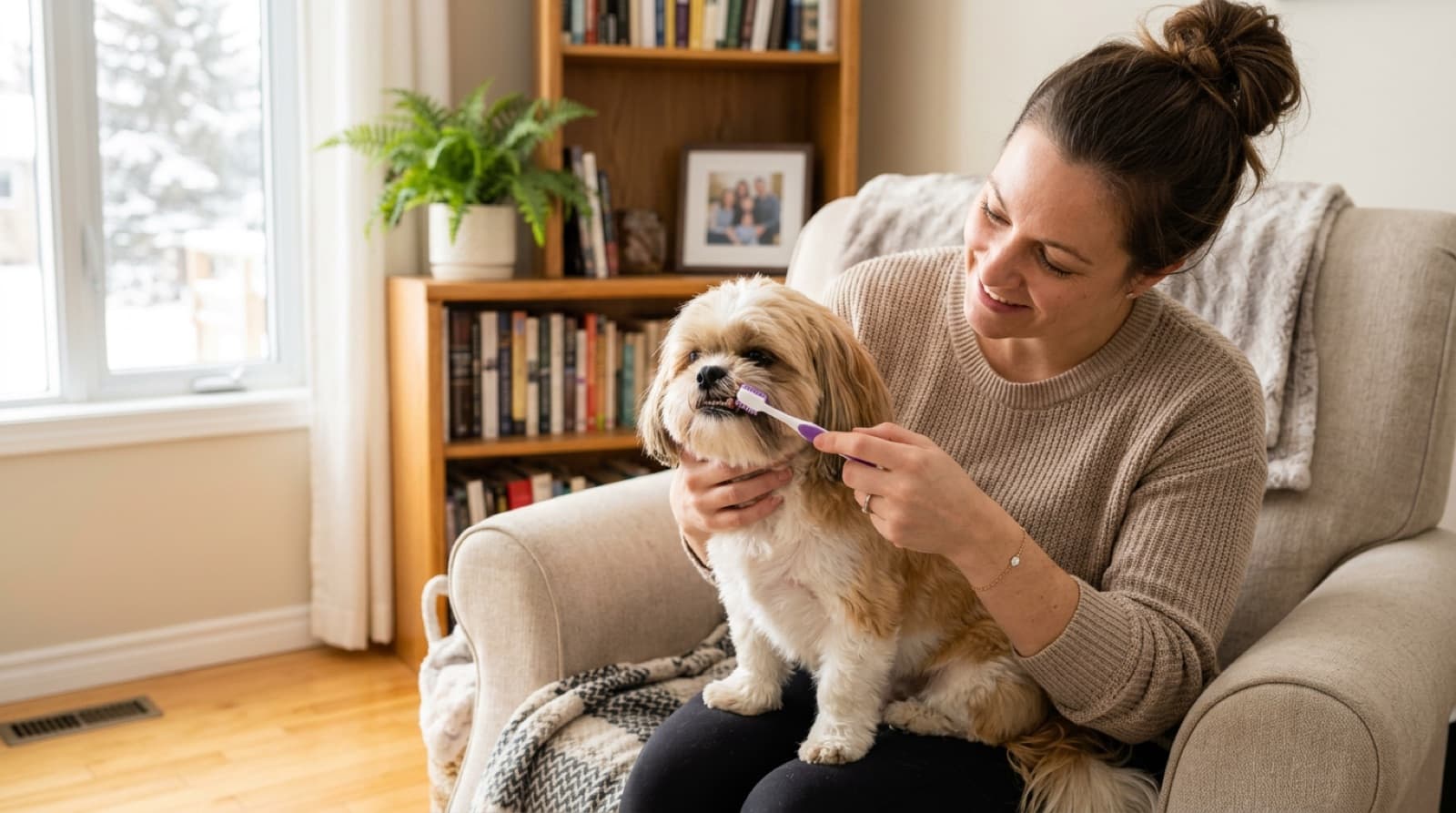
Dental disease is one of the most consistent and most preventable Shih Tzu health issues. The toy-breed skull crowds a full set of teeth into a small jaw, which traps plaque and accelerates periodontal disease, and retained baby teeth are common and make crowding worse. Untreated, dental disease causes pain, tooth loss, and a bacterial load that affects the whole body, not just bad breath.
Management is lifelong and routine. Daily toothbrushing with pet-safe paste is the single most effective home step and is worth building into the routine from day one. Dental-friendly chews help. Professional cleanings under anaesthesia, on the schedule your vet recommends, remove what brushing cannot, and toy breeds often need them more frequently than larger dogs. An Edmonton dental cleaning with anaesthesia and any necessary extractions commonly runs from several hundred to over a thousand dollars depending on the work involved. The brachycephalic anaesthesia note applies here, since dental work is the most common reason a Shih Tzu is anaesthetised.
The payoff for the daily brushing habit is real: less pain, fewer extractions, lower lifetime cost, and a healthier dog. It is one of the highest-value routines a Shih Tzu owner builds.
Knees, ears, skin, and the rest
Patellar luxation
Like many toy breeds, Shih Tzus are prone to patellar luxation, where the kneecap slips out of its groove. Signs are an intermittent skip or hop in a back leg, or a leg held up briefly mid-stride. Mild cases are managed conservatively with weight control and joint support; more severe or painful cases may need surgery. Your vet grades the severity and advises. The Orthopedic Foundation for Animals maintains patellar evaluation schemes vets use.
Ears and skin
The floppy, hairy ears trap moisture and warmth and are prone to infection, so routine ear checks and cleaning on your vet's advice matter, and many groomers manage the ear hair. Allergies (atopic dermatitis) are also common, showing as itchy skin, recurrent ear infections, and paw licking, and are managed long-term with your vet rather than cured. Keeping the coat and skin clean and well maintained reduces flare-ups.
Kidneys, back, and thyroid
A few other concerns appear at lower rates and are worth knowing. Renal dysplasia, an inherited abnormal kidney development, occurs in some Shih Tzu lines and can show as excessive drinking and urination or poor growth in a young dog; a vet workup investigates. Urinary and kidney stones occur and present as straining or blood in the urine, needing prompt care because a blockage is an emergency. Intervertebral disc disease appears at a moderate rate, so the back-protection basics (weight control, avoiding high jumps) are sensible. Hypothyroidism is easy to diagnose and inexpensive to treat. Share any known history with your Edmonton vet so the baseline is complete.
The first-month Edmonton vet workup
A rescue adoption fee typically covers the basics: spay or neuter, core vaccines, deworming, a microchip, and treatment of any acute issue found at intake. What it usually does not cover is the breed-specific baseline that makes the years ahead easier to manage.
Plan a first-month visit with your chosen Edmonton vet that establishes the Shih Tzu baseline:
- A careful eye exam, with a tear-production test if dry eye is suspected, and referral to a veterinary ophthalmologist if anything looks off
- A thorough dental assessment and a plan for home brushing and the first professional cleaning
- An airway and breathing check, noting any BOAS signs and the heat-safety implications
- An orthopaedic exam including a patellar check, and a back assessment
- An ear and skin exam, with an allergy conversation if there are signs
- Baseline bloodwork, including kidney values and thyroid where age-appropriate
- A frank talk about pet insurance and enrolling now, before anything is documented
For senior Shih Tzus (roughly ten and up), add full senior bloodwork and urinalysis, closer kidney and dental attention, and a careful eye exam, since dry eye and other issues progress with age. Budget $400 to $1,000 for a senior intake workup at an Edmonton clinic, and bring any vet notes the rescue can share.
Frequently asked questions
Where can I find an eye vet for a Shih Tzu near me in Edmonton?
Start with your general-practice Edmonton vet, who handles most eye problems and refers to a board-certified veterinary ophthalmologist (credentialed through the American College of Veterinary Ophthalmologists) for complex corneal disease, dry eye that is hard to control, or surgery. The Shih Tzu detail that matters most: a sudden painful red or cloudy eye, squinting, or pawing at the face is an urgent problem, not a wait-and-see, because corneal ulcers can deteriorate fast in a prominent-eyed breed. And a true proptosis, where the eyeball is displaced forward out of the socket after trauma, is an emergency where minutes matter for saving the eye. Know your regular vet's hours and your nearest after-hours emergency clinic before you need them, and treat any obviously painful eye as a same-day call.
What are the main Shih Tzu health issues to know before adopting?
The Shih Tzu is a brachycephalic (flat-faced) toy companion breed, and three themes lead the health picture: eyes, airway, and teeth. The prominent, shallow-set eyes are prone to corneal ulcers, dry eye (keratoconjunctivitis sicca), exposure damage, eyelash and eyelid problems, and, with trauma, proptosis. The brachycephalic airway means some degree of compromised breathing (brachycephalic obstructive airway syndrome, or BOAS) and real heat intolerance. The small crowded mouth makes dental disease close to universal without lifelong care. Beyond that trio: patellar luxation (slipping kneecaps), ear infections in the floppy hairy ears, skin and ear allergies, intervertebral disc disease at a moderate rate, hypothyroidism, urinary and kidney stones, and an inherited juvenile kidney condition (renal dysplasia) in some lines. Brachycephalic anaesthesia precautions apply. Week-one pet insurance is well worth it.
Why do Shih Tzus have so many eye problems?
It comes down to anatomy. The flat brachycephalic face sets the eyes prominently and shallowly in the skull, leaving the cornea more exposed and less protected than in a longer-nosed dog. That exposure, combined with sometimes reduced tear production and the hair around the face, makes several problems common: corneal ulcers (scratches or erosions on the eye surface that are painful and can worsen quickly), dry eye or keratoconjunctivitis sicca (inadequate tear film leading to chronic irritation and surface damage, usually managed lifelong with medicated drops), exposure keratitis, and eyelid or eyelash abnormalities like entropion and distichiasis that rub the eye. The most serious, proptosis, is when blunt trauma displaces the eyeball forward; it is an emergency. The practical upshot for owners: keep the face hair trimmed away from the eyes, watch closely for squinting, redness, cloudiness, discharge, or pawing, and get any painful eye seen promptly. Early eye care is far cheaper and far more successful than late.
Do Shih Tzus have breathing problems?
To some degree, yes, because they are brachycephalic, though it varies a lot by individual and tends to be milder than in a Pug or French Bulldog. Brachycephalic obstructive airway syndrome (BOAS) comes from the shortened skull crowding the soft tissues of the airway: narrowed nostrils, an overlong soft palate, and other changes that increase breathing effort. Signs range from snoring and snorting (often harmless) to noisy laboured breathing, exercise intolerance, and trouble in heat. The most important practical consequence is heat intolerance: a flat-faced dog cannot cool itself by panting as efficiently, so Edmonton summer heat is a genuine risk. Exercise in the cool of the day, never leave the dog in a warm car or unventilated space, and watch for excessive panting or distress. Dogs with significant BOAS can benefit from surgical correction; your vet assesses whether an individual needs it. Any Shih Tzu with laboured breathing at rest deserves a veterinary airway assessment.
How serious is dental disease in Shih Tzus?
It is one of the most consistent health issues in the breed and one of the most preventable. The toy-breed skull crowds a normal number of teeth into a small jaw, which traps plaque and food and accelerates periodontal disease; retained baby teeth are also common and worsen crowding. Left alone, dental disease is not just bad breath: it causes pain, tooth loss, and bacterial load that affects overall health. The management is lifelong and routine: daily toothbrushing with pet-safe paste (the single most effective home step), dental-friendly chews, and professional cleanings under anaesthesia on the schedule your vet recommends, often more frequently than for a larger dog. An Edmonton dental cleaning with anaesthesia and any needed extractions commonly runs several hundred to over a thousand dollars depending on the work involved. Building the toothbrushing habit early saves money, teeth, and discomfort over the dog's life. The American Animal Hospital Association publishes dental-care guidelines vets follow.
Should I get pet insurance for an Edmonton rescue Shih Tzu?
Yes, and enrol in week one. The Shih Tzu case is less about one catastrophic number and more about a steady stream of breed-typical costs that add up: recurrent eye problems (an ophthalmology workup and ongoing dry-eye medication, or surgery for a bad ulcer), lifelong dental care with periodic cleanings and extractions, ear and skin allergy management, possible airway surgery, and patellar or disc issues. Any one is manageable; together over a lifetime they are substantial, and an eye emergency or airway surgery can spike the cost quickly. Every Canadian provider excludes pre-existing conditions, and the clock starts the day you adopt, so an eye problem, a heart murmur, or a documented dental issue before enrolment becomes a permanent exclusion. Premiums for a small breed are usually moderate. Look for explicit hereditary and congenital coverage and reasonable wait times, and enrol before the first vet visit documents anything.
Do Shih Tzus need special anaesthesia precautions?
Yes, because they are brachycephalic, and a good vet builds the plan around it. Flat-faced breeds carry higher anaesthetic risk centred on the airway: they can be harder to intubate, more prone to airway obstruction during recovery, and need careful monitoring as they wake. Experienced clinics manage this routinely with appropriate pre-oxygenation, careful airway control, and close recovery monitoring, but it is a real consideration for any procedure requiring sedation or anaesthesia, including dental cleanings, which Shih Tzus need regularly. The practical takeaways: use a vet comfortable with brachycephalic anaesthesia, ask how they handle airway monitoring, and factor this into the timing of elective procedures. None of it makes anaesthesia unsafe; it makes a thoughtful protocol important.
Do Shih Tzus handle Edmonton weather?
Summer heat is the bigger concern; winter is manageable with care. As a brachycephalic breed, the Shih Tzu cools itself less efficiently by panting, so Edmonton summer heat and any warm, poorly ventilated space are genuine risks. Exercise in the cool of the day, provide shade and water, and never leave the dog in a warm car. In winter, the Shih Tzu is a small dog whose coat is usually kept clipped for manageability rather than left long, so a trimmed Shih Tzu has limited insulation and benefits from a coat or sweater in deep Edmonton cold, shorter outings when it is bitter, and paw care against salt and ice. Watch footing for any dog with knee or back vulnerability. With sensible seasonal accommodations in both directions, a Shih Tzu does well as an indoor companion.
Related Edmonton Shih Tzu guides
Edmonton Adoptable Dogs
Current Edmonton-area Shih Tzu and Shih Tzu-mix listings from SCARS, Zoe's, EHS, GEARS, Hope Lives Here, AHHRB, and AARCS Edmonton fosters.
Shih Tzu Adoption Edmonton
Rescue sources, real adoption costs, the companion-breed reality, common Shih Tzu mixes, and the grooming commitment.
Pug Health Issues Edmonton
A more brachycephalic cousin. Deeper detail on the flat-faced airway and eye concerns that Shih Tzus share in milder form.
Spay & Neuter Edmonton
Low-cost clinics, timing, and the brachycephalic anaesthesia precautions to raise with your vet before a Shih Tzu's surgery.
Find your Edmonton rescue Shih Tzu
Browse current Edmonton-area Shih Tzu and Shih Tzu-mix listings. Foster temperament notes help you flag any documented eye, dental, or breathing history before you apply, and your first-month vet workup baselines the eyes, teeth, and airway that shape the breed's care.
Browse All Edmonton Dogs →New dog? Start with these care guides
Everything a new adopter needs to set up a safe, happy home.