The short answer
Seven Pug conditions shape Edmonton adoption planning: BOAS airway disease (surgery $2,000 to $4,500), Pug Dog Encephalitis (PDE, a breed-specific fatal brain disease in young adults, no cure), eye proptosis (emergency that can dislocate the eye from minor trauma), dry eye and corneal ulcers (chronic management), chronic skin and ear disease (fold dermatitis, atopy, otitis), orthopaedic issues (hemivertebrae, patellar luxation, moderate hip dysplasia), and heat plus cold welfare risk across the Edmonton year. Complex cases refer to the Western College of Veterinary Medicine in Saskatoon or Calgary specialty centres. Enrol in pet insurance week one. Pug Dog Encephalitis alone makes this the highest-ROI insurance decision in toy-breed adoption.
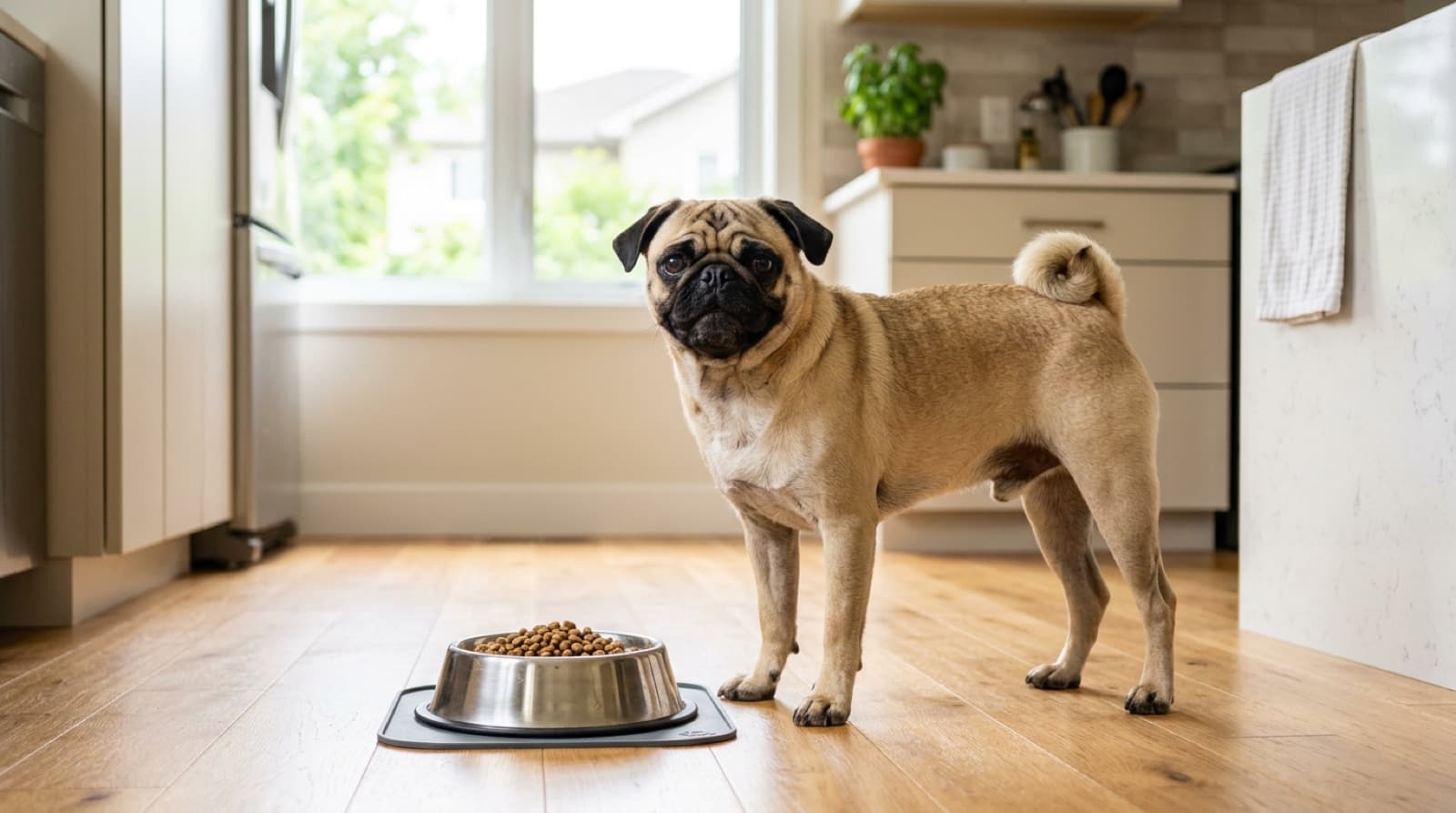
The Pug health picture, briefly
Pugs sit in the high-inherited-disease tier alongside French Bulldogs and English Bulldogs. The flat brachycephalic skull defines the airway, the eye sockets, and the anaesthesia risk profile. The wrinkled facial anatomy drives the chronic skin and ear pattern. The corkscrew tail genetics share a developmental pathway with hemivertebrae. And one condition belongs to this breed almost alone: Pug Dog Encephalitis, a fatal autoimmune brain disease of young adults that no responsible adopter should be unaware of before bringing a Pug home.
None of this argues against adopting a Pug. The breed earns its popularity for real reasons: affectionate, low-exercise companions that suit Edmonton condo and townhouse living, comfortable with children when raised right, and emotionally rewarding to live with. But adopting a Pug means budgeting realistically, enrolling pet insurance in week one, and building a relationship with an Edmonton vet who knows brachycephalic medicine. The Canadian Kennel Club breed standard and breed-club health surveys are reasonable starting references, and the specialty colleges governing each condition area publish owner-facing guidance you can read alongside this guide.
The framing rule: a Pug is a medically managed dog for life, with one rare but devastating tail risk (PDE) that no other breed carries at the same prevalence. Expect more vet visits than for a Labrador, more daily care (fold wipes, eye drops, ear cleaning), more specialty consults, and higher lifetime costs. The dog repays it in companionship. The owner who is not prepared for the financial and time investment ends up surrendering, which is part of why Pugs appear in Edmonton rescue more than the breed's purchase price would suggest.
Brachycephalic Obstructive Airway Syndrome (BOAS)
BOAS is the most common Pug health condition and the one most likely to need surgery. It is not one problem but a cluster of anatomical issues that together restrict airflow through the upper airway. Four components appear in veterinary literature, and most affected Pugs have at least two:
- Stenotic nares: narrow nostril openings that restrict air intake at the front of the airway. Visible from the outside and the easiest component to assess in a brief exam.
- Elongated soft palate: excess soft palate tissue extends back into the larynx and partially blocks airflow. The most common surgical correction.
- Everted laryngeal saccules: small tissue pouches inside the larynx get pulled outward by increased breathing effort and further restrict airflow. A secondary problem that progresses without intervention.
- Hypoplastic trachea: a narrower-than-normal windpipe. Less common in Pugs than in English Bulldogs but still seen.
Symptoms exist on a spectrum. Mild cases snore loudly, snort during excitement, and tolerate moderate exercise. Moderate cases have noticeable exercise intolerance, heat sensitivity, and noisy breathing at rest. Severe cases gasp, struggle to recover from exertion, develop blue or purple gum colour during episodes, and can collapse. Watch for any change in breathing pattern, any episode of distress, any gum colour change, and any apparent sleep apnoea.
Severity grading by a veterinary respiratory specialist uses a functional exercise tolerance test rather than imaging alone. The result guides whether surgery is necessary, when to do it, and which components to address. Surgical correction at an Edmonton or Calgary specialty surgical practice typically runs $2,000 to $4,500 for the standard package (soft palate trim, nostril widening, saccule removal). Add $1,000 to $2,000 for tracheal procedures if needed. Pug BOAS surgery generally costs slightly less than the equivalent Frenchie procedure because the average Pug soft palate and laryngeal work is less severe. The American College of Veterinary Surgeons governs the specialty board.
Timing matters. BOAS surgery done before age two to three has dramatically better outcomes than the same surgery done at age six after years of chronic strain have damaged the larynx and cardiovascular system. If a young rescue Pug shows moderate or severe BOAS at adoption, prioritise the specialty consult in month one. Peer-reviewed BOAS research supports earlier intervention as protective against secondary disease.
Pug Dog Encephalitis (PDE): the breed-specific condition
Pug Dog Encephalitis, also called Necrotising Meningoencephalitis, is a fatal autoimmune inflammation of the brain that occurs almost exclusively in Pugs and a small number of related breeds. It is the single most important reason to enrol pet insurance in week one for any rescue Pug under five years old. The condition is rare in absolute terms but devastating when it appears, and it is heavily under-discussed at the point of adoption.
Presentation
Onset is usually between two and four years of age, though it can appear earlier or later. The first signs are often subtle: behaviour changes, mild disorientation, increased clinginess or irritability. Within days to weeks the picture progresses to seizures, circling, head pressing against walls, ataxia, blindness from cortical involvement, and worsening weakness. The pace of progression varies, but most untreated cases reach severe neurological compromise within weeks of the first seizure.
Diagnosis
Definitive diagnosis requires MRI imaging of the brain and a cerebrospinal fluid (CSF) tap at a specialty neurology practice. The full workup typically costs $2,500 to $4,500 in Edmonton or Calgary; complex cases occasionally route to the Western College of Veterinary Medicine in Saskatoon, which has long-standing research interest in the disease. The MRI pattern is characteristic but not always pathognomonic; CSF analysis shows inflammatory changes consistent with autoimmune encephalitis. Genetic testing for DLA-II haplotypes associated with PDE susceptibility exists but is more useful for breeding decisions than for individual diagnosis in adopted dogs.
Treatment and prognosis
There is no cure. Immunosuppressive medications (prednisone, cyclosporine, cytarabine in various combinations under a board-certified neurologist) slow progression in some cases. Median survival from diagnosis is roughly three to twelve months, with a small subset achieving longer remissions on aggressive immunosuppression. Anti-seizure medications manage symptoms alongside the immunosuppression. Ongoing care costs for an actively managed PDE case run $400 to $1,200 per month between medications, lab monitoring, and follow-up neurology consults. The American College of Veterinary Internal Medicine governs the neurology specialty board.
For Edmonton adopters, the practical implication is straightforward. Enrol in pet insurance the day you bring a young Pug home. Once a neurological sign is documented, the condition becomes a permanent pre-existing exclusion and the family carries the full cost. The disease is rare enough that most Pugs will never develop it, but the consequences of being uninsured if they do are catastrophic. This is the single strongest argument for week-one enrolment in any breed.
Eye proptosis: the emergency Pug owners must recognise
Eye proptosis is the forward dislocation of the eye past the eyelids. In normal-snouted breeds it requires severe trauma; in Pugs the shallow eye sockets and prominent globes make it possible from minor incidents: a leash pull on a collar, rough play with a larger dog, a tumble down stairs, a face grab from a young child. The eye remains attached to the optic nerve but bulges past the eyelid, sometimes with the eyelid trapped behind the globe. It is genuinely shocking to witness and is a same-hour emergency.
First aid
Cover the eye with a damp sterile cloth or clean wet gauze to keep it from drying out. Keep the dog calm and prevent any pawing or rubbing at the face. Do not attempt to push the eye back yourself. Drive to a 24-hour Edmonton emergency veterinary clinic immediately. Time matters more than almost any other Pug emergency: vision preservation drops sharply after the first few hours.
Surgical management
Replacement surgery (returning the eye to the socket and suturing the eyelids partly closed to support healing) within the first few hours has the best chance of preserving vision. Cost runs $1,500 to $4,000 depending on the complexity of reconstruction and whether the cornea or extraocular muscles were damaged. In some cases the damage is severe enough that enucleation (eye removal) becomes the better option, with cost in the $1,200 to $2,500 range. Pugs adapt well to single-eye vision, but the goal is always preservation when possible. The American College of Veterinary Ophthalmologists governs the specialty.
Prevention
A body harness rather than a collar for every walk is non-negotiable. Pugs should never be leash-attached at the neck because a leash pull can dislocate the eyes on top of the cervical strain. Supervise rough play with larger dogs; the breed should not be in unsupervised group play. Teach young children gentle handling and never let them grab at a Pug's face. Be cautious around stairs and furniture jumps. A Pug who has had one proptosis is statistically more likely to have a second; some owners elect a permanent partial tarsorrhaphy (eyelid surgery to narrow the opening) after the first event as a preventive measure.
Dry eye and corneal ulcers
The same exposed eye anatomy that makes proptosis possible also drives chronic dry eye (keratoconjunctivitis sicca, or KCS) and corneal ulceration in Pugs. The prominent eyes are more exposed to wind, dust, and incidental contact than in normal-snouted breeds, and the reduced blink reflex (a brachycephalic facial nerve quirk) leaves the cornea drier between blinks.
Dry eye presents with thick mucoid discharge, redness, recurrent squinting, and progressive corneal pigmentation. Diagnosis is a Schirmer tear test, a strip of filter paper placed in the lower eyelid to measure tear production over one minute. Cost at a general-practice exam is $30 to $60 and the test should be part of every annual Pug visit. Management is lifelong lubricating eye drops, sometimes combined with prescription cyclosporine ointment to stimulate tear production. Cost runs $300 to $600 per year. Untreated dry eye progresses to chronic corneal scarring and vision loss.
Corneal ulcers happen more often in Pugs than in normal-snouted breeds. Any new squinting, excessive tearing, redness, or cloudiness in a Pug's eye is a same-day vet visit. Prescription antibiotic and lubricating drops resolve most surface ulcers; deeper or non-healing ulcers need ophthalmology referral and sometimes surgical procedures (conjunctival grafts, corneal debridement). The Edmonton veterinary ophthalmology pool is small; complex cases sometimes route to Calgary or WCVM Saskatoon.
Skin folds, atopic dermatitis, and chronic ear infections
Allergic skin disease is one of the top reasons Edmonton Pugs see general-practice vets. Three patterns stack together in the breed, and most adult Pugs have some combination of them.
Skin-fold dermatitis
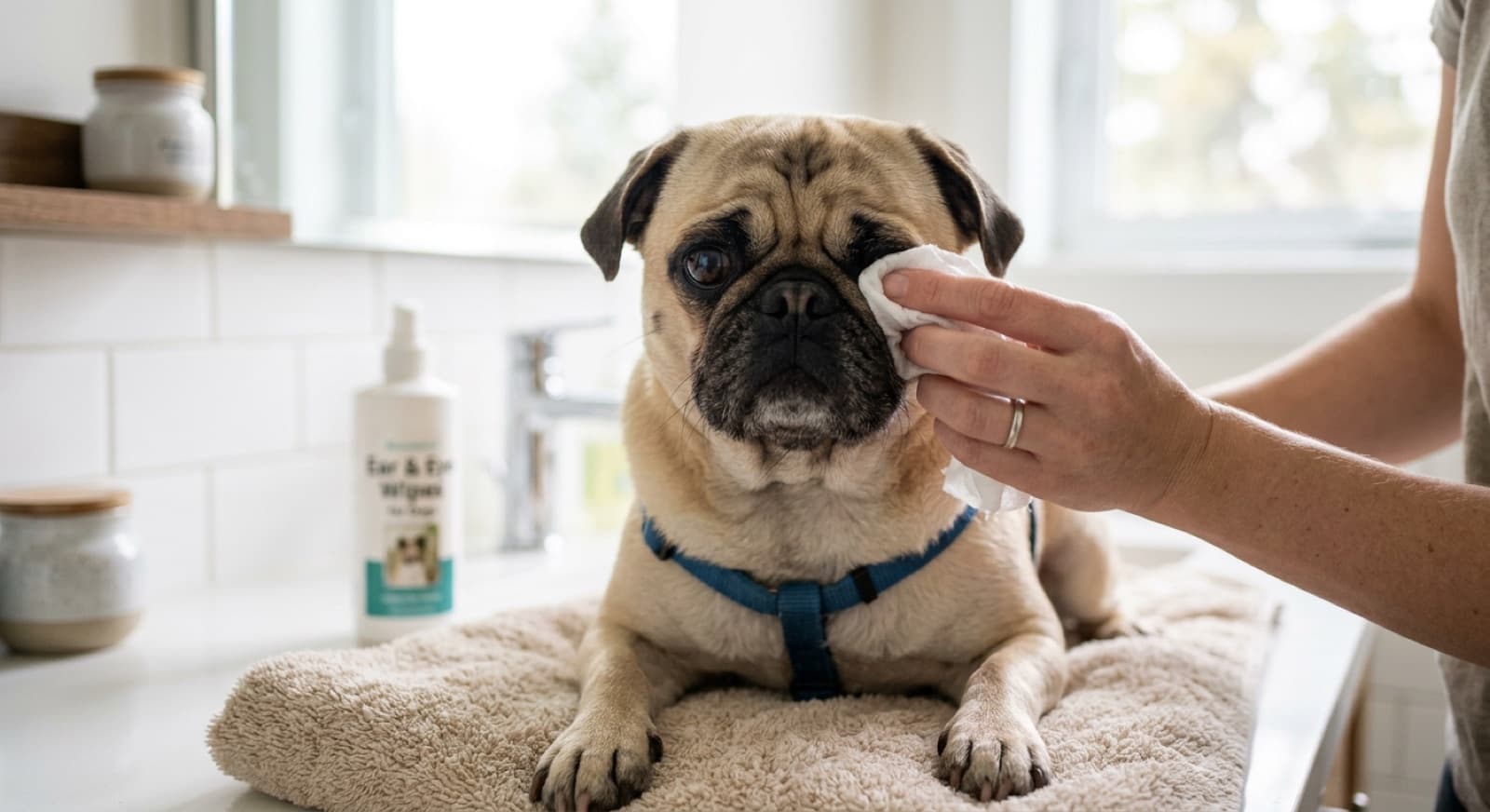
The wrinkled face creates folds at the nose roll, around the eyes, and between the cheek and the muzzle. The corkscrew tail creates a pocket at the base where moisture, bacteria, and yeast collect. Daily wipes with a vet-recommended cleanser (chlorhexidine-based pads or medicated wipes) keep these folds clean and dry. Skip the routine and the folds develop chronic infections that need prescription treatment. Five minutes a day prevents most of the vet visits. Lift the tail to wipe the tail pocket. Lift the nose roll to wipe underneath. Dry thoroughly after wiping. This is non-negotiable Pug care.
Atopic dermatitis
Atopic dermatitis is environmental allergy presenting as itchy skin. Triggers include pollen (Edmonton spring and fall), dust mites (year-round indoor), mould, grass, and household chemicals. Symptoms: paw licking and chewing, red belly and groin, recurrent hot spots, hair loss in patches, and recurrent yeast or bacterial skin infections. Edmonton dry winter air and indoor heating worsen symptoms; spring pollen worsens them again. Veterinary dermatology referral is reasonable for recurrent cases and is governed by the American College of Veterinary Dermatology. Management is layered: medicated shampoos, anti-itch medications (Apoquel, Cytopoint injections), fatty acid supplementation, environmental management, and sometimes immunotherapy desensitisation for severe cases. Lifelong cost typically runs $1,200 to $2,500 per year.
Chronic ear infections
Pugs have narrow ear canals and high allergy prevalence, which combine to produce recurrent otitis externa. Symptoms: head shaking, ear scratching, redness, dark waxy or pus-like discharge, and odour. Yeast (Malassezia) is the most common cause, followed by bacterial infections. Treating the ear without addressing the underlying allergy gets you back in the clinic in three months. Weekly home ear cleaning, prompt vet visits for any new symptoms, and a serious allergy workup for recurrent cases is the standard plan.
Demodicosis
Some Pug lines have elevated demodectic mange prevalence, especially in adolescents. The condition presents as patchy hair loss without intense itching (distinguishing it from atopic dermatitis). Diagnosis is by skin scrape. Treatment uses modern oral isoxazoline products (Bravecto, Simparica, NexGard at therapeutic doses) under veterinary direction, with most cases resolving over a few months. Pet insurance covers this when enrolled before diagnosis.
Orthopaedic and spinal conditions
Pugs carry several orthopaedic risks that an Edmonton adopter should plan for. None is as common as the skin and eye picture, but each can drive significant veterinary costs when present.
Hemivertebrae
Hemivertebrae is a congenital malformation where one or more vertebrae develop in a wedge shape rather than a normal block. The same gene cluster that produces the Pug's corkscrew tail produces vertebral wedging along the spine. Many Pugs have one or more hemivertebrae that are completely asymptomatic and found incidentally on X-rays taken for other reasons. A smaller subset develop progressive spinal cord compression as the malformation places pressure on the cord over time.
Symptoms when present: progressive hindlimb weakness or incoordination, urinary incontinence, sometimes spinal pain. Diagnosis is by spinal imaging (X-ray identifies the malformation, MRI or CT identifies whether it compresses the cord). Treatment ranges from monitoring (for asymptomatic findings) through medical management (anti-inflammatories, gabapentin) to surgical decompression at a specialty neurology practice (typically $5,000 to $12,000 in Edmonton or Calgary). Pet insurance enrolled before any back imaging covers this category cleanly.
Patellar luxation
Patellar luxation is the slipping of the kneecap out of its groove, and it appears at meaningful prevalence in Pugs. Grades run 1 (occasional slipping that pops back on its own) to 4 (permanently dislocated). Grade 1 cases are managed conservatively (lean body weight, joint supplements, avoiding repetitive jumping). Grades 2 and 3 with clinical signs (intermittent skipping or carrying the leg) are surgical candidates. Grade 4 needs surgery. Surgical correction at an Edmonton orthopaedic specialty practice typically runs $2,500 to $5,000 per knee.
Hip dysplasia
Hip dysplasia in Pugs is moderate compared with large breeds, but the breed shows meaningful prevalence on screening data. Presentation is usually middle-aged onset with stiffness, reluctance to jump, and a bunny-hopping gait. Many cases are managed medically with weight control, joint supplements with glucosamine and omega-3, anti-inflammatories under veterinary direction, physical therapy, and underwater treadmill hydrotherapy. Surgical options (femoral head ostectomy, total hip replacement) are available for severe cases at Edmonton or Calgary specialty practices. The Orthopedic Foundation for Animals registry tracks breed hip data.
Heat stroke and cold stress: the Edmonton year
Pugs are at welfare risk at both ends of the Edmonton temperature range, for related but distinct reasons.
Summer heat stroke
Brachycephalic anatomy makes panting much less efficient at dumping heat than in a normal-snouted dog. Edmonton summer (frequent days in the high 20s, occasional stretches above 30 Celsius, low humidity) is genuinely dangerous for the breed. Heat stroke can develop in 10 to 20 minutes of moderate outdoor exertion on a hot day and can be fatal within an hour without emergency care. Practical rules: no walks between 11am and 7pm in genuine heat, cooling vests or wet-towel cool-down for short outings, immediate access to shade and water, no car travel without air conditioning even for short trips, and a low threshold for an emergency vet visit if the dog is unusually distressed, vomiting, has bright red gums, or is acting confused. Early signs (excessive panting, restlessness, drooling) escalate to emergency (collapse, vomiting, seizures) faster in Pugs than in normal-snouted breeds.
Winter cold stress
The same compressed airway that fails in summer heat struggles with very cold dry air during winter exercise. Pugs also have thin coats, low body fat, and small body mass, so they lose heat fast. Practical rules below -10 Celsius: a fitted insulated coat for any outdoor time, paw protection from de-icing salt, short walks broken up by indoor warm-up breaks, and no extended outdoor play below -20. A humidifier in the main living area helps with the cold dry indoor heat that irritates the airway across an Edmonton winter.
The combined heat-and-cold caution means a Pug's outdoor schedule is genuinely different from most breeds across the whole Edmonton calendar. Cooler hours in summer, warmer hours in winter, and short controlled outings rather than long unstructured ones. The good news: Pugs are low-exercise dogs by design and stay happy with indoor enrichment.
Edmonton specialty veterinary access reality
Edmonton has good general-practice veterinary coverage. For routine Pug care (annual physical, vaccinations, dental, skin and ear visits, minor surgery), almost every reputable Edmonton clinic is a starting point. For breed-specific specialty work, the picture is more nuanced.
Edmonton specialty veterinary medicine covers airway surgery, neurology (the most relevant specialty for PDE diagnosis and management), ophthalmology, dermatology, cardiology, internal medicine, orthopaedics, and emergency. The specialty network is smaller than Calgary's but capable for most Pug needs locally. Two referral pathways matter for harder cases:
WCVM Saskatoon
The Western College of Veterinary Medicine at the University of Saskatchewan is the closest full veterinary teaching hospital. The drive from Edmonton is about five and a half hours each way. WCVM handles complex referrals beyond local specialty capacity, and it has had long-standing research interest in Pug Dog Encephalitis, which makes it a particularly relevant referral destination for PDE workups and second opinions. The University of Alberta does not have a veterinary school, which is why Saskatoon is the closest academic referral. Your general-practice or specialty vet initiates the referral; you do not self-refer.
Calgary specialty centres
Some Edmonton Pug owners drive to Calgary specialty centres for procedures not offered locally or when Edmonton wait times are longer than acceptable. The drive is about three hours each way. This pattern is more common for elective airway, ophthalmology, and orthopaedic cases than for emergencies. Recovery logistics matter: the dog should not be jostled in the first 24 to 48 hours after surgery, so plan for overnight accommodation if travelling for a same-day procedure.
Building your network in month one
Pick a primary Edmonton vet with brachycephalic experience in the first month after adoption. Ask which specialty practices they refer Pugs to for each condition area: airway, neurology (specifically for PDE workup if needed), spine, skin, eyes, cardiac. Write the answers down. Most Pugs will need at least one specialty referral in their lifetime. Knowing the pathway before you need it cuts hours off the response time when it matters, and lets you confirm pet insurance coverage at the receiving practice ahead of time. The American Animal Hospital Association publishes guidance on evaluating veterinary practices that applies to Edmonton clinics.
Pet insurance for an Edmonton Pug
Week-one pet insurance enrolment is essentially mandatory for an Edmonton rescue Pug. The combination of BOAS risk, PDE risk, eye proptosis risk, and chronic skin and ear management makes the breed-specific math one of the strongest in toy-breed adoption. Every Canadian provider excludes pre-existing conditions, and the clock starts the day you adopt. Once a vet documents anything (a stenotic nare grade, a BOAS severity score, a skin lesion, a murmur, a behaviour change), that condition becomes a permanent exclusion on any policy enrolled afterward.
The breed-specific value math for Pugs:
- BOAS airway surgery: $2,000 to $4,500
- Pug Dog Encephalitis diagnostic workup (MRI + CSF tap): $2,500 to $4,500
- PDE chronic management (immunosuppression + anti-seizure + monitoring): $400 to $1,200 per month for the duration of treatment
- Eye proptosis surgical replacement: $1,500 to $4,000 per event
- Dry eye lifelong drops: $300 to $600 per year
- Cherry eye replacement: $800 to $1,500 per eye
- Chronic allergy and ear management: $1,200 to $2,500 per year
- Dental cleanings with extractions: $1,000 to $3,000 per cleaning
- Patellar luxation surgery: $2,500 to $5,000 per knee
- Hemivertebrae surgical decompression: $5,000 to $12,000 when needed
- Heat stroke emergency vet visit: $800 to $3,000 or more
A single Pug with moderate BOAS and chronic allergies can generate $12,000 to $20,000 in out-of-pocket medical costs over the first five years of ownership. Add an eye proptosis emergency or a PDE diagnosis and lifetime costs frequently reach $40,000 or more. Monthly premiums for a young healthy Pug in Edmonton typically run $55 to $110, depending on deductible and reimbursement percentage. Over a 10-year lifespan, premiums total $6,600 to $13,200, which is the cost of one PDE workup or a single major airway surgery.
What to look for in a Pug policy:
- Hereditary and congenital conditions explicitly covered (some cheaper policies exclude these, which makes them nearly useless for a Pug)
- BOAS-related claims not excluded as “cosmetic” or “breed-typical”
- Neurological conditions and immune-mediated disease explicitly covered (the PDE consideration)
- Coverage caps that are annual rather than per-condition (per-condition caps can hit fast on chronic allergy and PDE management)
- No bilateral exclusion clauses on eye conditions (Pugs often need bilateral work)
- Reasonable wait times for orthopaedic, neurological, and ophthalmology coverage (typically 14 to 30 days)
- Claims process that allows direct vet payment or fast reimbursement at Edmonton specialty practices
Compare three to four providers before enrolling. Your Edmonton vet and your foster contact at the rescue can both share which providers other Pug adopters have used and what their claim experience has been.
Browse adoptable Edmonton dogs
Current Edmonton listings from SCARS, Zoe's Animal Rescue, Edmonton Humane Society, GEARS, Hope Lives Here, AHHRB, and AARCS Edmonton-foster dogs in one place. Pugs appear in rescue more than the breed's purchase price would suggest, often because owners did not budget for the chronic medical costs. Foster notes flag any airway, skin, eye, or mobility concerns to bring to your first-month vet visit.
See Edmonton Adoptable Dogs →Adoption health workup: what the rescue covers vs what you re-screen
Edmonton rescues do a baseline vet workup before adoption, but the depth varies by rescue and by individual dog. Understanding what is and is not covered helps you plan your first-month vet visit.
What most Edmonton rescues cover
- Physical exam by a vet at intake
- Core vaccinations (DAPP and rabies, sometimes Bordetella if boarded)
- Spay or neuter surgery
- Microchip implant and registration
- Deworming and flea and tick treatment
- Basic adult bloodwork in many cases
- Treatment of any acute issues identified at intake (active skin infection, ear infection, eye irritation)
What is usually NOT covered (and what to plan for)
- BOAS severity grading by a respiratory specialist
- Schirmer tear test or formal ophthalmology consult
- MRI imaging for any neurological concern
- Screening echocardiogram for murmur workup
- Spinal imaging for hemivertebrae unless symptoms were active at intake
- Patellar grading by an orthopaedic specialist
- Veterinary dermatology referral for chronic allergy patterns
- Dental cleaning beyond a visual exam
Plan a first-month vet visit with your chosen Edmonton vet that establishes a baseline you can build on. The standard ask: airway assessment with severity grading recommendation, cardiac auscultation with referral if a murmur is heard, Schirmer tear test on both eyes, careful skin-fold and ear exam with photo documentation, spine and patella palpation, and a frank conversation about whether early BOAS surgical consultation is warranted. If the rescue can share any intake bloodwork, imaging, or foster behavioural notes, bring them.
For senior Pugs (eight years and up), the first-month workup is more involved: full senior bloodwork including urinalysis, screening echocardiogram, ophthalmology consult, dental evaluation, and a mobility assessment. Budget $700 to $1,200 for the senior intake workup at an Edmonton clinic.
Senior Pug health after age eight
Pugs typically live 12 to 15 years, longer than French Bulldogs on average, with the lower end of that range driven by chronic untreated BOAS, severe cardiac progression, and complications of obesity. Pugs whose owners stayed on top of airway, eye, skin, and cardiac care tend to land at the upper end. Senior care begins around age seven to eight, slightly earlier than for the long-lived working breeds.
Reasonable senior-care adjustments, all guided by your Edmonton vet:
- Biannual vet exams instead of annual
- Full annual senior bloodwork including urinalysis
- Annual screening echocardiogram once a murmur appears (cardiac disease progresses in senior years)
- Annual ophthalmology check (dry eye, cataracts, and corneal pigmentation often progress)
- Continued careful airway monitoring (BOAS surgery done earlier reduces but does not eliminate senior airway issues)
- Routine dental care including professional cleanings every 18 to 24 months
- Joint support if hip or spinal stiffness develops
- Weight monitoring (overweight seniors do worse on every front, and the BOAS-cardiac-orthopaedic stack amplifies the cost of extra weight on a small body)
- Mobility aids if needed: orthopaedic bed, traction rugs on hardwood, ramps for stairs and furniture
- Climate comfort (a warm bed for Edmonton winter, a cool refuge with AC for summer)
Some senior Pugs develop canine cognitive dysfunction with disorientation, anxiety, or sleep changes. Your vet can advise on management options.
Pet insurance becomes harder and more expensive to obtain for first-time enrolment past age eight, and some providers will not enrol senior Pugs at all due to the elevated breed risk profile. If you adopt a senior Pug, price-compare carefully and consider whether a dedicated savings account makes more sense than insurance for your specific case. Talk through the math with your vet at the first visit.
Frequently asked questions
Where can I find a vet for a Pug near me in Edmonton?
Most Edmonton general-practice clinics handle routine Pug care (vaccinations, dental, skin and ear visits, wellness exams), and many have meaningful brachycephalic experience because the breed remains popular. For specialty work (BOAS airway correction, Pug Dog Encephalitis workup, eye proptosis emergencies, advanced dermatology, ophthalmology, neurology, cardiology), your general-practice vet refers to an Edmonton specialty practice. The specialty network is smaller than Calgary's, and complex neurological cases sometimes route to the Western College of Veterinary Medicine in Saskatoon, which has long-standing PDE research interest. Some Edmonton Pug owners drive to Calgary for shorter wait times or specific surgeon expertise. Pick a primary vet with brachycephalic experience in month one and build the specialty network around them.
What are the main Pug health issues to plan for before adopting?
Seven conditions shape Pug medical planning. First, Brachycephalic Obstructive Airway Syndrome (BOAS), the breed-defining airway disease. Second, Pug Dog Encephalitis (PDE), a Pug-specific fatal autoimmune brain disease most often striking young adults between two and four years. Third, eye proptosis, where minor trauma can dislocate the prominent eyes from their shallow sockets in an emergency that needs treatment within hours. Fourth, dry eye and corneal ulcers from the breed's exposed eye anatomy. Fifth, chronic skin disease: atopic dermatitis, skin-fold dermatitis at the facial wrinkles and tail pocket, recurrent ear infections. Sixth, orthopaedic issues including hemivertebrae, patellar luxation, and moderate hip dysplasia. Seventh, heat stroke and cold stress at both ends of the Edmonton year. A responsible rescue shares what is known; your first-month vet workup fills in the rest.
What is Pug Dog Encephalitis and how serious is it?
Pug Dog Encephalitis (PDE), also called Necrotising Meningoencephalitis, is a fatal autoimmune inflammation of the brain that occurs almost exclusively in Pugs and a few related breeds. It usually presents between two and four years of age with seizures, behaviour changes, circling, head pressing, blindness, or progressive weakness. Diagnosis requires MRI imaging and a cerebrospinal fluid tap at a specialty neurology practice, often costing $2,500 to $4,500 for the full workup. There is no cure. Immunosuppressive medications (prednisone, cyclosporine, cytarabine) slow progression in some cases, and median survival from diagnosis is roughly three to twelve months depending on response. The disease is heartbreaking and expensive, which is the single strongest reason to enrol pet insurance in week one for any rescue Pug under five years old. The Western College of Veterinary Medicine in Saskatoon has had research interest in PDE for years and is a reasonable referral destination for complex cases.
What do I do if my Pug's eye pops out?
Treat it as an immediate emergency. Pug eyes sit in shallow sockets and can dislocate forward from minor trauma, leash-pulling on a collar, or rough play. The eye remains attached but bulges past the eyelid, sometimes with the eyelid trapped behind it. Cover the eye with a damp sterile cloth or clean wet gauze, keep the dog calm, do not let them rub or paw at the face, and drive to a 24-hour emergency veterinary clinic immediately. Surgical replacement within the first few hours has the best chance of preserving vision; delayed treatment often leads to enucleation (eye removal). Cost runs $1,500 to $4,000 depending on what reconstruction is needed. Prevention is non-negotiable: a body harness rather than a collar for every walk, supervised play with larger dogs, and care around young children pulling on the face. A pug puppy or adult who has had one proptosis is more likely to have a second.
How much does BOAS surgery cost for a Pug in Edmonton?
Standard BOAS airway surgery (soft palate trim, nostril widening, laryngeal saccule removal) typically runs $2,000 to $4,500 at an Edmonton specialty surgical practice, slightly less than the equivalent Frenchie procedure because the soft palate and laryngeal work tends to be less severe. Add another $1,000 to $2,000 if hypoplastic trachea or advanced laryngeal collapse needs additional procedures. Severity grading by a veterinary respiratory specialist (using a functional exercise tolerance test) is the standard pre-operative workup. Surgery done before age two to three has dramatically better outcomes than the same procedure done at six after years of chronic strain. Pet insurance enrolled in week one covers this; enrolled after the first BOAS-flagged exam, it will not. The American College of Veterinary Surgeons governs the specialty board.
Why do Pugs have so many skin and eye problems?
Anatomy explains most of it. The wrinkled face creates folds at the nose roll, around the eyes, and at the tail pocket where moisture, bacteria, and yeast collect; daily wipes with a vet-recommended cleanser prevent most chronic infections. The shallow eye sockets leave the cornea exposed to wind, dust, and trauma, which drives high rates of dry eye (keratoconjunctivitis sicca) and corneal ulcers. The breed also carries elevated atopic dermatitis prevalence (environmental allergies), and the narrow ear canals combined with allergy inflammation produce chronic otitis externa in many adult Pugs. Day-to-day management is daily fold wipes, weekly ear cleaning, lubricating eye drops for dogs diagnosed with dry eye, and prompt vet visits for any new squinting, redness, or odour. The deeper work is identifying and managing underlying allergies with your vet.
Is heat stroke really that risky in Edmonton?
Yes. Brachycephalic anatomy makes panting much less efficient at dumping heat than in a normal-snouted dog, and Edmonton summer routinely produces days in the high 20s with stretches above 30 degrees Celsius. Heat stroke can develop in 10 to 20 minutes of moderate outdoor exertion on a hot afternoon and can be fatal within an hour without emergency care. Practical rules for a Pug: no walks between 11am and 7pm in genuine heat, cooling vests or wet-towel cool-down for short outings, immediate access to shade and water, no car travel without air conditioning even for short trips, and a low threshold for an emergency vet visit if the dog is unusually distressed, vomiting, has bright red gums, or is acting confused. Early warning signs (excessive panting, restlessness, drooling) escalate to emergency symptoms (collapse, vomiting, seizures) faster in Pugs than in normal-snouted breeds.
What about Edmonton winter for a Pug?
Pugs struggle in Edmonton winter for related but different reasons than summer. The thin single coat provides almost no insulation, the small body mass loses heat fast, and the compressed airway finds very cold dry air uncomfortable during exercise. Practical rules below -10 Celsius: a fitted insulated coat for every outdoor trip, paw protection from de-icing salt, short walks broken up by indoor warm-up breaks, and no extended outdoor play below -20. A humidifier in the main living area helps with the cold dry indoor heat that irritates the airway across an Edmonton winter. The result is that a Pug's outdoor schedule is genuinely different from most breeds in both seasons. Cooler hours in summer, warmer hours in winter, and short controlled outings rather than long unstructured ones. The good news: Pugs are low-exercise dogs by design and stay happy with indoor enrichment.
Should my Pug get a screening echocardiogram?
A cardiac auscultation by your general-practice vet at every annual exam is the baseline. Pugs have elevated prevalence of pulmonic stenosis and acquired mitral valve disease in senior years. If your vet hears a murmur, or the rescue noted any cardiac concern at intake, a screening echocardiogram with a board-certified veterinary cardiologist is the next step (typically $500 to $900 at an Edmonton or Calgary specialty cardiology practice). Mild stenosis is monitored; moderate to severe cases may benefit from interventional procedures at a specialty centre. Senior Pugs from age seven should have an annual cardiac auscultation and an echocardiogram if any murmur appears. The American College of Veterinary Internal Medicine governs the cardiology specialty board.
What pet insurance considerations matter most for an Edmonton Pug?
Enrol in week one without exception. The Pug Dog Encephalitis risk alone makes this the highest-ROI insurance decision in toy-breed adoption. Every Canadian provider excludes pre-existing conditions, and any concern documented before policy start is permanently excluded. The breed-specific math: BOAS surgery $2,000 to $4,500, PDE diagnostic workup $2,500 to $4,500 with chronic management costs after, eye proptosis surgery $1,500 to $4,000, dry eye lifelong drops $300 to $600 per year, chronic skin and ear management $1,200 to $2,500 per year, dental cleanings with extractions $1,000 to $3,000. Monthly premiums for a young healthy Pug in Edmonton typically run $55 to $110. Read for hereditary and congenital coverage (some cheaper policies exclude these and become nearly useless for a Pug), annual rather than per-condition coverage caps, no bilateral exclusion on eye conditions, and explicit coverage of brachycephalic airway disease. Compare three to four providers.
What health screening should I expect the Edmonton rescue to have done?
Reputable Edmonton rescues (SCARS, Edmonton Humane Society, Zoe's Animal Rescue, GEARS, Hope Lives Here, AHHRB) perform a baseline vet workup before adoption: physical exam, core vaccinations, spay or neuter, microchip, deworming, and basic adult bloodwork. BOAS severity grading, screening echocardiograms, MRI for PDE workup, ophthalmology consults, and spinal imaging for hemivertebrae are usually NOT in the standard intake unless a clinical concern was active at intake. Plan a first-month vet visit with your chosen Edmonton vet that establishes a baseline you can build on: a careful airway exam with severity assessment, cardiac auscultation with referral if a murmur is heard, a Schirmer tear test for dry eye screening, a thorough skin-fold and ear check, and a frank conversation about whether early BOAS surgical consultation is warranted. If the rescue can share intake bloodwork, foster notes, or any imaging, bring them.
Related Edmonton Pug guides
Edmonton Adoptable Dogs
Current Edmonton-area Pug and Pug-mix listings from SCARS, Zoe's, EHS, GEARS, Hope Lives Here, AHHRB, and AARCS Edmonton fosters.
Pug Adoption Edmonton
Rescue sources, adoption fees, the surrender pattern that drives Edmonton Pug inventory, and the budget reality before you apply.
Pug Winter Care Edmonton
Cold-weather thresholds for a thin-coated brachycephalic breed, indoor humidity, paw care on salted sidewalks, and the indoor exercise routine that replaces deep-cold walks.
Pug Weight Management Edmonton
Why obesity stacks dangerously with BOAS and orthopaedic risk in this food-motivated breed, body condition scoring, feeding routines, and the safe-exercise window across an Edmonton year.
Find your Edmonton rescue Pug
Browse current Edmonton-area Pug and Pug-mix listings. Foster notes help you flag any airway, skin, eye, or mobility concerns before you apply, and your first-month vet workup builds the baseline.
Browse All Edmonton Dogs →New dog? Start with these care guides
Everything a new adopter needs to set up a safe, happy home.