The short answer
Yorkies are rare in Edmonton rescue but they appear. The pipeline is urban owner-surrender (senior downsizing, allergies, life-change), not northern transfer. Edmonton Humane Society sees them most. Zoe's Animal Rescue and AARCS Edmonton fosters see lower volume. Fees $400 to $700. Retiree adopters dominate demand and adopt fastest. Pandemic-puppy Morkie, Yorkipoo, and Shorkie surrenders surface at two to four years. Free-Yorkie Kijiji posts carry real flipper risk.
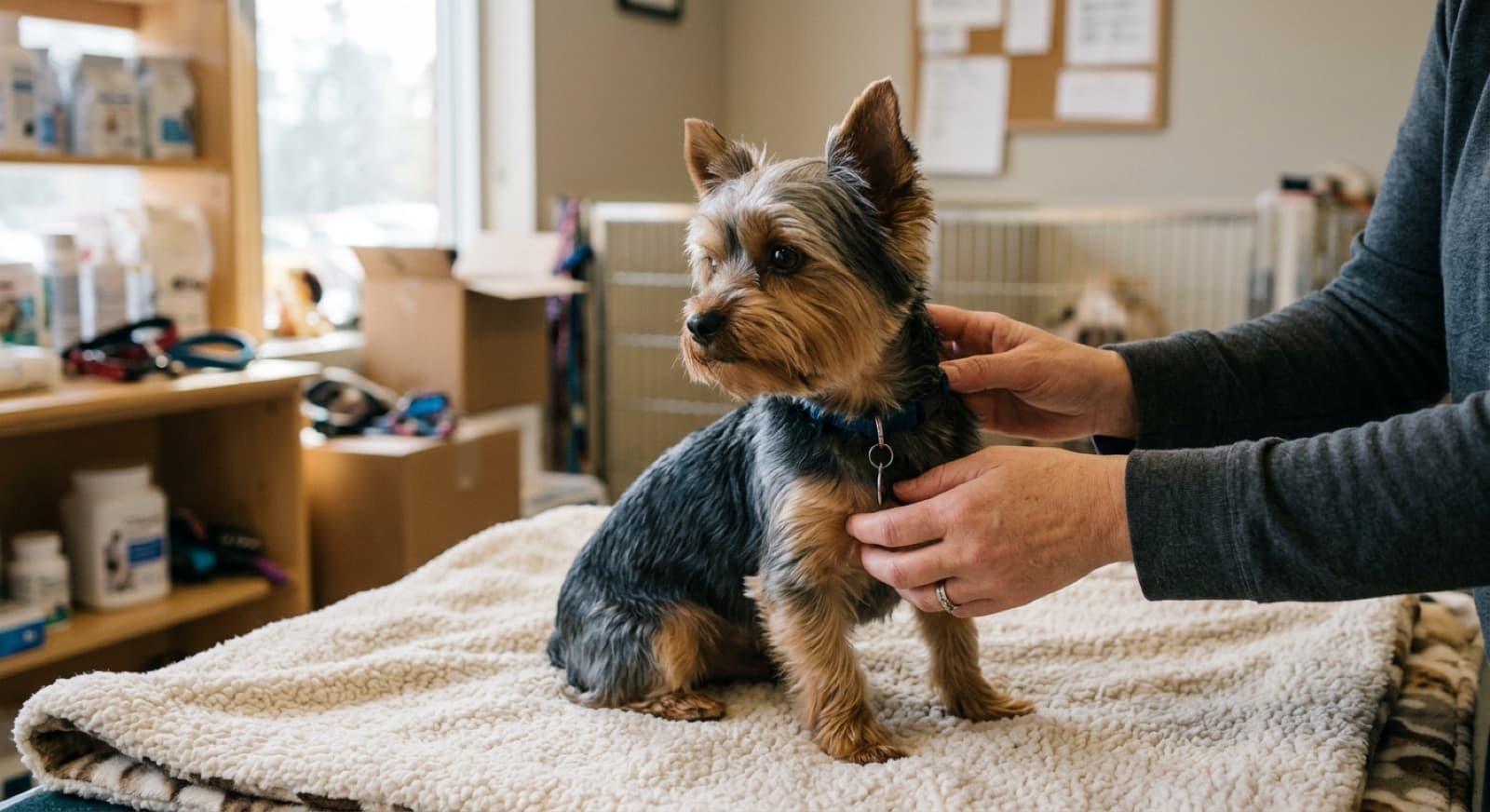
Why Yorkies are rare in Edmonton rescue
Edmonton rescue intake follows northern Alberta's pipeline. Stray pickups in northern communities, owner-surrender of working breeds that overwhelmed their first home, transfer from rural shelters with no capacity, intake from First Nations community partnerships. That pipeline brings Huskies, German Shepherds, Pit Bull-types, and large mixed-breed dogs in steady volume. It does not bring Yorkshire Terriers.
Yorkies enter Edmonton rescue through a different pipeline entirely: urban owner-surrender. A senior moving into assisted living and unable to bring the dog. A household allergy diagnosis that names the family Yorkie. A divorce where neither party can keep the dog. A death where no family member can take the dog. These surrenders are quieter, less frequent, and happen mostly inside Edmonton city limits rather than upstream in northern Alberta.
The practical effect for adopters is that Yorkie inventory in Edmonton rescue rotates fast. When a Yorkie is listed by EHS, applications stack up within days. Senior Yorkies move slightly slower than younger ones, but in the retiree-friendly Edmonton adopter pool, even senior Yorkies typically place inside three to six weeks. Adolescent Yorkies with foster notes flagging housetraining gaps, separation anxiety, or single-person-bond patterns wait longer, sometimes two to three months. Those are the dogs that benefit most from a thoughtful adopter who reads the foster write-up carefully.
A second part of the picture is the Yorkie mix landscape. Purebred Yorkies reach Edmonton rescue in small numbers. Morkies (Yorkie-Maltese), Yorkipoos (Yorkie-Poodle), Shorkies (Yorkie-Shih Tzu), and Yorkie-Chihuahua crosses show up more often, especially in the pandemic-puppy surrender wave. Most of those dogs are wonderful companions that combine two toy-breed temperaments. Foster notes are the right place to look for the actual size, coat, and energy; the breed label on a first-generation mix is a guess.
Edmonton rescues that occasionally list Yorkies and Yorkie mixes
Five Edmonton-area rescues carry Yorkies or Yorkie mixes from time to time. Inventory is genuinely intermittent for this breed, so set up listing alerts where you can and check current Edmonton listings before committing to a single rescue.
- Edmonton Humane Society: the city's largest shelter and the most visible source of Yorkie intake. EHS sees Yorkies primarily through owner surrenders. Senior downsizing is the most common reason; allergy diagnoses and life-change are next. The centralised facility means you can meet the dog in person before applying, and the EHS behaviour team produces detailed temperament assessments. Yorkie turnover at EHS is fast; if you see one listed, apply the same day.
- Zoe's Animal Rescue: long-running Edmonton foster-based rescue. Lower-volume toy-breed intake than EHS, but a real source for Yorkies and Yorkie mixes. Zoe's temperament assessments are thorough, and the application emphasises fit over speed.
- AARCS (Alberta Animal Rescue Crew Society): headquartered in Calgary but with Edmonton-area foster homes. AARCS tags each dog with its current foster location, so Edmonton-foster Yorkies surface on Edmonton listings. AARCS foster write-ups are among the most detailed in the province and explicitly cover kid tolerance, dog tolerance, and housetraining status, all of which matter for a Yorkie placement.
- Alberta Homeward Hound Rescue Bureau (AHHRB): Edmonton-area foster-based rescue. AHHRB lists every dog as Mixed Breed on paper, so Yorkies and Yorkie mixes are identified by photo and description rather than a breed tag. Worth checking even if a search for Yorkshire Terrier returns nothing. Their foster network includes some experienced small-dog homes, which matters for a fragile breed.
- GEARS (Greater Edmonton Animal Rescue Society) and Hope Lives Here Animal Rescue: both Edmonton-area rescues with smaller rotating dog inventory that occasionally includes a Yorkie or Yorkie mix. Lower frequency than the four rescues above, but worth following if you are willing to wait for the right dog.
Adopters sometimes ask whether there is a dedicated Yorkshire Terrier rescue in Edmonton or Alberta. As of writing we cannot verify a Yorkie-specific rescue operating in Alberta with current adoptable listings. If you find a group by a breed-specific name, verify it the same way you would verify any pet transaction: a Canada Revenue Agency charitable registry check, a real address or named foster network, public-facing vet references, and a current adoptable-dog list. Most Edmonton Yorkie adopters find their dog through the five rescues above.
What an Edmonton rescue Yorkie actually costs
Edmonton rescue adoption fees for Yorkies generally land between $400 and $700, with young adults and puppies at the upper end given the rarity. The fee is not a sale price; it covers the medical work the rescue has already done on the dog. A typical Yorkie adoption fee covers:
- Spay or neuter surgery. Standalone, this is $250 to $450 at an Edmonton vet clinic for a small dog.
- Core vaccinations. DAPP and rabies at minimum. Bordetella is often included if the dog has been boarded.
- Microchip implant and registration. Required by City of Edmonton bylaw for licensed dogs.
- Deworming and flea and tick treatment. Standard intake processing.
- Basic vet workup. Physical exam, dental assessment, and check for breed-typical issues (luxating patella, dental crowding, tracheal sensitivity, retained baby teeth common in toy breeds).
- Dental work, sometimes. Senior Yorkies often arrive with significant dental disease, and the rescue may have completed a dental cleaning or extraction before listing. That alone can be a $500 to $1,100 procedure at retail Edmonton vet pricing.
Stacked on their own, those services cost $900 to $1,700 at retail Edmonton vet pricing. The rescue fee is a partial recovery on costs, not a profit. Senior Yorkshire Terriers (around eight years and up) often have reduced fees of $200 to $400 because the rescue prioritises placement and senior toy breeds are easier to place into the right retiree home than into a generic adopter pool.
Beyond the fee, plan on ongoing Yorkie costs of $1,400 to $2,400 per year. Food is modest because the breed is tiny, but premium small-breed food is worth the price difference. Grooming is the breed's biggest ongoing line item; the silky single coat needs daily brushing at home and a professional groom every four to six weeks, which runs $55 to $90 per visit in Edmonton. Dental care is the breed's second-biggest medical cost over a lifetime; daily tooth brushing at home plus annual professional cleanings significantly reduce later extraction costs. Pet insurance for a young healthy Yorkie in Edmonton typically runs $35 to $60 per month and is worth it given the breed's tracheal, dental, patella, and liver-shunt risk profile.
For comparison, a Yorkshire Terrier puppy from an Alberta breeder runs $2,500 to $4,500 for pet-quality, sometimes higher for show-quality or particular colour patterns. The breeder puppy comes with none of the vet work the rescue dog already has. The rescue path is significantly cheaper, and for a breed this rare in northern rescue intake, every Yorkie placed from a shelter is one that opens capacity for another dog.
The pandemic-puppy surrender pipeline (and Morkies, Yorkipoos, Shorkies)
Between 2020 and 2022, toy-breed purchasing in Alberta surged. Households working from home wanted a small companion, breeders on Kijiji and Facebook Marketplace scaled up Yorkie and Yorkie-hybrid litters, and prices climbed past $3,000 for pet-quality dogs. The marketing emphasised hypoallergenic, low-maintenance, apartment-friendly. Many buyers were genuinely good homes; some were not.
Four years later, that wave is reaching Edmonton rescue. The dogs purchased in 2020 to 2022 are now two to four years old, deep in adolescence, and showing the behavioural patterns the marketing did not mention. Edmonton rescues now see steady intake of Yorkies and Yorkie hybrids in this age band, almost always tied to one of three causes: return-to-office schedule changes that left the dog alone nine hours a day, behavioural issues the owner was not prepared for (housetraining regression, alert barking, separation anxiety, resource guarding), or major life events (move, baby, divorce) that broke the household.
The hybrid mix patterns to know:
- Morkie (Yorkie-Maltese). Typically 6 to 12 pounds, soft cottony coat that mats easily, devoted companion temperament. The marketing sold these as low-shedding; the reality is the coat needs the same daily brushing and four-to-six-week professional groom as a Yorkie. Surrender pressure point is usually grooming maintenance burnout.
- Yorkipoo (Yorkie-Poodle). Typically 7 to 15 pounds, curly or wavy coat, generally clever and trainable. First-generation Yorkipoos vary widely. Surrender pressure point is usually housetraining gaps and the owner's assumption that hypoallergenic meant low-maintenance (it does not).
- Shorkie (Yorkie-Shih Tzu). Typically 8 to 16 pounds, longer face than a Shih Tzu, similar grooming needs. Often a calm temperament. Surrender pressure point is usually allergy diagnoses (the Shih Tzu side is not hypoallergenic) and grooming demands.
- Yorkie-Chihuahua and Yorkie-Pomeranian. Lower volume in Edmonton rescue than the three above. Size and temperament are highly variable. Foster notes do the work here.
If you see a Yorkie hybrid in Edmonton rescue, read the foster notes carefully and ask the foster home directly about specific traits: housetraining status, alert barking pattern, separation tolerance, grooming maintenance, and whether the dog has lived with kids or other pets. First-generation crosses are genuinely unpredictable, and the foster home's read on the specific dog is the most reliable information available.
The retiree-adopter advantage and where younger adopters fit
The Edmonton Yorkie adopter pool is heavily weighted toward retirees and semi-retired adults, and this is by far the strongest demographic fit for the breed. The reasons stack up:
- Time at home. A retired or semi-retired schedule means the Yorkie is not alone for nine hours of a workday. Yorkies are companion dogs; they thrive on presence.
- Calmer household. No toddlers, no large dogs running through the room, no high-energy chaos. A Yorkie can rest, observe, and engage on its own rhythm.
- Manageable size. Picking up a 60-pound dog after a hip replacement is hard; picking up a six-pound Yorkie is easy. The breed's size makes it accessible for adopters with mobility limitations.
- Indoor-friendly exercise. Short walks plus indoor play cover the daily needs. No long winter trail outings required.
- Predictable companionship. Yorkies bond closely with one or two people. For an adopter whose social rhythm is quieter, that focused devotion is exactly the dog they want.
None of this means younger adopters cannot adopt a Yorkshire Terrier. Many do, and many of those placements are excellent. The rescue will look at how well your specific household fits the specific dog, not at your age. A 32-year-old who works from home, lives in a quiet condo, and has clear time commitments to grooming and training is a strong candidate. A 32-year-old who works in-office 50 hours a week and travels frequently is a harder fit because the breed's emotional needs do not match the schedule.
The honest version is this. If you are a retiree adopter, you are exactly who Edmonton rescues hope sees a Yorkie listing first. If you are younger and the household genuinely works, apply with specificity about how it will work day to day. Foster homes write honest temperament notes; matching your honest application to a dog whose foster notes line up with your reality is the path that produces lasting placements.
What Edmonton rescues evaluate in a Yorkie application
Yorkie applications are screened differently from working-breed applications. The rescue is not worried about exercise capacity or yard size; they are worried about household fit, child safety, multi-pet compatibility, and the long-term commitment to grooming and dental care. The screening typically covers:
- Household structure and kid age. Most Edmonton rescues will not place a Yorkie into a home with children under five or six. The breed is fragile, and rough handling causes real injury. Households with calm older kids are usually fine, but the foster home's read on the specific dog matters most.
- Existing pets. Yorkies live happily with other small dogs and with cats they are introduced to gradually. Households with large or high-prey-drive dogs face more scrutiny because of the size mismatch. A Yorkie in a household with a 60-pound Lab can absolutely work, but the rescue will ask about supervision and separation arrangements.
- Multi-dog compatibility. Some Yorkies are notably dog-selective and prefer to be the only dog in the home. Foster notes flag this directly. Adding a Yorkie to a household with one or two existing small dogs usually works; adding to a household with three or more dogs gets more scrutiny.
- Grooming commitment. The silky single coat needs daily brushing to prevent mats and a professional groom every four to six weeks. Rescues will ask whether you have lined up a groomer and whether you are realistic about the maintenance.
- Dental care plan. Daily tooth brushing at home is the single biggest lifetime cost-saver for a Yorkie. The rescue will not require it in writing, but they will ask, and the answer signals long-term commitment.
- Apartment or condo barking management. If you live in a condo with shared walls, the rescue will ask about your plan for managing alert barking. Early training, a tired dog, and a not-lonely dog are the three pieces.
- Schedule and time alone. Yorkies are companion dogs and bond closely. A 50-hour-a-week work-from-office schedule with no midday check is a harder fit than a retiree home, a work-from-home home, or a household with multiple adults present at different times.
- Prior toy-breed experience. Not required, but it strengthens the application. First-time toy-breed adopters are not excluded; they just benefit from showing real homework, like training class plans and a clear understanding that a Yorkie is not a stuffed animal but a small dog with real teeth and real opinions.
The screening is not a hurdle; it is the conversation that determines whether this placement lasts. Specificity wins applications. Honest answers about your household's rhythm beat aspirational ones every time.
Browse adoptable Edmonton Yorkies and Yorkie mixes
Current Edmonton listings from EHS, Zoe's, AARCS Edmonton-foster dogs, AHHRB, GEARS, and Hope Lives Here in one place. Yorkie inventory rotates fast; set up listing alerts to catch them when they appear.
See Edmonton Adoptable Dogs →The free-Yorkie warning: flipper pattern and theft risk
Yorkies are among the most-targeted breeds in Alberta resale fraud. Their compact size, high market value (purebred puppies advertise at $2,500 to $4,500), and easy-to-transport profile make them a flipper magnet. Free-Yorkie and low-fee Yorkie listings on Kijiji and Facebook Marketplace deserve real caution. Common Edmonton patterns:
- Flippers collecting free toy-breed dogs. A free Yorkie can be resold within days at $800 to $1,500 with a fabricated backstory. Yorkies are particularly targeted because of resale value. The owner who gave the dog away does not know the dog ended up on Kijiji a week later.
- Owners bypassing formal rescue surrender. No behavioural disclosure, no vet history, no foster phone screen. The owner wants the dog gone, and the adopter inherits whatever the dog comes with.
- Backyard breeders using free as a hook. The ad says free to good home; the actual price reveals at pickup along with a story about food, vet bills, or transport. Walk away.
- Health or behaviour disclosures buried. A free Yorkie with significant dental disease, untreated luxating patella, an undiagnosed liver shunt, or a bite history is a free Yorkie with $2,000 to $7,000 of vet work in the first year that the adopter pays.
- Theft for resale. Edmonton sees a low but real rate of toy-breed theft from yards, cars, and outside coffee shops, specifically because of resale value. Never leave a Yorkie unattended outside.
A legitimate owner-rehoming with a modest fee (typically $150 to $400) can be fine, and many of those owners care deeply about where the dog ends up. The signals of a legitimate rehoming are vet records available, photos of the dog in its current home, a clear and honest answer about why the dog is being rehomed, willingness to meet at the current home rather than a parking lot, and openness to follow-up questions. If those signals are missing or vague, walk away.
The Canadian Anti-Fraud Centre tracks pet scams in Canada, and Yorkshire Terriers are among the most-targeted breeds in resale fraud. The Edmonton rescue path costs about the same as a legitimate owner-rehoming, comes with vet work and foster temperament notes already done, and supports a rescue rather than a flipper.
How to apply for an Edmonton Yorkie adoption
Most Edmonton rescues run their Yorkie adoption process online. Given the rarity and the fast turnover, speed matters. The typical sequence:
- Set up listing alerts. Before a Yorkie is listed, register for adoption alerts on the rescue websites and watch our Edmonton listings page. Yorkies move fast; a same-day application is often the difference between meeting the dog and not.
- Find a specific dog you want to apply for. Edmonton rescues apply per-dog rather than maintaining a general waitlist. Read the entire foster write-up, including kid tolerance, dog tolerance, housetraining status, and grooming notes.
- Complete the online application same day. Expect 30 to 45 minutes for a thorough application. Have your vet's name ready if you have other pets, your landlord's name if you rent, and two non-family references. A same-day application puts you in the first review round.
- Phone screen with the foster. If the application clears the first review, the dog's foster home will call you. This is the conversation that decides most applications. Be honest about household rhythm, work schedule, and prior toy-breed experience.
- Meet-and-greet. Either at the foster's home or a neutral location. Yorkies often warm up faster in a quiet environment than in a busy rescue facility, so a home visit usually shows the better version of the dog.
- Reference checks. Most Edmonton rescues call two references, including any prior vet if you have other pets. Give your references a heads-up so they pick up promptly.
- Adoption contract and fee. Most rescues use a standard adoption contract that specifies the dog must be returned to the rescue if you can no longer keep them, ever. Read it. Yorkie contracts sometimes include clauses about not allowing the dog to be used for breeding given the breeder-supply pressure on this breed.
Realistic timeline from application to dog-in-your-house is one to three weeks for a Yorkie placement, faster than most breeds because the rescue is genuinely happy to see a strong-fit adopter for one of the rarer dogs they list. The compressed timeline is one more reason to prepare your application materials before the listing goes up.
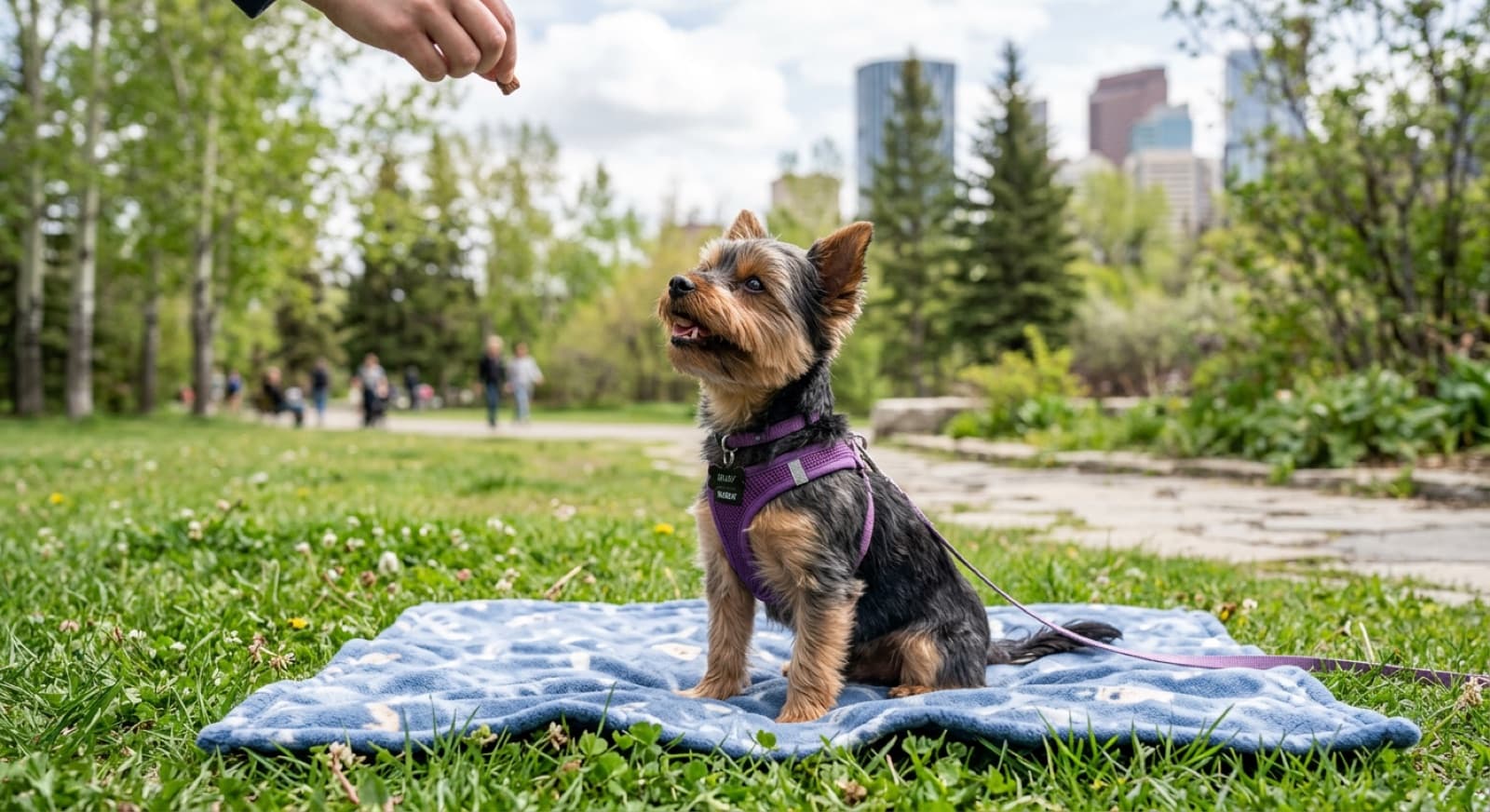
The first 30 days with an Edmonton rescue Yorkie
The 3-3-3 decompression principle applies to Yorkies just as it does to larger rescue dogs, but the rhythm is faster. Toy-breed adjustment often compresses to three days, three weeks, and three months, with the first-week stress phase sometimes resolving in days rather than weeks. That said, do not assume a quiet first week means the dog is fully settled. Real personality usually emerges around week three.
Practical week-one priorities for an Edmonton rescue Yorkie:
- Make the home Yorkie-proof. Tiny dogs disappear behind appliances, under couches, and through fence gaps a larger dog would never fit. Walk the house at Yorkie height before the dog arrives. Block under-furniture gaps if needed. Watch for stairs and balcony railings; a five-pound dog can fall through gaps designed to contain a 30-pound dog.
- Stay on a harness, not a collar. Yorkies are highly prone to tracheal collapse, and a collar with leash pressure makes it dramatically worse. A small step-in harness is the right walking gear from day one, every day, for life. This is non-negotiable for the breed.
- Watch the yard for predator risk. Edmonton has urban coyotes, magpies, and the occasional bird of prey. A five-pound Yorkie is a prey-sized target. Supervised yard time only, especially at dawn and dusk, especially near river-valley parkland. Never leave a Yorkie alone outside.
- License the dog with the City of Edmonton. Required for any dog over six months. Tags should be visible on the harness from day one. The Animal Care and Control Bylaw 21244 applies to all dogs; licensing is the basic compliance step. Information is on the City of Edmonton dogs page.
- Establish structure. Twice-daily meals at consistent times, predictable walk windows, clear house rules about furniture. Yorkies settle into routine quickly, and a clear structure prevents the demanding behaviour that comes from a confused or under-stimulated dog.
- Start light exercise. Two short walks per day (15 to 20 minutes each) plus indoor play covers a young adult Yorkie. Senior Yorkies may want only one short walk plus rest time. Build slowly as the dog settles.
- Add mental work early. Snuffle mats, puzzle feeders, short scent games, basic obedience refreshers. Yorkies are clever and bore quickly without mental stimulation; a bored Yorkie is a barking Yorkie.
- Begin grooming routine right away. Daily two-minute brushing sessions normalize handling before mats develop. The silky single coat tangles quickly without daily attention. Book the first professional groom for week three or four so the dog has time to settle before a new groomer environment.
- Start tooth brushing. Daily, with a dog-safe enzymatic toothpaste. Yorkies have one of the worst dental disease rates of any breed, and daily home care prevents thousands of dollars of extraction work over the dog's lifetime. Retained baby teeth are common in the breed; the vet check on intake should have flagged any present.
- Hold off on the dog park. Not for the first three weeks, and longer if foster notes flag any size-related anxiety. Large dogs at off-leash parks can injure a Yorkie in seconds even without intent to harm. Most Yorkie owners skip dog parks entirely in favour of small-dog playdates or quiet leashed walks.
- Winter routine startup. If you adopt in winter, the cold hits Yorkies very hard because they have a single coat (no insulating undercoat). A warm winter coat or sweater for outings below -10 C, short bundled trips below -20 C, booties on salted Edmonton sidewalks, and indoor play to fill in the rest. Paw-pad rinses after walks remove salt residue.
- Watch for hypoglycemia in small Yorkies. Dogs under five pounds, especially puppies, can drop blood sugar dangerously low if a meal is skipped or stress is high. Foster homes will brief you on signs (weakness, wobbly gait, glazed eyes) and on the emergency response (corn syrup or honey rubbed on the gums, then immediate vet contact). Larger Yorkies are at lower risk but still worth monitoring in the first weeks.
By week three, you will start seeing the real dog. Senior Yorkies often warm up faster than younger ones because they have lived in homes before and recognise the rhythm. Puppy Yorkies need more structure and patience, and a clear housetraining plan from day one. By month three, the routine is established and the foster-write-up dog is the dog living in your house. For Yorkies, this is when the bold, devoted, opinionated little personality really comes through, and it is genuinely delightful.
Frequently asked questions
Where can I adopt a Yorkie near me in Edmonton?
Yorkies are rare in Edmonton rescue but they do appear. The Edmonton Humane Society sees them most often, almost always through owner surrenders tied to senior downsizing, an allergy diagnosis, or a major life change. Zoe's Animal Rescue occasionally lists Yorkies and Yorkie mixes through their Edmonton foster network. AARCS, headquartered in Calgary, tags Edmonton-foster dogs and a Yorkie or Yorkie mix surfaces there from time to time. AHHRB and GEARS see Yorkies less often, but worth checking. Inventory rotates very quickly because Yorkie demand outpaces supply in the Edmonton adopter pool. Check current Edmonton listings, set up alerts, and apply the day you see a Yorkie listed.
Why are Yorkies so rare in Edmonton rescue?
Northern Alberta rescue intake skews heavily toward working breeds, mixed-breed medium-large dogs, and high-drive northern-pipeline dogs. The intake that fills Edmonton kennels with Huskies, Shepherds, and Pit Bull-types does not bring Yorkies. Yorkies enter Edmonton rescue almost exclusively through urban owner-surrender: a senior moving into assisted living, an allergy diagnosis in the family, a divorce where neither party can keep the dog, a death. Volume is low and the adopter pool is high, so Yorkies rarely linger.
How much does it cost to adopt a Yorkie in Edmonton?
Edmonton rescue adoption fees for Yorkies typically run $400 to $700, with puppies and young adults at the higher end of that range given the rarity. The fee covers spay or neuter surgery, core vaccinations (DAPP and rabies), microchip implant and registration, deworming, flea and tick treatment, and a basic vet workup including a dental assessment. Senior Yorkies (around eight years and up) often have reduced fees of $200 to $400 because the rescue prioritises placement and senior toy breeds match retiree adopters well.
What are Morkies, Yorkipoos, and Shorkies, and why are they in Edmonton rescue?
Morkie is a Yorkie-Maltese cross. Yorkipoo is a Yorkie-Poodle cross. Shorkie is a Yorkie-Shih Tzu cross. All three surged in popularity from 2020 through 2022 as designer-mix purchases from Kijiji and Facebook Marketplace breeders. Buyers were sold a small, hypoallergenic, low-maintenance companion. The reality is often a 10 to 18 pound dog with mixed grooming needs, real training demands, and toy-breed behavioural quirks the marketing did not mention. Edmonton rescues now see these hybrid surrenders at two to four years old, when the pandemic-puppy wave reaches adolescence in homes that were not prepared. Read foster notes carefully on any hybrid Yorkie mix; size, coat, and temperament are unpredictable in first-generation crosses.
Are Yorkies good for retirees in Edmonton?
Yes, and this is the demographic that adopts most Edmonton rescue Yorkies. The breed's size (four to seven pounds typically), low exercise needs, indoor-friendly nature, and devoted companion temperament fit retired and semi-retired households exceptionally well. Edmonton rescues will not refuse younger adopters, but they will look closely at fit. A Yorkie in a household with toddlers, large high-prey-drive dogs, or a 50-hour-a-week in-office schedule is a harder placement than a Yorkie in a calm retiree home. If you are retired or close to it and looking for a small companion, you are the adopter most Edmonton rescues hope sees the listing first.
Are Yorkies good with small children?
Generally no, and most Edmonton rescues will not place a Yorkie into a home with children under five or six. The breed is fragile (some Yorkies weigh under four pounds), and rough handling causes real injury. Yorkies can also snap defensively when startled, grabbed, or cornered, which creates a bite history that follows the dog on paper. Households with calm dog-aware older kids (seven and up) are usually fine. The foster home's read on the specific dog matters most; some Yorkies are notably more child-tolerant than others.
What is the free-Yorkie warning?
Yorkies are a magnet for unethical resale, and free-Yorkie listings on Kijiji and Facebook Marketplace deserve real caution. Common patterns are owners bypassing formal rescue surrender (no behavioural disclosure or vet history), backyard breeders using free as a hook before the price reveals at pickup, and flippers collecting free toy-breed dogs to resell at $800 to $1,500 with fabricated backstories. Yorkies are particularly targeted because of resale value. A legitimate owner-rehoming with a modest fee can be fine, but verification matters: ask for vet records, see the dog in its current home, and ask why the dog is being rehomed. If answers are rushed or vague, walk away.
How long do Yorkies wait in Edmonton rescue?
It depends sharply on age and temperament. Senior Yorkies (eight years and up) adopt fastest because retiree adopters specifically want a calm, low-energy small companion and a senior Yorkie is exactly that. Puppies (under one year) also adopt fast given the rarity. Adolescent Yorkies (one to three years) often wait longest, especially if foster notes flag housetraining gaps, separation anxiety, or single-person-bond patterns from a previous home. Well-presented Yorkies typically place inside two to six weeks; harder cases take longer.
Do Yorkies handle Edmonton winters?
Yorkies have a single coat (no insulating undercoat), which makes them genuinely cold-vulnerable. They chill fast and need real winter protection: a warm winter coat or sweater for outings below -10 C, short bundled trips below -20 C, and indoor play to cover the rest of the daily exercise. Booties protect tiny paws from heavily salted Edmonton sidewalks. Most Yorkie winter exercise happens indoors, which is part of why retiree adopters love the breed for Edmonton.
Is a teacup Yorkie a real thing?
No, and Edmonton rescues will steer adopters away from the term. Teacup is a marketing label used by backyard breeders for Yorkies bred to be under four pounds. Those dogs carry significantly higher rates of hypoglycemia, hepatic shunts, collapsing trachea, dental crowding, and orthopaedic issues. Most rescues will not list a dog as teacup even if a former owner used the term; they describe the dog by actual adult weight and let the foster temperament notes speak for fit. If you see teacup in a Kijiji or breeder ad, treat it as a warning sign about the breeding source.
Related Edmonton Yorkie guides
Edmonton Adoptable Dogs
Current Edmonton-area Yorkie, Morkie, Yorkipoo, Shorkie, and toy-breed listings from EHS, Zoe's, AARCS Edmonton fosters, and AHHRB.
Yorkie Health Issues: Teeth, Trachea, Liver
Yorkshire Terrier health issues to plan for: dental disease, collapsing trachea, liver shunt, puppy low blood sugar, hip and knee problems, and heart valve disease.
Yorkie Winter Care Edmonton
How single-coated tiny dogs handle Edmonton winters: coats and sweaters, booties, indoor-exercise programming, salt management, and cold-weather safety thresholds.
How to Groom a Yorkie
A Yorkie grooming guide: the silky vs cottony coat type that decides everything, the show-coat-vs-puppy-cut choice, the color change, matting, and cost.
Find your Edmonton rescue Yorkie
Browse current Edmonton-area Yorkshire Terrier and Yorkie-mix listings. Inventory rotates fast for this breed, so set up alerts and apply same-day when a Yorkie is listed.
Browse All Edmonton Dogs →New dog? Start with these care guides
Everything a new adopter needs to set up a safe, happy home.