The short answer
A Corgi is a big dog’s brain in a small body, a working herder, not a lap dog. Expect high intelligence, real energy, a strong will, and instincts to nip, herd, and bark. Manage the heel-nipping (herding instinct, not aggression) by redirecting rather than punishing, and give the drive an outlet. Manage the barking with exercise, a quiet cue, and trigger control. Above all, give the brain a job: training, puzzles, trick work, and dog sports, because a bored Corgi is a barky, nippy, overweight one. Use positive, reward-based training, and lean on indoor mental work through a Red Deer winter. Well matched, a Corgi is a brilliant, hilarious companion.
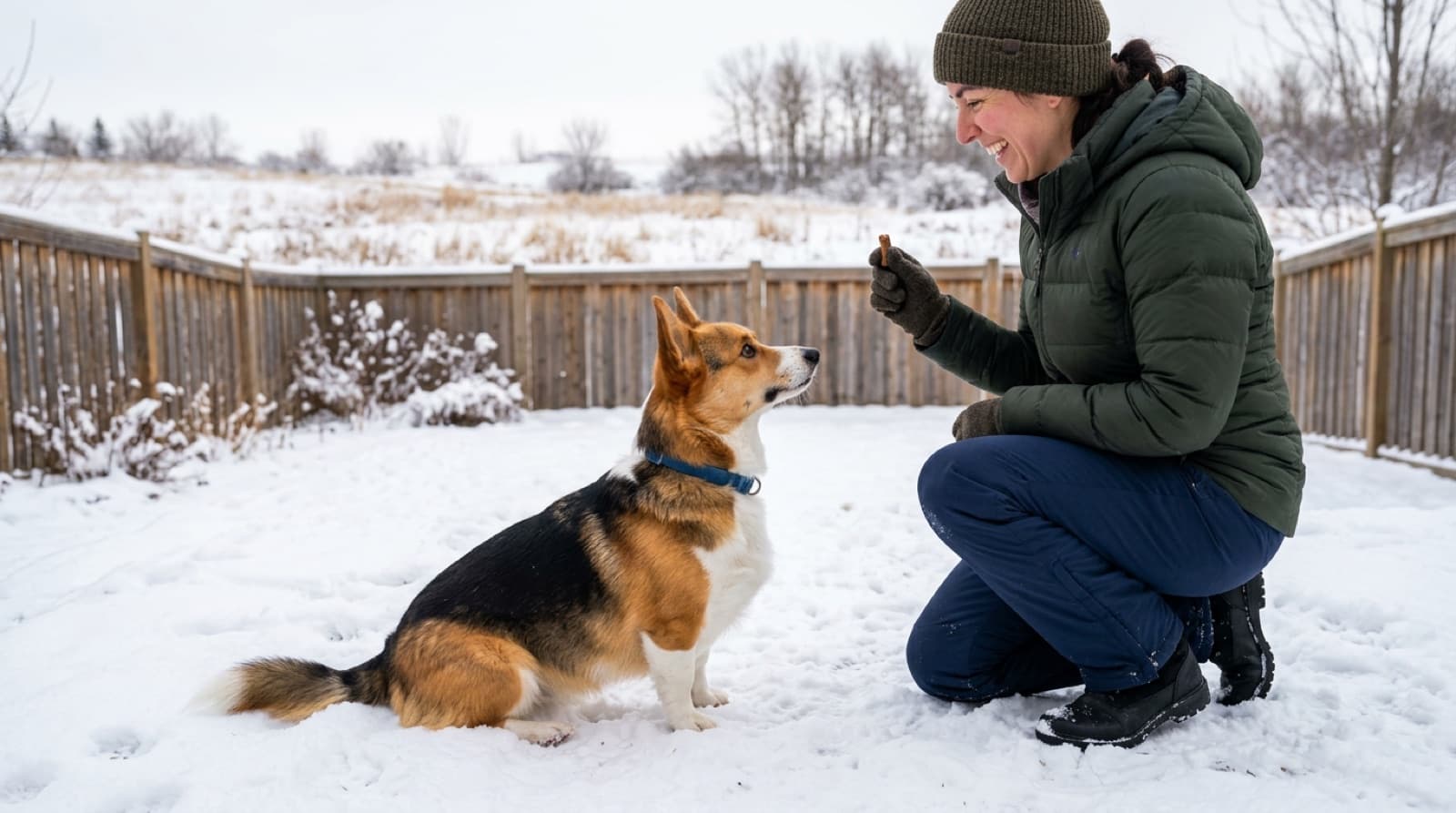
A herding brain in a small body
A Corgi is bold, smart, confident, and busy, affectionate with family, comical, and alert enough to be a fine little watchdog. Underneath the charm is a working herding dog bred to move cattle, which means high intelligence, real energy, a strong will, and instincts to herd, nip, and vocalise. Corgis are not placid lap dogs; they are engaged, opinionated companions that do best with an owner who enjoys their cleverness and gives them a job. Understanding the working heritage is the key to everything else, because the traits people find challenging are all the herding dog doing what it was bred to do.
Nipping, barking, and the brain that needs a job
Heel-nipping is herding instinct, not aggression. Redirect rather than punish: interrupt the nip, reward calm, teach an alternative, give the drive an outlet through games, and teach kids not to run and shriek around the dog. With consistency and enough exercise, it fades to manageable.
Barking is built into an alert working breed. Aim to manage, not eliminate: meet the dog’s needs (a bored Corgi barks more), do not reward demand-barking, teach a quiet cue, and control triggers like the window view of the street.
Give the brain a job. A Corgi needs mental work as much as physical exercise. Training, puzzle feeders, trick work, scent games, and dog sports like agility channel the working drive. Use positive, reward-based methods and keep sessions short and varied, since drilling bores a clever dog.
Ask your Red Deer vet or the rescue you adopt from for a current positive-methods trainer. The American Kennel Club breed profile covers the Corgi’s herding heritage.
Keeping a Corgi engaged through winter
Corgis handle cold well with their thick double coat, so they can still exercise outdoors on many Red Deer winter days, though the short legs make deep snow hard going and a shovelled path helps. The bigger winter lever is the brain: this smart breed needs mental work, and winter is ideal for training sessions, puzzle feeders, trick training, and indoor obedience. Because a bored Corgi barks and nips more, keeping the mind engaged through the cold months genuinely improves behaviour. Watch salted paws and ice balls in the paw fur after walks, and wipe the paws when you come in.
Ready for a Corgi of your own?
Browse adoptable Corgis from Central Alberta rescues. Ask the foster about the individual dog’s energy, vocal level, and herding drive.
See Available Corgis →Frequently Asked Questions
What is a Corgi’s temperament like?
A Corgi is a big dog’s personality in a small, short-legged body: bold, smart, confident, and full of character. They are affectionate and devoted to their families, playful and often comical, and alert enough to make excellent little watchdogs. Underneath the charm, though, is a working herding dog bred to move cattle, which means high intelligence, real energy, a strong will, and instincts to herd, nip, and vocalise. Corgis bond closely with their people and thrive on being involved in family life. They are not placid lap dogs, they are busy, opinionated, engaged dogs that do best with an owner who enjoys their cleverness and gives them something to do. Well matched, a Corgi is one of the most entertaining companions there is.
Are Corgis easy to train?
Corgis are highly intelligent and learn quickly, which makes them capable of impressive training, but that intelligence comes with a stubborn, independent streak from their working heritage, so they will test boundaries and think for themselves. The key is positive, reward-based training that keeps their busy brains engaged, short, fun, varied sessions work far better than repetitive drilling, which bores them. They are food-motivated, which helps, but you must guard against overfeeding. Consistency matters, because a clever Corgi quickly learns what it can get away with. Corgis excel at obedience, agility, trick training, and dog sports when given the chance. Trained with patience and creativity rather than force, a Corgi is a delight; left untrained, its cleverness turns into mischief.
Why does my Corgi nip at heels, and how do I stop it?
Heel-nipping is pure herding instinct: Corgis were bred to move cattle by nipping at their heels, and that hardwired behaviour shows up as nipping at running children, other pets, joggers, or ankles, especially when the dog is excited. It is not aggression, it is a job the dog is trying to do, but it needs managing, particularly around kids. Redirect the instinct rather than punishing it: interrupt the nip, reward calm behaviour, teach an alternative like a sit or a targeted toy to grab, and give the dog an appropriate outlet for the herding drive through training games and structured activity. Teach children not to run and shriek around the dog, which triggers it. With consistent redirection and enough mental and physical exercise, the nipping usually fades to manageable.
Do Corgis bark a lot?
Yes, Corgis are a vocal breed, and it is one of the traits that surprises owners expecting a quiet little dog. They were bred to be alert and to use their voice while working, so they tend to bark at people passing, other animals, doorbells, and general excitement, and some are quite persistent about it. The barking is manageable but rarely eliminated entirely, so honesty with yourself matters if you live in an apartment or close housing. Manage it by meeting the dog’s exercise and mental needs (a bored Corgi barks more), not rewarding demand-barking with attention, teaching a quiet cue, and managing the triggers, like blocking the window view of the street. A well-exercised, well-trained Corgi barks far less than a bored, under-stimulated one.
How much exercise and mental stimulation does a Corgi need?
More than their size suggests, this is a working breed, not a couch dog. A Corgi needs a solid hour or so of activity a day plus real mental work, and the mental component is as important as the physical, because a smart herding dog that is physically tired but mentally bored still gets into trouble. Brisk walks, play, fetch, and safe running all count, though repetitive jumping should be limited to protect the back. Crucially, add brain work: training sessions, puzzle feeders, trick training, scent games, and dog sports like agility or rally. A Corgi that gets both physical exercise and mental challenge is calm and content; one that gets neither becomes barky, nippy, destructive, and overweight. Channel the working drive and the breed shines.
How do I exercise and train a Corgi through a Red Deer winter?
Corgis handle cold well thanks to their thick double coat, so they can get outdoor exercise on many Red Deer winter days, though the short legs mean deep snow is hard going and a shovelled path helps. The bigger winter lever is the brain: this smart breed needs mental work, and winter is ideal for it. Training sessions, puzzle feeders, trick training, scent games, and indoor obedience keep a Corgi busy and satisfied when the coldest days limit outdoor time. Because a bored Corgi barks and nips more, keeping the mind engaged through winter genuinely improves behaviour. Watch salted paws and ice balls in the paw fur after outdoor walks, and wipe the paws when you come in.
Are Corgis good with children and other pets?
Generally yes, with management for the herding instinct. Corgis are typically affectionate and playful with their family’s children and can be wonderful family dogs, sturdy enough to handle kids and devoted to them. The catch is the heel-nipping and herding drive, which can be directed at running, shrieking children, so supervision and teaching both the dog and the kids appropriate behaviour matter. With other dogs Corgis are usually sociable, and with cats and other pets they often do fine, though the herding instinct may show as chasing or nipping that needs managing. Early socialisation helps a lot. Overall a well-socialised Corgi fits family life well, as long as the herding behaviours are guided rather than ignored.
Where can I train a Corgi in Red Deer?
Look for a trainer or class using positive, reward-based methods, which suit a smart, food-motivated, independent breed far better than punishment. Group obedience or puppy classes are excellent for a Corgi, combining training with the socialisation that helps manage herding and barking behaviours, and many Corgis love the mental challenge of class. If you want to go further, the breed excels at agility, rally, and trick training, which are superb outlets for the working brain. Ask your Red Deer vet or the rescue you adopt from for a current recommendation on a force-free trainer, as programs change over time. Beyond formal classes, the daily work matters most: consistent rules, redirected instincts, rewarded calm, and enough mental and physical exercise to keep a clever dog satisfied.
Related Guides
New dog? Start with these care guides
Everything a new adopter needs to set up a safe, happy home.