The short answer
First, call your vet, especially for any sudden change or a straining cat, because litter box problems are often medical and a blocked male cat is an emergency. Once a medical cause is ruled out, fix the setup: one box per cat plus one, spread across quiet locations and levels; an unscented, fine clumping litter in a roomy, uncovered box scooped daily; and reduced stress and resource competition. Clean accidents with an enzymatic cleaner, never punish, and involve your vet or a cat behaviour pro if it persists.
The fixes, in order
Rule out a medical cause first
A cat that suddenly stops using the box, strains, cries, or pees more often may have a urinary tract infection, crystals, or a blockage, and in male cats a urinary blockage is a life-threatening emergency that needs a vet the same day. Any sudden change in litter box habits deserves a vet call before you assume it is behavioural. Rule out the medical side first, then work through the setup below. When in doubt, call your vet.
Have enough boxes, in the right places
The rule of thumb is one box per cat plus one, so two boxes for one cat and three for two cats, spread across different areas rather than lined up in one spot. Put boxes in quiet, easy-to-reach places, not next to a noisy furnace or the food bowls, and make sure an older or arthritic cat can climb in easily. In a multi-level Vancouver apartment or townhouse, put a box on each level.
Get the litter and cleanliness right
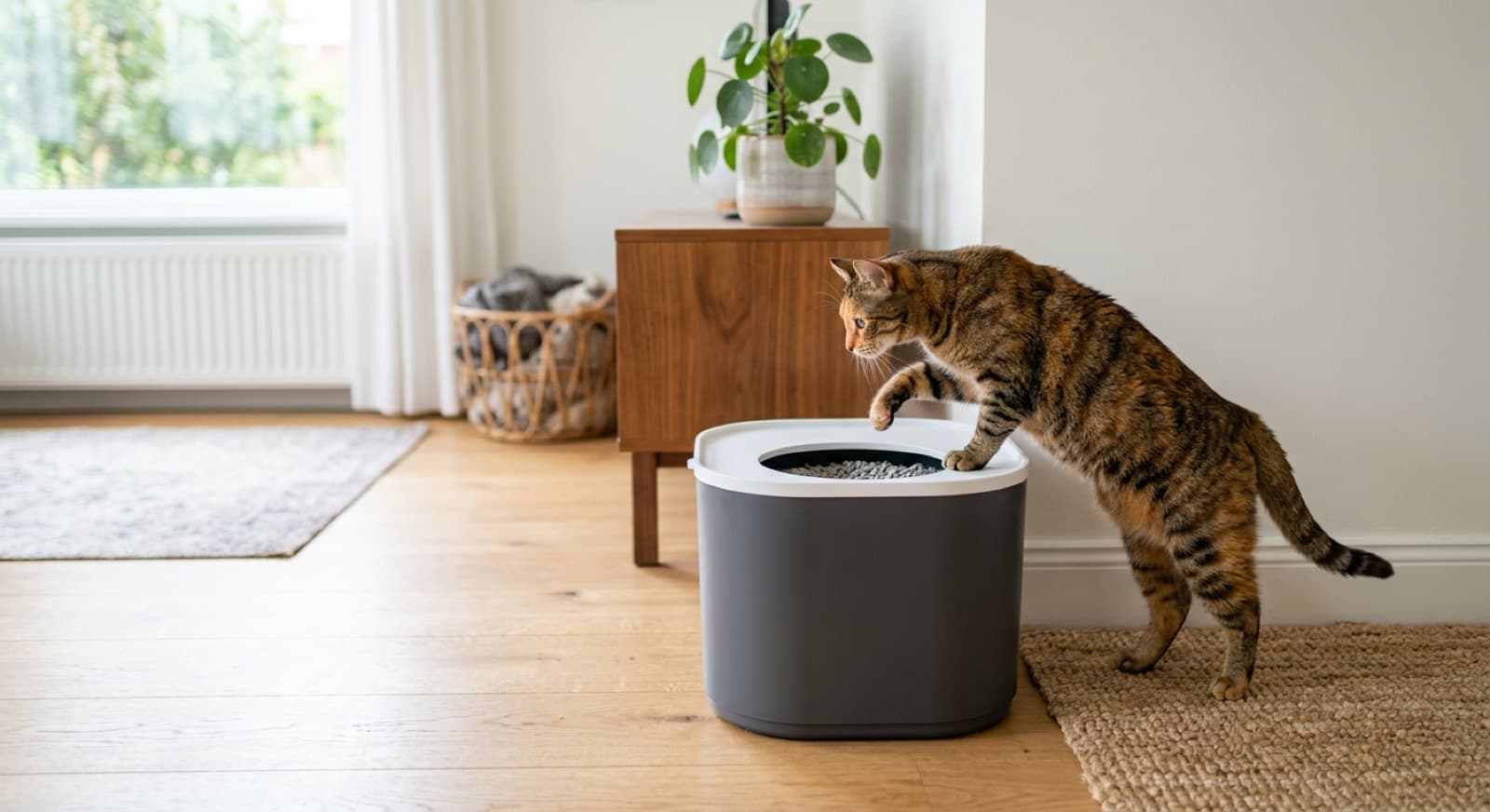
Most cats prefer an unscented, fine-grained clumping litter and a box that is scooped at least daily and fully changed regularly. Heavy fragrances, liners, and dirty boxes are common turn-offs. If you are changing litter brands, do it gradually. Many cats also dislike covered boxes or boxes that are too small, so try an uncovered, roomy box (about one and a half times the length of the cat) if problems persist.
Reduce stress and territory conflict
Cats are sensitive to change and competition. A new pet, a move, a new baby, renovations, or even a neighbourhood cat visible through the window can trigger house soiling. In multi-cat homes, tension over resources is a frequent cause, so spread out boxes, food, water, and resting spots so no cat has to pass another to reach them. Reliable routines, vertical space, and play help. Ask your vet about calming aids if stress seems central.
Clean accidents properly and do not punish
Clean soiled spots with an enzymatic pet cleaner, not an ammonia-based product, since leftover scent draws the cat back to the same place. Never punish a cat for missing the box: it does not understand punishment and it adds stress, which usually makes the problem worse. If you have worked through the medical and setup steps and it is not improving, loop in your vet or a qualified cat behaviour professional.
The single most important thing to remember: a sudden change in litter box habits is a medical question first. Cats hide illness well, and a box problem is often the only visible sign. If you have adopted recently, some of this can also just be adjustment, so our first-week guide and the safe-room approach help a new cat settle. For finding a good local vet, our low-cost vet guide lists Vancouver options for cats and dogs.
Looking to adopt a Vancouver cat?
Most adoptable cats come already litter-trained from their foster home, and the foster can tell you exactly what setup the cat is used to.
Browse Vancouver Cats →Frequently Asked Questions
Why has my cat suddenly stopped using the litter box?
A sudden change is a medical red flag until proven otherwise. Urinary tract infections, bladder crystals or stones, kidney issues, arthritis that makes climbing in painful, and other conditions all show up as litter box changes. In male cats especially, straining with little or no urine can mean a urinary blockage, which is a life-threatening emergency needing a vet the same day. Call your vet first for any sudden change, then work through box setup, litter, location, and stress once a medical cause is ruled out.
How many litter boxes should I have?
The standard guidance is one box per cat plus one: two boxes for a single cat, three for two cats. Just as important is where they go. Spread them across different rooms and levels rather than clustering them, keep them away from food and from loud appliances, and make sure they are easy to reach. In a multi-level Vancouver home, put at least one box on each floor so the cat never has to travel far or pass another cat to get there.
What litter do most cats prefer?
Most cats prefer an unscented, fine-grained clumping litter in a roomy, uncovered box, kept clean. Strong fragrances, plastic liners, covered hoods, and boxes that are too small or not scooped often enough are common reasons a cat looks elsewhere. If you need to switch litter, transition gradually by mixing the new in with the old. When a cat is picky, offering two boxes with different litters and seeing which it uses can tell you what it prefers.
Is my cat peeing outside the box out of spite?
No. Cats do not soil out of spite or revenge, and punishment does not help and usually makes things worse by adding stress. House soiling is almost always either a medical issue or a signal that something about the box, its location, or the household is not working for the cat. Treat it as information, not misbehaviour: rule out a vet issue, then adjust the setup and reduce stress. Approaching it that way solves the large majority of cases.
How do I clean cat urine so my cat stops going back to the spot?
Use an enzymatic pet cleaner made to break down urine, and avoid ammonia-based cleaners, since ammonia smells like urine to a cat and can draw it back. Clean thoroughly and let it work as directed. Blocking access to a favourite accident spot temporarily, or placing a box there while you retrain, can also help. If a cat keeps returning to one location despite good cleaning, it is worth reassessing whether a box belongs nearby.
When should I see a vet versus try to fix it at home?
See a vet first for any sudden or new litter box problem, any straining, crying, blood in the urine, frequent tiny trips, or a cat that seems unwell, and urgently for a male cat that cannot pass urine. Those can be medical and some are emergencies. If your vet rules out a medical cause, then it is reasonable to work through box number, placement, litter, cleanliness, and stress at home, and to involve a qualified cat behaviour professional if it persists.
First Week With a Rescue Cat
The safe room, the 3-3-3 rule, and a calm start.
New Kitten Checklist
Litter setup and everything else to have ready.
Indoor vs Outdoor Cats
Why indoor-only is the safe choice in Vancouver.
How to Adopt a Cat in Vancouver
The full step-by-step adoption process.
New dog? Start with these care guides
Everything a new adopter needs to set up a safe, happy home.