The short answer
Basset Hounds are stubborn and challenging to train because they are scent hounds, bred to follow a trail independently, not to please a handler. Recall is notoriously unreliable because the powerful nose takes over, so a Basset should only be off-leash in securely fenced areas and leashed everywhere else, a fundamental safety rule. Train with patience, high-value food rewards, short fun sessions, and positive methods (never harsh, which backfires), and set realistic goals (good manners, not competition obedience). Channel the nose with scent games. In Vancouver: fenced off-leash parks and yards for freedom, leashed for trails and open spaces. A delightful companion, just never an obedience robot.
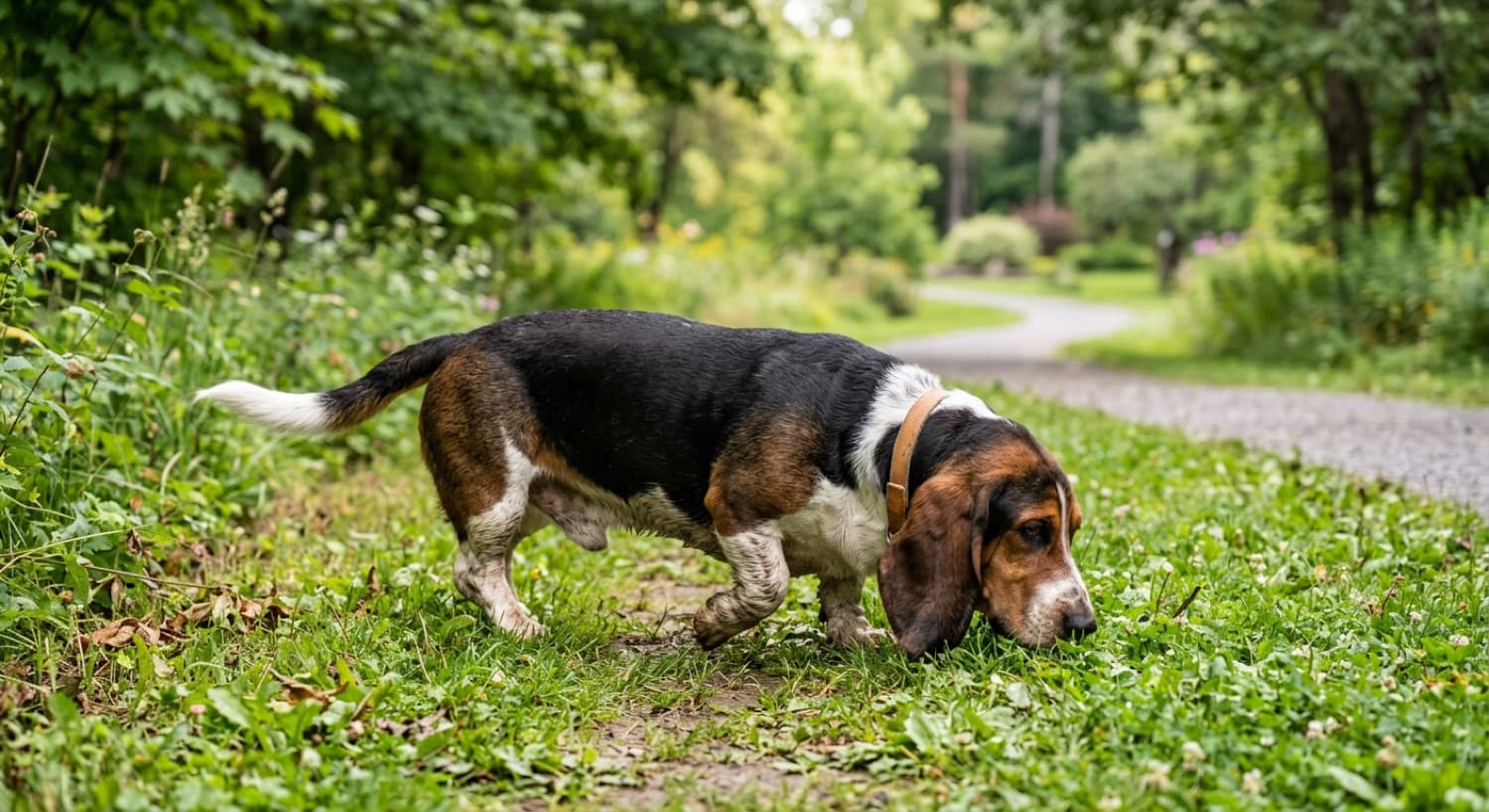
Are Basset Hounds hard to train?
Yes, Bassets have a well-earned reputation for being stubborn, but it helps to understand why: they are scent hounds, bred to follow a trail independently for hours without human direction. They are independent thinkers who are not naturally motivated to please their handler the way obedience-oriented breeds are. A Basset will weigh whether it feels like complying, and if there is a more interesting smell around, training often loses. This is not stupidity, Bassets are intelligent, they are simply hardwired to be self-directed and scent-driven rather than biddable.
The practical implications: training a Basset requires patience, consistency, realistic expectations, and, above all, strong motivation (food is usually the key). You can absolutely teach a Basset good manners and basic obedience, but do not expect the snappy, reliable, off-leash obedience of a working breed, and do not use harsh methods (which backfire with this sensitive, stubborn breed). Set realistic goals, make training rewarding and consistent, keep sessions short and fun, and accept that a Basset will always be a bit of an independent character, that stubborn independence is part of the breed's charm as much as its challenge.
Why is recall so unreliable?
Basset Hound recall is notoriously unreliable because of the breed's defining trait: an extraordinarily powerful nose and a hardwired instinct to follow scent. Bassets have one of the best senses of smell of any breed (second only to the Bloodhound), bred to lock onto a scent trail and follow it single-mindedly, tuning out everything, including you calling them. When a Basset catches an interesting scent, its nose essentially takes over, and its independent nature means it will often ignore recall in favour of the trail. This is instinct, not disobedience, and very difficult to fully train out.
The critical practical consequence is that a Basset should generally not be trusted off-leash in unfenced areas, because once it locks onto a scent it may wander off and not respond, potentially into danger (roads, getting lost). You can and should train a recall, and it can be reasonably good in low-distraction settings, but never rely on it in an unfenced, scent-rich environment. For a Vancouver Basset, this means leashed walks and securely fenced areas for off-leash freedom, a fundamental safety rule for the breed.
How to train a Basset Hound effectively
Train with patience, high-value food rewards, short fun sessions, and realistic expectations, working with the breed's nature rather than against it.
- •Use food as motivation: Bassets are very food-motivated, so high-value treats are your most powerful tool, make complying more rewarding than the alternative.
- •Keep sessions short and engaging: Bassets bore easily, so brief, positive, upbeat sessions beat long drills.
- •Be consistent and patient: Bassets learn more slowly and need repetition; progress is gradual.
- •Never use harsh methods: they backfire badly, damaging trust; positive reinforcement is the only approach that works well.
- •Use the nose: scent games and nose work are fun, engaging ways to exercise a Basset's mind and channel its instincts.
Set realistic goals, good manners and reliable basics rather than precision obedience. A professional trainer experienced with hounds can help, especially for a first-time Basset owner. With the right approach, a Basset can be a well-mannered, pleasant companion, just not an obedience-competition star, and that is perfectly fine.
Can I ever let a Basset off-leash in Vancouver?
A Basset Hound should only be off-leash in securely fenced areas, and kept leashed in any unfenced environment, because the powerful nose and scent-following instinct make recall unreliable enough that off-leash freedom in open areas is genuinely risky. In Vancouver: use securely fenced off-leash dog parks and fenced yards for off-leash play (where the fence keeps the dog safe even if it catches a scent), but keep the Basset on-leash for regular walks, trails, and any unfenced space.
This is not being overly cautious, it is a realistic response to the breed's hardwired behaviour; countless Bassets have wandered off following a scent and ended up lost or in danger. Vancouver has good fenced off-leash areas that let a Basset enjoy sniffing and exploring safely, and a long-line (a long training leash) can be a useful middle ground in some open areas. You can and should train recall to improve it, but build your management around the assumption that recall may fail when a good scent appears. Respecting this reality keeps a Vancouver Basset safe while still letting it do what it loves: use its nose.
House-training and other behaviours
House-training follows the same principles as any dog but can take extra patience given the stubborn streak, be consistent with a schedule, use crate training, reward success immediately and generously, clean accidents thoroughly, and be patient without punishment. Many Bassets house-train reliably with a consistent routine, though it may take longer, and Vancouver's wet weather can complicate things (some Bassets dislike the rain, so a covered spot helps).
For other behaviours: Bassets can be vocal (the classic bay and howl), which is instinctive, manage excessive vocalizing with training and by not rewarding it, but accept some hound sound. Food-motivation means they can be counter-surfers and beggars, so manage food access and do not feed from the table (also important for weight control). Digging and scent-driven mischief can occur if bored. Overall, managing a Basset is about working with the scent-hound instincts, using positive reinforcement, providing outlets like nose work, and accepting a degree of independent, houndy character. With patient, consistent, positive management, a Basset makes a delightful, well-mannered family companion.
Is a rescue Basset harder to train than a puppy?
Not necessarily, and a rescue Basset can be a great option, because you can often adopt an adult whose temperament and existing training you can see, and many adult Bassets already have basic manners and house-training. A good rescue assesses each dog and can tell you what training it has and how it does with people, other animals, and situations. The scent-hound stubbornness is a breed trait in both puppies and adults, so a rescue Basset is not inherently harder to train, and in some ways an adult is easier (past the demanding puppy stage, often already house-trained).
The considerations are the usual ones: a rescue dog may have unknown history, gaps in training, or learned habits needing patient work, and an adult settling into a new home needs time and consistency. The training approach is the same as with any Basset, patience, consistency, high-value food rewards, positive methods, and realistic expectations. Work with the rescue to understand the dog, and consider a professional trainer if needed. For most adopters, a rescue Basset is a wonderful choice, a gentle, affectionate companion, often past the intense puppy phase, with a known temperament and training level.
Browse adoptable Basset Hounds in Vancouver
A good rescue assesses each Basset's temperament and training, so you can adopt a dog whose character you already understand. Refreshed regularly across Lower Mainland rescues.
See Available Basset Hounds →Frequently Asked Questions
Are Basset Hounds hard to train?
Yes, they are stubborn because they are scent hounds bred to work independently, not to please a handler. They are intelligent but self-directed. Train with patience, food motivation, and realistic goals, and never expect working-breed obedience. Harsh methods backfire.
Why is recall so unreliable?
The powerful nose (second only to the Bloodhound) takes over when a Basset catches a scent, and the breed is hardwired to follow trails single-mindedly, ignoring recall. It is instinct, not disobedience, and hard to train out, so never trust a Basset off-leash in unfenced areas.
How do I train one effectively?
High-value food rewards, short fun sessions, consistency and patience, positive methods only, and scent games to channel the nose. Aim for good manners and reliable basics, not precision obedience. A hound-experienced trainer helps first-time owners.
Can I ever let one off-leash in Vancouver?
Only in securely fenced areas, leashed everywhere else. Use fenced off-leash parks and yards for freedom, and keep the Basset leashed on trails and open spaces. A long-line is a useful middle ground. Recall may fail when a good scent appears, so build management around that.
How do I house-train and manage other behaviours?
Consistent schedule, crate training, generous rewards, and patience, it may take longer than an eager-to-please breed. Manage the baying, counter-surfing, and begging (also for weight control), and provide nose-work outlets. Accept some independent, houndy character.
Is a rescue Basset harder than a puppy?
Not necessarily, you often adopt an adult with known temperament and existing manners, often past the puppy stage and already house-trained. The stubbornness is a breed trait in both. Same positive, patient approach applies. A rescue Basset is a wonderful choice for most adopters.
Related Vancouver guides
Basset Hound Adoption in Vancouver
Where to adopt in BC, the easygoing temperament, care needs, real costs, and who it suits.
Basset Hound Health Issues
Back problems (IVDD), ear infections, bloat, obesity, and the breed's vet picture.
Adoptable Basset Hounds in Vancouver
All currently available Bassets and Basset mixes with foster temperament notes. Updates regularly.
Best Dog Rescues in Vancouver
Every Vancouver-area rescue reviewed on cost, wait time, and best fit by adopter type.
New dog? Start with these care guides
Everything a new adopter needs to set up a safe, happy home.