The short answer
The Bernedoodle can inherit from either parent. The defining consideration is the Bernese cancer predisposition (lower than a purebred Bernese thanks to hybrid vigor, but still a real consideration, check regularly for lumps). Other issues: hip and elbow dysplasia (especially in larger dogs), eye conditions (PRA, cataracts from the Poodle side), skin and coat issues, ear infections (floppy hairy ears), and bloat in bigger, deep-chested dogs. Lifespan is a good ~12 to 15 years (often longer than a purebred Bernese). The levers you control: keep the dog lean, groom diligently, care for skin and ears, and stay vigilant about lumps. Because cancer and joint treatment are costly, the insurance case is real, insure while young.
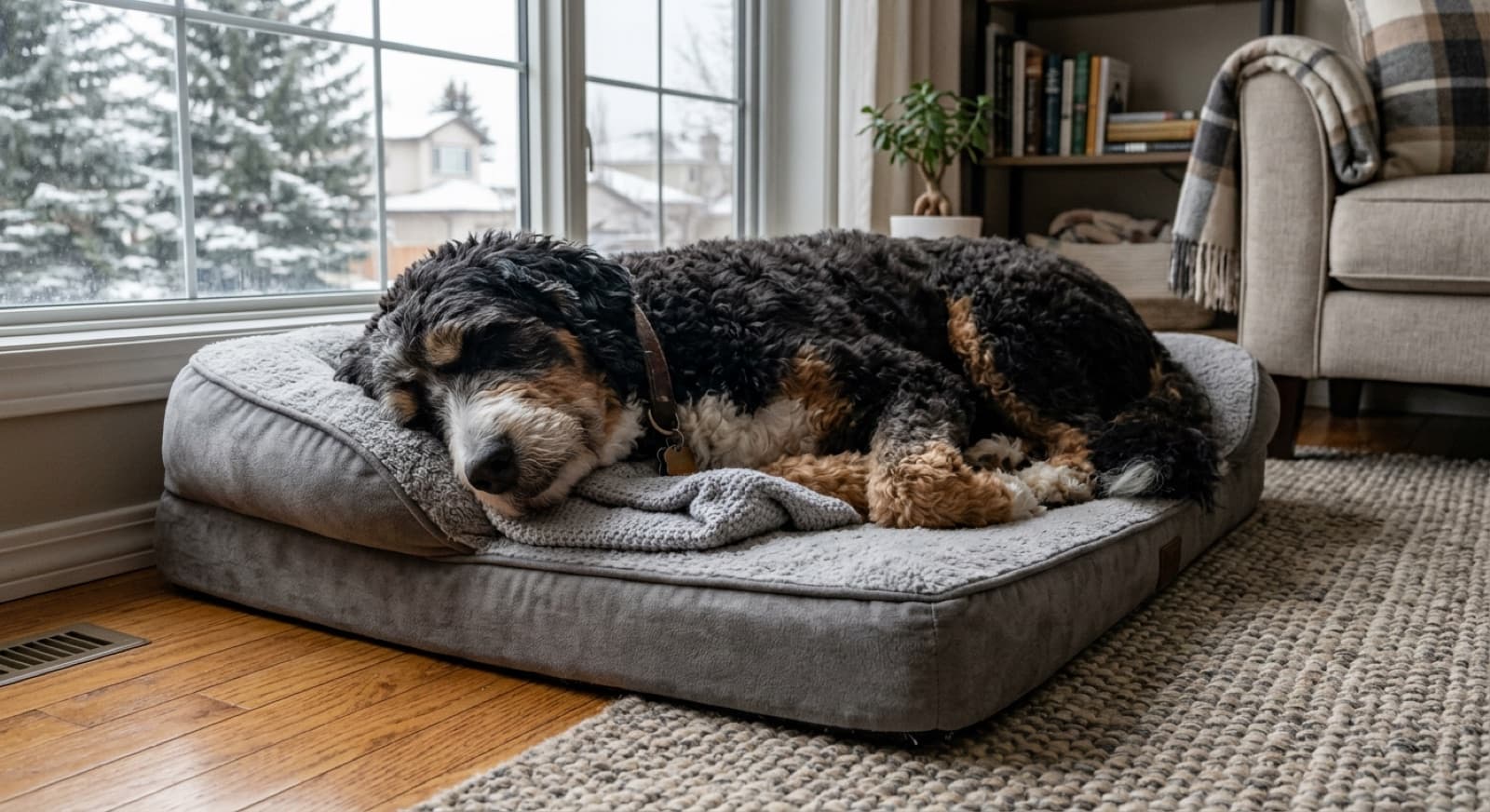
A Bernedoodle's health depends on which traits it inherits from its Bernese and Poodle parents. Hybrid vigor helps, but the breed can still inherit real conditions, led by the Bernese cancer predisposition. Knowing them lets you catch problems early. Here is the medical picture, condition by condition.
Cancer risk, the Bernese heritage
The Bernedoodle's cancer risk is a real consideration because of the Bernese Mountain Dog parent, one of the breeds most predisposed to cancer (histiocytic sarcoma, lymphoma, mast cell tumours), a burden that drives the Bernese's relatively short lifespan. A Bernedoodle can inherit this predisposition, though the picture is more favourable: crossbreeding introduces genetic diversity (hybrid vigor), and Poodles do not carry the same extreme risk, so a Bernedoodle's cancer risk is generally lower than a purebred Bernese's but potentially higher than some other breeds, varying by individual.
This does not mean every Bernedoodle will get cancer, many live long, healthy lives, but owners should be aware and vigilant: get to know your dog's body, check regularly for lumps, bumps, or changes, and have anything concerning assessed promptly, as early detection significantly improves outcomes. The cancer consideration is one of the stronger arguments for pet insurance for a Bernedoodle. The American College of Veterinary Internal Medicine publishes oncology resources.
Hips, elbows, and weight
Hip and elbow dysplasia are among the more common concerns, because both parent breeds can carry these joint issues, and larger Bernedoodles in particular are prone to them. They are joint malformations leading to arthritis, pain, and reduced mobility. Signs include stiffness, difficulty rising, reluctance to exercise or climb stairs, limping, or an altered gait. Management ranges from weight control, supplements, appropriate exercise, and medication to surgery in severe cases.
The single most important thing an owner controls is weight, keeping a Bernedoodle lean significantly reduces joint load and slows arthritis, especially important for a potentially large dog. Appropriate exercise that maintains fitness without overstressing the joints helps, and avoid excessive high-impact exercise in puppies before growth plates close. Vancouver's trails and mild climate make it easy to keep a Bernedoodle fit. Ask the rescue about known mobility issues, and start good weight management from day one.
Eyes, skin, and ears
Eyes: Bernedoodles can inherit Poodle eye conditions including PRA (leading to vision loss) and cataracts, watch for cloudiness, vision changes, redness, or squinting. Skin and coat: the curly doodle coat requires diligent care, and Bernedoodles can be prone to allergies and, if the coat mats, skin problems underneath; Poodles also have a predisposition to sebaceous adenitis. Ears: the floppy, hairy ears trap moisture and make them prone to infections.
Good grooming (regular brushing and professional grooming to keep the coat mat-free) is important for both coat and skin health, especially in damp Vancouver, and regular ear checking, cleaning, and drying (especially after swimming) prevents most ear problems. These conditions are generally manageable with good routine care, grooming, and prompt attention, and none is as significant as the cancer or joint considerations, but collectively they mean Bernedoodle ownership involves attentive grooming, skin, ear, and eye care.
Lifespan and keeping a Bernedoodle healthy
Bernedoodles typically live around 12 to 15 years (smaller ones longer), often longer than a purebred Bernese thanks to hybrid vigor and the Poodle's longer lifespan. Keep the dog lean (protecting the joints, especially for a large dog), provide appropriate exercise and mental stimulation while protecting growing joints in puppies, maintain diligent grooming and skin/coat/ear care (especially in damp Vancouver), and stay on routine vet care. Crucially, given the Bernese cancer heritage, be vigilant, check regularly for lumps and have anything concerning assessed promptly.
Feed a good-quality diet, maintain dental care, parasite prevention, and vaccinations, and if the dog is large and deep-chested, be aware of bloat and feed accordingly. A Bernedoodle that is kept lean, well-groomed, appropriately exercised, monitored for lumps, and given routine care has an excellent chance at a long, healthy life, much of it down to an engaged owner keeping up the grooming and staying vigilant, especially about cancer.
Is pet insurance worth it?
Pet insurance is worth considering for a Bernedoodle, and the cancer risk in particular strengthens the case, a Bernedoodle can inherit the Bernese cancer predisposition, and treatment (surgery, chemotherapy, specialist care) can be very expensive, plus the potential for joint surgery, eye treatment, and other conditions, and Vancouver vet and specialist care is not cheap. The combination of the cancer consideration and joint risks, both potentially costly, makes the case relevant.
As always, take out insurance while the dog is young and healthy, before any condition is diagnosed and excluded. Compare providers, understand coverage (including whether cancer and chronic conditions are well covered) and any limits, and read the fine print. For many owners, insurance provides valuable protection against the potentially very large cost of cancer treatment, plus joint surgery and other conditions. If you self-insure, keep a substantial vet fund in mind. Note that for an adopted adult or senior, some conditions may already be present, so understand what a policy covers. See our Vancouver adoption and ownership costs guide for the numbers.
Browse adoptable Bernedoodles in Vancouver
Rescue Bernedoodles come vet-checked, and a good rescue will share a dog's known health history so you can adopt informed. Refreshed regularly across Lower Mainland rescues.
See Available Bernedoodles →Frequently Asked Questions
What are the main health problems?
They can inherit from either parent: the Bernese cancer predisposition (the defining consideration), hip and elbow dysplasia, Poodle eye conditions (PRA, cataracts), skin and coat issues, ear infections, and bloat in larger dogs. Lifespan ~12 to 15 years, often longer than a purebred Bernese.
Are they at higher risk of cancer?
The Bernese parent is one of the most cancer-prone breeds, so a Bernedoodle can inherit that predisposition, though hybrid vigor and the Poodle side make the risk lower than a purebred Bernese. Not every Bernedoodle gets cancer, but check regularly for lumps and see the vet promptly. A strong argument for insurance.
Do they have joint problems?
Yes, hip and elbow dysplasia are common, from both parents, and larger Bernedoodles especially. Keeping the dog lean is the biggest lever, plus appropriate exercise that avoids high-impact stress in puppies. Vancouver's trails make fitness easy.
What eye, skin, and ear conditions affect them?
Eyes: PRA and cataracts from the Poodle side. Skin: allergies, coat/mat-related issues, and sebaceous adenitis. Ears: the floppy, hairy ears trap moisture and cause infections. Good grooming and ear care, especially in damp Vancouver, prevent most problems.
How long do they live?
Around 12 to 15 years (smaller ones longer), often longer than a purebred Bernese. Keep the dog lean, well-groomed, and appropriately exercised, monitor for lumps, and stay on routine vet care. Vigilance about cancer is the most important habit.
Is pet insurance worth it?
Worth considering, the cancer risk (from the Bernese side) and joint issues can be expensive. Take insurance out while the dog is young, before conditions are excluded. If you self-insure, keep a substantial vet fund. For an adopted senior, understand what a policy covers.
Related Vancouver guides
Bernedoodle Adoption in Vancouver
Where to adopt in BC, the gentle temperament, grooming, real costs, and who it suits.
Bernedoodle Sizes & Generations
Mini vs standard, F1 vs F1b vs multigen, and what they mean for coat, size, and shedding.
Adoptable Bernedoodles in Vancouver
All currently available Bernedoodles and doodle mixes with foster health notes. Updates regularly.
Low-Cost Vet Care in Vancouver
Affordable clinics and options for routine care and the monitoring a Bernedoodle needs.
New dog? Start with these care guides
Everything a new adopter needs to set up a safe, happy home.