The short answer
Bernedoodle size depends on the Poodle used: Toy/Tiny (under ~25 lbs), Mini (~25 to 50), Medium (~40 to 60), and Standard (50 to 90-plus). Generation describes the genetic mix: F1 (50/50, variable coat), F1b (~75% Poodle, curlier and lower-shedding, often preferred for allergies), F2 and multigen (later generations, often bred for consistent curly coats). Generally, more Poodle = curlier, lower-shedding coat; size affects the amount of coat, not the type. But these are tendencies, not guarantees. For a rescue adopter, the generation label barely matters, you can see and ask about the actual dog's real size, coat, shedding, and temperament, which is far more reliable than any label.
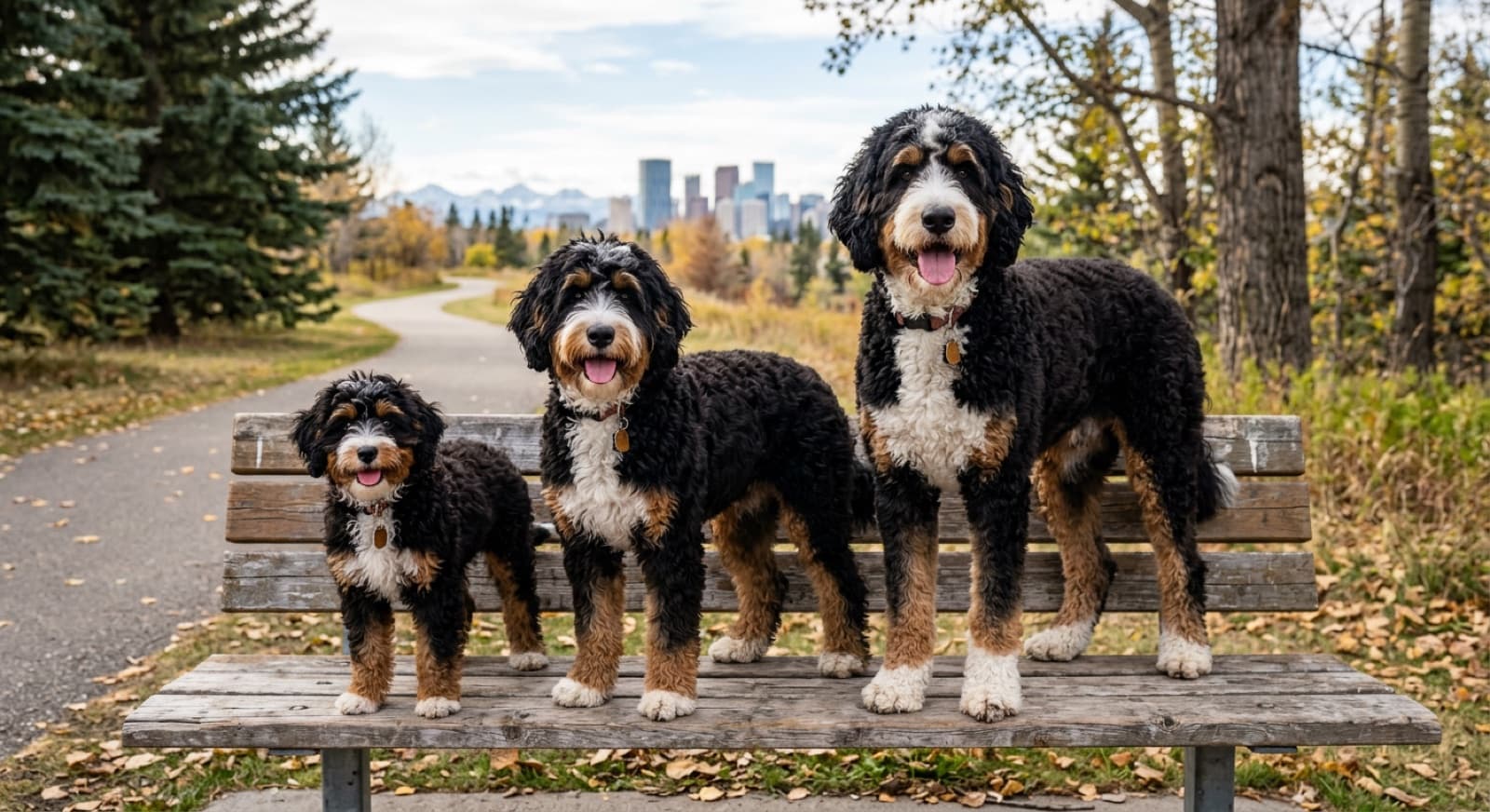
The Bernedoodle sizes
Bernedoodle sizes are determined mainly by which size of Poodle is used in the cross (Toy, Miniature, or Standard) combined with the large Bernese Mountain Dog.
| Size | Poodle used | Typical weight |
|---|---|---|
| Tiny / Toy | Toy Poodle | Under ~25 lbs (sometimes much smaller) |
| Miniature / Mini | Miniature Poodle | ~25 to 50 lbs |
| Medium | Intermediate | ~40 to 60 lbs |
| Standard | Standard Poodle | 50 to 90-plus lbs |
Size affects space needs, exercise, cost of food and care, and lifespan (smaller dogs generally live longer). Size predictions for a puppy or mixed-generation dog are estimates, so one advantage of adopting an adult is seeing the actual size. For Vancouver, a Mini or Medium may suit an apartment or smaller home, while a Standard needs more space.
The generations (F1, F1b, F2, multigen)
Generations describe how much Bernese versus Poodle is in the dog, and they affect coat type, shedding, and appearance.
- •F1: a first-generation cross, purebred Bernese bred to purebred Poodle (50/50). The most variable coats, from wavier and more shedding to curlier, less predictable.
- •F1b: an F1 Bernedoodle bred back to a Poodle (~75% Poodle, 25% Bernese). A curlier, lower-shedding coat often preferred by allergy sufferers.
- •F2: a second-generation cross (two Bernedoodles, or various F1 combinations), with more variable results.
- •Multigen: later generations bred over multiple generations, often specifically for consistent, curly, low-shedding coats. Frequently the most predictable.
In general, the more Poodle in the mix (higher Poodle percentage, as in F1b or many multigens), the curlier and lower-shedding the coat tends to be; more Bernese can mean a wavier, higher-shedding coat and more of the Bernese look. For a rescue dog, the exact generation is often unknown, which is fine, what matters most is the individual dog's actual coat and shedding.
How sizes and generations affect coat and shedding
The generation (and amount of Poodle genetics) is the biggest factor affecting coat type and shedding, while size affects the amount of coat but not the type. The more Poodle in the cross, the curlier and lower-shedding the coat tends to be, F1b and many multigens usually have curlier, lower-shedding coats often marketed as more hypoallergenic, while F1s are more variable. A larger Bernedoodle simply has more coat to groom (more brushing, bigger grooming bills).
Importantly, all these are tendencies, not guarantees, individual dogs within any generation vary, and no coat guarantees zero shedding or allergy safety. The practical bottom line for adopters: rather than relying on generation or size labels, look at (and ask about) the individual dog's actual coat type, curliness, and shedding, which is what really determines the grooming commitment and shedding level you will experience, and which a rescue can tell you about the specific dog. Our adoption guide covers the grooming commitment in more detail.
Temperament, and which type is best for Vancouver
Size and generation have some influence on temperament, but individual variation, upbringing, and socialization matter more. Some tendencies: smaller Bernedoodles (Toy/Mini Poodle) may be a bit more energetic and lively, while larger Standard-based ones may be calmer and more mellow. More Poodle influence may bring more intelligence, energy, and sensitivity; more Bernese may bring a gentle, mellow, sometimes stubborn temperament. But individual dogs vary widely, so do not rely on size or generation to predict a specific dog's temperament.
The best size and type for you in Vancouver depends on your space, lifestyle, and priorities: a Mini or Medium suits an apartment or smaller home; a Standard suits a house with space and an active lifestyle. If low shedding is a priority, a curlier-coated dog (often F1b or multigen) is generally preferable, but meet the specific dog if allergies are a concern. All sizes and types need regular grooming and the coat care Vancouver's wet climate makes especially important. Ultimately, for a rescue adopter, look at the individual dogs available and choose the one whose size, coat, energy, and temperament, as assessed by the rescue, fit your home, adopting lets you match a real dog to your situation.
Should I worry about generation labels when adopting?
No, you generally should not worry too much about generation labels when adopting a rescue Bernedoodle, because for a rescue dog, the exact generation is often unknown or uncertain, and what matters far more is the individual dog's actual traits, which you can observe and which a good rescue can describe. Generation labels are most relevant when buying a puppy from a breeder, where they predict coat and shedding before you can see the adult dog.
When you adopt an adult or adolescent from rescue, you have something better than a prediction, the actual dog, whose real size, coat type and condition, shedding, energy, and temperament can be seen and assessed. So rather than asking what generation a rescue Bernedoodle is, ask the useful questions: How big is the dog? What is its coat like and how much does it shed? What is its energy and temperament? How does it do with kids, other pets, and being alone? A good rescue will have assessed these and can tell you. The beauty of adopting is precisely that you are not gambling on generation-based predictions, you are choosing a known, assessed dog, so focus on the individual dog in front of you.
Browse adoptable Bernedoodles in Vancouver
Forget guessing generations, adopting lets you meet the real dog and choose the size, coat, and temperament that fit your home. Each Lower Mainland rescue Bernedoodle comes with a foster's assessment. Refreshed regularly.
See Available Bernedoodles →Frequently Asked Questions
What are the different Bernedoodle sizes?
Tiny/Toy (under ~25 lbs), Mini (~25 to 50), Medium (~40 to 60), and Standard (50 to 90-plus), determined by the Poodle used. Size affects space, exercise, cost, and lifespan. Adopting an adult lets you see the actual size rather than guessing.
What do F1, F1b, F2, and multigen mean?
F1 is 50/50 Bernese-Poodle (variable coat); F1b is ~75% Poodle (curlier, lower-shedding); F2 is second-generation (variable); multigen is later generations often bred for consistent curly coats. More Poodle generally means curlier and lower-shedding.
How do they affect coat and shedding?
Generation (Poodle percentage) is the biggest factor, more Poodle means curlier, lower-shedding. F1b and multigens tend to shed least; F1s vary. Size affects the amount of coat, not the type. All are tendencies, not guarantees, so assess the individual dog's actual coat.
Does size or generation affect temperament?
Some, smaller ones may be livelier, larger ones mellower, and more Bernese may mean a gentler, sometimes stubborn temperament. But individual variation and socialization matter more. Do not predict a dog's temperament from labels; assess the individual dog.
Which type is best for Vancouver?
Depends on your space and priorities, Mini/Medium for apartments, Standard for a house with space. Curlier coats (F1b/multigen) shed less. All need grooming and coat care, especially in damp Vancouver. Choose the individual rescue dog whose traits fit your home.
Should I worry about generation labels when adopting?
No, for a rescue dog the generation is often unknown and matters far less than the actual dog. Ask instead about size, coat and shedding, energy, and temperament, all of which a good rescue can describe. Adopting means choosing a known, assessed dog rather than gambling on labels.
Related Vancouver guides
Bernedoodle Adoption in Vancouver
Where to adopt in BC, the gentle temperament, grooming, real costs, and who it suits.
Bernedoodle Health Issues: What Each Parent Adds
Bernedoodle health issues to plan for: cancer risk from the Bernese side, hip and elbow dysplasia, bloat, degenerative myelopathy, Addison’s and skin and ear problems.
Adoptable Bernedoodles in Vancouver
All currently available Bernedoodles and doodle mixes with foster notes. Updates regularly.
Best Dog Rescues in Vancouver
Every Vancouver-area rescue reviewed on cost, wait time, and best fit by adopter type.
New dog? Start with these care guides
Everything a new adopter needs to set up a safe, happy home.