The short answer
Watch an adult Bernedoodle closely for new lumps, a limp, a cough, poor appetite or low energy, because the Bernese side carries a high cancer risk. Keep the dog lean for its hips and elbows. Learn the signs of bloat. Know the vague, come-and-go signs of Addison’s disease, and keep the ears clean and dry. Price pet insurance in your first week.
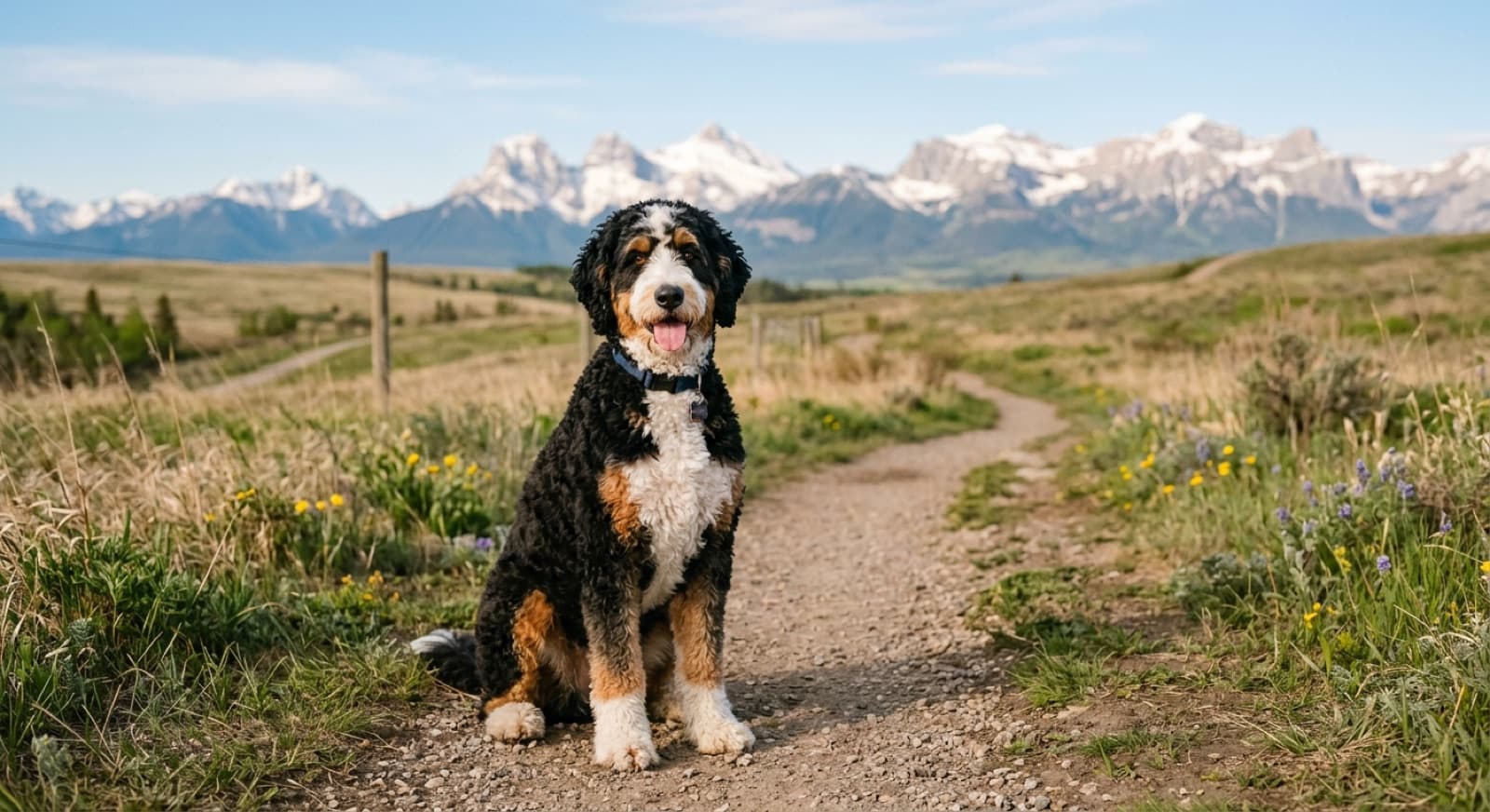
Mixes are not automatically healthier
A cross can inherit conditions from either parent, and a rescue Bernedoodle’s exact mix (first generation, Poodle-heavy or Bernese-heavy) is often unknown. The practical approach is to know both parents’ lists and watch for the most serious items on each. See our Bernese Mountain Dog and Poodle and doodle health guides for the full detail.
From the Bernese side: cancer, joints and the spine
Bernese Mountain Dogs have a very high risk of histiocytic sarcoma, an aggressive cancer; a study of the breed cites an estimate of 225 times the risk of other breeds. How much of that risk passes to a cross is not known, so treat any new, unexplained sign in an adult Bernedoodle (a lump, limp, cough, poor appetite, weight loss or low energy) as a reason for a prompt vet visit.
Hip and elbow dysplasia are common in large breeds, and VCA Animal Hospitals stresses lean growth and low-impact exercise. The Bernese is also on VCA’s degenerative myelopathy list, a slow, painless spinal-cord disease of older dogs with a DNA test.
Browse adoptable Bernedoodles
Ask the rescue what they know about the dog’s parentage and any lumps, limps or ear trouble.
See Available Bernedoodles →Bloat
Both parents are large and deep-chested (VCA names the Standard Poodle for bloat), so a standard-size Bernedoodle should be watched for gastric dilatation-volvulus. Retching without producing anything, a swollen belly, drooling and restlessness need emergency care within minutes to hours, according to VCA. Ask about a preventive gastropexy.
From the Poodle side: Addison’s, skin and ears
Addison’s disease, a shortage of adrenal hormones, is a condition VCA names for the Standard Poodle. Signs are vague and come and go: tiredness, vomiting, diarrhea, more drinking and weight loss. A sudden collapse with severe vomiting is an emergency.
The curly, low-shedding coat traps debris and needs regular grooming, and hairy, floppy ears are prone to infection. Keep the ears dry and see your vet for odour or head shaking before using drops.
The first vet visit after adoption
Tell your vet the dog is a Bernese-Poodle cross. Ask for a full lump check, a gait and joint assessment, an ear and skin check, a body condition score and baseline bloodwork. Raise gastropexy and degenerative myelopathy testing. Bring the rescue’s records.
Price pet insurance the same week. Every Canadian provider excludes conditions documented before enrolment, and cancer care and orthopaedic surgery are the large costs to plan for.
Frequently asked questions
Are Bernedoodles healthier than Bernese Mountain Dogs?
Not reliably. A cross can inherit risks from either parent, and how much of the Bernese cancer risk passes on is not known. Watch for the serious conditions on both sides.
What are the most common Bernedoodle health issues?
Cancer risk from the Bernese side, hip and elbow dysplasia, bloat, degenerative myelopathy, Addison’s disease from the Poodle side, and ear and skin problems.
What signs should worry me in an adult Bernedoodle?
Any new lump, a limp that does not settle, a cough, poor appetite, weight loss or low energy. See your vet promptly rather than waiting.
Are Bernedoodles prone to bloat?
Standard-size Bernedoodles are large and deep-chested, so yes, they are at risk. Learn the signs and ask your vet about a preventive gastropexy.
How long do Bernedoodles live?
It varies with size and parentage. Lean weight, regular checkups and early attention to new signs give the best odds.
Should I get pet insurance for a rescue Bernedoodle?
It is worth pricing in your first week. Canadian pet insurance excludes conditions documented before enrolment, and cancer and joint care are significant costs.
Sources
- Risk factors for histiocytic sarcoma in Bernese Mountain Dogs (PMC): Bernese estimated 225 times more likely than other breeds
- VCA Animal Hospitals: Hip Dysplasia in Dogs: lean growth and exercise advice
- VCA Animal Hospitals: Degenerative Myelopathy in Dogs: Bernese and Standard Poodle named; DNA test
- VCA Animal Hospitals: Gastric Dilatation and Volvulus: Standard Poodle named; urgency; gastropexy
- VCA Animal Hospitals: Addison’s Disease in Dogs: Standard Poodle named; signs; crisis is an emergency
General information, not veterinary advice. Diagnosis and treatment decisions belong with your veterinarian.
Related guides
New dog? Start with these care guides
Everything a new adopter needs to set up a safe, happy home.