The short answer
Boston Terriers are relatively healthy and often long-lived (11 to 14 years), less affected by flat-faced problems than Bulldogs or Pugs, but there are real breed issues to know: some breathing difficulty and heat sensitivity, prominent-eye vulnerabilities (corneal ulcers, cherry eye, cataracts), patellar luxation (slipping kneecaps), allergies and sensitive skin, and congenital deafness in some white-marked lines. The levers you control: manage heat, protect and monitor the eyes, keep the dog lean, and stay on routine care. Insurance or a vet fund is sensible for the eye and knee risks, take out insurance while the dog is young.
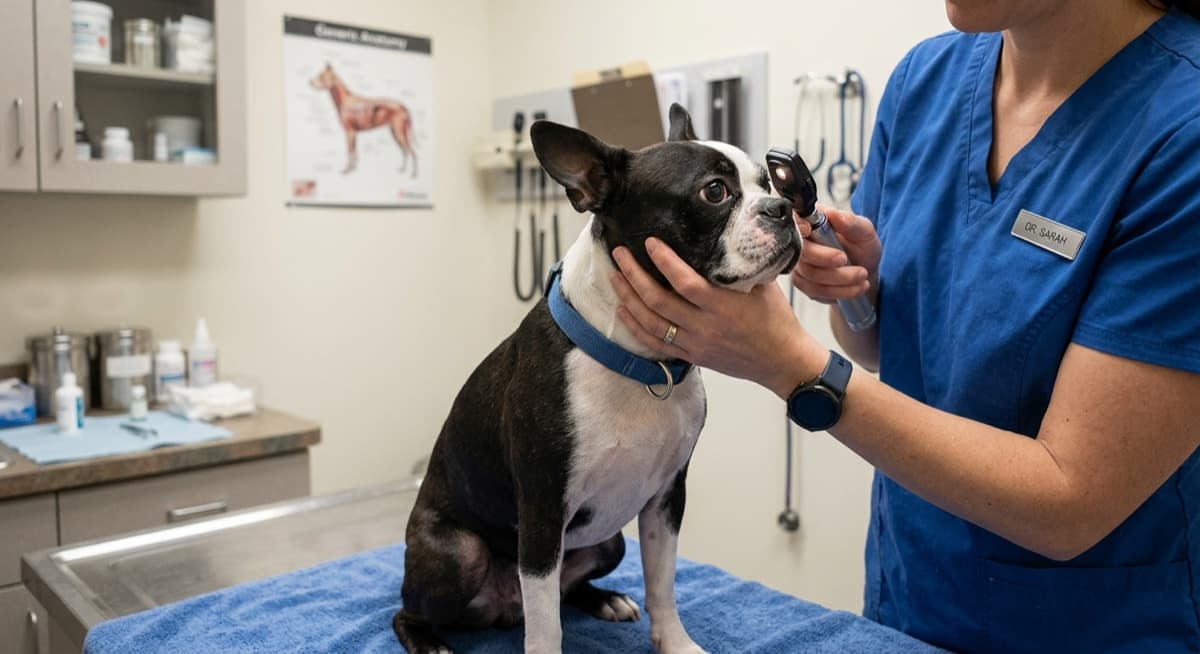
Boston Terriers are one of the easier flat-faced breeds to own, but they are not problem-free, and knowing the predispositions lets you catch issues early. Here is the medical picture, condition by condition.
Breathing and heat
Bostons are brachycephalic, so they can have some degree of BOAS, but they are generally more moderately affected than Bulldogs and Pugs, many breathe reasonably well with only some snorting or snoring. Still, the shortened airway means they cool less efficiently, so heat sensitivity is the practical everyday concern: they overheat more easily and need heat management, especially in summer.
Signs of more significant breathing trouble, laboured or very noisy breathing, marked exercise intolerance, or distress, warrant a vet assessment, as more severely affected individuals can benefit from airway surgery. For most Bostons, though, the key is sensible heat management (cool spaces, shade, water, cool-hour walks, no overexertion in heat) rather than major intervention. Vancouver's mild climate makes this quite manageable most of the year.
Eyes, the big one
Eye issues are one of the most important health considerations for Boston Terriers, because their large, round, prominent eyes are both a breed hallmark and a vulnerability. They are prone to corneal ulcers and injuries (the exposed eyes are easily scratched), cherry eye (usually needing surgery), cataracts (juvenile and later-onset), dry eye, and other conditions.
Because the eyes are so exposed, prompt attention to any eye problem is essential, watch for squinting, redness, cloudiness, discharge, excessive tearing, or pawing, and see the vet quickly, as conditions worsen fast and vision is at stake. Routine eye care, keeping the face clean, protecting the eyes from hazards, and not letting a Boston hang its head out car windows, plus regular vet checks, helps a lot. Eye issues are manageable but need vigilance, and are a meaningful part of the breed's potential vet costs. The American College of Veterinary Ophthalmologists maintains resources on hereditary eye conditions.
Kneecaps, allergies, and skin
Patellar luxation (slipping kneecaps) is a common orthopedic issue, where the kneecap slips out of its groove, causing an intermittent skip or hop in the gait, occasional lameness, or a hind leg held up briefly. Mild cases are managed conservatively (weight control, appropriate exercise, sometimes supplements); severe cases may need surgery. Keeping the dog lean reduces the strain.
On the skin side, Bostons can be prone to allergies (environmental and food) causing itching, skin irritation, and ear issues, and their short coat and sensitive skin can be prone to irritation, generally manageable with veterinary guidance, appropriate diet, and good routine care. Some also have sensitive digestion and can be gassy (a breed running joke, but a sign to feed a good-quality, suitable diet). None is usually severe, but knowing them helps you spot and address them early, and keeping a Boston lean helps the joints and general health considerably.
Deafness in some lines
Some Bostons, particularly those with a lot of white on the head or that are predominantly white, can be born with congenital deafness (in one or both ears), a hereditary condition linked to coat-colour genetics that affects several white-marked breeds. It is not extremely common, but it is a recognized breed issue worth knowing.
A deaf or partially deaf Boston can still live a completely happy, full life, they simply need accommodations: training with hand signals and visual cues rather than voice, extra care around traffic and off-leash situations (a deaf dog cannot hear a car or a recall), and vibration or light-based ways to get their attention. A good rescue will usually have noticed and disclosed hearing issues, and a simple vet assessment can check. Deafness should not deter you from a wonderful dog, but manage it thoughtfully, especially in a busy Vancouver neighbourhood.
Is pet insurance worth it?
Pet insurance is worth considering for a Boston Terrier, though the calculation is softer than for a giant or extreme brachycephalic breed. Bostons are relatively healthy with modest routine costs, but the breed does carry real risks of potentially costly issues, eye surgeries (cherry eye, cataracts, corneal ulcers add up), patellar luxation surgery, and airway or allergy management in some dogs, and Vancouver vet care is not cheap.
The usual rule applies: if you want insurance, take it out while the dog is young and healthy, before any condition is diagnosed and excluded, which matters for a breed with predictable eye and knee risks. Compare providers and read the exclusions. For many owners, insurance, or at minimum a dedicated vet savings fund, provides peace of mind against the breed's known eye and orthopedic risks. Because Bostons are generally healthy, some owners reasonably self-insure with a solid emergency fund instead, either is defensible, but do plan for the possibility of an eye or knee bill. See our Vancouver adoption and ownership costs guide for the numbers.
Browse adoptable Boston Terriers in Vancouver
Rescue Bostons come vet-checked, and a good rescue will share a dog's known eye, hearing, and health history so you can adopt informed. Refreshed regularly.
See Available Boston Terriers →Frequently Asked Questions
How healthy are Boston Terriers overall?
Relatively healthy and often long-lived (11 to 14 years), less affected by flat-faced problems than Bulldogs or Pugs. But know the predispositions: some breathing and heat sensitivity, eye vulnerabilities, patellar luxation, allergies, and occasional deafness. A vet-checked rescue comes with known conditions.
Do they have breathing problems?
Some, being flat-faced, but generally more moderate than Bulldogs or Pugs. The practical concern is heat sensitivity, they cool less efficiently, so manage summer heat. Significant laboured breathing warrants a vet assessment, but most Bostons just need sensible heat management.
What eye problems are they prone to?
Their large, prominent eyes are vulnerable to corneal ulcers and injuries, cherry eye, cataracts, and dry eye. Prompt attention to any eye issue, squinting, redness, cloudiness, is essential since conditions worsen fast. Protect the eyes and see the vet quickly.
What about kneecaps, allergies, and skin?
Patellar luxation (slipping kneecaps) causes a skip or hop in the gait, mild cases managed with weight control, severe ones with surgery. Bostons can also have allergies, sensitive skin, and gassy digestion. Keeping the dog lean and feeding well helps a lot.
Are they prone to deafness?
Some, especially predominantly white or white-headed dogs, can have congenital deafness linked to coat-colour genetics. It is not very common. A deaf Boston lives a full life with hand-signal training and extra care around traffic. A good rescue will have noticed and disclosed it.
Is pet insurance worth it?
Worth considering, though softer than for a giant breed. The real risks are eye surgeries and patellar luxation, which can add up. Take insurance out while the dog is young, before conditions are excluded. A solid vet fund is a defensible alternative given the breed's general health.
Related Vancouver guides
Boston Terrier Adoption in Vancouver
Where to adopt in BC, the friendly temperament, apartment fit, real costs, and who it suits.
Boston Terrier Temperament & Training
The friendly, eager-to-please temperament and how to train an American Gentleman.
Adoptable Boston Terriers in Vancouver
All currently available Bostons and Boston mixes with foster health notes. Updates regularly.
Low-Cost Vet Care in Vancouver
Affordable clinics and options for routine care, eye checks, and the checks a Boston needs.
New dog? Start with these care guides
Everything a new adopter needs to set up a safe, happy home.