The short answer
Chihuahuas are clever, food-motivated and quick to learn, and they get away with things a big dog never would. Train in short daily sessions, teach handling early so that lifelong dental care is possible, and expect house training to take longer through a Vancouver winter than the books suggest. Adopting an adult means the temperament is already visible instead of a guess.
The under-training trap
The reason Chihuahuas have a reputation for being badly behaved is not that the breed cannot learn. It is that nobody is sufficiently inconvenienced to teach it. A 30-kilogram dog that jumps on visitors gets dealt with immediately because it knocks people over. A four-pound dog doing the same thing is mildly funny, so it carries on doing it for a decade.
The same applies to recall, to sofa guarding, and to walking on a lead. Small misbehaviour is tolerable, tolerated behaviour becomes habit, and by the time anyone minds, the dog has years of practice. The fix is simply to decide that the rules apply. Chihuahuas are food-motivated and genuinely bright; five minutes twice a day gets you a long way, and the breed enjoys the work once it starts.
Teach handling before you need it
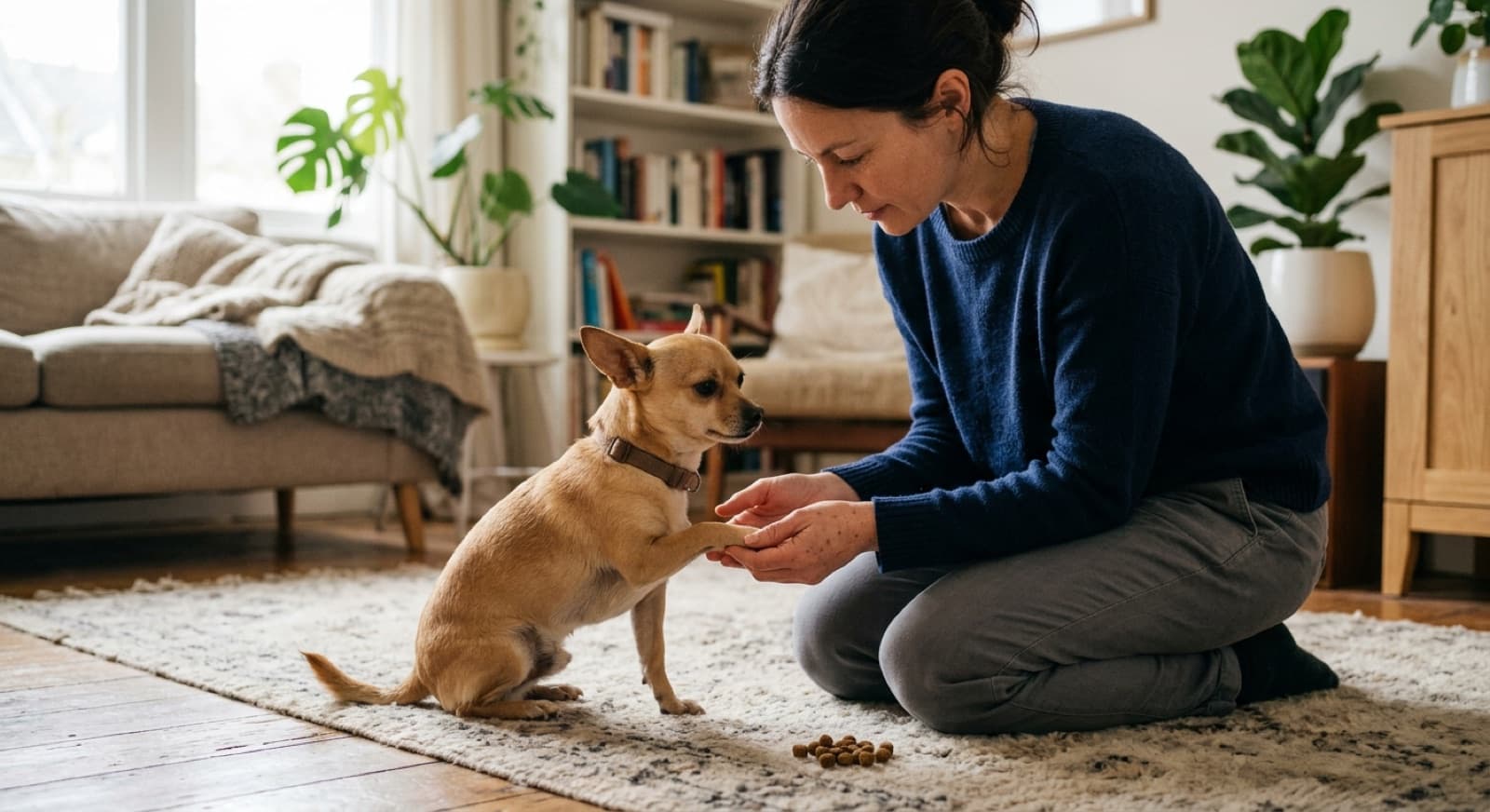
This is the part that matters most for this breed and gets skipped most often. Chihuahuas carry a full set of teeth in a jaw far too small for them, so dental disease is close to inevitable and dental care is a lifelong requirement rather than an occasional event. A dog that will let you lift a lip, brush its teeth and hold a paw is a dog that gets better care for fifteen years. A dog that will not becomes a sedation appointment every time.
Build it in small steps and stop early. Touch a paw, reward, done. Later, hold the paw. Later still, let the dog see the clippers without using them. One nail is a complete session. The same ladder works for tooth brushing and for being examined. Forcing it once to get the job finished usually costs weeks of progress and makes the next vet visit worse. The Fear Free approach to low-stress handling is the framework a growing number of clinics work to, and it is worth asking whether yours does. Our Vancouver Chihuahua health guide covers why the teeth deserve this attention.
House training in a condo, in the rain
Two things make this harder in Vancouver than the standard advice assumes. A small dog holds less and needs more trips out than a bigger puppy. And in a condo, every trip means a corridor, an elevator and a lobby before anyone reaches grass, which is a long way when a small bladder has already decided.
Work to a fixed schedule rather than waiting for the dog to signal, since by the time a Chihuahua signals you have roughly no time. Reward outside, immediately, rather than praising once you are back indoors. Expect the wet months to slow things down, because a short-coated dog that hates rain will hold on and then have an accident inside. Plenty of Vancouver owners run an indoor pad option through the worst of the winter, and that is a reasonable accommodation rather than an admission of defeat.
The one-person dog, and the lap-guarding problem
Many Chihuahuas attach hardest to one person and treat the rest of the household as scenery. That is a breed tendency, not a failure of your partner. It becomes a problem when the dog starts guarding that person, typically from a lap, and the household finds it flattering rather than concerning.
Spread the good things around: let other people feed, walk, train and treat the dog. Do not let growling from a lap be a joke, because the dog is rehearsing something that gets less funny over time. If it has already progressed to snapping at people approaching you, that needs a qualified professional rather than management at home. Credentials from the International Association of Animal Behavior Consultants or the Certification Council for Professional Dog Trainers are a reasonable filter, and the question to ask before booking is what the trainer does when a dog gets something wrong.
Recall, and being honest about off leash
A reliable recall is worth building. Use a long line somewhere quiet, make coming back pay every time, and never call the dog to do something it dislikes, because that is how a recall gets poisoned. Practise it as a safety behaviour first.
Then be realistic about where you use it. A small dog in a busy off-leash area shared with large dogs can be hurt through no fault of its own or its owner's, and one bad encounter can set a Chihuahua back for months. Vancouver's designated off-leash areas are the place for this, at quiet hours, and going off leash outside one carries a fine starting at $250. Our Vancouver condo guide lists the designated areas and the licensing rules.
Browse adoptable Chihuahuas in Vancouver
An adult from a foster home comes with a temperament somebody has already lived with, which beats predicting one.
See Available Chihuahuas →Questions Vancouver adopters ask
What is a Chihuahua actually like to live with?▼
Loyal to the point of being a shadow, alert, opinionated, and far more trainable than the reputation suggests. Most bond hardest with one person and will follow that person from room to room. They are watchful, which is where the barking comes from, and they are properly clever, which means they learn whatever you accidentally teach just as fast as what you teach on purpose. In a Vancouver condo they suit the space well. The catch is that a bored, unexercised Chihuahua invents its own job, and that job is usually announcing the hallway.
Are Chihuahuas hard to train?▼
No, they are under-trained. A four-pound dog can jump on visitors, ignore a recall and guard the sofa for years without anyone finding it inconvenient enough to fix, which is exactly why the behaviour persists. The same conduct in a Labrador would be addressed in a fortnight. Chihuahuas are food-motivated, quick and enjoy learning, so short daily sessions of a few minutes work well. Treat the training as no more optional than it would be for a big dog and the breed stops looking difficult.
Are Chihuahuas good with children?▼
It depends far more on the children than on the dog. A Chihuahua is small enough to be genuinely injured by ordinary toddler enthusiasm, and a dog that has been hurt or startled by a child once will remember it. With calm older children who understand not to grab, chase or pick the dog up, they do well. With very young children they need real supervision and a place to retreat to that nobody follows them into. Ask a rescue directly about the dog's history with kids rather than guessing, since a foster home will know.
How do I house train a Chihuahua?▼
Frequency and consistency, plus realism about the bladder you are working with. Small dogs hold less and need more trips outside than a larger puppy, and in a Vancouver condo those trips involve a corridor, an elevator and a lobby before anyone reaches grass. Take the dog out on a fixed schedule rather than waiting for a signal, reward outdoors immediately rather than back inside, and expect the wet months to slow progress. Many owners keep an indoor pad option through the worst of the rain, which is a sensible accommodation for a very small dog in this climate rather than a failure.
How do I teach a Chihuahua to accept nail trims and tooth brushing?▼
Slowly, in tiny steps, long before you need it. This matters more for Chihuahuas than most breeds because dental disease is close to inevitable in a jaw that crowded, so a dog that tolerates having its mouth handled will get better care for its whole life. Start by touching a paw or lifting a lip and rewarding, then build up over days to holding, then to the clipper or brush being present, then to one nail or a few teeth. Stop before the dog gets worried rather than after. Forcing it once tends to cost weeks of progress and makes the vet visit harder too.
Why does my Chihuahua only like one person?▼
It is a real breed tendency rather than something you did wrong. Many Chihuahuas attach hardest to one person and treat everyone else as background, and some will guard that person from other people or dogs. Reduce it by having other members of the household do the good things: feeding, walks, training, treats. Discourage the guarding rather than finding it flattering, because a dog growling at your partner from your lap is rehearsing something you do not want. If it has already tipped into snapping, get a qualified behaviour professional involved.
Can I train a Chihuahua to have a reliable recall?▼
Yes, and it is worth the effort in a city like this. Practise on a long line in a fenced or quiet area first, make coming back pay every single time, and never call the dog to do something it dislikes. Be honest about the limits: a small dog in an off-leash area shared with large dogs can get hurt through no fault of its own, and going off leash outside a designated area in Vancouver carries a fine starting at $250. A solid recall is for safety and for designated spaces, not for improvising in a regular park.
Is an adult rescue Chihuahua harder to train than a puppy?▼
Usually easier. An adult can concentrate for longer than a puppy, is often already house trained, and comes with a temperament you can assess rather than predict. A foster home can tell you whether the dog settles alone, how it is with other dogs, and whether it has ever guarded anything, which is information no puppy comes with. Old habits can be changed; the idea that an adult dog is fixed is not true.
Anxiety and Reactivity →
When the barking is fear rather than manners, and what changes.
Chihuahua Health Issues →
Knees, teeth, windpipe and heart, and what they cost here.
Chihuahuas in Vancouver Condos →
Strata rules, the $68 licence, and the rain problem.
Chihuahua Adoption in Vancouver →
Where to look, real costs, and what rescue dogs arrive with.
New dog? Start with these care guides
Everything a new adopter needs to set up a safe, happy home.