The short answer
Dachshunds are bold, clever, devoted, and independent (stubborn), a hunter's brain in a small body. They make charming family dogs for the right home, best with older, gentle children given their fragile back and lower tolerance for rough handling. Expect three real commitments: patient housetraining (the breed is genuinely hard to house-train, made worse by a dislike of Vancouver rain), managing the barking (they are vocal alert-barkers), and protecting the back for life (covered in our adoption guide). Train with short, fun, food-motivated, consistent sessions, never harsh corrections. Get that right and few dogs are more entertaining or loyal.
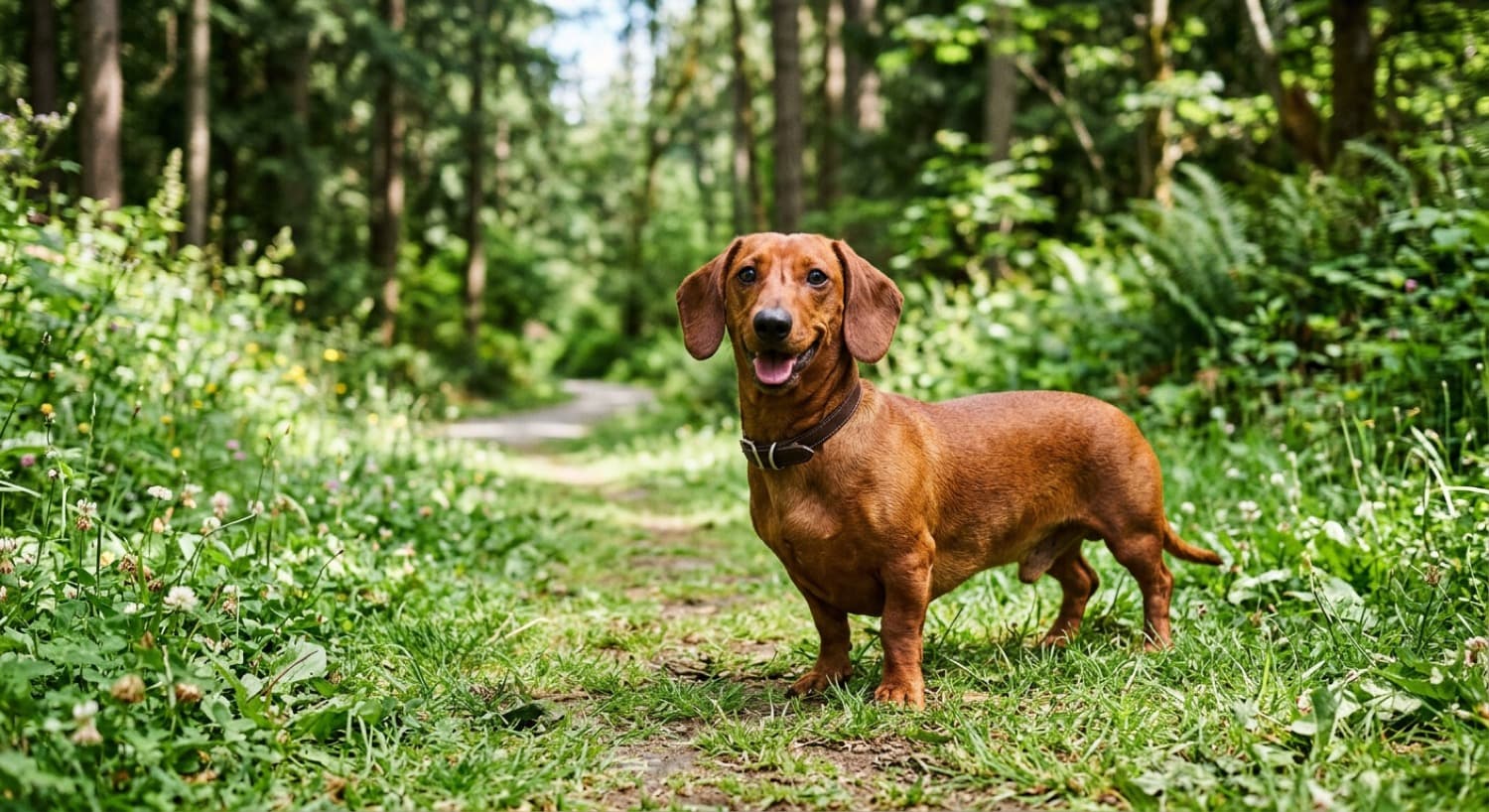
The real Dachshund personality
A Dachshund is bold, curious, tenacious, and devoted, with a strong independent streak. They were bred to hunt badgers underground, alone and without direction, so courage and self-reliance are baked in, which is exactly why they can be so headstrong. This is a small hound with a hunter's brain, not a compliant lapdog.
At home, that translates to an affectionate, playful, big-on-opinions companion that often bonds closely with one or two people and is quick to announce visitors. The AKC breed profile sums the Dachshund up as spunky, clever, and courageous to the point of rashness, which is a fair description of the everyday dog. Understanding the breed's origin is the key to everything else: the stubbornness, the barking, the digging, and the selective recall all make sense once you see the Dachshund as a bold little hunter. Work with that character and the breed is a delight; fight it and you will both be frustrated.
Housetraining: the honest challenge
Dachshunds are one of the more challenging breeds to housetrain, so go in expecting it to take real patience. The independent streak means they are less naturally eager to comply, they have small bladders, and they genuinely dislike going out in cold or wet weather, a real factor in rainy Vancouver.
The answer is consistency and management, never punishment. Keep a reliable schedule, take the dog out frequently and reward heavily the moment it goes, use crate training to prevent accidents, and clean any mistakes thoroughly with an enzymatic cleaner so the scent does not draw the dog back. A covered potty area helps enormously in the rain, since a Dachshund that hates getting wet will hold it and then have an accident indoors. Expect a longer timeline than for many breeds, stay consistent, and most Dachshunds get there. For settling a newly adopted one in, our first-week guide helps.
Barking, prey drive, and digging
Barking. Dachshunds are vocal. They were bred to bark while hunting so the handler could locate them underground, so alert barking at visitors and passers-by is very much in the breed. It makes them good little watchdogs but can be a challenge in an apartment or near close neighbours. Manage it with training, not by expecting silence: teach a “quiet” cue, avoid rewarding demand-barking with attention, meet the dog's exercise and enrichment needs so boredom barking drops, and manage triggers like a street-facing window. A well-exercised Dachshund is much quieter than a bored one.
Prey drive and recall. As a scent hound, a Dachshund's nose can override its ears, so recall becomes unreliable once it locks onto a scent or a small scurrying animal. A secure, fenced area and a leash in open spaces are wise. Channel the drive with sniffy walks and scent games rather than fighting it.
Digging. Digging is a hardwired hunting behaviour, so a Dachshund may enthusiastically redecorate a garden. If you have a yard, a sanctioned digging spot (a sandbox or a corner it is allowed to excavate) saves your flowerbeds and gives the instinct a legitimate outlet.
Training a stubborn breed
Work with the breed, not against it. Dachshunds are intelligent and very food-motivated, but the independent streak means they respond poorly to repetition and harsh corrections and much better to short, upbeat, rewarding sessions that keep them interested and feeling like cooperation is worth their while.
Use high-value treats, keep training games fun and varied so a clever dog does not get bored, and be genuinely consistent, because a Dachshund will happily exploit any rule that is only sometimes enforced. Start socialisation and training early and keep it positive, exposing the dog to lots of people, dogs, and situations. This is not a breed that lives to obey; it is a breed that decides cooperation is worthwhile. Positive reinforcement gets you a willing, engaged Dachshund, and a good reward-based trainer can help if you are stuck. And remember to keep all training back-safe: no repetitive jumping or stairs.
Kids, other pets, and whether the breed suits you
Kids. Dachshunds can be devoted family dogs, but two honest caveats apply: the fragile back means children must be taught never to pick the dog up incorrectly or let it leap from arms or furniture, and the breed can be less tolerant of rough handling and may snap if hurt or startled. They often suit homes with older, gentle children better than those with toddlers. With respectful kids and supervision, they are affectionate, funny companions.
Other pets. It varies by dog and socialisation. Many do well with other dogs (especially other Dachshunds) and with cats they are raised with, but the prey drive means some are too interested in small pets like rabbits or hamsters. Their boldness means a Dachshund may not back down from a much larger dog, so supervise mixed-size play to protect that back. Ask a foster-based rescue how a specific dog does with kids and animals.
Is a Dachshund right for you? The breed suits someone charmed rather than frustrated by an independent, opinionated dog, and ready for patient housetraining, managing the barking, and protecting the back for life (jumping, weight, and handling, all covered in our Dachshund adoption guide). It is a poor fit for someone wanting an easy, biddable first dog with no training investment. If the character appeals, few dogs give back more personality, and an adult Dachshund from a rescue, whose temperament and any back history are known, is a great place to start.
Ready to meet a Dachshund?
Browse adoptable Dachshunds and Doxie mixes from Lower Mainland rescues. A foster-based rescue can tell you a specific dog's personality, house-training progress, and any back history, which is exactly what makes a great match. Refreshed regularly.
See Available Dachshunds →Frequently Asked Questions
What is a Dachshund's temperament like?
A Dachshund is a big-dog personality in a small body: bold, curious, tenacious, and devoted to its people, with a strong independent (some would say stubborn) streak. They were bred to hunt badgers underground, alone and without direction, so courage and self-reliance are baked in, which is exactly why they can be so headstrong. At home they are affectionate, often bonding closely with one or two people, playful, and surprisingly big on personality and opinions. They are also alert and vocal, quick to announce visitors. Understanding that you have a small hound with a hunter's brain, not a compliant lapdog, is the key to enjoying the breed and training it successfully.
Are Dachshunds good family dogs?
They can be wonderful family dogs, devoted, funny, and full of character, but with two honest caveats. First, their long back: children must be taught never to pick a Dachshund up incorrectly or let it jump from arms or furniture, because back injury is a genuine risk for the breed (our adoption guide covers back care in detail). Second, temperament: Dachshunds can be less tolerant of rough handling than some breeds and may be snappy if startled or hurt, so they often suit homes with older, gentle children better than those with toddlers. With respectful kids, supervision, and good socialisation, a Dachshund is a devoted family companion. Match the dog to your household honestly.
Why are Dachshunds so hard to housetrain?
Dachshunds are one of the more challenging breeds to housetrain, and it is a common frustration, so go in expecting it to take patience. A few things stack up: the breed's independent, stubborn streak means they are less naturally eager to comply; they have small bladders; and they genuinely dislike going out in cold or wet weather, which is a real factor in rainy Vancouver. The answer is consistency and management, not punishment: a reliable schedule, taking the dog out frequently and rewarding heavily right after it goes, crate training to prevent accidents, thorough enzymatic cleaning of any mistakes, and patience through a longer timeline than you would expect for many breeds. A covered potty area helps in the rain. Most get there; it just takes commitment.
Do Dachshunds bark a lot?
Yes, Dachshunds tend to be vocal. They were bred to bark while hunting so their handler could locate them underground, so alert barking at visitors, sounds, and passers-by is very much in the breed. This makes them good little watchdogs but can be a challenge in an apartment or a home with close neighbours, which matters in much of Vancouver. Manage it with training rather than expecting silence: teach a "quiet" cue, avoid rewarding demand-barking with attention, meet the dog's exercise and mental-stimulation needs so boredom barking drops, and manage triggers like a window view of the sidewalk. A well-exercised, well-trained Dachshund is much quieter than a bored, under-stimulated one, but some alertness is simply part of the package.
Do Dachshunds have a strong prey drive?
Yes. As scent hounds bred to hunt, Dachshunds often have a real prey drive and a nose that can override their ears, which has two practical effects. First, recall can be unreliable once a Dachshund locks onto an interesting scent or a small scurrying animal, so a secure, fenced area and a leash in open spaces are wise. Second, they love to dig, a hardwired hunting behaviour, so a Dachshund may redecorate a garden given the chance. Neither is misbehaviour; it is the breed doing what it was built to do. Channel it with sniffy walks, scent games, and a sanctioned digging spot if you have a yard, and manage the environment so the instinct does not get the dog into trouble.
How do I train a stubborn Dachshund?
Work with the breed, not against it. Dachshunds are intelligent and very food-motivated, but their independent streak means they respond poorly to repetition and harsh corrections and much better to short, upbeat, rewarding sessions that keep them interested. Use high-value treats, keep training games fun and varied so a clever dog does not get bored, and be genuinely consistent, because a Dachshund will happily exploit any rule that is only sometimes enforced. Start socialisation and training early, and be patient: this is not a breed that lives to obey, it is a breed that decides cooperation is worth its while. Positive reinforcement gets you a willing, engaged Dachshund; pressure gets you a stubborn one digging in. A good reward-based trainer can help.
Are Dachshunds good with other dogs and cats?
It varies by the individual dog and its socialisation, so ask a foster-based rescue about a specific Dachshund. Many do well with other dogs, especially other Dachshunds, and can live happily with cats they are raised with, though the breed's prey drive means some are too interested in small pets like rabbits, birds, or hamsters to be trusted with them. Their bold personality means a Dachshund may not back down from a much larger dog, so supervise mixed-size play to protect that vulnerable back. Early, positive socialisation makes the biggest difference. If you have resident pets, tell the rescue and let them help you match a Dachshund that suits your home.
Is a Dachshund the right dog for me?
A Dachshund suits someone who wants a big personality in a small, portable package and is charmed rather than frustrated by an independent, opinionated dog. Go in ready for three real commitments: patient housetraining, managing the barking, and protecting the breed's back for life (no jumping on and off furniture, weight control, careful handling, covered in our adoption guide). They are a poor fit for someone wanting an easy, biddable first dog or a quiet apartment dog with no training investment. If the character appeals and you will put in the work, a Dachshund is a devoted, entertaining companion. An adult Dachshund from a rescue, whose personality and any back history are known, is a great way to start.
More Dachshund and breed guides
Dachshund Adoption in Vancouver
Where to adopt, real costs, and the all-important back health (IVDD) and back-care detail for the breed.
Adoptable Dachshunds in Vancouver
All currently available Dachshunds and Doxie mixes. Updates regularly.
First Week With a Rescue Dog
The decompression routine that helps a newly adopted Dachshund settle and start housetraining.
Chihuahua Adoption in Vancouver
Another big-personality small breed common in Vancouver rescue, and the reality behind the reputation.
New dog? Start with these care guides
Everything a new adopter needs to set up a safe, happy home.