The short answer
Your new Vancouver rescue dog will likely be shut down or hyper-vigilant for the first three days, skip food in the first 24 to 48 hours, and act nothing like the personality the rescue described. None of that is a problem. Set up a quiet decompression space, keep the household calm, and take short leash walks on quiet streets (skip the seawall and beaches in week one). Sort out a Vancouver dog licence and update the microchip early. Call a vet if your dog has eaten zero food at 48 hours, has not urinated in 24 hours, shows lethargy past day three, or has vomiting or diarrhoea longer than 24 hours.
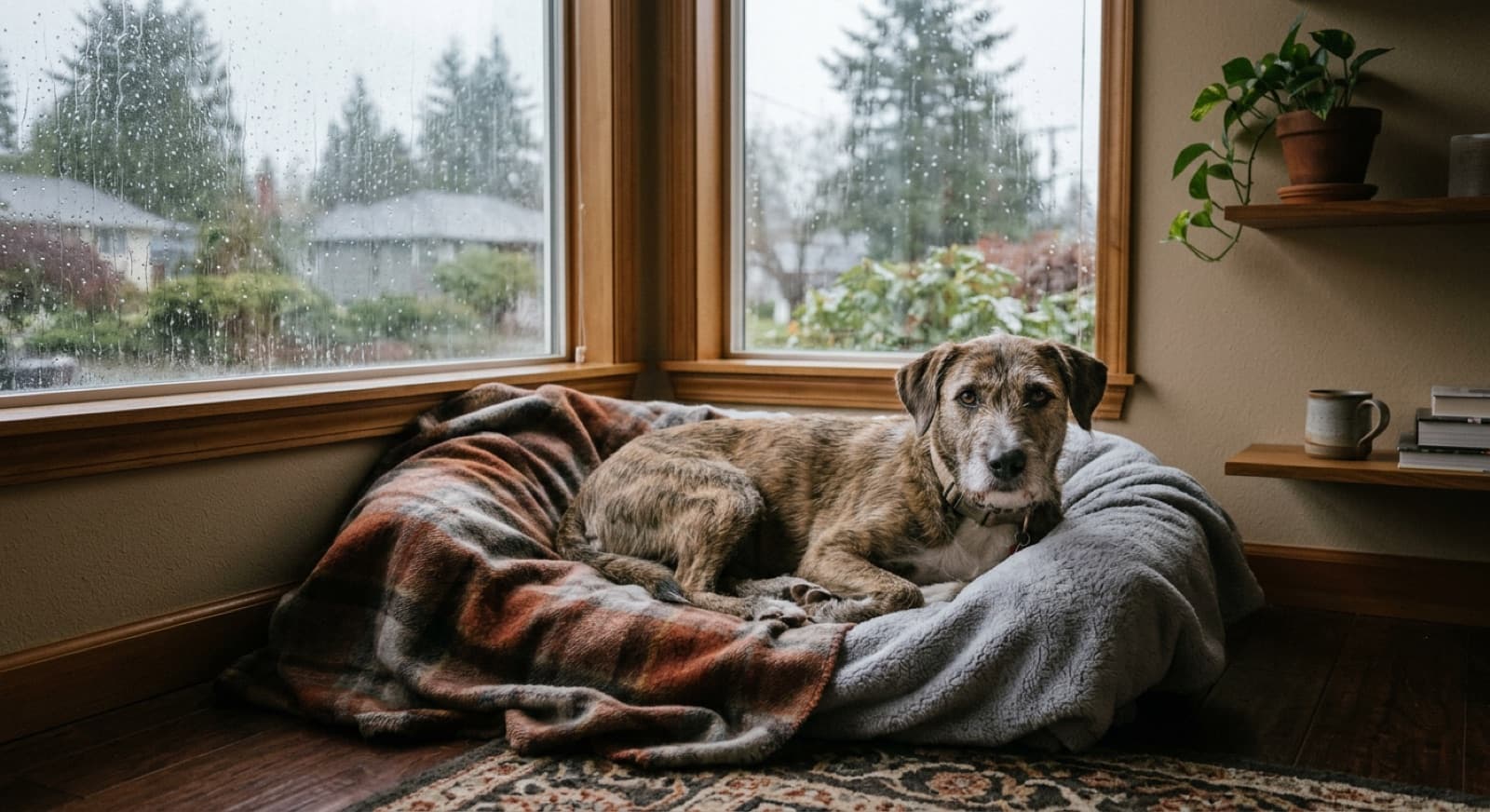
The 3-3-3 rule explained
The 3-3-3 rule is the decompression timeline most rescue dogs follow. It is not a guarantee, and individual dogs run faster or slower, but it captures the curve well enough that Vancouver adoption coordinators use it as the default expectation when placing a dog. The ASPCA dog care guidance and the BC SPCA pet care resources describe the same decompression pattern.
- 3 days to decompress. The dog is overwhelmed. Expect shutdown (sleeping a lot, hiding, refusing food) or the opposite (pacing, panting, whining, restlessness). Either is normal. Behaviour is muted or exaggerated, but neither version reflects the real dog.
- 3 weeks to settle. The dog begins to learn your routine. Eats at predictable times. Greets you at the door. Starts showing preferences for sleeping spots, toys, and people. Some quirks emerge that the rescue or foster never mentioned. Trust is building.
- 3 months to bond. The dog's real personality emerges. The playful one starts playing. The cuddly one starts cuddling. The reactive one shows what triggers them and you can finally work on it. This is the dog you actually adopted.
Set up the decompression space before pickup
The decompression space is the single most important setup decision you make. Pick the quietest part of your home. A spare bedroom corner, a designated crate area, or a covered bed in a low-traffic hallway all work. A small Vancouver condo or apartment with no interior door is the hardest version of the first week, but even there you can carve out a corner with a crate, a blanket, and a barrier away from the front door.
Decompression space checklist:
- A crate (open door) or covered bed the dog can retreat into. The covered option matters; dogs feel safer in den-like enclosed spaces.
- Water bowl within reach.
- One or two quiet chew toys (a frozen Kong, a rubber chew). Skip squeaky toys and battery-powered toys for the first few days.
- Soft bedding the dog can rest on.
- Away from foot traffic, the front door, and noisy appliances (dishwasher, washing machine, TV).
- If you use a crate, leave the door open at first. Crating a stressed new dog with the door shut can backfire; let the dog choose to use the crate before locking the door.
Keep the household quieter than usual for the first three days. No vacuuming, no loud TV, no visitors. The dog needs predictability, not stimulation.
Why your dog is shut down (and why it's fine)
Shutting down is a survival response, not a sign of unhappiness or a behaviour problem. Your dog just left a familiar environment (foster home, shelter kennel, northern transport, or stray situation) and arrived in a place where everything smells, sounds, and looks unfamiliar. The dog's nervous system is doing one job: assess whether the new environment is safe. Until that assessment finishes, the dog will choose to sleep, hide, or stay still and observe.
The opposite version of shutdown is hyper-vigilance: pacing, panting, scanning, vocalising. Same stress, different expression. Some dogs externalise their stress; others internalise it. Neither version is the “real dog,” and you cannot tell which one you have until week two or three.
The signs that matter are not how much you see of the dog's personality. The signs that matter are eating, drinking, urination, and defecation. If those four things are happening (even at unusual hours), the dog is fine.
The Vancouver wet season and your first-week walks
Vancouver's weather is mild but wet. From late autumn through spring, you get long stretches of rain, and a dog who has never lived on the coast may flat-out refuse to step outside in it. That is an adjustment issue, not a health one. The rule for week one stays the same in any weather: walks happen, but they are short, calm, and on quiet streets, not the long exploratory loops you might do in month two.
Rainy-season walks (week one):
- Keep potty walks short. Five to ten minutes on a calm residential block is plenty while the dog is still decompressing.
- A thin rain coat helps short-coated breeds and seniors stay comfortable and willing to go out. Many dogs warm up to the rain within a week.
- Bring treats and praise the dog for relieving themselves in the rain. You are building a positive association, not winning a fight.
- Towel-dry paws and belly at the door so the dog comes back to a calm, warm spot rather than a cold, soaked one.
- Watch for paw irritation from road salt or grit on wet winter sidewalks in colder spells, and rinse paws when you come inside if needed.
Warm summer days (week one):
- On warm afternoons, walk early morning or after the evening cools off rather than during peak heat.
- The seven-second test: press the back of your hand to the sidewalk. If you cannot hold it for seven seconds, the pavement is too hot for paws.
- Carry water. A collapsible bowl in your pocket is enough.
- Heat stroke signs (heavy non-stop panting, drooling, glassy eyes, stumbling) are emergencies. Go straight to a Vancouver emergency vet.
On the coast, the practical implication is that some first-week days will be too wet for a dog to want a real walk. That is fine. A frozen Kong, a scatter feed indoors, a 10-minute sniff game in the living room, or a slow-feeder bowl all burn surprising amounts of mental energy without long outdoor exposure.
Day-by-day playbook
Day 1: arrival
- If you drove the dog home, take them straight to the yard or a quiet patch of grass to relieve themselves before going inside.
- Walk the dog through the front door on leash. Show them the decompression space first. Let them sniff and investigate at their own pace.
- Offer water. Offer a small meal. If they do not eat, do not push. Leave the bowl down for 15 minutes, then pick it up.
- One short, quiet leash walk on a side street near home. Five to ten minutes is plenty. No off-leash zones, no busy parks, and definitely not the Stanley Park seawall.
- No visitors. No other pets' free access. Lower household noise.
- Bedtime: let the dog choose where to sleep. If they want the crate, great. If they want the floor near the bed, also great.
Day 2 to 3: decompression
- Most dogs settle into a pattern by day two. Either sleeping more than expected (shutdown) or moving around restlessly (hyper-vigilant). Both are fine.
- Stick to a predictable feeding schedule. Same time, same spot, same food.
- Short leash walks once or twice a day, quiet routes. Bring a rain coat and treats if it is wet, and keep the loops short.
- If you have resident dogs, keep them separated. Scent-swapping with a soft cloth helps; rub the cloth on one dog's cheek and leave it near the other dog's bed.
- If the food bowl is untouched at 48 hours, call the rescue. Try warming wet food. If still nothing, escalate to your vet.
- Sit in the same room with the dog, doing something boring (reading, scrolling your phone). Boring presence builds trust faster than active engagement.
Day 4 to 7: emerging
- By day four or five, most dogs start showing more personality. They might wag their tail when you come home, follow you between rooms, or solicit a scratch.
- Longer leash walks become possible. Quiet residential streets in neighbourhoods like Kitsilano, Mount Pleasant, or Dunbar at off-peak hours work well. Skip the Spanish Banks crowds, the seawall, and Commercial Drive's sidewalk bustle for one more week.
- Still no off-leash zones. Still no beaches. Still no dog-dense areas.
- Resident dog introductions: short, leashed, calm meetings can start by day three or four if both dogs are showing relaxed body language. Free interaction by week one only if both dogs are clearly comfortable.
- Resident cat introductions: keep the dog leashed indoors and use baby gates. No chasing, ever, even in play. Cat introductions take weeks, not days.
- End of week one: most dogs are sleeping through the night, eating predictably, and starting to know where their water bowl, leash, and bed are. That is the goal for week one.
Signs of stress vs. signs that need a vet
Most first-week behaviour that looks alarming is just stress. A handful of signs cross the line into vet-call territory. Know the difference before you need it.
Call a vet right away if:
- Zero food eaten in 48 hours (sooner for puppies, seniors, and small breeds).
- No urination in 24 hours, or visible straining to urinate. Urinary blockage can become a true emergency, especially in male dogs.
- Vomiting or diarrhoea longer than 24 hours, or any blood in vomit or stool.
- Lethargy that continues past day three (dog is awake but unresponsive, not just sleeping a lot).
- Visible injury, laboured breathing, persistent coughing, or extreme weight loss.
- Heat-stroke signs in summer (non-stop panting, drooling, glassy eyes, stumbling).
- Aggressive resource guarding that emerges around food, toys, or sleeping spots, especially if it escalates to bites. This is a trainer or veterinary behaviourist call, not a wait-and-see.
Vancouver has 24-hour emergency veterinary care available year-round. Ask your adoption rescue or your daytime vet which after-hours clinic they currently recommend for your part of Metro Vancouver. We deliberately do not name specific clinics here because emergency availability changes; your rescue or daytime Vancouver vet will give you the current right answer. Adopters who came through the BC SPCA in Vancouver can ask the shelter directly for a current emergency referral.
Vancouver rescue paths: what to expect
The Vancouver dog rescue scene splits roughly into a few channels, and knowing which path you went through helps set realistic expectations for week one.
Shelter-based same-day adoption through the BC SPCA in Vancouver is the dominant local channel. Dogs live in the shelter environment, which is louder and more stressful than a foster home, so the personality the shelter sees is often more guarded (or more amped up) than the dog's real personality. Your first week is genuine discovery. The dog you bring home may look quite different by week three. A quiet shelter dog sometimes blooms into a confident, playful family dog; an outgoing shelter dog sometimes turns out to be reactive once they leave the shelter environment. Patience matters more on this path because the real dog may not appear until week three or four.
Foster-based rescues include Loved at Last Dog Rescue and Heart and Soul Dog and Cat Rescue, both of which place dogs from home environments. If you adopted from one of them, the first week looks more like verification than discovery: the foster has documented behaviour notes and your dog's personality will mostly match what the foster described. The dog will still need a few days to decompress because the environment is new, but the surprise factor is lower and the foster usually stays available for week-one questions.
Full-service shelters like the Langley Animal Protection Society (LAPS) serve their local area with animal control plus an enrichment-focused adoption program. If you adopted from LAPS in Langley or south Surrey, expect a shelter-style first week similar to the BC SPCA path, with the same genuine-discovery curve.
One northern-transport caveat: many Lower Mainland rescues pull dogs from northern BC and remote First Nations communities alongside local placements. Northern transfer dogs carry an extra layer of adjustment stress on top of the normal rescue decompression. The transfer can involve hours of travel, multiple handlers, and a complete loss of any previously familiar environment. These dogs can take two to three weeks to start showing meaningful decompression instead of the usual three days. If your dog came through northern intake, your three-day window is really a three-week window. Watch eating, drinking, and elimination on the same schedule, but expect the personality emergence to run much slower.
None of these paths is better. Same-day BC SPCA adoption gives you a dog the same afternoon with less behavioural history. Foster-based gives you more pre-adoption information but smaller selection and longer adopter-matching timelines. All produce great matches; the first-week behaviour you should expect just runs different timelines.
Leash, harness, and crate routine
A new rescue dog in an unfamiliar home is at the highest risk of slipping a collar or door-bolting. Two simple rules cut almost all of that risk:
- Double-point leash setup for the first two to four weeks. Attach the leash to both a properly fitted martingale collar and a harness with a back clip. If one fails, the other holds. This is the single most-recommended week-one gear setup by Vancouver rescues, and it has prevented countless lost-dog situations.
- Closed door, closed gate, every time. Until the dog reliably stays when the front door opens (a week three or four behaviour, at best), assume the dog will bolt. Train other household members to check before opening exterior doors. If you have a back gate, latch it securely for the first two weeks.
On the crate question: many rescue dogs are crate-trained, but many are not, and some have negative crate associations from kennel life. Use the crate as a passive option in week one. Leave the door open. Toss treats inside. Feed meals near or inside it. Do not lock the door until the dog is voluntarily resting inside with the door open. Forcing crate confinement on a stressed new dog is the most common cause of crate aversion that persists for months.
The International Association of Animal Behaviour Consultants (IAABC) maintains a directory of certified dog behaviour consultants for behaviour concerns that persist past the first two weeks (separation anxiety, reactivity, resource guarding, escape attempts).
Separation anxiety: the first-week version
Some first-week vocalising and pacing when you leave the room is normal stress, not clinical separation anxiety. A dog who has just landed in a new home and bonded to you as the one safe thing will often protest when you step out. The goal in week one is not to cure anything; it is to avoid accidentally teaching the dog that being alone is a crisis.
- Practise tiny absences. Step out of the room for 30 seconds, come back, no fuss. Build up gradually.
- Leave a frozen Kong or a long-lasting chew when you do leave, so departures predict something good.
- Keep arrivals and departures low-key. No big emotional goodbyes or hello parties.
- If the dog injures themselves trying to escape, will not settle alone at all, or panics the moment you leave, that is beyond week-one stress. Loop in your rescue and an IAABC-certified behaviour consultant.
The “dog hiding under the bed for 3 days” panic
Around day three, many adopters hit the same panic: the dog has been here three days and is still hiding under the bed or behind the couch. Is something wrong?
Here is the breakdown. Hiding for three days with eating, drinking, and outdoor potty breaks is normal. The dog is decompressing on the slower end of the curve and will come out when ready. Hiding for three days without eating is a vet conversation, not a behaviour question. Hiding for three days with eating but no urination is also a vet call.
The check you can do without disturbing the dog: leash the dog gently to take them out for a potty break (some hidden dogs will walk out for a walk even when they will not come out for food). Once outside, you can also do a basic visual check (gait, alertness, eye and nose appearance). Inside, mark food bowl levels with a marker, leave water out, and count outdoor pees and poops. If those three checks all show daily activity, the dog is decompressing and just needs more time.
The first vet visit and the BC dog licence
Schedule a baseline vet visit within one to two weeks of adoption, even if everything looks fine. This sets up the medical record with your chosen Vancouver clinic, gives the vet a baseline weight and physical exam, and is the right moment to confirm spay/neuter status, review vaccination schedules, update microchip registration to your name and contact info, and discuss parasite prevention.
The two paperwork tasks that get a lost dog home fastest are the microchip update and the City of Vancouver dog licence. The City of Vancouver requires every dog past puppyhood to carry a current licence, and most Metro Vancouver municipalities have the same rule; you can buy or renew through your municipality, and the fee is reduced for spayed or neutered dogs. Sort both out in your first week or two. You can read the City's own rules on the City of Vancouver dog licence page.
For longer-term care logistics and adopter resources, see the best dog rescues in Vancouver overview, which covers what each rescue offers post-adoption.
What NOT to do in week one
- Do not take the dog to the Stanley Park seawall, Spanish Banks, Pacific Spirit Park at peak times, Trout Lake, or any high-traffic park or off-leash beach.
- Do not let visitors in to meet the dog. The household is enough.
- Do not introduce the dog to other resident dogs without a neutral first meeting and slow indoor integration.
- Do not let a new dog and resident cat have unsupervised interactions for at least two weeks.
- Do not lock the dog in a crate with the door shut if they have not voluntarily used the crate with the door open first.
- Do not change food brands abruptly. Transition over seven to ten days if you want to switch.
- Do not bathe the dog unless it is medically necessary. Save grooming for week two or three.
- Do not enrol in group training classes in week one. Wait two to four weeks.
- Do not punish stress behaviours (whining, pacing, accidents). Stress is not disobedience.
- Do not force long walks in heavy rain or peak summer heat. Match the walk length to the weather and the dog's comfort.
When the new dog is ready for the seawall
Vancouver has some of the best dog walking in the country, and it is tempting to show your new dog all of it right away. Hold off. The Stanley Park seawall, Spanish Banks, Trout Lake, and the busy off-leash beaches are wonderful and completely wrong for week one. A reasonable progression:
- Week 1 to 2: Leash walks only. Quiet streets, quiet residential neighbourhoods. No seawall, no beaches, no crowded parks.
- Week 3 to 4: Longer leash walks on quieter sections of Pacific Spirit Park at off-peak hours. Work on recall in your yard or a fully fenced private space.
- Month 2: If recall is reliable and the dog is calm around other dogs on leash, try a small fenced off-leash area at a quiet time. Some adopters use private rental yards as a stepping stone.
- Month 2 to 3: Quieter off-leash spots at quiet times. Stay close, recall often, leash up at the first sign of overstimulation.
- Month 3+: The Stanley Park seawall, Spanish Banks, the busy beaches, and the dog-dense parks, only when the dog reliably recalls under distraction.
Rushing this progression is the most common reason adopters report “sudden” reactive episodes or escape incidents that were not actually sudden; the dog was over threshold the whole time and finally lost their cool. For the full breakdown of where to go and when, see our Vancouver off-leash parks guide.
Browse adoptable dogs in Vancouver
Vancouver rescue dogs from the BC SPCA in Vancouver, Loved at Last, Langley APS, and Heart and Soul all come with adoption support. Reach out to the rescue if first-week behaviour worries you.
See Available Dogs →Frequently asked questions
What is the 3-3-3 rule for rescue dogs?
The 3-3-3 rule is a simple decompression timeline that most rescue dogs follow. Three days to start decompressing (often shut down, sleeping a lot, possibly not eating, or the opposite: pacing and hyper-vigilant). Three weeks to learn your routine, start showing more personality, and feel safe in the home. Three months to fully settle and reveal the dog you actually adopted. Most Vancouver adopters say their dog finally felt like their real dog somewhere between month two and month three.
Is my rescue dog hiding under the bed for 3 days normal?
Yes. Some rescue dogs shut down completely in the first three days. They hide under beds, behind couches, in closets, or in their crate, and barely come out. Others do the opposite and pace, pant, or whine. Both are stress responses, not behaviour problems. The signs that actually matter are whether the dog is eating, drinking, and urinating or defecating outside. If those three things are happening, even at strange hours, the dog is fine and just needs time.
Is it normal for a new rescue dog to not eat?
Skipping food in the first 24 to 48 hours is common and normal. Use the exact same food brand the rescue used. Leave the bowl in a quiet spot. Try a small amount of warm wet food. Do not hover. If your dog has eaten zero food at the 48-hour mark, call the rescue or your vet. Healthy adult dogs can usually go 48 to 72 hours without major risk, but puppies, seniors, and small breeds are more vulnerable and should be seen sooner. Always check with a vet rather than waiting it out.
When should I take my new rescue dog to the vet?
Schedule a baseline vet visit within one to two weeks of adoption, even if everything looks fine. This sets up the medical record with your Vancouver vet, gives a baseline weight and physical exam, and is the moment to confirm spay/neuter status, vaccines, and microchip registration. Go sooner if you see any of the following: no food at 48 hours, no urination in 24 hours, vomiting or diarrhoea longer than 24 hours, lethargy past day three, visible injury, blood in stool, or laboured breathing.
How do I set up a decompression space for my new dog?
Pick the quietest part of your home. A spare bedroom, a corner of the living room, or a designated crate area all work. Set up a crate or covered bed the dog can retreat into. Add a water bowl, a few quiet chew toys, and a soft blanket. Keep the area away from foot traffic, the front door, and noisy appliances. Most dogs will choose to sleep there even when given the run of the house. Decompression space is not punishment. It is the dog choosing where to feel safe.
Can I take my new rescue dog on a walk on day one in Vancouver?
Yes, but keep it very short and very quiet. A five to ten minute potty walk on a calm residential side street is the right length for day one, not a tour of the neighbourhood. Skip the Stanley Park seawall, Spanish Banks, and any busy off-leash beach in week one. They are too stimulating for a dog who has been home for a few hours. Vancouver rain is fine for most dogs; a thin rain coat helps short-coated breeds stay comfortable, and a towel by the door keeps the adjustment calm rather than chaotic.
How does Vancouver rain and the wet season affect a new rescue dog?
Vancouver gets long stretches of rain from late autumn through spring, and a new dog who has never lived on the coast may balk at going outside in it. That is normal. Keep potty walks short, bring treats, and praise the dog for relieving themselves in the rain so it builds a positive association. A rain coat helps thin-coated and senior dogs. Towel-dry paws and belly at the door to avoid a soaked, cold dog. A dog refusing to potty in heavy rain in week one is an adjustment issue, not a health issue, but watch for the no-urination thresholds in the vet section if it goes past 24 hours.
When can my new dog go to Stanley Park seawall or an off-leash beach?
Not in week one, and usually not in the first month. The Stanley Park seawall, Spanish Banks, and the busy beaches draw heavy crowds of joggers, cyclists, and off-leash dogs. A brand new rescue dog in an unfamiliar environment, surrounded by unfamiliar dogs and people, is the highest-risk scenario for an escape or a reactive incident. Wait until the dog reliably recalls to you in your yard and on quiet leash walks, then build slowly. Quiet residential streets and low-traffic times at Pacific Spirit Park come first; the seawall and beaches are a month two or three step.
Do I need a dog licence in Vancouver?
Yes. The City of Vancouver requires every dog over a few months old to have a current dog licence, and most Metro Vancouver municipalities have the same rule. You can buy or renew the licence through your municipality. It is inexpensive, reduced for spayed or neutered dogs, and the licence tag plus an up-to-date microchip are the two things that get a lost dog home fastest. Sort the licence out in your first week or two, alongside updating your new dog's microchip to your name and contact info.
When can I introduce my new dog to my other pets?
For resident dogs, do a neutral first meeting (on leash, on a neutral street or park, not at home) before bringing the new dog through the front door. After arrival, keep them separated for the first 24 to 48 hours with a baby gate or rotated rooms. Short, leashed, calm meetings start day two or three. Free interaction by week one only if both dogs are clearly comfortable. For resident cats, keep the dog leashed indoors and use baby gates for at least the first two weeks. Never let a new dog chase a resident cat, even in play.
My foster-based rescue dog seems more settled than a shelter dog. Why?
Foster-based Vancouver rescues like Loved at Last Dog Rescue and Heart and Soul Dog and Cat Rescue place dogs from real home environments, so the foster has watched the dog live, eat, sleep, and handle daily life for weeks. You usually get a documented behaviour profile before adoption, which makes week one feel more like verification than discovery. A dog adopted same-day from the BC SPCA in Vancouver comes with less behavioural history because shelter life is louder and more stressful, so the real personality often appears closer to week three or four. Neither path is better; the timelines just run differently.
My Vancouver rescue dog came from northern BC. Should the adjustment be different?
Often, yes, and it usually runs slower. Many Lower Mainland rescues transport dogs from northern BC and remote First Nations communities, and those dogs can arrive with travel stress on top of the normal adjustment. The trip can involve hours of driving, multiple handlers, and a complete change of environment. Their decompression can stretch closer to two or three weeks instead of three days, and shutdown can be deeper. Eating, drinking, and elimination are still the markers that matter. Stay in close contact with the rescue coordinator who placed the dog; they have seen this curve many times and can tell you whether what you are watching is the long-but-normal version.
How long until my rescue dog trusts me?
Real trust takes weeks. Early signs show up in week two or three: the dog approaches you when you sit down, settles near your feet, makes eye contact, takes treats gently from your hand, and stops flinching at sudden movements. Deeper trust (relaxed sleep in your presence, leaning into you, soliciting affection) often shows up around month two or three. Some dogs are reserved their whole lives, especially if they came from neglect or kennel-stress backgrounds. The bond is not measured by how affectionate the dog acts on day one.
When can I start group training classes with my new dog?
Wait at least two to four weeks. Group classes are useful, but a brand-new rescue dog in a room full of strange dogs and strange people is overstimulating in week one. Start with quiet at-home practice (name recognition, basic sit, settle on a mat). Move to one-on-one sessions with a fear-free certified Vancouver trainer if you need help. Group classes are a week three or four step at the earliest. The exception is a puppy under 16 weeks, where puppy socialisation classes are time-sensitive and the rescue or your vet can advise on the right balance.
Can I have friends over to meet the new dog on day one?
No. Day one through three should be quiet household members only. Friends and visitors can meet the dog starting day four or five, briefly, one at a time, in a calm setting. Ask visitors to ignore the dog at first and let the dog approach if it wants to. No hovering, no reaching, no loud greetings. Big family gatherings, kids' parties, and house parties are all reasons to push pickup back or to confine the dog to a quiet room during the event. Quiet households produce faster decompression.
New dog? Start with these care guides
Everything a new adopter needs to set up a safe, happy home.