The short answer
Dobermans are loyal, brilliant, sensitive, intensely people-bonded “velcro” dogs wrapped around a real but discerning guardian instinct, far softer than the stereotype. They are among the most trainable breeds, thriving on positive reinforcement (harsh methods backfire with this sensitive breed). Socialization is essential for a guardian breed, it keeps the protectiveness balanced. They need substantial daily exercise and real mental stimulation, or a bored, powerful dog develops problems. Typically excellent with their own family and kids, variable with other pets (adopting an adult lets you know). A good but not effortless first breed, for an active, present, committed owner.
What is a Doberman's temperament really like?
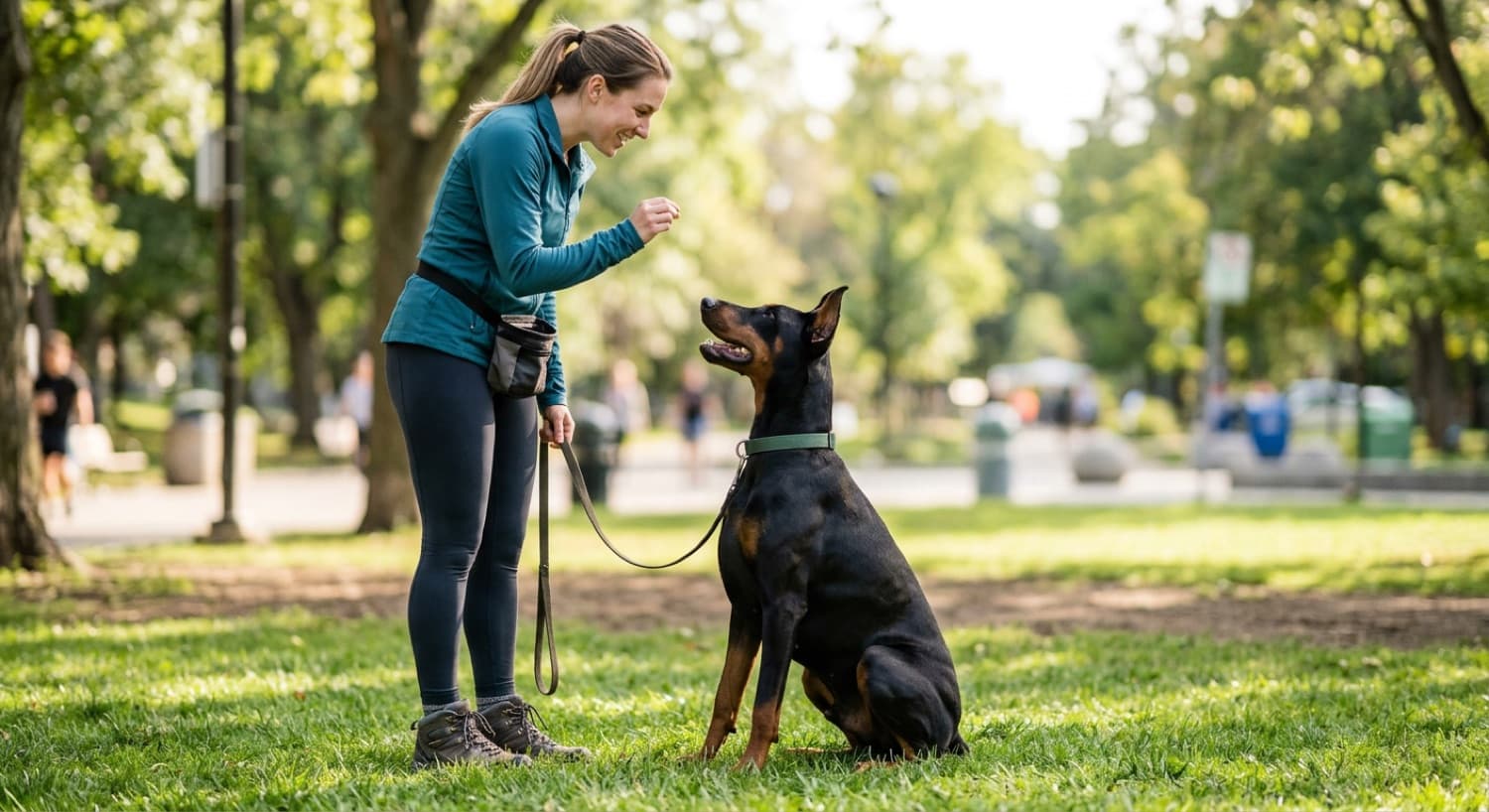
Very different from the fierce guard-dog stereotype. A properly bred and socialized Doberman is loyal, intelligent, sensitive, and intensely affectionate, famously a “velcro” dog that wants to be with its people constantly and often acts like a lap dog that does not know its size. They are among the most trainable and eager-to-work breeds, deeply attuned to their handler, and typically gentle and devoted with their family, including children. The guardian side is real, Dobermans are naturally alert and protective, but in a well-socialized dog that protectiveness is discerning and controlled rather than indiscriminate. The key words are sensitive and people-oriented: a Doberman thrives on close involvement, structure, and positive relationships, and does poorly with harsh handling, isolation, or being treated as a yard dog.
Why is socialization so important for a Doberman?
Because it is a powerful guardian breed, and socialization is the difference between a well-adjusted, discerning dog and a fearful or over-reactive one. A Doberman is naturally alert and protective, and without broad, positive exposure to a wide variety of people, dogs, environments, and experiences, that protectiveness can tip into suspicion, fearfulness, or over-guarding, a serious problem in a large, strong dog. Thorough socialization, especially for a newly adopted adult, teaches the dog to distinguish normal comings and goings (visitors, other dogs, the busy Vancouver sidewalk) from genuine concerns, keeping the guardian instincts balanced. Because Dobermans are sensitive, socialization should always be positive and confidence-building, never forced. Well-socialized Dobermans are typically calm, confident, and friendly in public while remaining watchful, exactly what you want in a city guardian breed.
Are Dobermans easy to train?
Yes, remarkably so, among the most intelligent and trainable breeds there is. They are quick learners, eager to please, deeply attuned to their handler, and they thrive on the mental engagement of training, excelling at obedience and working roles. Positive-reinforcement training produces excellent results and is essential, because the Doberman is a sensitive breed that does not respond well to harsh, forceful, or punitive methods, which damage the trust the breed depends on and can create fear or reactivity. Structure, consistency, and clear, kind leadership work beautifully. Because they are so smart and driven, Dobermans need their minds worked as much as their bodies, an untrained, under-stimulated Doberman will find its own problematic outlets. Start early, keep it positive, and channel that brilliant, eager nature, and a Doberman becomes a wonderfully responsive companion.
A Vancouver force-free trainer experienced with large or working breeds can help enormously, especially for a newly adopted adult Doberman settling into a home.
How much exercise and mental stimulation does a Doberman need?
A lot of both. Dobermans are athletic, high-energy working dogs that need at least an hour or more of real daily activity, brisk walks, running, hiking, fetch, and play, not a stroll around the block. Crucially, mental stimulation matters as much as physical: these are brilliant dogs that bore easily, and a bored Doberman becomes destructive, anxious, or difficult, so training, dog sports (obedience, agility, rally, tracking all suit the breed), puzzle toys, and having a “job” are essential. In Vancouver, the seawall, trails, and beaches are great for a well-exercised Doberman (leashed where required), and dog sports clubs offer the structured mental work the breed loves. A Doberman whose needs are met is calm and delightful at home; one whose needs go unmet is a large, powerful dog with problems, which is exactly why the breed suits active owners.
Are Dobermans good with children and other pets?
With their own family, typically excellent and gentle with children, affectionate, patient, and protective, though interactions with young children should be supervised and kids taught to handle the dog respectfully, as with any large breed. With other pets, it varies: many Dobermans live happily with dogs and even cats they are raised with, but some, especially under-socialized dogs or those with a strong prey drive, can be dog-selective or unsafe with small animals, and same-sex dog aggression occurs in some. Careful introductions, good socialization, and honest assessment of the individual dog matter. This is a real advantage of adopting an adult: a foster can tell you how a specific Doberman actually does with kids, dogs, and cats, rather than guessing from a puppy.
Is a Doberman a good choice for a first-time owner in Vancouver?
It can be, with the right commitment, but it is not the easiest first breed. On the plus side, Dobermans are highly trainable, eager to please, and affectionate, and a well-bred, well-socialized one is not difficult or aggressive. The challenges are the size and power, the substantial exercise and mental-stimulation needs, the importance of socialization for a guardian breed, the intense velcro temperament and separation-anxiety tendency, and the serious health profile (cardiac care in particular). A first-time owner who genuinely understands and is ready for all of that, active, present, and committed to training and socialization, can absolutely succeed, especially by adopting a well-adjusted adult from a rescue that has evaluated its temperament. Someone wanting a low-effort, independent, or leave-alone-all-day dog should choose a different breed. Honest self-assessment is the key.
Browse adoptable Dobermans in Vancouver
If you can offer the training, exercise, socialization, and company this brilliant, sensitive breed needs, a Doberman is a devoted, deeply bonded companion. Browse Lower Mainland rescues, each with a foster's notes on temperament and how the dog does with kids, dogs, and alone-time. Refreshed regularly.
See Available Dobermans →Frequently Asked Questions
What is a Doberman's temperament like?
Loyal, brilliant, sensitive, and intensely affectionate, a velcro dog that wants constant closeness, wrapped around a real but discerning guardian instinct. Far softer than the stereotype. Thrives on involvement, does poorly with harsh handling or isolation.
Why does socialization matter so much?
It keeps a guardian breed's protectiveness balanced. Without broad, positive exposure, it can tip into suspicion or over-guarding, a serious problem in a powerful dog. Socialize positively and continue it through life, especially for an adopted adult.
Are they easy to train?
Yes, among the most trainable breeds. Use positive reinforcement, harsh methods backfire with this sensitive breed. They need their minds worked as much as their bodies. Start early and keep it positive.
How much exercise do they need?
A lot, an hour-plus of real daily activity plus mental work (dog sports, training, puzzles). A bored Doberman develops problems. Vancouver's seawall, trails, and sports clubs suit the breed well.
Are they good with kids and pets?
Typically excellent and gentle with their own family and children (supervise young kids). With other pets it varies by individual and socialization, some are dog-selective. Adopting an adult lets a foster tell you how it actually does.
Good for a first-time owner?
Can be, with commitment. Trainable and affectionate, but big, powerful, exercise- and socialization-heavy, velcro, and health-intensive. A prepared, active, present first-timer can succeed, especially with an adult rescue. Not for a leave-alone lifestyle.
Related Vancouver guides
Doberman Adoption in Vancouver
Where to adopt in BC, the housing and insurance reality, real costs, and who the breed suits.
Doberman Health Issues
DCM heart disease, von Willebrand, wobbler, bloat, and the pet-insurance case.
Adoptable Dobermans in Vancouver
All currently available Dobermans and Doberman mixes with foster temperament notes. Updates regularly.
Vancouver Off-Leash Parks
Where a high-energy working breed can run and play across the Lower Mainland.
New dog? Start with these care guides
Everything a new adopter needs to set up a safe, happy home.