The short answer
A Great Pyrenees' guardian instincts, from centuries as a livestock guardian, are hardwired, not trained behaviours. The core traits: independence (bred to work alone, so stubborn and not biddable), barking (a guardian's main tool, so a lot, especially at night, and you cannot fully train it out), roaming (they patrol territory, so secure high fencing and never off-leash are essential), protectiveness and wariness of strangers (gentle with family, watchful with newcomers, so socialization matters), and nocturnal activity. You manage these instincts, not eliminate them. This makes a Pyr genuinely unsuited to apartment or dense-urban living and best for a rural or large-secure-yard home with tolerance for barking. Understanding and accepting the guardian nature is the key to whether the breed fits.
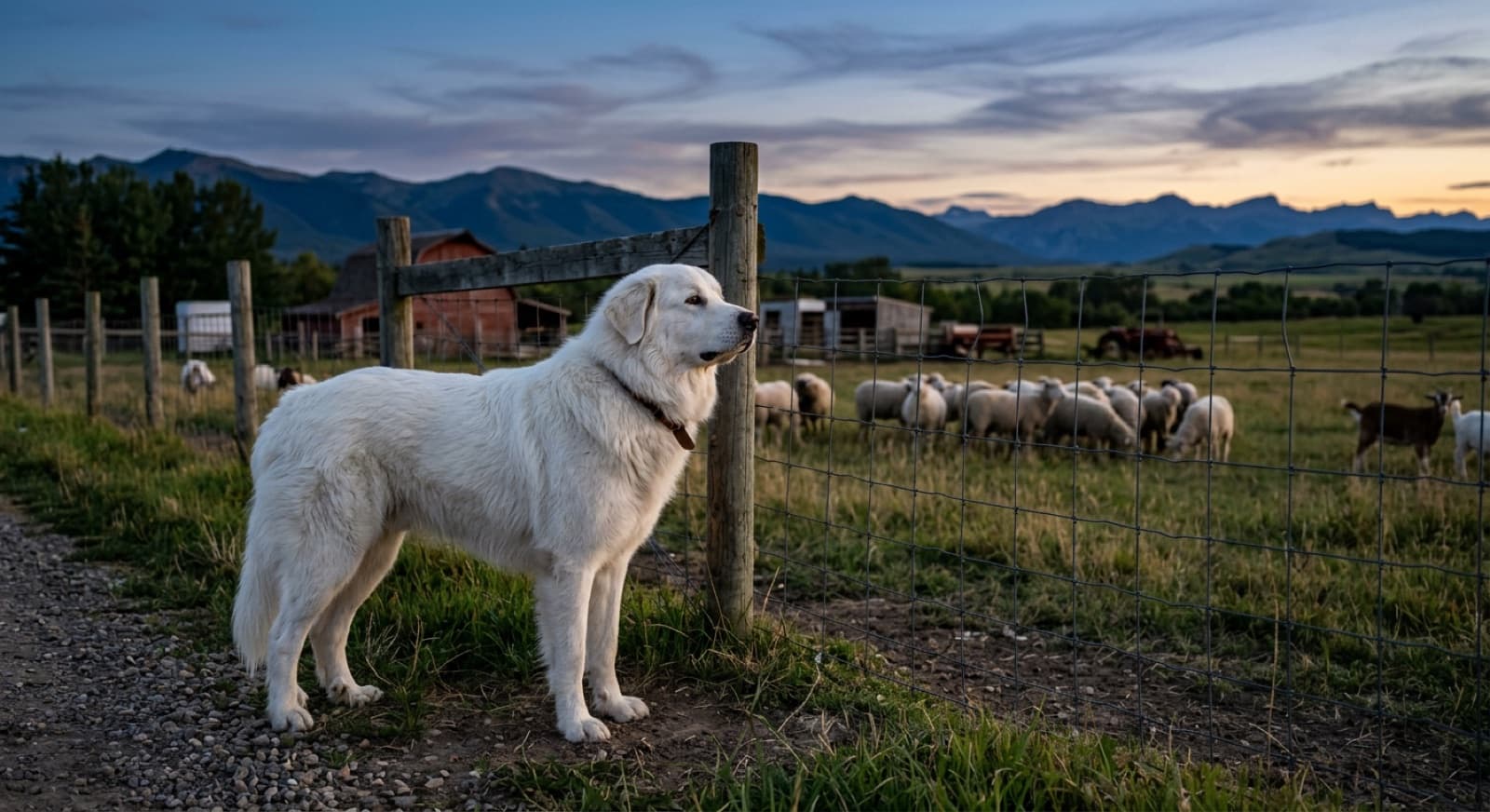
What are a Great Pyrenees' guardian instincts?
A Great Pyrenees' guardian instincts are the deeply-ingrained behaviours from the breed's centuries as a livestock guardian dog (LGD), bred to live with and protect flocks, working independently, often alone, to defend their charges from predators. These are hardwired, not trained behaviours, and understanding them is essential to living with a Pyr.
The core instincts: independence and autonomous decision-making (bred to work alone and judge threats themselves, so highly independent, not biddable, and often called stubborn); vigilance and protectiveness (watchful, alert, protective of family and territory, wary of strangers); barking (a guardian's primary tool to warn off predators and alert, so a lot, especially at night); territorial patrolling and roaming (they patrol and expand territory); nocturnal activity (predators came at night, so guardians are most active after dark); and a calm, watchful demeanour punctuated by decisive action against perceived threats. These made the Pyr a superb working guardian, and they persist strongly in pet Pyrs, so anyone adopting must understand and accept them as core to the dog, not problems to eliminate. The AKC breed profile describes the guardian heritage.
Why they bark so much, and can you stop it?
Great Pyrenees bark a lot because barking is a fundamental, instinctive tool a guardian uses to warn off predators and alert to anything unusual, and this is deeply hardwired. A Pyr barks at unfamiliar sounds, sights, animals, people, and changes, and often at night. To a Pyr, this is not misbehaviour, it is doing its job. Can you stop it? Not entirely, a crucial point: you cannot fully train the barking instinct out of a Great Pyrenees, it is part of the breed, and expecting to eliminate it leads to frustration and, likely, a stressed and surrendered dog.
You can manage and somewhat reduce it: ensure the dog is not bored, lonely, or under-stimulated (which increases barking), provide companionship and appropriate activity, manage the environment to reduce triggers (a Pyr that sees or hears fewer things barks less), bring the dog indoors at night (to reduce the often-biggest problem, nocturnal barking), and with patience use some training to moderate excessive barking, though instinctive alert-barking remains. The honest bottom line: significant barking, including nocturnal barking, is an inherent, unavoidable feature of the breed, making a Pyr genuinely unsuitable for apartment or dense-urban living or homes with close neighbours who cannot tolerate barking. Be honest about whether you, your neighbours, and your living situation can accommodate a barking guardian dog.
Why they roam, and how to contain one
Great Pyrenees roam because guardians patrol and expand the territory they consider their domain, so the instinct to wander and cover ground is strong. A Pyr left in an unfenced or inadequately-fenced area will very likely wander off, potentially far, and can become lost, hit by a car, or endangered, so secure containment is absolutely essential and one of the most important requirements for owning the breed.
To contain one safely: provide a very secure, high fence (Pyrs are large, strong, and determined, and can jump, push through, or dig under inadequate fencing, so it must be tall, sturdy, and secure, ideally with dig protection); never trust a Pyr off-leash in an unfenced area (the roaming instinct and independence make recall unreliable, so unfenced off-leash time is genuinely dangerous); and supervise outdoor time and check the fencing regularly. This requirement is a major reason the breed is best suited to a rural or acreage setting or a home with a large, very secure yard. In Vancouver, a Pyr owner must have a securely-fenced property and keep the dog leashed in unfenced areas, always, and anyone unable to provide secure containment should not adopt the breed.
Independence and training
Great Pyrenees are challenging to train in the conventional obedience sense, a direct result of their guardian-breed independence. Bred to work alone and make their own decisions, Pyrs are highly independent, autonomous thinkers, not wired to look to humans for direction or eagerly obey. A Pyr will weigh whether it feels like complying, may ignore commands it sees no point in, and is often called stubborn, though it is better understood as independent and self-directed rather than defiant or unintelligent (Pyrs are intelligent, just not obedience-oriented).
To train a Pyr effectively: use positive, reward-based methods (harsh methods backfire with this sensitive, independent breed), keep expectations realistic (good manners and basic reliability rather than precise obedience), be patient and consistent, make training rewarding, and focus on early socialization (to help the naturally wary guardian be appropriately discerning). Crucially, do not rely on a Pyr's obedience for safety, its unreliable recall is exactly why secure fencing and leashing are essential. For an owner who understands and accepts the independent nature, a Pyr can be a well-mannered companion, but expecting a biddable obedience dog is a recipe for frustration.
Protectiveness, and fitting a Pyr into a Vancouver home
Great Pyrenees are naturally protective of family, home, and territory, and wary of strangers. With their family, a well-raised, well-socialized Pyr is gentle, calm, affectionate, and devoted, often very good with children and, when socialized, other family animals, within the home, they are the gentle giants they are known as. Toward strangers, a Pyr is watchful, reserved, and alert rather than immediately friendly, so proper socialization is very important to ensure the dog is appropriately discerning rather than overly suspicious. A well-socialized Pyr is protective but not indiscriminately aggressive.
Whether a Pyr fits a non-farm Vancouver home depends on the specific home meeting the breed's needs: adequate space, very secure fencing, tolerance for barking (from you and your neighbours, often the deciding factor), an owner who accepts the independent guardian nature, the ability to provide grooming and giant-breed care, and ideally experience with large or independent breeds. Given these, a Pyr suits a rural or acreage home, can work in a suburban home with a large secure yard and understanding neighbours, but is a poor fit for apartments, dense urban settings, or owners wanting a conventional, biddable pet. Be honest about whether your home can accommodate a guardian breed, if yes, a Pyr is a magnificent, gentle, devoted companion; if no, it is not the right choice regardless of the appealing gentle-giant appearance. Our adoption guide covers the full picture.
Browse adoptable Great Pyrenees in Vancouver
A good rescue assesses each Pyr's guardian behaviours and temperament, so you can adopt a dog whose instincts match a home that can accommodate them. Refreshed regularly across Lower Mainland rescues.
See Available Great Pyrenees →Frequently Asked Questions
What are their guardian instincts?
Hardwired livestock-guardian behaviours: independence and autonomous decision-making (so stubborn, not biddable), vigilance and protectiveness, barking (a guardian's main tool), territorial roaming, and nocturnal activity. They are core to the breed, not problems to eliminate.
Why do they bark so much, and can I stop it?
Barking is a guardian's primary tool, hardwired, so a lot, especially at night. You cannot fully train it out. You can manage it (reduce triggers, prevent boredom, bring the dog in at night), but instinctive barking remains, making the breed unsuitable for apartments or homes with close neighbours who cannot tolerate it.
Why do they roam, and how do I contain one?
Guardians patrol and expand territory, so the roaming instinct is strong, and recall is unreliable. Secure containment is essential: a tall, sturdy, secure fence (with dig protection), and never off-leash in unfenced areas. Anyone unable to provide secure fencing should not adopt the breed.
Are they hard to train?
In the conventional obedience sense, yes, their guardian independence means they are autonomous thinkers, not biddable. Train with positive methods, realistic expectations (good manners, not precision obedience), patience, and early socialization. Never rely on their obedience for safety, hence the fencing and leashing.
Are they safe with family and strangers?
With family, a well-socialized Pyr is gentle, calm, and devoted, often great with kids. Toward strangers, watchful and reserved rather than immediately friendly, so socialization matters to keep them discerning, not overly suspicious. A well-raised Pyr is protective but not indiscriminately aggressive.
Can they be a good pet in a Vancouver home?
Yes, in the right home: adequate space, very secure fencing, tolerance for barking (yours and your neighbours'), acceptance of the independent guardian nature, and giant-breed care. Suits rural or large-secure-yard homes; a poor fit for apartments or dense urban settings. Be honest about whether your home can accommodate a guardian breed.
Related Vancouver guides
Great Pyrenees Adoption in Vancouver
Where to adopt in BC, the guardian temperament, barking and roaming, real costs, and who it suits.
Great Pyrenees Health Issues
Hip and elbow dysplasia, bloat, bone cancer, and the giant-breed vet picture.
Adoptable Great Pyrenees in Vancouver
All currently available Great Pyrenees and Pyr mixes with foster temperament notes. Updates regularly.
Best Dog Rescues in Vancouver
Every Vancouver-area rescue reviewed on cost, wait time, and best fit by adopter type.
New dog? Start with these care guides
Everything a new adopter needs to set up a safe, happy home.