The short answer
Generation describes how far a Labradoodle is from the original cross: F1 (50/50 Lab-Poodle, most variable), F1b (bred back to a Poodle, ~75% Poodle, curlier and lower-shedding), F2 (two F1s, variable again), multigen (later generations selected for consistency). Size depends on the Poodle parent: Standard (~50 to 65+ lbs), Medium (~30 to 45 lbs), Miniature (~15 to 30 lbs). The big thing to understand: Labradoodle coats and shedding are genuinely variable, because the Lab sheds heavily and the Poodle barely sheds. No Labradoodle is truly hypoallergenic. When adopting, judge the actual adult dog's coat, not the generation label.
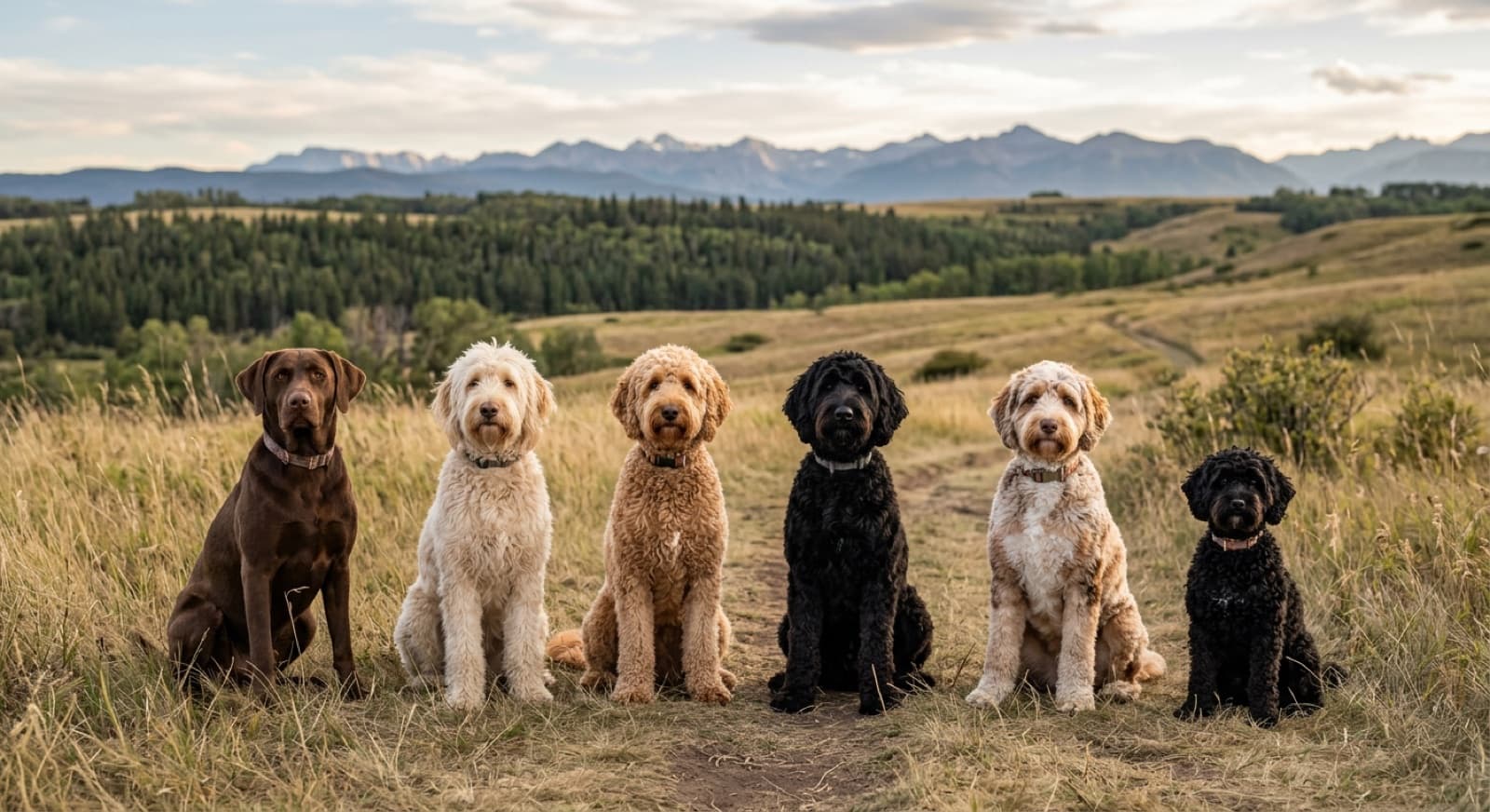
If you have looked at Labradoodles, you have run into a wall of labels: F1, F1b, F2, multigen, Australian, Standard, Medium, Miniature. They matter most when buying a puppy from a breeder and trying to predict an unseen future coat. When you adopt, they matter far less, because you can see the real dog. Here is what the terms mean, and how to actually use them.
What the generation labels mean
Generation describes how far a Labradoodle is from the original Labrador-and-Poodle cross. F1 is a first cross, one purebred Lab, one purebred Poodle, 50/50, and the most variable (littermates range from wavy to curly and from low-shedding to noticeably shedding). F1b is an F1 bred back to a Poodle (~75% Poodle), tending to curlier, lower-shedding coats (but more grooming). F2 is two F1s bred together, which can increase variability again. Multigen (F2b, F3+) are later generations selected for consistent coats, and the Australian Labradoodle is a distinct, more standardized multigen line.
Key point for adopters: with a rescue, you often will not know the generation, and it does not ultimately matter, because you can see and feel the actual adult dog's coat, which tells you far more than any label. Generation matters most when buying a predictable puppy from a breeder. When adopting, judge the individual dog.
Coat, shedding, and the hypoallergenic question
This is the single most important thing to understand about the breed. The Lab sheds heavily; the Poodle barely sheds. A Labradoodle can land anywhere on that spectrum depending on which genes it inherited.
| Coat type | Shedding | Grooming |
|---|---|---|
| Curly (Poodle-like, common in F1b) | Lowest | Highest, mats readily, frequent brushing + grooming |
| Wavy / fleece (very common) | Low to moderate | Regular brushing + periodic grooming |
| Straighter (Lab-like) | Noticeable | Lower-maintenance to brush, sheds more |
No Labradoodle is truly hypoallergenic, no dog is. Allergies are to dander and saliva proteins, not hair, and even a low-shedding curly Labradoodle produces dander. Lower-shedding coats spread less hair and dander, which some allergy sufferers tolerate better, but it is individual and not guaranteed. Anyone with allergies should spend real time with the specific dog before committing.
The practical approach for adopters: don't rely on the label. Meet the actual dog, see and feel its coat, and ask the rescue or foster what its shedding is really like day to day. The adult dog in front of you tells you the truth that no generation label can promise.
Sizes: Standard, Medium, Miniature
Size depends mainly on the Poodle parent. Standard (from a Standard Poodle cross) is the largest, ~50 to 65 lbs or more, a substantial active dog. Medium is ~30 to 45 lbs. Miniature (from a Miniature Poodle cross) is smallest, ~15 to 30 lbs. Sizes vary and a dog may fall between categories.
Size matters for Vancouver living. A Standard Labradoodle is a large active dog needing space and substantial exercise, fine for a house or an active owner using the city's trails, more demanding in a small condo. A Miniature adapts better to apartment life, though all Labradoodles are active and need real exercise regardless of size. Larger Labradoodles also carry more of the joint (hip and elbow dysplasia) and bloat considerations that come with size, see our Labradoodle health guide. For adopters, size is one of the clearer things to judge, an adult rescue dog's size is known, so match it to your home directly.
What this means for grooming
Whatever the exact coat, most Labradoodles need real grooming, though the amount varies. The priorities across coat types:
- •Regular brushing to prevent matting, especially for curlier and wavier coats, and especially behind the ears, in the armpits, and anywhere friction occurs.
- •Professional grooming for most Labradoodles (many owners keep them in a manageable clip), every 6 to 8 weeks or so for curlier coats.
- •Ear care, the floppy ears and ear hair trap moisture and are infection-prone, important in damp Vancouver.
- •Keeping the coat dry and managed after wet, muddy Vancouver walks.
Budget for professional grooming for most Labradoodles, especially curlier-coated ones. Because the coat is so variable, meeting the dog and assessing its actual coat, and asking the rescue or groomer about its grooming needs, is the best way to know what you are signing up for.
Choosing the right Labradoodle
When you adopt, generation barely matters, you can see and assess the real adult dog. Focus on: size (match to your home), coat and shedding (meet the dog, and if allergies are a concern, spend real time with it), grooming willingness (be honest, most Labradoodles need professional grooming), energy (all are active and need substantial exercise), and temperament (ask the rescue about the individual dog).
This is actually an advantage of adopting, you assess the real adult dog rather than gamble on a puppy's future coat. A good rescue will help match you to a dog that fits, so tell them your home, activity level, allergy situation, and grooming willingness, and let the actual dog, not the label, guide the decision.
Browse adoptable Labradoodles in Vancouver
Rescue Labradoodles are adult or older dogs whose coat, size, and shedding you can see and assess directly, no gambling on a label. Refreshed regularly across Lower Mainland rescues.
See Available Labradoodles →Frequently Asked Questions
What do F1, F1b, F2, and multigen mean?
F1 is a 50/50 Lab-Poodle cross (most variable). F1b is bred back to a Poodle (~75% Poodle, curlier, lower-shedding). F2 is two F1s (variable again). Multigen (F2b, F3+) is selected for consistency. With a rescue you often won't know the generation, and it doesn't matter, judge the actual adult dog.
Do they shed, and are they hypoallergenic?
Shedding is genuinely variable, curlier coats shed less, straighter ones shed more. No Labradoodle is truly hypoallergenic (no dog is), even low-shedding curly coats produce dander. Lower-shedding coats spread less around a home, but it's individual, spend real time with the specific dog if allergies matter.
What sizes do they come in?
Standard (~50 to 65+ lbs), Medium (~30 to 45 lbs), and Miniature (~15 to 30 lbs), depending mainly on the Poodle parent. A Standard suits a house or active owner; a Miniature adapts better to condo life. All are active and need real exercise.
How does the coat affect grooming?
Most Labradoodles need real grooming. Curlier coats are lower-shedding but higher-maintenance (frequent brushing, professional grooming every 6 to 8 weeks). Wavy/fleece coats are a middle ground. Straighter coats shed more but are easier to brush. Ear care matters across all, especially in damp Vancouver.
Does generation matter when adopting?
Not really. Generation matters for predicting an unseen breeder puppy's coat. When adopting, the dog is usually an adult whose coat, size, shedding, and temperament you can see directly, so judge the individual dog, not the label. It's an advantage of adopting.
How do I choose the right one for my Vancouver home?
Match size to your home, meet the dog to assess coat and shedding (spend real time if allergies matter), be honest about grooming willingness (most need professional grooming), make sure you can provide the exercise all Labradoodles need, and ask the rescue about temperament. Let the actual dog guide the decision.
Related Vancouver guides
Labradoodle Adoption in Vancouver
Where to adopt in BC, the friendly active temperament, exercise and grooming, real costs, and who it suits.
Labradoodle Health Issues: Joints, Ears, Eyes
Labradoodle health issues to plan for: hip and elbow dysplasia, weight, exercise-induced collapse, Addison’s disease, ear infections, eye disease and bloat.
Adoptable Labradoodles in Vancouver
All currently available Labradoodles and doodle mixes, whose coats you can see and assess. Updates regularly.
Best Dog Rescues in Vancouver
Vetted Lower Mainland rescues, including those that place doodles and doodle mixes.
New dog? Start with these care guides
Everything a new adopter needs to set up a safe, happy home.