The short answer
Keep a Labradoodle lean to protect hips and elbows. Stop hard exercise if your dog wobbles or collapses and see a vet. Know the vague signs of Addison’s disease. Keep the ears dry and groomed. Have the eyes checked, and learn the signs of bloat for a standard-size dog. Price pet insurance in your first week.
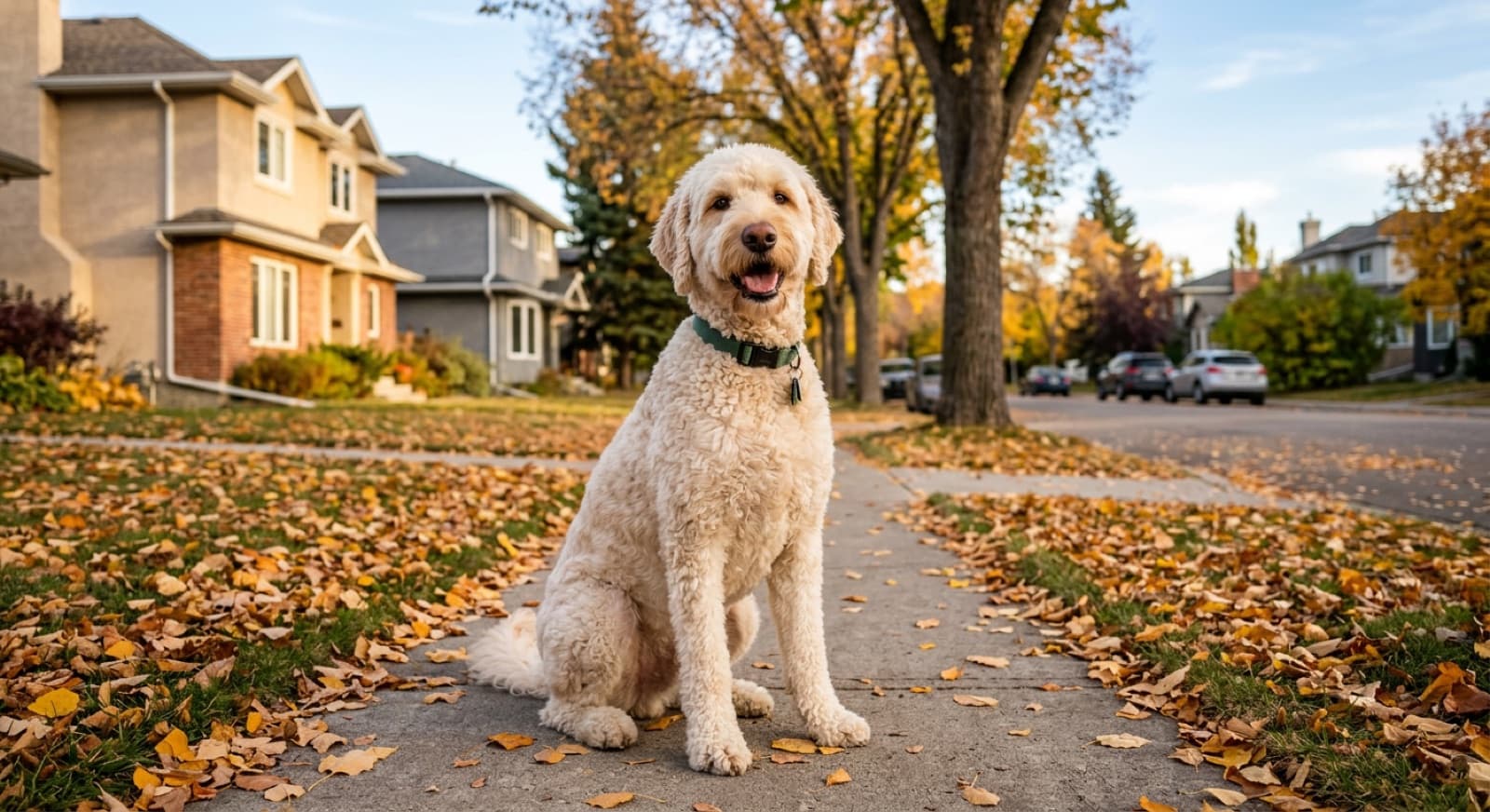
Mixes are not automatically healthier
A cross can inherit conditions from either parent, and a rescue Labradoodle’s generation and mix are often unknown. Know both parents’ lists. See our Labrador and Poodle and doodle health guides for more detail.
From the Labrador side: joints, weight and collapse
VCA Animal Hospitals names the Labrador among the breeds most affected by hip dysplasia, and elbow dysplasia is common too. Lean growth and steady, low-impact exercise protect the joints. Many Labradors also carry a gene variant linked to a bigger appetite, according to University of Cambridge research, so measure meals and count treats.
Exercise-induced collapse is an inherited Labrador condition. The Merck Veterinary Manual describes weakness, wobbling and collapse 5 to 20 minutes into intense exercise, with quick recovery. A DNA test exists; stop the session and see a vet if it happens.
Browse adoptable Labradoodles
Ask the rescue what they know about the dog’s parentage and any joint, ear or exercise problems.
See Available Labradoodles →From the Poodle side: Addison’s, skin and ears
Addison’s disease, a shortage of adrenal hormones, is a condition VCA names for both the Standard Poodle and the Labrador. Signs are vague and come and go: tiredness, vomiting, diarrhea, more drinking and weight loss. A sudden collapse with severe vomiting is an emergency.
Hairy, floppy ears are prone to infection, and both parents are on VCA’s allergy list. Keep the ears dry, groom the coat regularly and see your vet for odour, itching or head shaking.
Eyes and bloat
Progressive retinal atrophy, a painless inherited loss of vision, is listed by VCA for Labradors, and the Poodle is on VCA’s glaucoma list. An eye exam after adoption and prompt checks for cloudiness or a red, painful eye catch most problems.
A standard-size Labradoodle is large and deep-chested, and VCA names the Standard Poodle for bloat. Retching without producing anything, a swollen belly and restlessness need emergency care. Ask about a preventive gastropexy.
The first vet visit after adoption
Tell your vet the dog is a Labrador-Poodle cross. Ask for a joint assessment, an eye exam, an ear and skin check, a body condition score with a written target weight and baseline bloodwork. Bring the rescue’s records.
Price pet insurance the same week. Every Canadian provider excludes conditions documented before enrolment, and joint surgery and Addison’s care are significant costs.
Frequently asked questions
Are Labradoodles healthier than Labradors or Poodles?
Not reliably. A Labradoodle can inherit health risks from either parent, so watch for the serious conditions on both sides.
What are the most common Labradoodle health issues?
Hip and elbow dysplasia, weight gain, exercise-induced collapse, Addison’s disease, ear infections and allergies, eye disease and, in standard sizes, bloat.
Why does my Labradoodle wobble after hard play?
It may be exercise-induced collapse, an inherited Labrador condition. Stop the session, let the dog cool down and see your vet; a DNA test can confirm it.
What are the signs of Addison’s disease in a Labradoodle?
Vague signs that come and go: tiredness, vomiting, diarrhea, more drinking and weight loss. A sudden collapse with severe vomiting is an emergency.
How do I keep my Labradoodle’s ears healthy?
Check them weekly, keep the hair around them groomed, dry them after swims and baths, and see your vet before using drops.
Should I get pet insurance for a rescue Labradoodle?
It is worth pricing in your first week. Canadian pet insurance excludes conditions documented before enrolment, and joint and Addison’s care are significant costs.
Sources
- VCA Animal Hospitals: Hip Dysplasia in Dogs: Labrador named; lean growth and exercise advice
- University of Cambridge: Labrador appetite gene variant: about 23% of Labradors carry the POMC variant
- Merck Veterinary Manual: Exercise-Induced Collapse in Dogs: signs 5 to 20 minutes after intense exercise; DNA test
- VCA Animal Hospitals: Addison’s Disease in Dogs: Standard Poodle and Labrador named
- VCA Animal Hospitals: Atopy in Dogs: Labrador and Poodle named
- VCA Animal Hospitals: Progressive Retinal Atrophy: Labrador named
- VCA Animal Hospitals: Gastric Dilatation and Volvulus: Standard Poodle named; emergency; gastropexy
General information, not veterinary advice. Diagnosis and treatment decisions belong with your veterinarian.
Related guides
New dog? Start with these care guides
Everything a new adopter needs to set up a safe, happy home.