The short answer
Labs are the most obesity-prone dog breed because many carry a POMC gene deletion that makes them feel hungry even when fed enough. Aim for a Body Condition Score of 4 to 5 out of 9: feel the ribs through a thin layer of fat, see a waist from above, and see a belly tuck from the side. Feed to body condition, not to the kibble bag, which usually runs high, and ask your vet for your dog's target. Keep treats to about 10 percent of daily calories. The local trap is Vancouver's rainy season: skipped or shortened winter walks plus the same food is how Labs gain weight. Keep moving in the rain, swim year-round at indoor pools, and trim food to match when walks shrink. Even mild overweight shortens a Lab's life and worsens joint disease.
Browse adoptable Labradors in Vancouver. For where to adopt one, see our Lab adoption guide, and for the medical picture, the Lab health-issues guide covers the joint and thyroid conditions that weight makes worse.
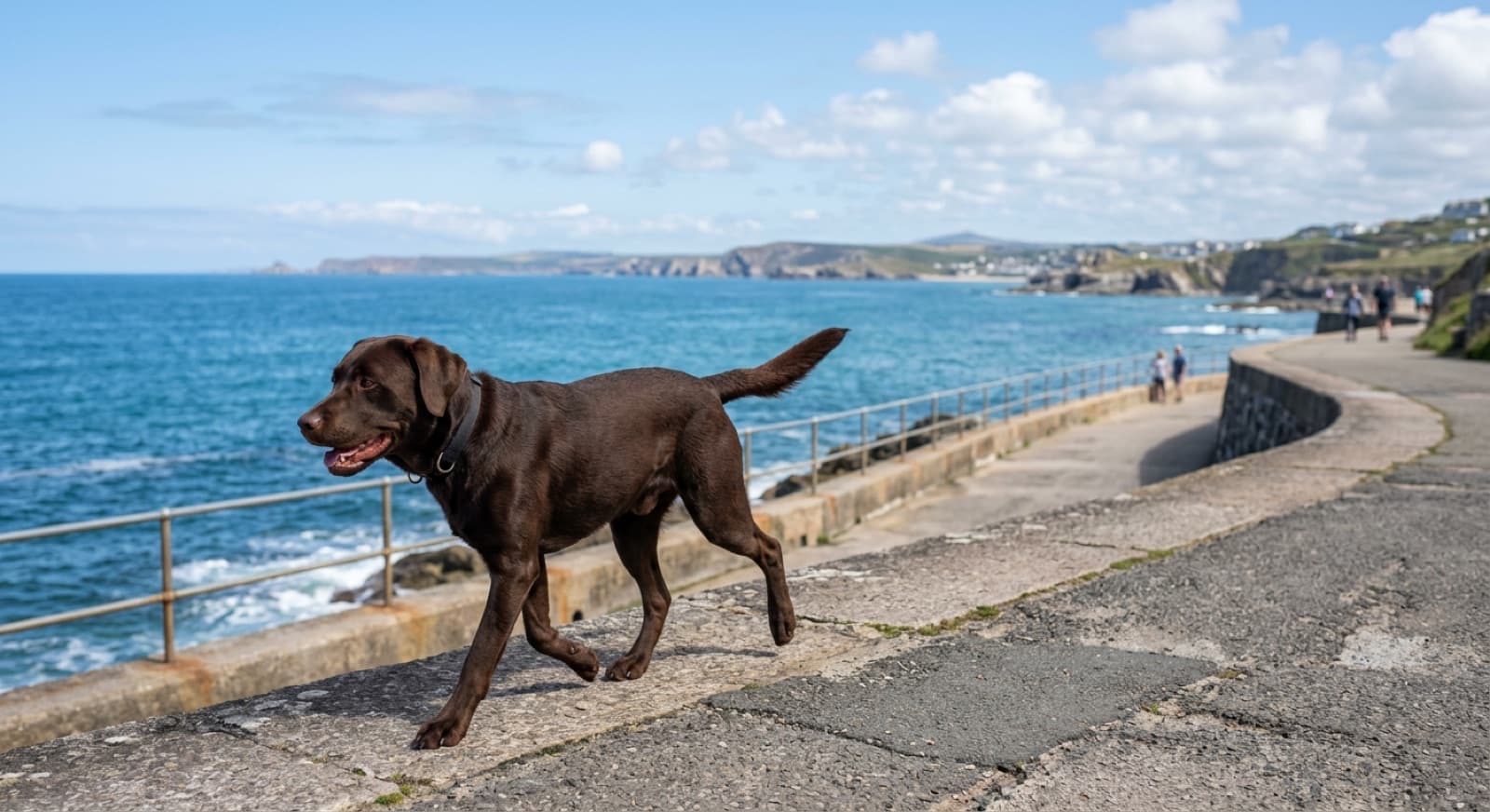
A lean Lab lives longer. This is the highest-impact thing you can do.
Keeping a Lab at a lean Body Condition Score of 4 to 5 is the single biggest favour you can do for their health and lifespan. Long-term research shows lean dogs live meaningfully longer than overweight ones, with less arthritis, fewer joint problems, and lower rates of diabetes and heart disease. No supplement and no procedure comes close. The hard part is mental, because Lab eyes are powerful and the breed always acts hungry. Hold the line anyway.
Why Labs are the most obesity-prone breed
It is partly genetic. Many Labradors carry a deletion in the POMC gene, which helps regulate appetite and the feeling of being full. Affected dogs feel hungrier than other breeds even after a complete meal.
Researchers at the University of Cambridge identified this mutation and linked it to higher body weight and stronger food motivation in Labradors. You can read a plain-language summary on the American Kennel Club. The short version: a Lab that acts starving is usually obeying its genes, not telling you it is underfed.
That same food drive is exactly why Labs dominate guide-dog and service-dog programs. They train beautifully for food rewards. The flip side is that a food-obsessed dog with a generous owner is the perfect setup for weight gain, which is why Labs carry the highest obesity rate of any breed.
The practical lesson is simple. Your Lab's appetite is not a reliable guide to how much it should eat. You have to manage the food, because the dog never will. That makes weight a daily, lifelong habit rather than a problem you fix once.
What body condition should a Lab be?
Target a Body Condition Score of 4 to 5 out of 9. Most pet Labs are a 6 to 8, so many owners have never seen a truly lean Lab and assume a healthy one looks too skinny.
| BCS | Status | What you see and feel |
|---|---|---|
| 1 to 3 | Underweight | Ribs and spine clearly visible, little body fat |
| 4 to 5 (target) | Ideal | Ribs felt with light pressure, visible waist from above, belly tuck from the side |
| 6 to 7 | Overweight | Ribs felt only with firm pressure, waist fading, fat over hips and tail base |
| 8 to 9 | Obese | Ribs not felt under fat, no waist, heavy fat deposits |
The three-step home check, done monthly:
- Ribs. Run flat hands along the sides. You should feel ribs through a thin layer of fat without pressing, like feeling your knuckles through the back of your hand. If you have to push to find them, your Lab is overweight.
- Waist from above. Stand over your dog and look down. There should be a clear narrowing behind the rib cage. A straight or bulging side line means too much weight.
- Tuck from the side. The belly should slope upward from the chest to the back legs. A belly that hangs straight or sags is a sign of excess fat.
Adopting a Lab in Vancouver? Rescue Labs often arrive at a 6 to 7, and a good rescue will tell you the dog needs to slim down. Bring them to a 4 to 5 over the first several months with your vet's guidance. Snap a photo from above and from the side each month, because the changes are slow and a photo is a far better record than memory.
How much should I feed my Lab?
Feed to body condition, not to the bag. Kibble charts run high for most pet Labs. The amount on the package is a starting point, not a prescription.
Energy needs vary so much by age, neuter status, metabolism, and activity that no single cup count fits every Lab. So rather than print numbers that might overfeed your dog, the honest answer is this: ask your vet for your dog's daily calorie target, then feed to it and recheck body condition as your Lab ages. Your vet can set a target in a two-minute conversation at any routine visit.
The rules that matter regardless of the number:
- Weigh the kibble on a kitchen scale. Scooping by eye varies by a surprising amount, easily enough to keep a Lab overweight.
- Feed two measured meals a day, never free-feed. A Lab will empty whatever bowl you leave out.
- Count treats inside the daily total, not on top of it.
- Recheck body condition every few weeks and adjust the amount up or down based on what you see and feel, not on what the bag says.
The most common feeding mistake with Labs is trusting the bag and never adjusting. Set the amount by how your dog actually looks, and let the kitchen scale and the monthly rib check do the work.
The Vancouver trap: skipped rainy-season walks
This is the number-one local cause of Lab weight gain. Vancouver's wet season runs October to April, and the daily walk is the first thing to shrink when it is cold and pouring. The Lab keeps eating the same food. That gap is where the pounds creep on.
Your Lab does not care that it is raining. It cares about the lost exercise. Cut 30 to 45 minutes off the daily walk across a long wet winter, keep the food the same, and add a few extra cozy-evening treats, and your dog burns less while eating more. Most owners do not notice until spring, when the dog steps on the vet's scale a few pounds heavier.
Labs are built for water and weather. A dog walked in the rain and dried properly afterward is completely fine. The problem is not the rain, it is the human deciding to stay in. So the wet-season plan has two parts.
- Keep walking in the rain. Good gear for you, a quick towel-down for the dog, and the seawall or a local trail is still on. For the broader cold-and-wet routine, see our Pacific rain-coast winter dog care guide.
- If walks genuinely shrink, trim the food. When the daily walk drops over winter, reduce the daily portion slightly to match the lower activity. Match food to the exercise your dog actually gets, not the exercise you meant to give.
Rainy-day exercise that actually burns calories
On the worst days you can still tire out a Lab. A mix of indoor activity, sheltered outings, and swimming keeps the calories burning through the wet months.
Indoor and sheltered options:
- Indoor fetch and stair runs. A long hallway or a flight of stairs gets the heart rate up fast.
- Tug and flirt-pole play. Short, intense, and easy to do in a living room.
- Food puzzles and scatter-feeding. Turning a meal into 15 minutes of sniffing and problem-solving tires a Lab more than people expect. Mental work counts.
- Sheltered walks. Walk under the tree canopy at a park, use a covered court, or run short brisk loops between rain bands.
- Doggy daycare a couple of days a week. Many Vancouver owners use winter daycare for hard play and social time that a wet backyard cannot match.
The standout option is swimming, which deserves its own section because it is the perfect exercise for the breed most likely to need it.
Swimming: low-impact exercise for a heavy or stiff Lab
Swimming is one of the best workouts for an overweight or arthritic Lab, and most Labs adore the water. The water carries the body weight, so the dog gets strong cardio with almost no impact on sore joints.
This matters because excess weight and joint disease tend to travel together in Labs. A heavy Lab's hips, elbows, and knees are already under strain, so running and jumping on land can hurt while a swim burns the same calories without the pounding. For a dog recovering condition, swimming is often the gentlest way to start.
In Vancouver you can swim a Lab outdoors at the lakes and shoreline in summer, and at indoor canine pools and hydrotherapy facilities in the Lower Mainland year-round. That means the rain is no excuse, a Lab can swim in January as easily as July. If your dog has joint pain or is well out of shape, hydrotherapy with a qualified practitioner is worth asking your vet about.
A few safety notes from our wet-coast swimming guide:
- Dry the coat fully afterward so trapped damp does not cause skin trouble.
- Watch for water intoxication from gulping water during fetch.
- Check with your vet first if your Lab has a heart condition or is severely overweight.
For cold-water timing, ocean and lake risks, and the full safety checklist, see our Lab swimming-safety guide for Vancouver.
Treats, begging, and the 10 percent rule
Keep treats to about 10 percent of daily calories. Most owners blow past that without noticing, especially with a Lab that has perfected the starving-puppy look.
Treats add up faster than people think. A single dental chew or a handful of training treats can eat a big slice of the daily budget, and a begging Lab works every member of the household. The fix is not zero treats, it is counting them honestly inside the daily total.
- Train with kibble counted out of the meal. Set aside a portion of the daily food for rewards so training adds zero extra calories. Most Labs are food-driven enough that plain kibble works.
- Lean on low-calorie veggies. Green beans, baby carrots, cucumber, and plain canned pumpkin (never pie filling) are filling and nearly free of calories. Labs usually love them.
- Avoid the toxic ones. Grapes, raisins, onion, and garlic are off-limits, and skip table scraps entirely.
- Get the household aligned. A Lab will collect a treat from every person and every visitor. One person should own the daily count.
When the begging is relentless, remember the gene. Your Lab is not starving. It feels hungry because of how it is built, and giving in just feeds a habit that shortens its life.
When weight gain is medical, not just food
Most Lab weight gain is overfeeding, but not all of it. Weight that climbs despite controlled portions, or appears alongside other symptoms, deserves a vet visit before you assume it is only the diet.
The condition to know about is hypothyroidism, an underactive thyroid that Labs are predisposed to. It can cause weight gain despite normal or reduced food, along with lethargy, hair loss, dry skin, and cold intolerance. A simple blood test diagnoses it, and treatment is straightforward and effective. Other causes your vet can check for include Cushing's disease, diabetes, and fluid retention from heart problems.
The decision rule is easy. A perpetually hungry Lab at a healthy weight is normal Lab behaviour. A Lab that is gaining weight while eating a controlled diet, or that suddenly seems hungrier and more tired, should see the vet. Catching a medical cause early is far better than spending months tightening a diet that was never the real problem.
Helping an already-overweight Lab lose weight
Start with the vet, not a crash diet. Safe weight loss is gradual, roughly 1 to 2 percent of body weight per week, and it usually runs several months.
- See your vet first. Rule out medical causes, get an accurate starting weight, and agree on a target body condition and a daily calorie goal.
- Tighten the food. Weigh kibble on a kitchen scale, feed two measured meals, cut treats hard, and ask whether a vet-recommended weight-management diet makes sense for a moderate-to-severe case.
- Build exercise gradually. Start with short, frequent walks and low-impact swimming rather than running or jumping, which stresses joints while the dog is still heavy.
- Recheck and adjust. Weigh every few weeks and drop the portion further as the dog shrinks, because a lighter dog needs fewer calories. Photos from above and the side track progress better than the scale alone.
- Hold the maintenance habit. Once your Lab hits target, keep the measured meals, the treat discipline, and the regular weigh-ins. Backsliding is common when owners relax.
It takes patience, and the begging is the hardest part. But a Lab brought down to a lean, healthy weight often gains years of comfortable, active life. That is the whole point.
Browse adoptable Labradors in Vancouver
Ready to commit to the measured meals, the rainy-day walks, and a lean healthy Lab? Meet the Labradors and Lab mixes available right now from Vancouver-area rescues.
See Available Labradors →Frequently Asked Questions
Why are Labs so prone to obesity?
Many Labs carry a POMC gene deletion that controls appetite, so they feel hungry even after eating enough. Combined with strong food motivation, it gives Labs the highest obesity rate of any breed. When your Lab acts starving, that is the gene, not real hunger.
What body condition should a Lab be?
A 4 to 5 out of 9. Feel ribs through a thin fat layer without pressing, see a waist from above, and see a belly tuck from the side. Most pet Labs are a 6 to 8, so a healthy one can look leaner than owners expect.
How much should I feed?
Feed to body condition, not the bag, which runs high. Weigh kibble on a kitchen scale, feed two measured meals, never free-feed, and recheck the rib test every few weeks. Ask your vet for your dog's specific daily calorie target.
How does Vancouver rain cause weight gain?
Skipped or shortened winter walks plus the same food. The Lab burns less but eats the same, so weight creeps on by spring. Keep walking in the rain, swim indoors, and trim the food when walks shrink.
Is swimming good for an overweight Lab?
Yes, it is ideal. The water carries the weight, so a heavy or arthritic Lab gets strong cardio with no joint pounding. Vancouver has indoor canine pools and hydrotherapy year-round. Dry the coat fully and check with your vet first if there is a heart condition.
How many treats are too many?
Keep treats to about 10 percent of daily calories and count them inside the daily total. Train with kibble counted out of the meal, use low-calorie veggies like green beans and carrots, and get the whole household on the same page.
My Lab is always hungry. Is that normal?
For a Lab at a healthy weight, yes, it is the breed. The thing to watch is weight gain despite controlled portions, or hunger paired with lethargy, hair loss, or extra thirst, which can signal hypothyroidism. See your vet if that happens.
How do I help my fat Lab lose weight?
See the vet first to rule out medical causes and set a target. Then weigh the food, feed two measured meals, cut treats, build exercise gradually with walks and swimming, and recheck every few weeks. Healthy loss is gradual and runs several months.
Does even mild overweight matter?
Yes. Long-term research shows lean dogs live longer with less arthritis. For a breed already prone to hip and elbow dysplasia, extra weight worsens joints and raises diabetes and heart risk. A lean Lab is the highest-impact thing you can do.
Labrador Adoption Vancouver
Where to find Labs, costs, scam warnings, and Lab mixes in the Lower Mainland.
Lab Health Issues
Hip and elbow dysplasia, EIC, and the thyroid condition that drives weight gain.
Lab Swimming Safety
Cold-water timing, ocean and lake risks, and the full safety checklist for Vancouver.
Adoptable Labradors in Vancouver
Live Labrador and Lab-mix listings from Vancouver-area rescues.
New dog? Start with these care guides
Everything a new adopter needs to set up a safe, happy home.