The short answer
The Pug's flat-faced build drives its health profile: BOAS and breathing difficulty, dangerous heat intolerance, skin-fold infections, and serious eye vulnerabilities (ulcers, dry eye, and even proptosis, the eye popping out). Add pug myelopathy (a spinal condition affecting the hind end) and a strong obesity tendency. Lifespan is about 12 to 15 years, but quality of life depends on management. The highest-impact things you control: keep the dog lean (the single biggest lever), manage heat, clean and dry the folds, protect the eyes, and use a harness not a collar. Insure while young and healthy, before any condition is diagnosed. None of this is a reason to avoid the breed, only to go in prepared.
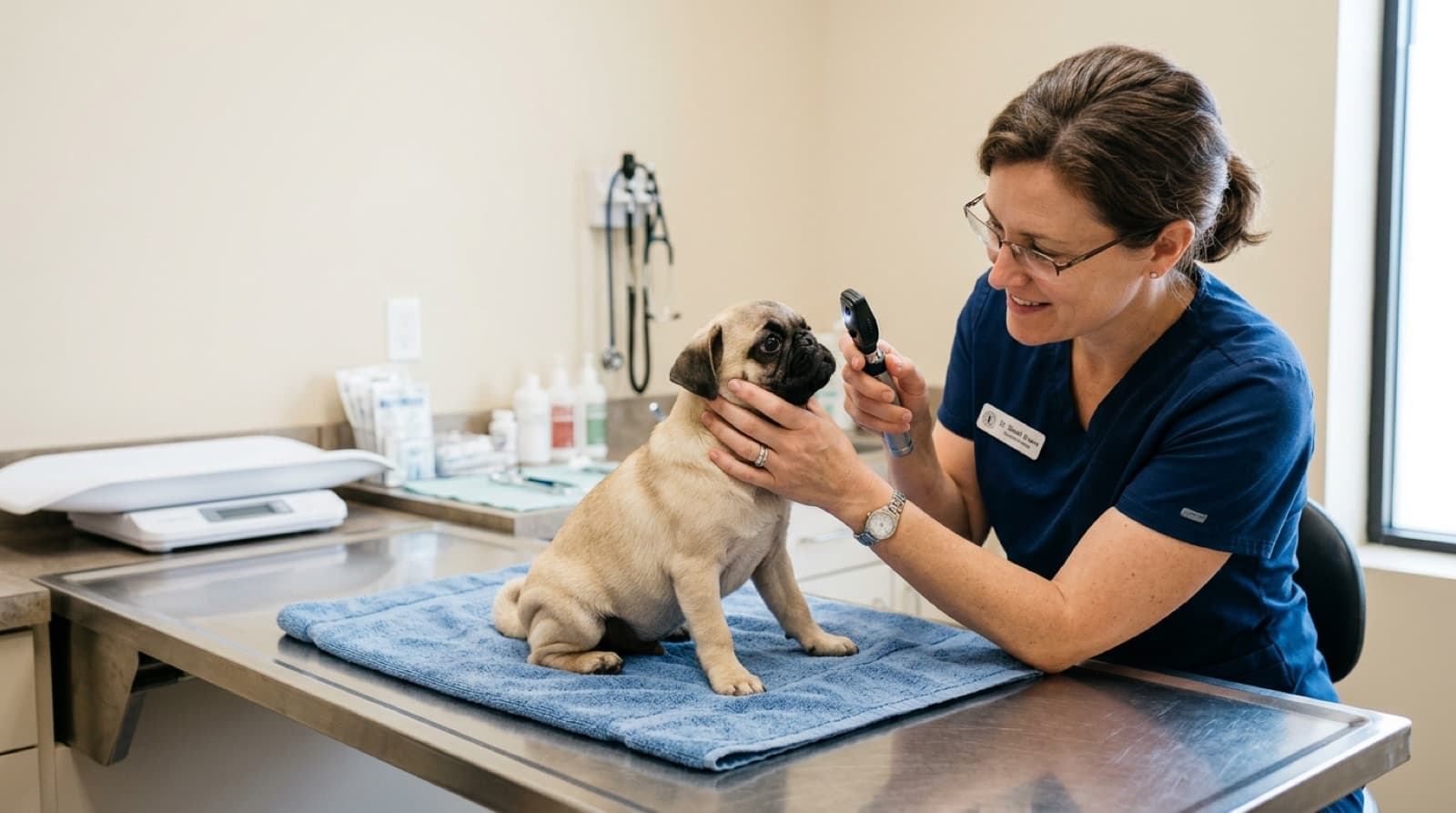
What health problems are Pugs prone to?
A substantial list, mostly driven by the extreme flat-faced build. The major categories: BOAS and breathing difficulty; serious heat intolerance; skin-fold dermatitis; a range of eye conditions (corneal ulcers, dry eye, pigmentary keratitis, and proptosis); pug dog encephalitis (a rare but serious brain disease); pug myelopathy (a spinal condition); hip dysplasia and patellar luxation; and a strong tendency to obesity, which worsens everything. Pugs are one of the more health-intensive small breeds, so assume higher-than-average lifetime vet care, sometimes including surgery. Manageable with a prepared home, but never a surprise.
Our brachycephalic care guide covers the day-to-day management, and the VCA guide to brachycephalic syndrome explains the airway anatomy.
What is BOAS in a Pug?
BOAS (Brachycephalic Obstructive Airway Syndrome) is the defining health issue of the breed. Because the skull is compressed, Pugs often have narrowed nostrils, an elongated soft palate, and a narrowed windpipe that make breathing harder. Signs range from noisy breathing, snoring, and snorting (which owners often think is normal Pug charm but can indicate real obstruction) to exercise intolerance, gagging, and in severe cases collapse or airway crises, especially in heat or with exertion. Many Pugs benefit from BOAS surgery (widening the nostrils and shortening the soft palate), which can dramatically improve breathing and quality of life, so a vet assessment of airway function is worthwhile, and increasingly encouraged rather than accepting heavy breathing as normal. Weight control matters enormously, since even mild obesity worsens BOAS significantly in a small dog.
Why do Pugs have so many eye problems?
The Pug's large, round, prominent eyes are a defining feature and a serious health vulnerability. Because the eyes protrude and the sockets are shallow, they are highly exposed and prone to corneal ulcers and injury, and Pugs are prone to dry eye, pigmentary keratitis (a brown pigment that can spread across the cornea and threaten vision), and other conditions. Most dramatically, a Pug's eye can proptose (pop out of the socket) from trauma or even too much pressure around the neck, a genuine emergency requiring immediate veterinary care. Watch for squinting, redness, cloudiness, excessive tearing, pawing at the eye, or any change, and see the vet promptly, since eye problems worsen fast and vision is at stake; protect the eyes from hazards; use a harness rather than a collar to avoid neck pressure; and keep up regular eye checks. Prompt attention to any Pug eye issue is especially important.
What is pug myelopathy?
Pug myelopathy is a spinal cord condition seen fairly commonly in the breed, particularly in middle-aged to older Pugs, that affects the hind end. Related to abnormalities in the vertebrae of the lower spine, it causes a slowly progressive weakness and incoordination of the back legs, an owner may notice the hind end becoming wobbly, the Pug dragging its back feet or scuffing its nails, difficulty with stairs or jumping, and sometimes incontinence, typically without obvious pain. It differs from a sudden disc rupture, being more gradual. There is no cure, but it can be managed to maintain quality of life: physiotherapy, keeping the dog lean, using harnesses and slings for support, providing traction and ramps, and managing incontinence. Many affected Pugs live comfortably for a good while with support, sometimes eventually using a wheeled cart. If your Pug develops progressive hind-end weakness, see the vet for assessment.
How long do Pugs live, and how do I keep mine healthy?
Typically 12 to 15 years, longer than the giant brachycephalic breeds, but quality of life depends heavily on managing the health issues. The highest-impact things: keep the dog lean (obesity worsens breathing, joints, spine, and heat tolerance, the single most important daily choice for a food-loving breed), manage heat rigorously, clean and dry the facial folds (important in damp Vancouver), protect and monitor the eyes, use a harness rather than a collar (protecting the airway and eyes), address breathing problems with your vet including considering BOAS surgery, watch for hind-end weakness, and keep up with checkups. Adopting from a rescue that has assessed the dog's health, and budgeting for the breed's real vet costs, sets you up well. With good management, many Pugs live long, happy, comedic lives.
Should I get pet insurance for a Pug?
Strongly recommended, more so than for many small breeds, because this is a health-intensive breed. Many Pugs need airway surgery, eye treatment or surgery, skin-fold care, and management of other conditions over their lives, and eye emergencies (a corneal ulcer or proptosis), BOAS surgery, and ongoing skin or spinal care can all add up. The critical rule is to insure while the dog is young and healthy, before any condition is diagnosed, because insurers exclude pre-existing conditions, and a Pug that already has a diagnosed BOAS, eye, or skin issue may find it uncovered. Compare Canadian providers on brachycephalic and hereditary coverage specifically, read the exclusions carefully, and treat either insurance or a substantial dedicated vet fund as non-negotiable. A Pug is a small dog with a real potential for significant vet bills.
Our Vancouver adoption cost guide and low-cost vet guide help with budgeting and routine care.
Browse adoptable Pugs in Vancouver
Live inventory from Lower Mainland rescues, each with a foster's notes on breathing, eyes, skin, and any known health history, exactly what you want to know for this breed. Refreshed regularly.
See Available Pugs →Frequently Asked Questions
What health problems are Pugs prone to?
BOAS and breathing difficulty, heat intolerance, skin-fold infections, serious eye conditions (ulcers, dry eye, proptosis), pug myelopathy (a spinal condition), and obesity that worsens everything. Expect higher-than-average lifetime vet care.
What is BOAS?
The flat-faced airway problem: narrowed nostrils, elongated soft palate, narrowed windpipe. Causes noisy breathing, exercise and heat intolerance, and sometimes crises. Surgery helps many dogs; keeping the dog lean is essential. Don't accept heavy breathing as normal.
Why so many eye problems?
Their prominent, exposed eyes are prone to ulcers, dry eye, pigmentary keratitis, and even proptosis (the eye popping out, an emergency). Watch for redness, squinting, or cloudiness, see the vet fast, and use a harness not a collar.
What is pug myelopathy?
A spinal condition in middle-aged to older Pugs causing slowly progressive hind-end weakness (wobbliness, scuffing back feet, stair difficulty), usually painless. No cure, but manageable with physio, staying lean, harnesses, ramps, and support. See the vet for hind-end weakness.
How long do they live?
About 12 to 15 years, but quality of life depends on management. Keeping the dog lean is the single biggest lever, plus heat management, fold and eye care, a harness, and prompt vet attention.
Do I need pet insurance?
Strongly recommended for this breed. Airway surgery, eye emergencies, and skin or spinal care add up. Insure while young and healthy, before any condition is diagnosed and excluded, and compare providers on brachycephalic coverage.
Related Vancouver guides
Pug Adoption in Vancouver
Where to adopt in BC, the comedic temperament, real costs, and who the breed suits.
Pug Brachycephalic Care
The day-to-day breathing, heat, fold, eye, and weight care that keeps a flat-faced dog safe.
Adoptable Pugs in Vancouver
All currently available Pugs and Pug mixes with foster health notes. Updates regularly.
Vancouver Dog Adoption Costs
Adoption fees, annual care, and the insurance case, the full budget picture for BC adopters.
New dog? Start with these care guides
Everything a new adopter needs to set up a safe, happy home.