The short answer
A Samoyed needs thorough brushing several times a week (daily during coat blow), working down to the skin with a slicker brush and undercoat rake to prevent painful mats. They are heavy shedders year-round and blow their undercoat dramatically once or twice a year. Never shave the coat, the double coat regulates temperature (including keeping the dog cooler in summer) and protects the skin; shaving harms it. In damp Vancouver, dry the coat thoroughly after wet walks to prevent matting and skin issues, and the coat's natural dirt resistance does much of the cleaning work. Budget real time or money (usually both) for grooming, it is a defining reality of the breed.
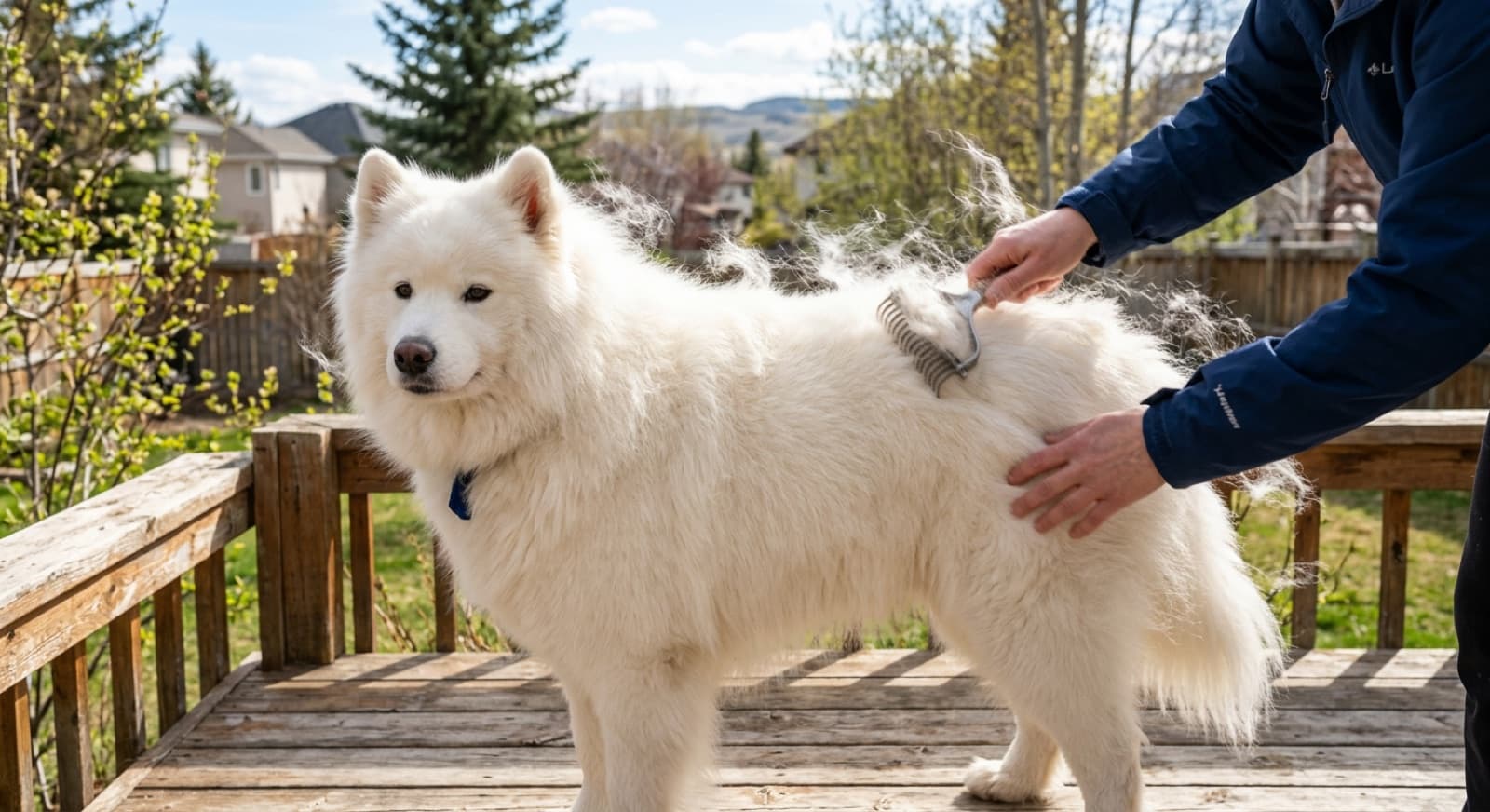
How often to brush a Samoyed
Plan to brush a Samoyed thoroughly several times a week at minimum, and daily during heavy shedding, this is the core, non-negotiable grooming commitment. The dense double coat (soft insulating undercoat plus longer outer coat) mats without regular brushing, and mats pull painfully on the skin, trap moisture and debris, and can cause skin infections, especially in damp Vancouver.
Proper brushing means working down to the skin with the right tools (a slicker brush and an undercoat rake or comb are essentials), not just skimming the surface, line-brushing (parting the coat and brushing in sections) ensures you reach the undercoat. Pay special attention to mat-prone areas: behind the ears, armpits, britches (rear legs), and tail. A consistent routine keeps the coat healthy, reduces loose fur, and lets you catch skin issues early. If you are not prepared to commit to this, a Samoyed is not the right breed.
Shedding and coat blow
Samoyeds shed a lot, year-round to some degree and dramatically during seasonal coat blow. Coat blow happens once or twice a year, when the Samoyed sheds out its dense undercoat in enormous quantities over days to weeks; the amount of fur is genuinely striking, and you will need to brush frequently (often daily) to remove the loose undercoat and prevent matting. An undercoat rake is invaluable during coat blow.
Regular brushing throughout the year manages the ongoing shedding and makes coat-blow season more manageable, the more loose undercoat you remove, the less ends up on your floors. Be realistic: even with diligent grooming, a Samoyed means living with dog hair, this is not a low-shedding breed, and anyone who cannot tolerate significant shedding should choose differently. On the plus side, the shed undercoat is famously soft, and diligent brushing dramatically reduces the mess. Managing shedding through regular brushing is simply part of owning the breed.
Never shave a Samoyed
Never shave a Samoyed (except when medically necessary on veterinary advice). It is tempting to think shaving a thick-coated dog keeps it cooler or reduces shedding, but shaving a double-coated breed is harmful: the double coat regulates temperature (insulating against cold and, importantly, keeping the dog cooler in summer through insulation and airflow) and protects the skin from sunburn and injury.
Shaving disrupts this regulation, can cause the coat to grow back improperly or unevenly (sometimes permanently damaging the texture), exposes the skin to sunburn, and does not solve shedding or heat. To keep a Samoyed cool in summer, manage the environment instead, shade, AC, water, and exercising in the cool hours, and keep the coat well-brushed and mat-free (a clean, mat-free coat regulates temperature far better than a matted one). Regular brushing, not shaving, is the answer to both shedding and coat health.
Keeping a white coat clean in damp Vancouver
Keeping a white Samoyed coat clean in Vancouver's wet, muddy conditions takes effort, but the coat is more self-cleaning than you might expect. The Samoyed's coat texture resists dirt somewhat, mud often dries and brushes out rather than staining, so you do not need to bathe constantly. The keys: brush regularly, dry the coat thoroughly after wet, muddy walks (trapped dampness causes matting and skin issues), and let mud dry before brushing it out rather than rubbing wet mud in.
Bathe only when genuinely needed (over-bathing strips natural oils), using a quality dog shampoo, and ensure the coat is dried completely down to the skin afterward, a damp undercoat is a recipe for matting and skin problems. Paw and belly cleaning after muddy walks helps. In practice, a combination of regular brushing, thorough drying, spot-cleaning, and occasional full baths keeps a Vancouver Samoyed looking good, and the coat's natural dirt resistance does much of the work for you.
Do I need a professional groomer, and what will it cost?
You can groom a Samoyed at home with time and good tools, but many owners use a professional groomer periodically to supplement home care, especially for thorough deshedding during coat blow, baths and complete drying, and nail trims. Either way, budget for it: home grooming needs a good slicker brush, undercoat rake, a quality dryer (very helpful in damp Vancouver), and shampoo, plus the significant time of regular brushing.
Professional grooming for a Samoyed is not cheap given the size and coat, expect a meaningful cost per visit, and relying on it for the bulk of coat care becomes a real recurring expense. Most owners do a mix: regular at-home brushing (essential and frequent) plus periodic professional grooming for baths, deshedding, and tidying. Samoyed grooming is a genuine ongoing commitment in either time or money (usually both), one of the defining practical realities of the breed alongside the exercise and companionship needs. See our adoption guide for the full commitment picture.
The full grooming routine
A complete Samoyed routine covers coat, nails, ears, teeth, and skin:
- •Coat (the big one): line-brush thoroughly several times a week (daily during coat blow), down to the skin, focusing on mat-prone areas.
- •Bathing: only as needed, with complete drying down to the skin afterward.
- •Nails: trim every few weeks; long nails cause discomfort and gait issues.
- •Ears: check and clean regularly to prevent infections, especially with moisture in the damp climate.
- •Teeth and skin: brush teeth regularly; check the skin while brushing for redness, hot spots, or parasites (the dense coat hides issues). Wipe eye discharge to prevent staining on the white coat.
Establishing this routine early, and getting a rescue Samoyed comfortable with handling and grooming, makes the lifelong commitment manageable and keeps the dog healthy and comfortable. Consistency is everything with a double-coated breed.
Browse adoptable Samoyeds in Vancouver
If you are ready for the coat commitment, a Samoyed is a joyful, devoted companion. Browse Lower Mainland rescues, each with a foster's notes on coat condition and temperament. Refreshed regularly.
See Available Samoyeds →Frequently Asked Questions
How often do I brush a Samoyed?
Thoroughly several times a week at minimum, daily during coat blow. Line-brush down to the skin with a slicker brush and undercoat rake, focusing on mat-prone areas (ears, armpits, britches, tail). This is the core, non-negotiable commitment of the breed.
How much do they shed?
A lot, year-round, and dramatically during coat blow once or twice a year when the undercoat sheds out in enormous quantities. Regular brushing manages it and reduces the mess, but a Samoyed always means living with dog hair. Not a low-shedding breed.
Should I ever shave a Samoyed?
No, except medically on vet advice. The double coat regulates temperature (including keeping the dog cooler in summer) and protects the skin. Shaving harms it, can permanently damage the coat, and does not solve heat or shedding. Manage heat with environment and brushing instead.
How do I keep a white coat clean in wet Vancouver?
The coat resists dirt more than you would expect, mud often dries and brushes out. Brush regularly, dry the coat thoroughly after wet walks (trapped damp causes matting), let mud dry before brushing, and bathe only when needed with complete drying afterward.
Do I need a professional groomer?
You can DIY with time and good tools, but many owners use a groomer periodically for deshedding, baths, and drying. Either way budget real time or money (usually both). Professional grooming for a Samoyed is not cheap given the size and coat.
What is the full grooming routine?
Line-brush the coat several times a week (daily during coat blow); bathe as needed with full drying; trim nails every few weeks; clean ears regularly; brush teeth; and check the skin while brushing. Wipe eye discharge to prevent staining. Consistency is everything.
Related Vancouver guides
Samoyed Adoption in Vancouver
Where to adopt in BC, the friendly temperament, grooming and exercise, real costs, and who it suits.
Samoyed Health Issues
Hereditary kidney disease, hip dysplasia, eye conditions, and the breed's vet picture.
Adoptable Samoyeds in Vancouver
All currently available Samoyeds and Samoyed mixes with foster notes. Updates regularly.
Best Dog Rescues in Vancouver
Every Vancouver-area rescue reviewed on cost, wait time, and best fit by adopter type.
New dog? Start with these care guides
Everything a new adopter needs to set up a safe, happy home.