The short answer
The Samoyed's signature health concern is hereditary glomerulopathy (a genetic kidney disease, more severe in males). Other issues: hip dysplasia, a notable range of eye conditions (PRA, cataracts, glaucoma), a higher-than-average diabetes risk, and some heart conditions. Lifespan is a good ~12 to 14 years. The levers you control: keep the dog lean, exercise well, groom diligently, and stay on routine vet monitoring (watch especially for kidney, eye, and diabetes signs). Because several conditions are chronic and costly, the insurance case is real, insure while young, before anything is diagnosed.
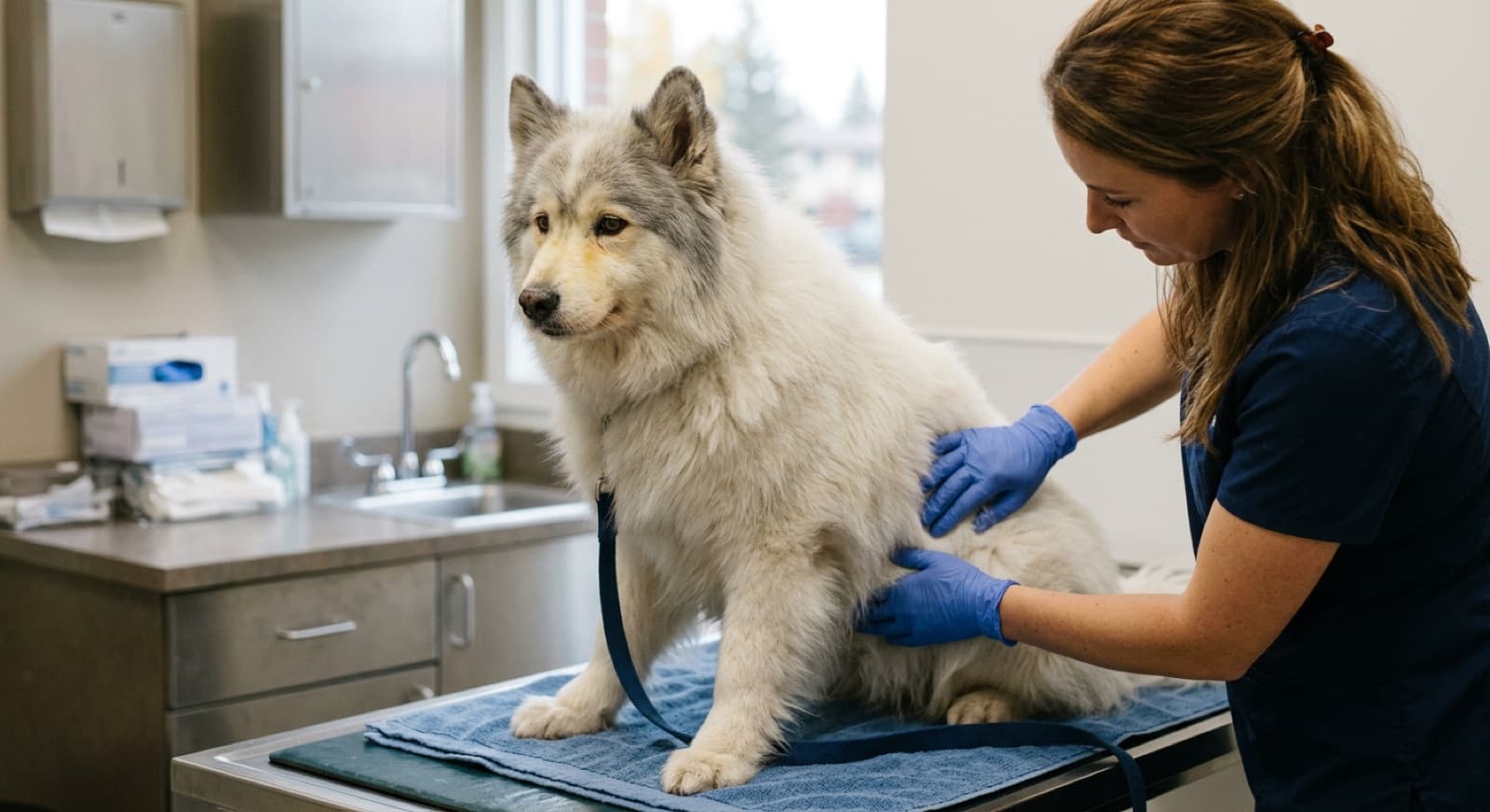
The Samoyed is a robust, generally healthy breed, but it has a distinctive set of hereditary conditions, led by a genetic kidney disease, that make routine monitoring worthwhile. Knowing them lets you catch problems early. Here is the medical picture, condition by condition.
Hereditary kidney disease, the signature issue
Hereditary glomerulopathy (Samoyed hereditary nephritis) is the breed's signature genetic concern, a serious inherited kidney disease. A defect in the kidney's filtering structures leads to progressive kidney damage and, in severely affected dogs, kidney failure. It is X-linked and much more severe in males, affected males can develop kidney failure young, while affected females are typically milder carriers.
Signs of kidney trouble can include increased thirst and urination, weight loss, and general decline; diagnosis involves urine and blood testing. There is no cure, though supportive care and management can help affected dogs. Because it is genetic, prevention is responsible breeding, one reason adopting or choosing a health-tested breeder matters. For an adopter, be aware of the condition, ensure routine vet checks include kidney assessment, and seek prompt attention for any kidney signs, especially in a male Samoyed. Many Samoyeds are unaffected and live long, healthy lives. The Orthopedic Foundation for Animals maintains breed health-testing databases.
Hips and joints
Hip dysplasia is a recognized issue in Samoyeds, as in many medium-to-large active breeds, a hip malformation leading to arthritis, pain, and reduced mobility. Signs include stiffness, difficulty rising, reluctance to exercise or climb stairs, limping, or an altered gait. Management ranges from weight control, joint supplements, appropriate exercise, and anti-inflammatory medication for milder cases up to surgery for severe ones.
The single most important thing an owner controls is weight, keeping a Samoyed lean significantly reduces joint load and slows arthritis, and appropriate exercise that maintains muscle without overstressing joints helps too. Vancouver's trails and cool climate make it easy to keep a Samoyed active and fit (with heat caution in summer). Ask the rescue about known mobility issues, and start good weight management from day one.
Eyes, diabetes, and heart
Samoyeds have a notable eye-health profile, prone to progressive retinal atrophy (PRA, leading to vision loss), cataracts, glaucoma, and retinal dysplasia. Watch for cloudiness, vision changes, redness, or squinting, and have eye concerns assessed promptly. The breed also has a higher-than-average diabetes predisposition, so watch for increased thirst, urination, and appetite or weight changes, which warrant testing.
Diabetes is manageable with treatment but needs diagnosis and ongoing care. The breed can also have congenital heart conditions such as subvalvular aortic stenosis (detected via a murmur and cardiac workup) and hypothyroidism (affecting metabolism and coat). Routine veterinary care monitoring eyes, heart, thyroid, and metabolic health, plus prompt attention to symptoms, is the key to catching these early. Many Samoyeds never develop serious problems, but the range of conditions makes regular monitoring genuinely worthwhile.
Lifespan and keeping a Samoyed healthy
Samoyeds typically live around 12 to 14 years, and much of keeping one healthy is within your control. Keep the dog lean (obesity worsens joints and diabetes risk), provide the substantial exercise the breed needs (supporting joint, metabolic, and mental health, easy with Vancouver's trails, with heat caution in summer), maintain diligent grooming and skin care, and stay on routine vet care so kidney, eye, heart, thyroid, and metabolic issues are caught early.
Be particularly attentive to kidney signs (especially in males), eye changes, and diabetes symptoms. Feed a good-quality diet, keep vaccinations and parasite prevention current, and maintain dental care. A Samoyed that is kept lean, well-exercised, well-groomed, and given routine monitoring has an excellent chance at a long, healthy life, much of it down to an engaged owner who watches for the breed's specific health signs.
Is pet insurance worth it?
Pet insurance is worth considering for a Samoyed, because the breed carries several potentially costly hereditary conditions, kidney disease, eye conditions (some needing surgery or ongoing care), diabetes (lifelong, ongoing expense), heart conditions, and hip issues, and Vancouver vet care is not cheap. The genetic kidney predisposition and notable diabetes risk in particular make the insurance case relevant, as both can be significant ongoing expenses.
As always, take out insurance while the dog is young and healthy, before any condition is diagnosed and excluded, which matters given the range of hereditary issues. Compare providers, understand coverage and any breed-specific limits, and read the fine print. For many owners, insurance turns the unpredictable risk of an expensive hereditary condition, or the ongoing cost of managing diabetes, into a manageable monthly cost. If you self-insure, keep a solid vet fund in mind given the potential for chronic, ongoing conditions. See our Vancouver adoption and ownership costs guide for the numbers.
Browse adoptable Samoyeds in Vancouver
Rescue Samoyeds come vet-checked, and a good rescue will share a dog's known health history so you can adopt informed. Refreshed regularly across Lower Mainland rescues.
See Available Samoyeds →Frequently Asked Questions
What are the main health problems?
Hereditary glomerulopathy (genetic kidney disease, worse in males) is the signature. Plus hip dysplasia, several eye conditions (PRA, cataracts, glaucoma), a higher diabetes risk, and some heart conditions. Lifespan ~12 to 14 years. Routine monitoring is the key.
What is hereditary glomerulopathy?
An inherited kidney disease affecting the kidney's filters, X-linked and much more severe in males (who can develop kidney failure young). Watch for increased thirst, urination, and weight loss. No cure, but supportive care helps. Routine kidney monitoring, especially in males, matters.
Do they have hip and joint problems?
Hip dysplasia occurs, as in many active breeds. Keep the dog lean, the biggest lever, and provide appropriate exercise that builds muscle without overstressing joints. Vancouver's trails make fitness easy, with heat caution in summer.
What eye and other conditions affect them?
A notable eye profile, PRA, cataracts, glaucoma, retinal dysplasia, plus a higher diabetes risk (watch thirst and urination) and some heart conditions and hypothyroidism. Routine monitoring of eyes, heart, thyroid, and metabolism catches these early.
How long do they live?
Around 12 to 14 years. Keep the dog lean, well-exercised, and well-groomed, and stay on routine vet care watching for kidney, eye, and diabetes signs. An engaged owner who monitors the breed's specific risks gives a Samoyed the best shot at a long life.
Is pet insurance worth it?
Worth considering, the breed's hereditary kidney disease, diabetes, eye, heart, and hip risks can be costly, and several are chronic. Take insurance out while the dog is young, before conditions are excluded. If you self-insure, budget for ongoing chronic conditions.
Related Vancouver guides
Samoyed Adoption in Vancouver
Where to adopt in BC, the friendly temperament, grooming and exercise, real costs, and who it suits.
Samoyed Grooming & Shedding
The double-coat brushing routine, coat-blow season, and keeping a white coat clean in damp Vancouver.
Adoptable Samoyeds in Vancouver
All currently available Samoyeds and Samoyed mixes with foster health notes. Updates regularly.
Low-Cost Vet Care in Vancouver
Affordable clinics and options for routine care, kidney and eye checks, and the monitoring a Samoyed needs.
New dog? Start with these care guides
Everything a new adopter needs to set up a safe, happy home.