The short answer
Keep a Basset Hound on lead or in a securely fenced area outdoors; one interesting scent is enough to send it off. Train with food in short, upbeat sessions and expect a slower pace than with herding breeds. Build recall on a long line. Count the treats, because extra weight strains a Basset’s back and joints, and give the nose daily work with sniffy walks and scent games.
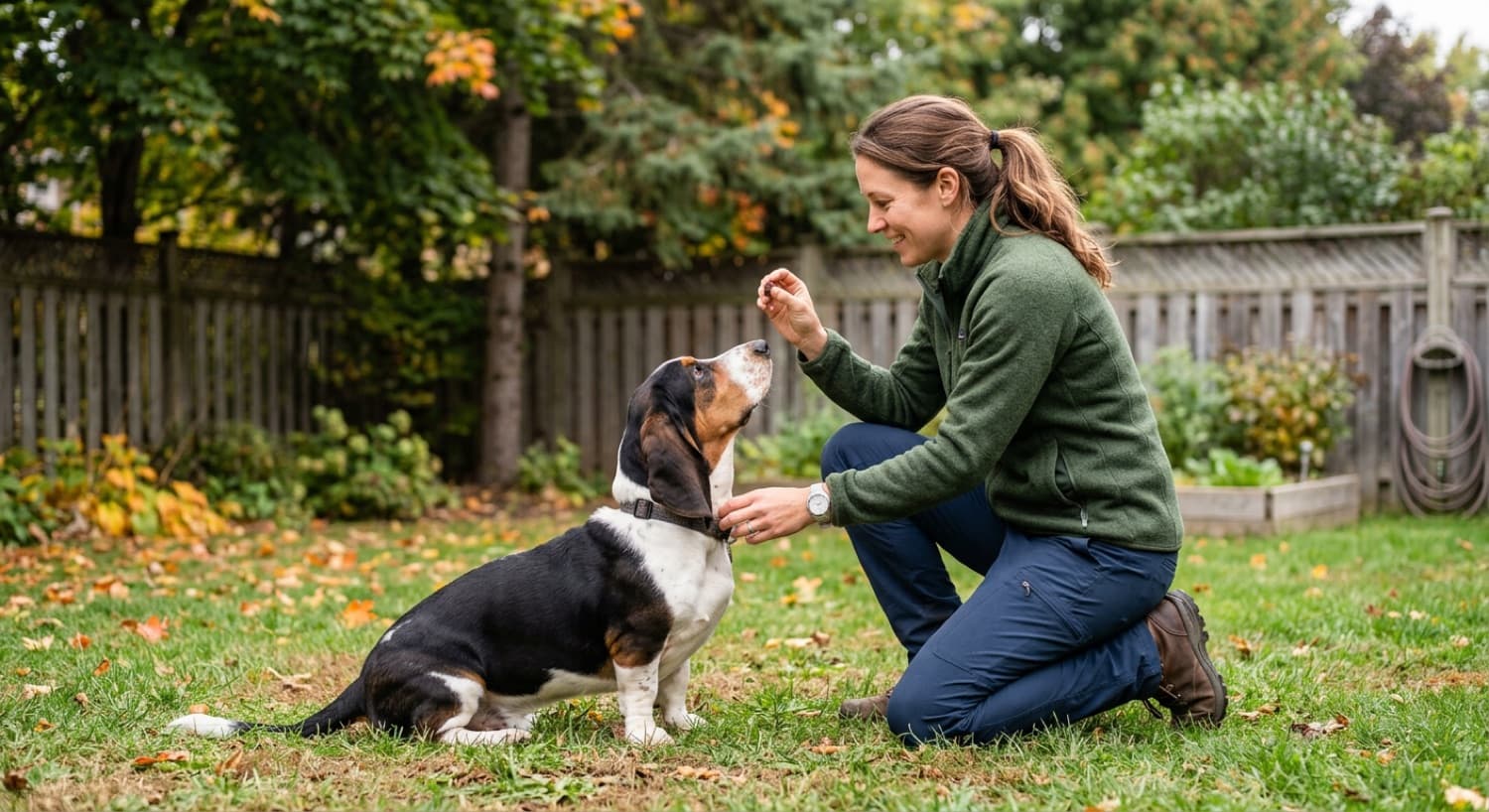
A scent hound first
The Canadian Kennel Club describes the Basset as mild in temperament and a dependable friend and companion, historically used in packs to follow hare and deer, and warns that like any good hound, it only takes a whiff of an interesting scent to get him off and running.
That is why Bassets earn a reputation for stubbornness. When the nose has information, the ears switch off. Training works when you accept that and make yourself the better deal.
Training that works
The American Veterinary Society of Animal Behavior recommends reward-based methods for all dogs. Bassets are sensitive and tend to shut down with harsh handling, so rewards are both kinder and more effective.
- Keep sessions to a few minutes, several times a day.
- Use food the dog genuinely values, and part of the daily ration to protect the waistline.
- Train in quiet places first; add smells and distractions slowly.
- Expect to repeat things more often than with eager-to-please breeds.
Browse adoptable Basset Hounds
Ask the rescue how the dog does on lead, with house-training and when left alone.
See Available Basset Hounds →Recall on a long line
Practise recall indoors, then in the yard, then on a 5 to 10 metre long line in quiet outdoor spaces. Reward every return generously, and call before your dog locks onto a scent, not after. Most Bassets will never be reliable off lead near fresh wildlife scent, so keep them leashed or in securely fenced areas.
House-training and baying
House-training can take patience. Keep a regular schedule, reward right after the dog goes outside, and clean accidents with an enzyme cleaner. Bassets also bay, especially when bored or left alone. Daily exercise, scent games and gradual alone-time training help more than trying to silence it.
Exercise and the long back
The CKC says a Basset needs a daily walk or equivalent exercise and has great endurance. Steady walks with plenty of sniffing suit the breed better than jumping or stairs. Keeping the dog lean is one of the most useful things you can do for its back and joints; see our Basset Hound health guide.
Frequently asked questions
Are Basset Hounds stubborn?
They are scent-driven rather than stubborn. Food rewards, short sessions and calling before the nose locks on make training far easier.
Can a Basset Hound be off lead?
Only in securely fenced areas. The CKC notes one interesting scent can send a Basset off, and recall rarely beats a fresh trail.
Are Basset Hounds hard to house-train?
It can take longer than with some breeds. A regular schedule, immediate rewards outside and enzyme cleaning help most.
Why does my Basset Hound howl?
Baying is part of the breed and often rises with boredom or loneliness. Exercise, scent games and gradual alone-time training reduce it.
How much exercise does a Basset need?
A daily walk or equivalent, with plenty of sniffing. Avoid lots of jumping and stairs to protect the back.
Are Basset Hounds good family dogs?
Many are. The CKC describes them as mild in temperament and dependable companions.
Sources
- Canadian Kennel Club: Basset Hound: mild temperament; scent sends it off; pack hunting history; daily walk
- American Veterinary Society of Animal Behavior: Position Statement on Humane Dog Training: reward-based training recommended
General information, not a substitute for a qualified trainer or behaviour professional. For reluctance to move or sudden behaviour change, start with your veterinarian.
Related guides
New dog? Start with these care guides
Everything a new adopter needs to set up a safe, happy home.