The short answer
Buy a vet-formulated ear cleaner matched to your dog, and only clean when the ear actually needs it. Choose a drying formula for swimmers and floppy-eared dogs, a gentle, alcohol-free one for sensitive ears, or a wax-dissolving one for waxy buildup. Never use hydrogen peroxide, alcohol or cotton swabs in the canal. And never clean a red or painful ear before seeing your vet, since the eardrum may be ruptured.
The two worth buying
Two products cover almost every dog, and they do different jobs rather than competing.
Virbac Epi‑Otic Advanced is the one most Canadian vet clinics hand you, and it is the pick if your dog has recurring ear trouble. It is a proper flush: you fill the canal, massage the base of the ear, and let the dog shake the debris out. It dries the canal rather than leaving it damp, which is the whole game for a floppy-eared dog or a swimmer. It costs more per bottle than the drugstore options and it lasts a long time. 4.6★ (8,802) · $44.99 on Amazon.ca
Earth Rated ear wipes are the pick for routine upkeep on a dog whose ears are basically healthy. Wipes are not a flush and do not reach into the canal, so they will not fix an infection or clear deep wax — but for wiping the visible folds after a swim or a muddy walk, they are quicker, less messy, and far more likely to actually get done weekly. Earth Rated is a Canadian company, which is a small thing but a real one. 4.6★ (67,566) · $16.99 on Amazon.ca
If you only buy one and your dog's ears give you trouble, buy the flush. If you only buy one and they do not, buy the wipes. Buying both is what most owners of a spaniel or a retriever end up doing.
Some links on this page are Amazon affiliate links — we may earn a small commission at no extra cost to you. It never changes what we recommend.
When to clean, and why less is more
The most surprising thing about dog ear cleaning is that a lot of dogs need very little of it. As the VCA puts it, some dogs with healthy, clean ears may never need them cleaned at all. A healthy dog ear is pink, odourless and not inflamed, and the right approach is to clean when you notice something, a bit of odour, discharge, visible debris, or more head-shaking than usual, rather than on a fixed weekly schedule.
This matters because over-cleaning is a genuine harm, not a safe default. Both the VCA and the American Kennel Club warn that cleaning too often irritates the ear canal and can lead to infection, so more is not better. The dogs that do benefit from more regular cleaning are the ones prone to recurrent infections and the ones that spend a lot of time in water, where trapped moisture invites trouble. Floppy and long-eared breeds like Basset Hounds and Cocker Spaniels, and allergy-prone dogs, are the most susceptible, so they are worth checking more often, but even then you are cleaning in response to what you see, not by the calendar.
How to clean a dog's ear correctly
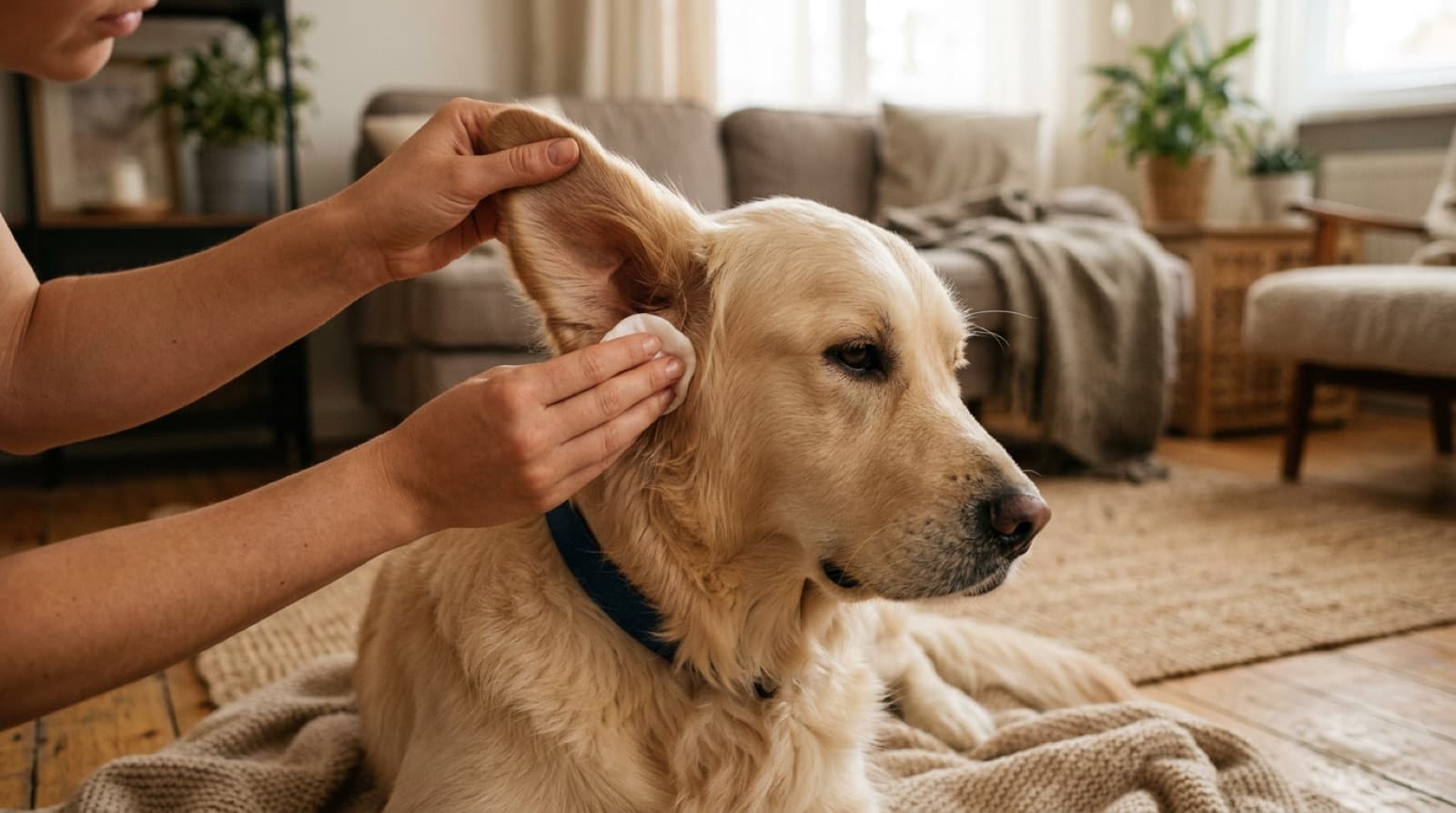
The technique vets recommend is simple and, done right, comfortable for the dog. Fill the ear canal with a vet-approved ear cleaner until you see liquid pooling at the opening, taking care not to let the bottle tip touch the ear, which contaminates it. Massage the base of the ear for about thirty seconds, and you will hear a squishing sound as the cleaner breaks up wax and debris. Let your dog shake their head, which carries the loosened debris up out of the canal, then wipe the visible outer ear with a cotton ball or gauze, going no deeper than one knuckle.
The hard nevers, per the AKC:
- Never push cotton swabs or any pointed tool into the canal. They pack debris deeper and can injure the ear.
- Never use hydrogen peroxide. It irritates the healthy skin cells inside the ear.
- Never use alcohol, which stings and irritates, especially on inflamed skin.
- Skip homemade vinegar solutions unless your vet specifically directs it.
When to see a vet instead of cleaning
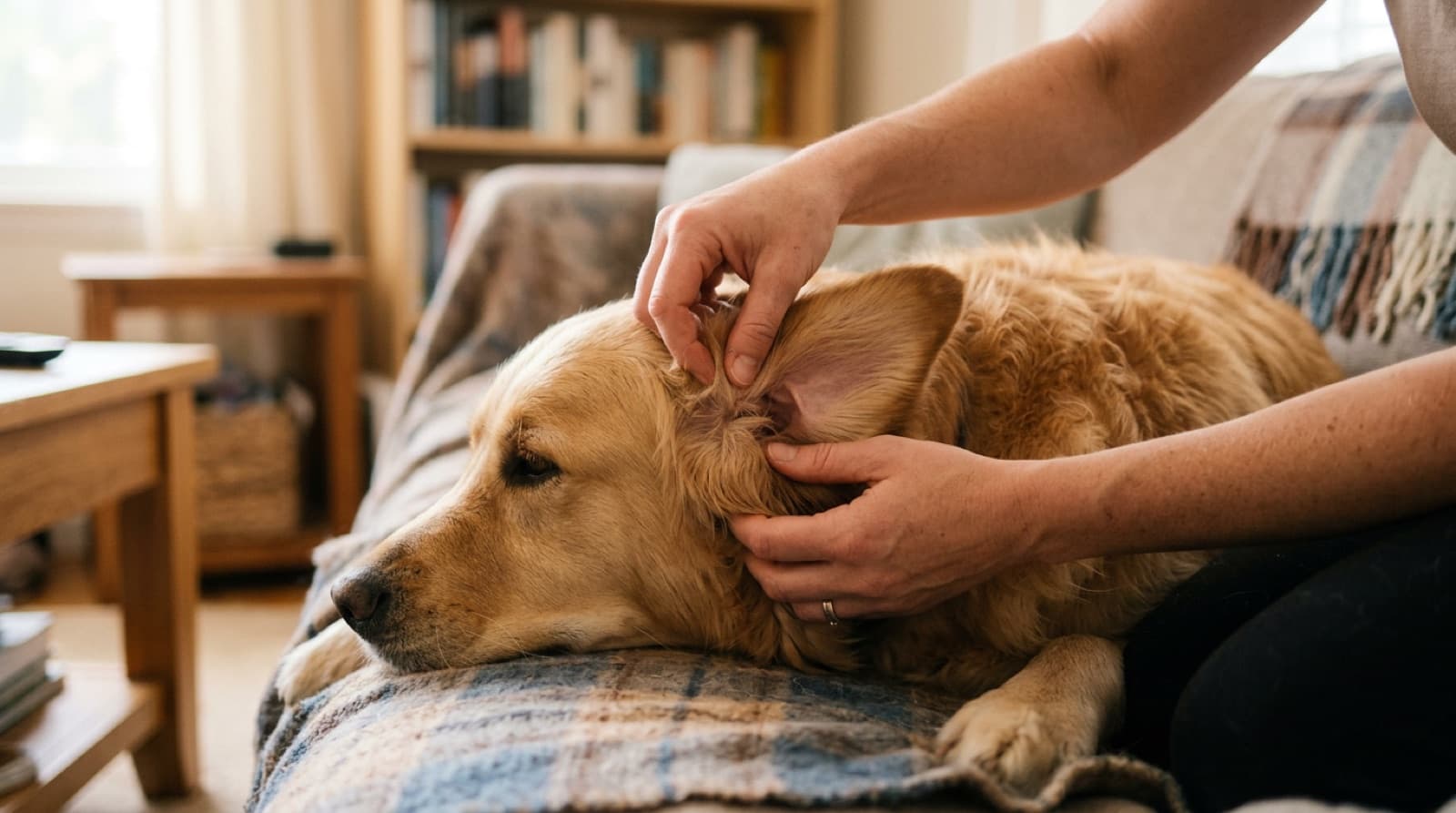
An ear cleaner is not a treatment for an infection, and cleaning the wrong ear can do real harm. If the ear is red, swollen or painful, do not clean it. See your vet first, because the eardrum may be ruptured and pouring cleaner into it can cause serious damage.
Ear infections are one of the most common reasons dogs see a vet, and they need a diagnosis, not a bottle off the shelf. See your vet, rather than reaching for a cleaner, if you notice any of these: persistent head-shaking or ear-scratching; redness, swelling or inflammation; a strong yeasty or foul odour; discharge that is black, yellow or waxy brown; pain or crying when the ear is touched; or any hearing change, head tilt or loss of balance, which can signal deeper middle or inner ear trouble.
The reason to take the painful-ear warning seriously is the eardrum. As the VCA notes, a red, inflamed or painful ear may have an active infection or a ruptured eardrum, and cleaning solution flushed into a ruptured ear can cause serious injury. First-time and recurrent infections both need a vet to find the underlying cause, whether that is allergies, mites, bacteria or yeast, which the Merck Veterinary Manual lists as the usual culprits. Cleaning is often part of the treatment your vet prescribes, but it follows the diagnosis, not the other way round.
Choosing the right ear cleaner
Once you know your dog genuinely needs routine cleaning, the choice comes down to matching the formula to the dog, and a vet-formulated cleaner is always the safest starting point. Here is how the main types line up:
- A vet-approved general cleaner is the sensible default for most dogs, balanced not to irritate the canal.
- A drying cleaner evaporates leftover moisture, which is exactly what swimmers and floppy-eared dogs need to head off the moisture that feeds infection.
- A wax-dissolving (ceruminolytic) cleaner breaks down and lifts stubborn waxy buildup.
- A gentle, alcohol-free cleaner suits sensitive ears and dogs who flinch, since it will not sting.
- Cleaners marketed for yeast or odour can help with buildup and smell, but remember they still are not a treatment for an active infection.
If your dog is a heavy-coat breed with its own grooming rhythm, ear checks fit naturally into the routine we lay out in the breed grooming guides, for example for the floppy-eared Cocker Spaniel or the water-loving Labrador.
Some links on this page are Amazon affiliate links — we may earn a small commission at no extra cost to you. It never changes what we recommend. This article is general information, not veterinary advice; see your vet for any ear that is red, painful, smelly, or not improving.
Sorting out the rest of grooming?
Ear care is one piece. Our companion guide covers choosing the right shampoo for your dog's coat and skin, and the breed grooming guides pull it all together.
Best Dog Shampoo →Frequently Asked Questions
How often should I clean my dog's ears?
Only when they need it, when you notice odour, discharge or debris, not on a fixed schedule. Many healthy dogs rarely need their ears cleaned at all, and over-cleaning is a real problem: it can irritate the ear canal and actually trigger an infection. So clean as needed, not preventively by the calendar, and let your dog's ears, which should be pink and odourless when healthy, tell you when.
What is the best dog ear cleaner?
The best one is a vet-formulated cleaner matched to your dog: a drying formula for swimmers and floppy-eared dogs that trap moisture, a gentle, alcohol-free formula for sensitive ears, and a wax-dissolving (ceruminolytic) formula for dogs with waxy buildup. There is no single best product for every dog, and if your dog gets recurrent infections, ask your vet which cleaner to use as part of a proper plan.
Can I use human ear cleaner, hydrogen peroxide or vinegar on my dog?
No. Skip human products, hydrogen peroxide and alcohol, all of which irritate the healthy skin inside the ear. Do not improvise a vinegar solution either, since acidic home remedies can sting and irritate inflamed or broken skin. Use a vet-approved dog ear cleaner, and ask your vet before trying anything else.
How do I clean my dog's ears at home?
Fill the ear canal with a vet-approved cleaner, massage the base of the ear for about thirty seconds until you hear a squishing sound, let your dog shake their head to bring the debris up, then wipe the outer ear with a cotton ball or gauze no deeper than one knuckle. Never push a cotton swab down into the canal, and do not let the bottle tip touch the ear.
Can I use Q-tips in my dog's ears?
No. Cotton swabs push debris deeper into the canal and can injure the ear, including the delicate inner structures. Use them only, if at all, on the visible outer ear, and clean the canal itself by flushing with cleaner and letting your dog shake it out.
Why do my dog's ears smell?
A mild odour can simply mean it is time for a clean, but a strong yeasty or foul smell usually signals an infection or an underlying issue like allergies or ear mites. That is a vet visit, not a cleaning job, because a cleaner does not treat an infection and cleaning a sore ear can make things worse.
Should I clean my dog's ears if they have an infection?
Not on your own. If the ear is red, swollen or painful, see your vet before you clean it at all, because the eardrum may be ruptured and pouring cleaner into it can cause serious harm. Cleaning is often part of a vet-directed treatment plan, but only with the right product and under their guidance.
Which dogs get ear infections most?
Floppy and long-eared breeds such as Basset Hounds and Cocker Spaniels, allergy-prone dogs, and dogs that swim a lot are at the highest risk, because their ears trap warmth and moisture. Those are exactly the dogs a drying ear cleaner is designed to help, and the ones worth watching most closely for early signs of trouble.
Best Dog Shampoo
Matching a shampoo to your dog's coat and skin, and how to bathe properly.
Dog Dental Care
Brushing, chews and cleanings, ranked by what the evidence actually supports.
How to Groom a Cocker Spaniel
A floppy-eared breed where ear care is a core part of the grooming routine.
How to Groom a Labrador
A water-loving breed prone to trapped moisture and ear trouble.
Explore Dog Breeds
Some breeds need far more ear care than others. See what each one needs.
Something else going on with your dog?
Pick what is on your mind and we will point you at the guide that answers it, and what to buy if anything.