The short answer
Feed a complete small-breed adult formula from a company that employs a qualified nutritionist. Royal Canin Chihuahua Adult, ACANA Small Breed and Hill's Science Diet Small Paws are all sold widely in Canada and all are reasonable choices. There is no nutrient standard specific to Chihuahuas, so a breed-labelled bag is a small-breed food with a shape tweak. The things that genuinely matter at this size are portion precision, small kibble for crowded teeth, and frequent meals for puppies. Some links here are Amazon affiliate links; we may earn a small commission at no extra cost to you, and it never changes what we recommend.
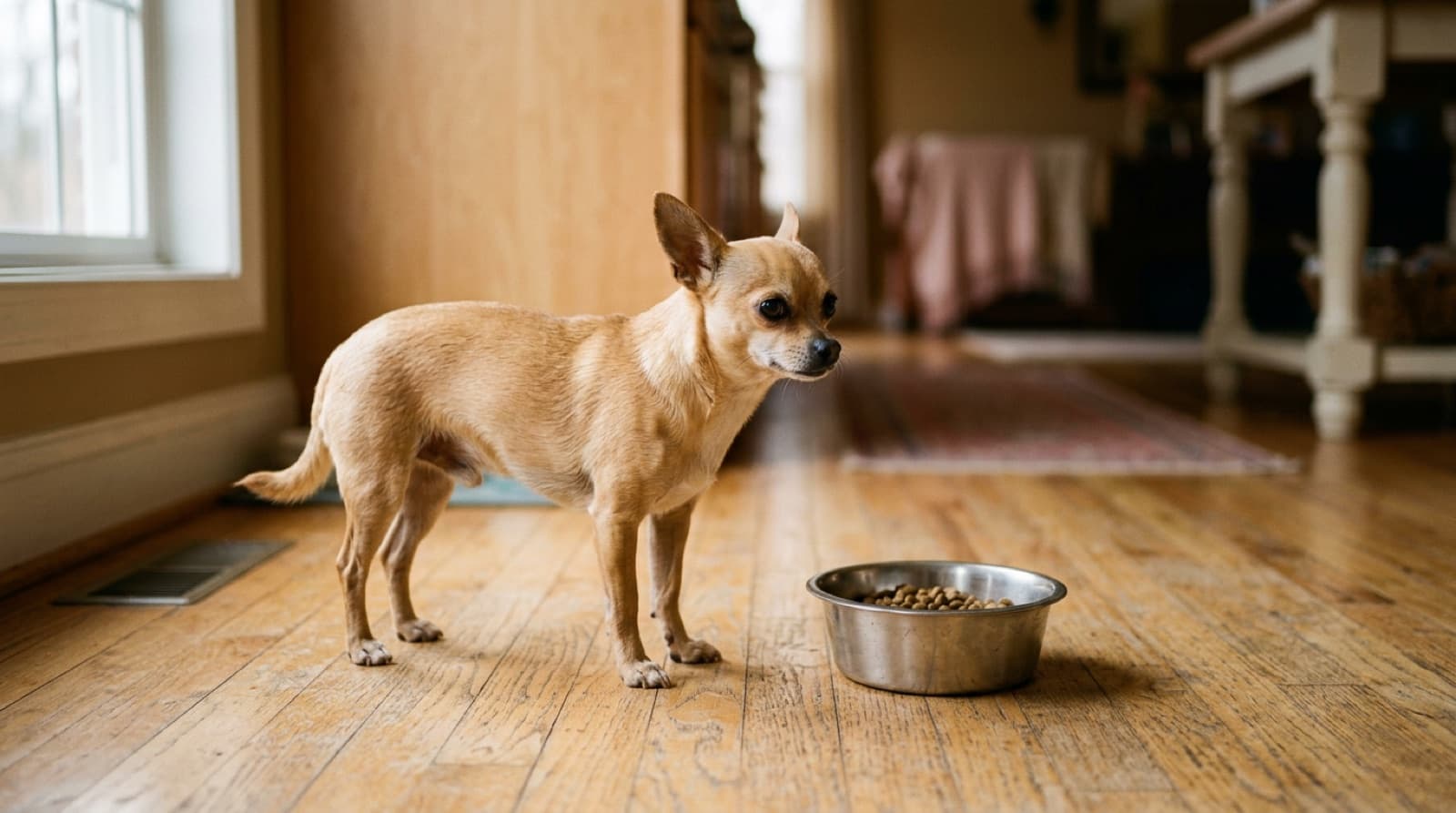
Search for Chihuahua food and you get a wall of lists ranking ten bags against each other. Almost none of them start with the question that actually decides the answer, which is whether “Chihuahua food” is a real category at all. It mostly is not, and understanding why saves you money and gets you to a better bowl. Here is the honest version, written for Canadian shelves and Canadian prices.
Breed-specific food is a size formula with a premium
Pet food nutrient standards are set by life stage. A food is formulated for growth, for adult maintenance, or for all life stages, and the one size-based carve-out in the standards is for large-breed growth, where controlling calcium genuinely changes how a puppy's joints develop. There is no Chihuahua profile. There is no toy-breed profile either. You can read the framework yourself at AAFCO, the body whose nutrient profiles Canadian and American manufacturers formulate against.
So what are you buying when you buy a Chihuahua bag? Small kibble, a fairly calorie-dense recipe, and sometimes a kibble shape designed for a short muzzle. Those are small-breed features. They are useful features. They are also exactly what you get in a bag labelled “small breed,” which is usually sitting on the same shelf.
The price gap is easy to check for yourself. Searching Canadian retailers in August 2026, Royal Canin Chihuahua Adult listed around $36.99 while ACANA Small Breed listed around $29.99 for a comparable bag. Prices move, so treat those as a snapshot rather than a rule. The pattern is the point: the breed label tends to carry a premium over the size label for a nutritionally similar food.
None of this makes breed food bad, and owners rate it for a real reason. Ask a room of Chihuahua owners what they feed and Royal Canin's Chihuahua formula comes up constantly. That is not marketing working on them. The kibble is a small pointed shape built for a short muzzle and a crowded mouth, and fussy little dogs tend to eat it when they turn their nose up at other food. Getting a picky Chihuahua to eat reliably is worth real money. Just be clear about what you are buying: palatability and shape, not a breed-specific nutritional requirement. That distinction is worth about seven dollars a bag, and if your dog eats it happily, keep buying it.
The better test than any ingredient list
Ingredient panels are the most argued-about and least useful part of a dog food bag. A more reliable filter, and the one most veterinary nutritionists point to, is who formulated the food. The World Small Animal Veterinary Association publishes a set of questions to put to a manufacturer, and the two that do most of the work are whether the company employs a qualified nutritionist and whether it runs feeding trials rather than only formulating on paper.
That test cuts through a lot of marketing at once. It does not care whether the first ingredient is deboned chicken or whether the recipe is grain-free. It asks whether anyone qualified is accountable for the food. Most of the large manufacturers on Canadian shelves pass it. A surprising number of boutique brands with better-looking labels do not.
Your rescue Chihuahua may not be a Chihuahua
This is where breed-based feeding gets shakier still, and it is the part no food brand will tell you. Breed on a shelter intake card is usually a visual guess made by a busy staff member, not a genetic result. It is a reasonable guess and it helps adopters search, but it is a guess.
Our own breed matching reflects that reality. When we surface Chihuahuas across Canadian rescues, the search deliberately includes Chihuahua mixes and the common crosses, because that is overwhelmingly what shows up: chiweenies, chorkies, chugs, cheagles, pomchis. A dog labelled Chihuahua at eight weeks can finish at 12 lbs with a terrier's build and a terrier's appetite.
The practical consequence is simple. If you feed to the label, you are feeding to a guess about a dog you can measure directly. Feed to the dog in front of you instead. If you want to know what your rescue actually is, a DNA test settles the question and often changes the adult-weight estimate a fair bit.
What genuinely changes for a very small dog
Having argued that breed matters less than the bags suggest, here is the honest other half. Size does change real things, and at Chihuahua size it changes four of them.
1. Calorie math is unforgiving
A 5 lb adult Chihuahua needs roughly a couple of hundred calories a day depending on age and activity. That is a very small budget. A single cheese cube or a handful of training treats can be a meaningful share of it, which is why toy breeds gain weight on portions their owners describe honestly as tiny. Obesity is the most common preventable health problem in small dogs, and it worsens nearly everything else, including joints and heart.
The pattern this produces is extremely common and it catches careful owners out. Someone feeds a quarter cup twice a day, describes that honestly as a small amount, and ends up with a 10 lb Chihuahua who should be nearer 5 or 6. Nothing careless happened. The portion simply was never measured against the dog's actual energy needs, and at this size the gap compounds fast. Our dog feeding calculator works the number out from body weight and life stage, which is a better starting point than the range printed on a bag.
2. A measuring cup is not accurate enough
For a Labrador, scooping is fine. For a 5 lb dog, the difference between a lean body condition and an overweight one can be a few grams a day, and scoop-to-scoop variation is larger than that. A digital kitchen scale is the single highest-value thing you can buy for a Chihuahua's diet, and it costs less than one premium bag.
3. Crowded teeth make kibble size mechanical, not cosmetic
A Chihuahua carries the same 42 adult teeth as a much larger dog, packed into a jaw a fraction of the size. Crowding traps plaque, and periodontal disease is the most common health problem in toy breeds. Small kibble is genuinely easier to chew properly, and chewing does some mechanical cleaning. It is not a substitute for brushing. The American Kennel Club and most Canadian vets put daily or near-daily brushing well ahead of any dental diet or chew.
4. Puppies need frequent meals, and low blood sugar is an emergency
Toy-breed puppies hold very little glycogen reserve, so a long gap between meals can drop them into hypoglycemia. Signs include wobbliness, glazed or unfocused eyes, weakness, and in bad cases a seizure. Three to four small meals a day is the usual schedule, and very young or very small puppies may need more. If you see those signs, rub a little corn syrup or honey on the gums and get to a vet immediately. Do not pour liquid down the throat of a dog that is not fully alert, and do not wait to see whether it passes. VCA Hospitals has owner-facing material on recognising it.
This guide is general information, not veterinary advice. Weight loss, sudden appetite change, repeated vomiting, or a puppy showing any hypoglycemia sign needs a vet, not a new bag of food. Your vet can also give you a body condition score and a calorie target specific to your dog, which is more useful than any number on a label.
When your Chihuahua will not eat
Ask Chihuahua owners what they actually struggle with and this comes up more than any brand question. The dog ate happily for months, then started leaving the kibble, or will only eat if there is something interesting on top. It is one of the defining quirks of the breed, and it is worth separating into two very different situations.
The first is ordinary fussiness in a dog who is otherwise bright, active and holding weight. Small dogs are easy to accidentally train into it: the bowl gets refused, a topper appears, and the dog learns that waiting produces something better. The usual fixes are dull but they work. Put the food down for 15 or 20 minutes, then lift it and offer nothing until the next meal. Cut treats right back, because at 200-odd calories a day a few of those genuinely blunt an appetite. Warming wet food slightly makes it smell stronger, which matters more to a dog than taste does. If you use a topper, keep it small and consistent rather than escalating it, and count it toward the daily total. A freeze-dried meal mixer or a spoon of wet food over kibble is the standard approach, and it keeps the mechanical benefit of chewing kibble.
The second situation is not fussiness, and in a toy breed it moves faster than people expect. A dog who genuinely stops eating, rather than holding out for something better, needs a vet. Small dogs have very little reserve, and a true loss of appetite can tip a Chihuahua toward low blood sugar within a day. Dental pain is another common and easily missed cause, since a mouth that hurts makes hard kibble the last thing a dog wants. Treat sudden appetite loss, weight loss, lethargy, drooling or a dog who approaches the bowl and then backs away as medical until a vet says otherwise.
You do not have to buy the expensive bag
Cost is the other question owners actually ask, and most lists ignore it because cheap food pays no commission. Here is the honest position: price and quality are correlated, but loosely, and the correlation is weaker than the marketing implies. The nutritionist-and-feeding-trials test from earlier is the one that matters, and several mainstream mid-priced brands pass it while a number of expensive boutique brands with much better-looking labels do not.
A Chihuahua is also the cheapest dog in Canada to feed. At a couple of hundred calories a day, even a premium small-breed bag lasts months, so the gap between a value brand and a premium one is a few dollars a month rather than the difference it would be for a Great Dane. That cuts both ways: it is a weak argument for stretching your budget, and an equally weak reason to feel guilty about not doing so.
Practical version. Diamond Naturals Small Breed is the value option owners recommend most often and is easy to find here. Costco's Kirkland Signature small-breed food has a long-standing following among Canadian owners for the same reason, though it is a warehouse product rather than something you can order online. If money is tight, a complete mainstream small-breed food fed in the right portion beats a premium bag fed by guesswork every time. Portion control is free and it matters more than the brand.
The Canadian problem with most “best food” lists
Search the same question from a Canadian address and several of the results ranking on google.ca lead with fresh-food delivery brands that do not ship to Canada at all. Some of the highest-ranking Chihuahua food lists are written for a US audience and never say so, and at least one prominent US pet-food brand ranks on Canadian results with a page written entirely for American shoppers.
That is worth knowing before you spend an evening researching a subscription you cannot order. Canadian fresh-food delivery companies do exist and do ship domestically, and Canadian retailers stock the mainstream small-breed formulas everywhere. The filter to apply to any list you read is simple: can you actually buy this, in your city, this week, at that price? A recommendation that fails that test is not a recommendation.
Feeding a rescue Chihuahua in the first month
A dog coming out of rescue arrives eating whatever the shelter had, which is often donated and often changed week to week. Do not switch it on day one. A stressed dog in a new house with a new diet is the classic recipe for a week of loose stool, and new adopters reliably read that as the food being wrong when it is really the speed of the change.
- Ask what they were eating and buy a small bag of the same thing, even if you plan to change it.
- Wait for the dog to settle before switching. A week or two of stability is more valuable than an upgrade.
- Transition over seven to ten days, moving in roughly quarter steps from old to new.
- Change one thing at a time. New food and new treats and a new chew at once tells you nothing when something disagrees.
- Weigh weekly at first. Many rescue dogs arrive slightly underweight, and at this size a half pound is a big proportional change.
If loose stool lasts beyond about 48 hours, or you see blood, repeated vomiting or lethargy, that is a vet call rather than a food adjustment. Our sensitive stomach guide covers the warning signs in more detail, and the Chihuahua feeding and portions guide goes deeper on daily amounts by age.
Browse adoptable Chihuahuas across Canada
Most Chihuahuas in Canadian rescue are mixes, which is exactly why feeding to body condition beats feeding to a breed label. See who is available near you right now.
See Available Chihuahuas →Frequently asked questions
What food is best for Chihuahuas?
A complete small-breed adult formula from a manufacturer that employs a qualified nutritionist, fed to your dog's actual body condition. There is no nutritional standard specific to Chihuahuas, so a bag labelled for the breed is a small-breed food with breed marketing on the front. Widely available options in Canada include Royal Canin Chihuahua Adult, ACANA Small Breed, and Hill's Science Diet Small Paws. All three are reasonable. The one that matters most is the one your dog does well on and you can buy consistently in your city.
What is the healthiest dry dog food for a Chihuahua?
The healthiest option is a small-kibble adult formula that meets AAFCO nutrient profiles for adult maintenance and comes from a company that does its own feeding trials and employs a board-certified veterinary nutritionist. That test matters more than any ingredient on the label. Small kibble is the one genuinely breed-relevant feature, because a Chihuahua has the standard 42 teeth crowded into a very small jaw and dental disease is the most common health problem in toy breeds. Ask your vet to check body condition at every visit rather than chasing the healthiest bag.
What foods should I avoid giving my Chihuahua?
Avoid the standard toxic list for all dogs: chocolate, grapes and raisins, onions and garlic, macadamia nuts, alcohol, and anything containing xylitol, which is in many sugar-free peanut butters and gums. For a Chihuahua specifically, the bigger everyday risk is portion size rather than any single food. A 5 lb dog needs only a couple of hundred calories a day, so one cheese cube or a few training treats can be a large share of the daily total. Hard chews like antlers, bones and dense nylon are also worth skipping, because they crack small teeth.
What is the best wet food to feed my Chihuahua?
Any complete and balanced small-breed wet food from a reputable manufacturer works, and wet food has two real advantages for a small dog: it adds moisture and it is easier to eat for a dog with missing or painful teeth. The trade-off is that wet food does less to reduce plaque than kibble and costs more per calorie. Many owners land on a mix, using wet food as a topper on small-breed kibble to make it appealing without giving up the mechanical benefit. Watch the total calories when you combine the two, because that is where small dogs quietly gain weight.
Is breed-specific dog food worth it for a Chihuahua?
Usually not, at least not for the reason the bag implies. Nutrient standards are set by life stage and, for growth, by adult size. There is no Chihuahua-specific nutrient profile, so a breed formula is a small-breed formula with a shape tweak and a marketing label. Breed-specific food is not a bad food and some dogs love the kibble shape, but you are generally paying a premium for a size formula. If the price gap does not bother you and your dog eats it well, it is a perfectly fine choice.
How often should a Chihuahua puppy eat?
Chihuahua puppies usually need three to four small meals a day, and very young or very small puppies sometimes need more. This is not fussiness. Toy-breed puppies carry very little glycogen reserve and can drop into hypoglycemia, which shows up as wobbliness, glazed eyes, weakness or a seizure. If that happens, rub a little corn syrup or honey on the gums and get to a vet immediately rather than waiting to see if it passes. Ask your vet when to move to twice-daily feeding, which is usually somewhere around six months.
How much should I feed a Chihuahua?
Feed to body condition, not to the cup on the bag, and weigh the food rather than scooping it. A small adult Chihuahua needs only a couple of hundred calories a day, which is why the common pattern of a quarter cup twice daily can quietly produce a 10 lb dog who should be nearer 5 or 6. At this size the margin for error is a matter of grams, and a measuring cup is not accurate enough to catch it. You should be able to feel ribs easily without pressing hard and see a waist from above. Work the starting number out from body weight and life stage rather than the bag range, then adjust every few weeks.
Why has my Chihuahua stopped eating dry food?
Usually one of two things, and they need opposite responses. Ordinary fussiness looks like a bright, active dog at a steady weight who refuses kibble but will happily eat something better, which is a habit that builds when a refused bowl reliably produces a topper. Put food down for 15 to 20 minutes, lift it, offer nothing until the next meal, and cut treats back hard, because a few treats are a large share of a Chihuahua's daily calories. The other situation is a dog who genuinely stops eating rather than holding out, and that needs a vet promptly. Small dogs have little reserve and can drift toward low blood sugar within a day, and dental pain is a common hidden cause because a sore mouth makes hard kibble unappealing.
What is a good affordable dog food for a Chihuahua?
A complete mainstream small-breed formula from a manufacturer that employs a qualified nutritionist, which several mid-priced brands do while some expensive boutique brands do not. Diamond Naturals Small Breed is the value option Canadian owners recommend most often, and Costco's Kirkland Signature small-breed food has a similar following. The good news is that a Chihuahua is the cheapest dog in Canada to feed, since a couple of hundred calories a day makes even a premium bag last months. The gap between value and premium is a few dollars a month, so this is a weak reason to stretch your budget and an equally weak reason to feel bad about not doing so.
How many Chihuahuas are available for adoption in Canada?
As of September 2026, 40 Chihuahuas are available for adoption in Canada across 22 rescues on LocalPetFinder. Listings update regularly as dogs are adopted and new ones arrive — see the current Chihuahuas on our Chihuahua adoption page and apply directly through the rescue.
Availability figures are pulled live from LocalPetFinder listings and reflect September 2026.
Related guides
Live listings from rescues across the country.
Daily amounts by age, and how to weigh instead of scoop.
Why shelter breed labels are guesses, and how to find out.
Growth formulas, and the large-breed calcium exception.
Something else going on with your dog?
Pick what is on your mind and we will point you at the guide that answers it, and what to buy if anything.