The short answer
Expect a playful, loyal, energetic dog that loves its family and is alert with strangers. Give daily outdoor exercise and brain work, teach four-paws-on-the-floor greetings and gentle mouths with rewards, and supervise boisterous play with small children. Boxers stay puppyish for a long time, so patience and consistency pay off.
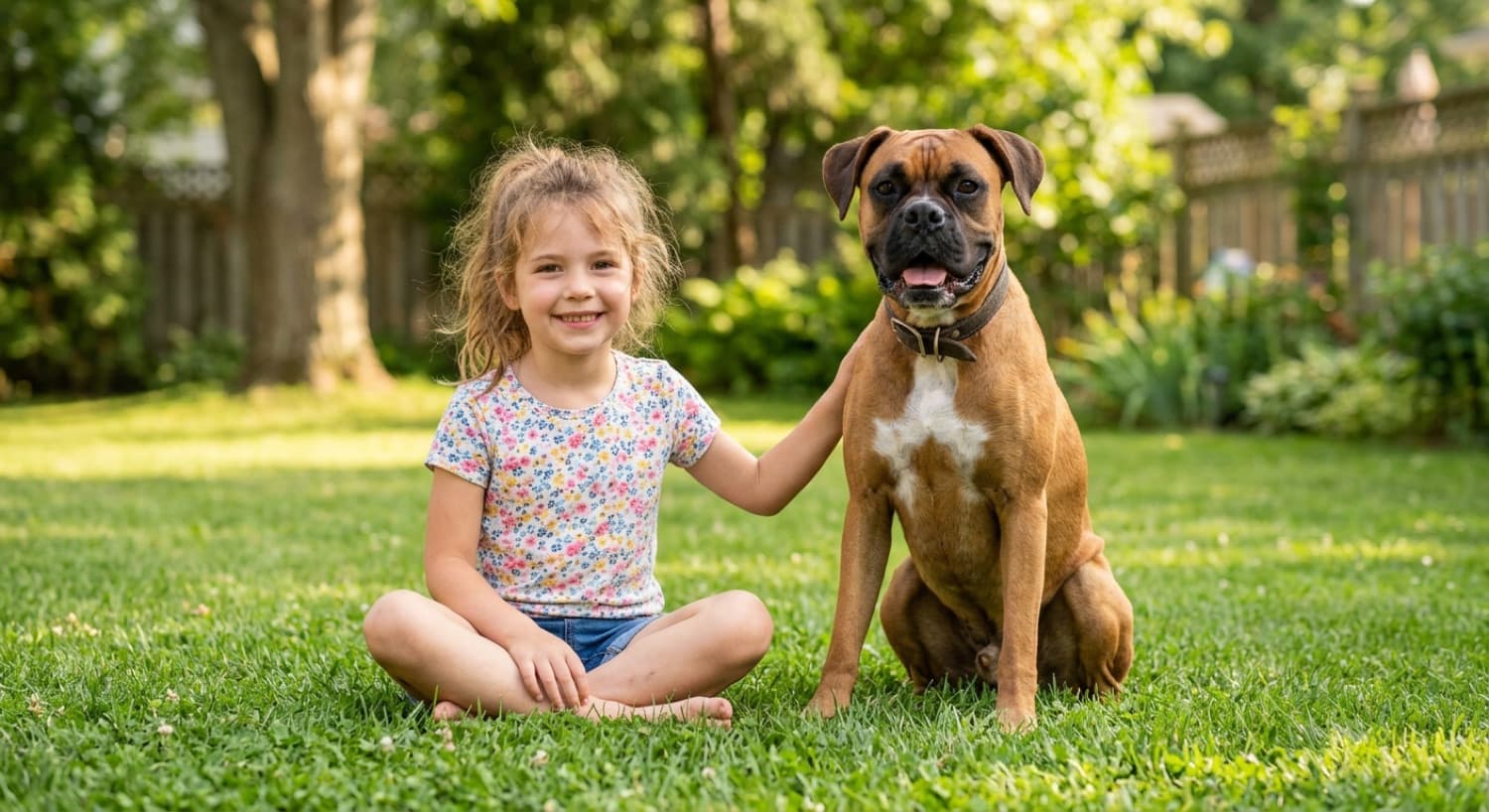
The Boxer temperament
The Canadian Kennel Club describes the ideal Boxer as alert and fearless, willing to make friends but not effusive, a spirited pet often with a sense of humour, playful with family and patient with children, and intelligent and loyal. It was developed as a medium-sized security dog, and many Boxers remain watchful with strangers.
Boxers and children
Many Boxers adore children. The risk is size and bounce rather than temper: a happy Boxer can knock over a toddler. Supervise play, teach children not to run and squeal around an excited dog, give the dog a quiet place to retreat, and practise calm greetings.
Browse adoptable Boxers
Ask the rescue how the dog does with children, visitors and other dogs, and how much it jumps.
See Available Boxers →Jumping and mouthiness
Boxers greet with their whole body. Reward four paws on the floor, turn away from jumping, and ask visitors to greet only a calm dog. Mouthy play is common in young Boxers: redirect onto a toy, and end play calmly if teeth meet skin.
The American Veterinary Society of Animal Behavior recommends reward-based training for all dogs and advises against physical corrections and aversive tools, which are linked to fear and aggression.
Exercise and a busy mind
The CKC says regular outdoor exercise should be part of a Boxer’s daily routine. Walks, play in a secure yard, fetch and tug with rules, and short training sessions all help. Boxers are short-nosed, so exercise in the cooler parts of hot days and watch for heavy panting.
Strangers and other dogs
Keep socialising throughout life: calm meetings with people and well-matched dogs, rewards for relaxed behaviour, and no forced greetings. Some Boxers play rough with other dogs, so choose play partners who enjoy that style.
Frequently asked questions
Are Boxers good with kids?
Many are. The Canadian Kennel Club describes them as patient with children. Supervise play because of their size and bounce.
How do I stop my Boxer jumping up?
Reward four paws on the floor, turn away from jumping, and only greet a calm dog. Consistency from everyone matters.
Are Boxers aggressive?
No, but they were bred as security dogs and are often alert with strangers. Ongoing socialisation and reward-based training keep them confident.
How much exercise does a Boxer need?
Regular daily outdoor exercise plus play and training. Avoid hard exercise in heat.
When do Boxers calm down?
Many stay puppyish for several years. Exercise, training and settle practice help a lot in the meantime.
Are Boxers easy to train?
They are intelligent and loyal. Short, fun, reward-based sessions work best with a bouncy Boxer.
Sources
- Canadian Kennel Club: Boxer: alert, fearless, playful, patient with children; security dog origin; daily outdoor exercise
- American Veterinary Society of Animal Behavior: Position Statement on Humane Dog Training: reward-based training recommended
General information, not a substitute for a qualified trainer or behaviour professional. For growling, snapping or sudden behaviour change, start with your veterinarian.
Related guides
New dog? Start with these care guides
Everything a new adopter needs to set up a safe, happy home.