The short answer
Keep a Cane Corso lean, especially while it grows, to protect hips and elbows. Learn the signs of bloat, which is an emergency in deep-chested dogs, and ask your vet about a preventive gastropexy. Have the heart listened to carefully and follow up any murmur. Get an older Corso’s persistent limp X-rayed. Price pet insurance in your first week.
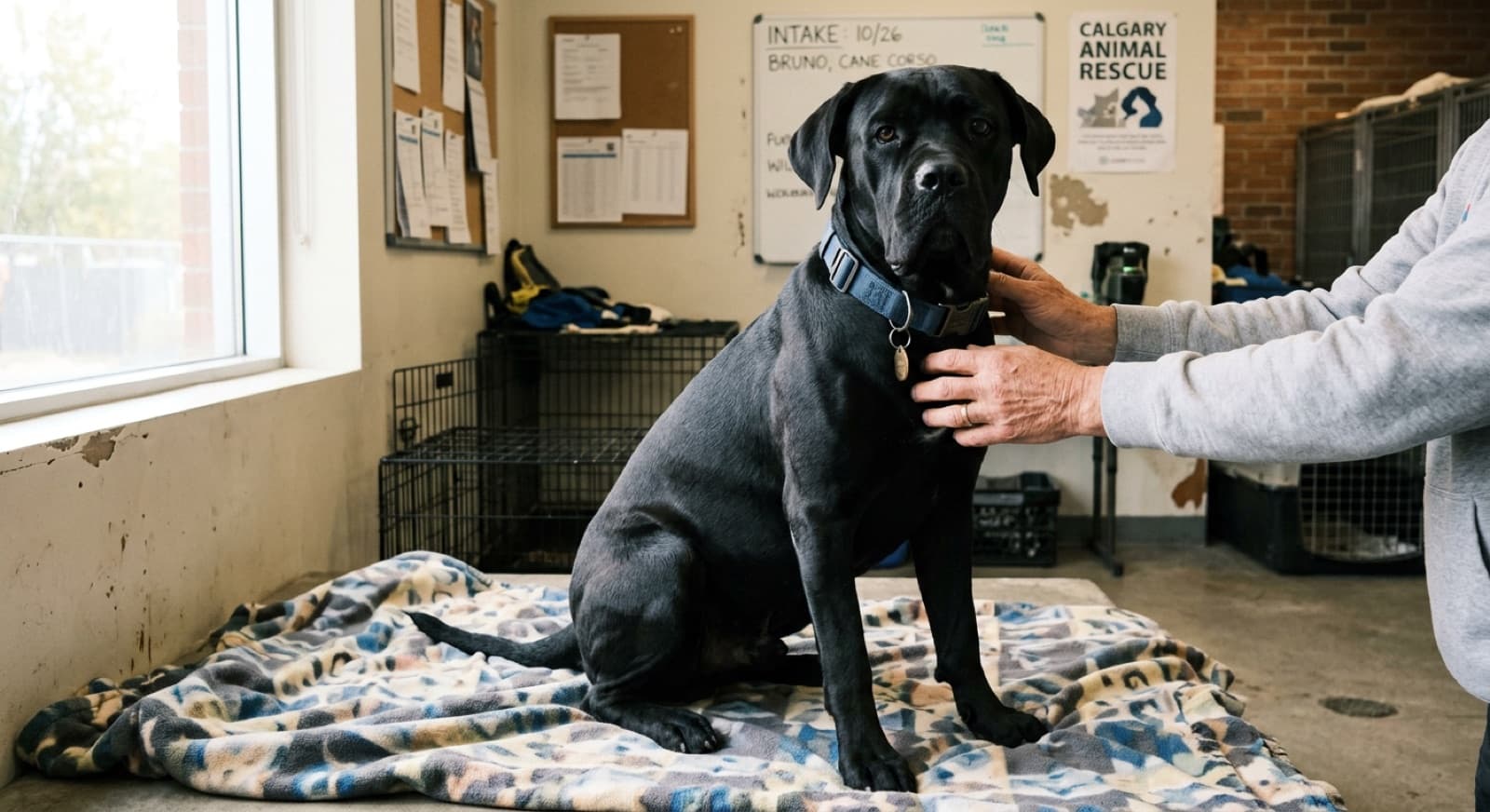
What the breed club screens for
The Cane Corso Association of America asks breeding dogs to be screened for hip and elbow dysplasia, the heart, slipping kneecaps (patellar luxation), and two DNA tests: neuronal ceroid lipofuscinosis (a neurological disease) and dental-skeletal-retinal anomaly. That list is a good guide to what matters in the breed.
A rescue Corso almost never comes with those results, so your vet becomes the screen. You do not need every test, but knowing the list helps you ask the right questions.
Hips, elbows and growth
Large, fast-growing breeds are prone to hip and elbow dysplasia, where the joints form loosely and wear into arthritis. VCA Animal Hospitals stresses lean growth in puppies, a large-breed growth diet, weight loss for heavy dogs and moderate, low-impact exercise. Signs include stiffness after rest, a bunny-hopping gait and reluctance to jump into the car. Torn knee ligaments are also common in heavy, muscular dogs.
Browse adoptable Cane Corsos
Foster notes often mention joints, weight or eyes, which is exactly what to raise at your first vet visit.
See Available Cane Corsos →The heart
Cardiac screening is on the breed club’s list, and large breeds are prone to both inherited heart defects and heart-muscle disease. Ask your vet for a careful listen at every checkup. A murmur, an irregular rhythm, fainting, coughing or tiring easily deserves follow-up, usually an echocardiogram with a veterinary cardiologist.
Bloat and bone cancer
Gastric dilatation-volvulus, where the stomach fills with gas and twists, is a risk in large, deep-chested dogs. Signs are unproductive retching, a swollen belly, drooling and restlessness. VCA is clear it needs emergency care within minutes to hours, and a preventive gastropexy, often done at spay or neuter, prevents twisting in most cases.
Osteosarcoma, an aggressive bone cancer, is far more common in large and giant breeds, according to VCA. It usually starts in a leg bone, and most dogs limp. A limp in a middle-aged or older Corso that does not settle with rest deserves X-rays rather than waiting.
Eyelids and skin
Heavy-headed breeds with loose facial skin often have eyelids that roll in (entropion) or droop out (ectropion). VCA names several mastiff-type breeds for entropion, which is corrected surgically. Squinting, tearing or a red eye is worth a vet visit before the cornea is damaged. Patchy hair loss in a young dog should also be checked, since mites and allergies look alike.
The first vet visit after adoption
Ask for a gait and joint assessment, a careful heart listen, an eye and eyelid check, a body condition score with a written target weight and baseline bloodwork. Raise gastropexy if the dog is not yet spayed or neutered. Bring the rescue’s records.
Price pet insurance the same week. Every Canadian provider excludes conditions documented before enrolment, and orthopaedic surgery, bloat surgery and cancer care are large costs in a dog this size.
Frequently asked questions
What are the most common Cane Corso health issues?
Hip and elbow dysplasia, torn knee ligaments, heart disease, bloat, bone cancer and eyelid problems. The breed club also screens for slipping kneecaps and two inherited conditions with DNA tests.
What health tests does the Cane Corso breed club recommend?
Hips, elbows, a cardiac exam, kneecaps, and DNA tests for neuronal ceroid lipofuscinosis and dental-skeletal-retinal anomaly.
Are Cane Corsos prone to bloat?
As large, deep-chested dogs they are at risk. Learn the signs (retching without producing anything, a swollen belly, restlessness) and treat them as an emergency. Ask your vet about a preventive gastropexy.
How do I protect a young Cane Corso’s joints?
Feed a large-breed puppy diet, keep the dog lean, avoid forced running and repetitive jumping while it grows, and ask your vet to check the hips and elbows.
How long do Cane Corsos live?
Like most large breeds, they live shorter lives than small dogs. Lean weight, early attention to limps and murmurs, and regular checkups give the best odds.
Should I get pet insurance for a rescue Cane Corso?
It is worth pricing in your first week. Canadian pet insurance excludes conditions documented before enrolment, and joint, bloat and cancer care are large costs in this breed.
Sources
- Cane Corso Association of America: CHIC requirements: hips, elbows, cardiac, patella, NCL and DSRA DNA tests
- VCA Animal Hospitals: Hip Dysplasia in Dogs: large breeds; lean growth, diet and exercise advice
- VCA Animal Hospitals: Gastric Dilatation and Volvulus: deep-chested breeds; urgency; preventive gastropexy
- VCA Animal Hospitals: Osteosarcoma in Dogs: large and giant breeds at higher risk; leg bones; limping
- VCA Animal Hospitals: Entropion in Dogs: mastiff-type breeds named; surgical correction
General information, not veterinary advice. Diagnosis and treatment decisions belong with your veterinarian.
Related guides
New dog? Start with these care guides
Everything a new adopter needs to set up a safe, happy home.