The short answer
Treat a Chihuahua like a real dog: teach manners with rewards, let it walk on its own feet, and do not let strangers grab or loom over it. Snapping and barking at people are usually fear, so keep enough distance that your dog stays calm and pair new people with treats. Expect house-training to take patience. In an apartment, work on quiet cues and short alone-time from day one.
The real Chihuahua temperament
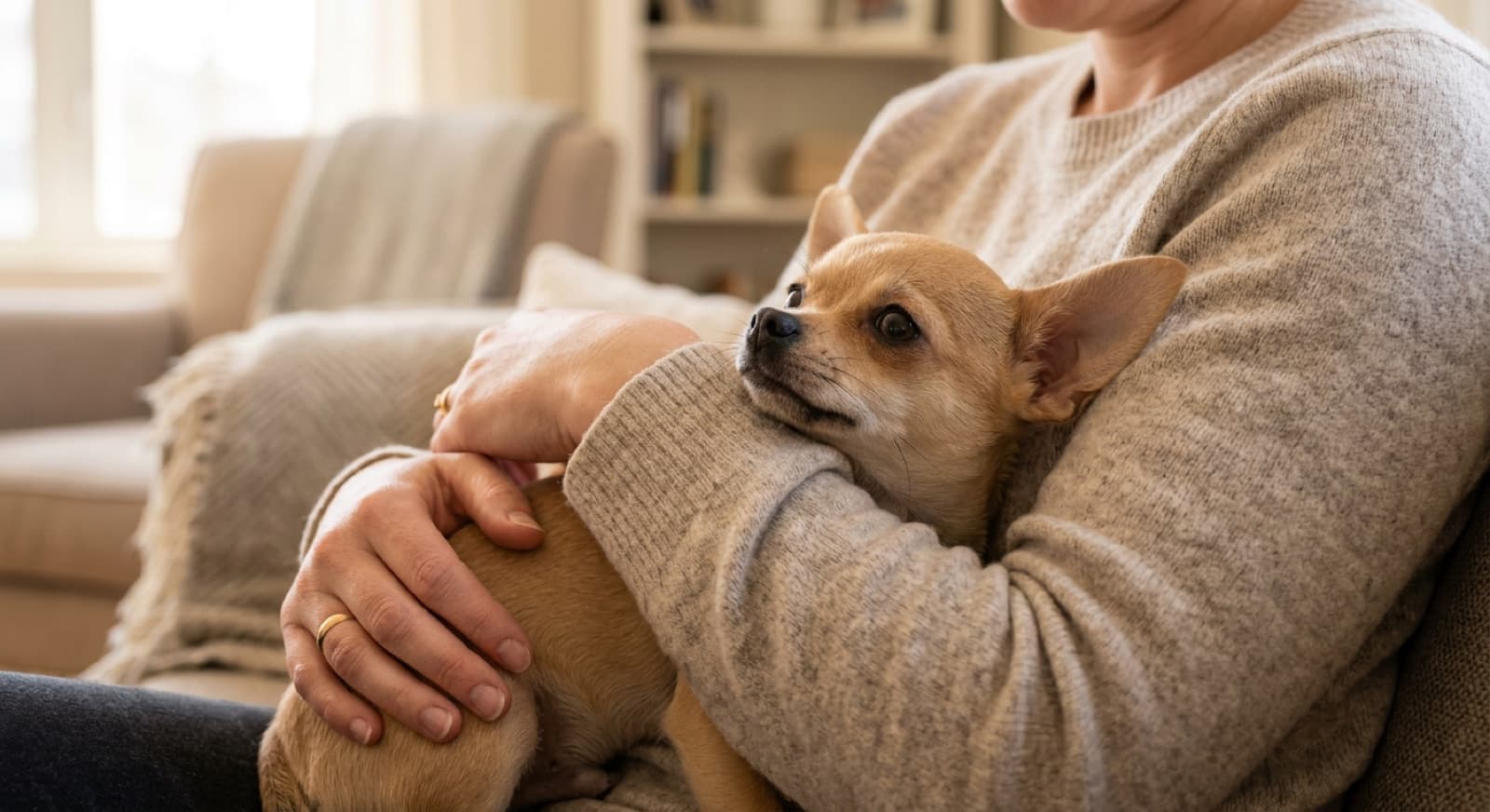
The American Kennel Club sums the breed up as a tiny dog with a huge personality. Most Chihuahuas bond closely with one or two people, love warmth and laps, and are alert to everything around them. Many are naturally reserved with strangers.
The trouble starts when that wariness meets how people handle small dogs: scooped up without warning, passed between visitors, carried past everything that worries them. A dog that can never move away learns that warning growls and snaps are the only way to be heard. The so-called small-dog syndrome is usually a dog that has never been given a choice.
Snapping and barking at people: it is usually fear
Barking, lunging or snapping at visitors, children or other dogs is most often fear. The response that works is the same one used for fearful dogs of any size: keep the trigger far enough away that your dog stays calm, then pair the trigger with something good, such as a treat each time a person appears. Over many short sessions, you shrink the distance.
Punishment makes fear worse. The American Veterinary Society of Animal Behavior recommends reward-based methods for all training and warns that aversive methods are linked to more fear and aggression. If your Chihuahua snaps when touched in a particular place, or the behaviour starts suddenly, see your vet first, because pain from teeth, knees or the back can look like bad temper.
- Let your dog approach people, not the other way round. Ask visitors to ignore the dog and toss treats.
- Put your dog down on its own feet in safe places so it can choose to move away.
- Use a harness rather than a collar, which also protects a small windpipe.
- If a dog has bitten or the fear is intense, get help from a qualified reward-based trainer or a veterinary behaviourist.
Browse adoptable Chihuahuas
Ask the rescue how the dog does with strangers, children and handling, and what the foster has found helps it settle.
See Available Chihuahuas →Socialisation and puppies
The AVSAB puppy socialisation statement identifies the first three months of life as the most important window for safe, positive exposure to new people, animals and places, and supports well-run puppy classes from as early as 7 to 8 weeks with first vaccines. For a tiny breed, that means gentle, controlled meetings, not crowds. Adult rescue Chihuahuas can still learn; it just takes longer and more distance.
House-training
Small bladders, cold-weather reluctance and accidents that are easy to miss make house-training slower in many toy breeds. Take your dog out on a schedule (after waking, eating and play), reward right after it goes, and clean accidents with an enzyme cleaner so the smell does not draw it back. An indoor pad area is a reasonable backup in deep cold, but treat it as one consistent spot.
Apartment life
Chihuahuas suit apartments well, with two things to work on early. First, barking at hallway noise: teach a quiet cue by rewarding a pause in barking, and block the view or sound of the door when you are out. Second, being left alone: build up from a few minutes, give a long-lasting chew or puzzle feeder, and keep departures low-key.
They feel the cold quickly, so a fitted coat for winter walks is practical, and indoor games (short training sessions, scent games, food puzzles) cover exercise on the worst days.
Frequently asked questions
Are Chihuahuas aggressive?
Most are not aggressive so much as fearful. Snapping and barking at people usually come from feeling cornered. Giving the dog space, pairing new people with treats and avoiding punishment fix most cases.
Why is my Chihuahua so attached to one person?
Chihuahuas tend to bond closely with one or two people. Encourage other household members to feed, walk and play with the dog so it is comfortable with more than one person.
How do I stop my Chihuahua barking at visitors?
Keep the dog at a distance where it stays calm, have visitors ignore it and toss treats, and reward quiet. Over many short sessions, the dog learns visitors predict good things.
Are Chihuahuas hard to house-train?
They often take longer than larger dogs. A regular schedule, immediate rewards outside and enzyme cleaning for accidents make the biggest difference.
Is a Chihuahua good for an apartment?
Yes, as long as you teach a quiet cue for hallway noise and build up alone-time gradually from day one.
Should I use a correction collar on a Chihuahua?
No. Veterinary behaviour experts recommend reward-based training for all dogs, and correction tools can increase fear. A harness is also safer for a small windpipe.
Sources
- American Kennel Club: Chihuahua: breed character
- American Veterinary Society of Animal Behavior: Position Statement on Humane Dog Training: reward-based training recommended; aversive methods linked to fear and aggression
- American Veterinary Society of Animal Behavior: Position Statement on Puppy Socialization: first three months most important; puppy classes from 7 to 8 weeks
General information, not a substitute for a qualified trainer or behaviour professional. For snapping, sudden changes or fear, start with your veterinarian to rule out pain or illness.
Related guides
New dog? Start with these care guides
Everything a new adopter needs to set up a safe, happy home.