The short answer
Expect a smart, food-loving, vocal dog with herding instincts. Redirect heel-nipping onto a toy and reward calm, teach a quiet cue early, and give daily mental work such as training games and scent puzzles. Use their love of food for training but count the treats, because extra weight strains a long back. Skip jumping games and use ramps.
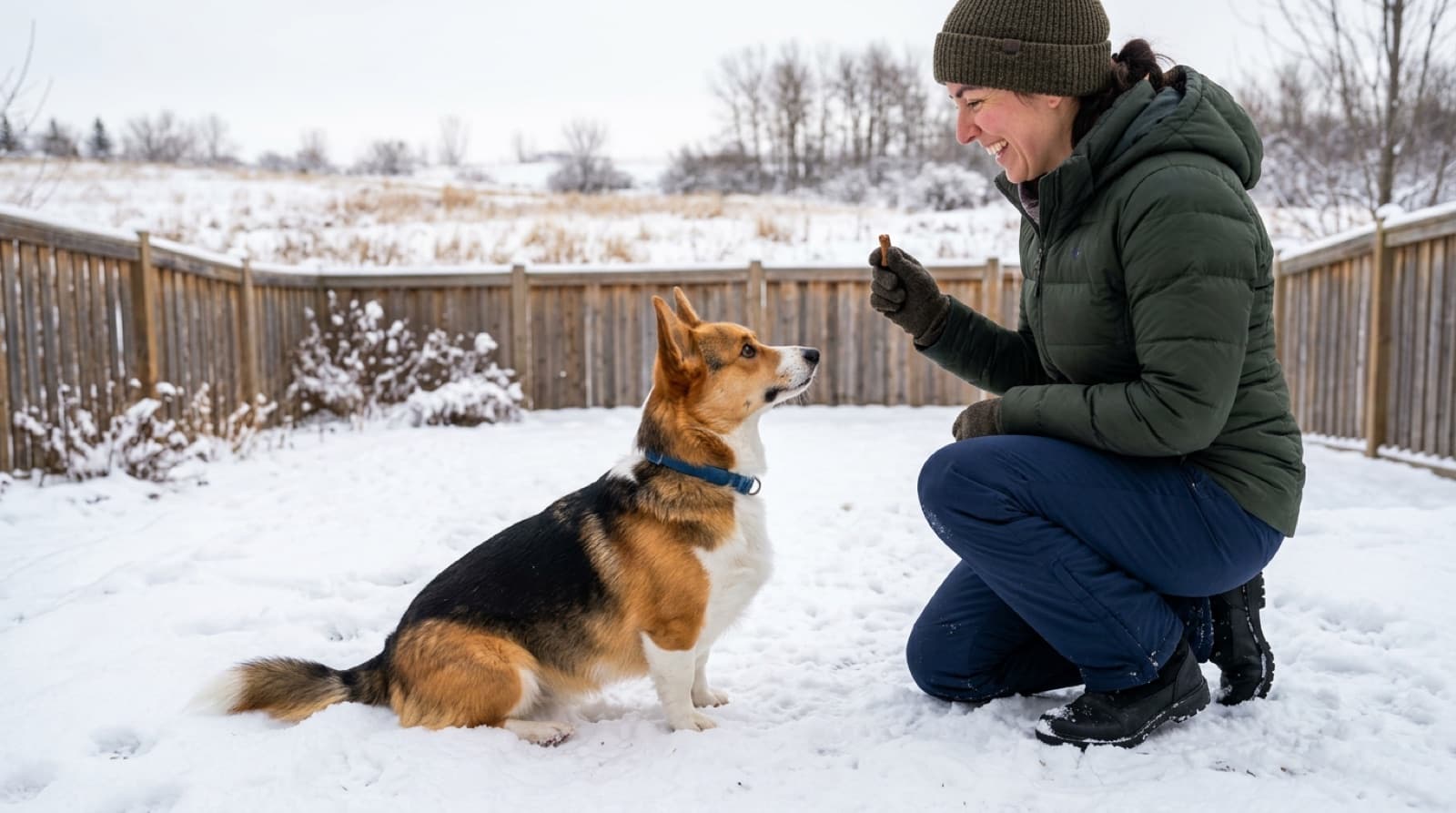
A herding brain in a small body
The Canadian Kennel Club describes the Pembroke as intelligent, charming and affectionate, alert and vigilant but kindly, with a history of working farms and driving cattle, and suited to homes with plenty of outdoor exercise. That working background explains most of what owners notice: Corgis watch everything, have opinions, and like to be in charge of movement.
Nipping at heels
Heel-nipping is herding behaviour aimed at whatever moves: children, joggers, other pets. Do not punish it; give the instinct a better outlet. Keep a tug toy handy and redirect onto it, reward the dog for staying calm when people move, and teach a "settle" on a mat. With children, manage the situation (a gate during running games) while the dog learns.
The American Veterinary Society of Animal Behavior recommends reward-based methods for all training and links physical corrections and aversive tools to more fear and aggression.
Browse adoptable Corgis
Ask the rescue how the dog does with children, other pets and being left alone, and whether it has a history of back trouble.
See Available Corgis →Barking
Corgis have a big bark and use it to report the world. Teach a quiet cue by rewarding a pause in barking, reduce triggers (block window views, add background sound), and make sure the dog is mentally tired. Barking out of boredom fades fast when the brain has something to do.
Food, weight and the back
Most Corgis will work hard for food, which makes training easy. The catch is weight: a long back on short legs carries every extra kilogram. Use part of the daily ration as training treats, measure meals, and keep the dog lean.
Avoid repeated jumping on and off furniture or out of the car, use ramps, and choose games that keep all four feet on the ground. See our Corgi health guide for why back care matters.
Keeping a Corgi busy
Daily walks plus mental work keep a Corgi content: short training sessions, scent games, food puzzles, and dog sports such as rally, scent work or herding instinct classes. In bad weather, indoor games and trick training cover a lot of ground.
Frequently asked questions
Why does my Corgi nip at heels?
It is herding behaviour. Redirect onto a toy, reward calm when people move, and manage busy play with children while the dog learns. Avoid punishment.
Are Corgis good with kids?
Many are, but their herding instinct can show as nipping at running children. Supervise, teach both dog and children the rules, and give the dog a quiet place to retreat.
Do Corgis bark a lot?
Many do. A quiet cue, fewer visual triggers and plenty of mental work reduce barking.
Are Corgis easy to train?
Usually, yes. They are smart and food-motivated. Use rewards, keep sessions short and count treats so the dog stays lean.
Can Corgis do agility?
Many enjoy dog sports, but because of their long backs, choose low-impact activities such as rally, scent work or herding instinct classes over high jumping.
How much exercise does a Corgi need?
Daily walks and play plus mental work. Exercise and lean weight together protect the back.
Sources
- Canadian Kennel Club: Pembroke Welsh Corgi: intelligent, affectionate, alert; farm and cattle work; needs outdoor exercise
- American Veterinary Society of Animal Behavior: Position Statement on Humane Dog Training: reward-based training recommended
General information, not a substitute for a qualified trainer or behaviour professional. For snapping, sudden changes or reluctance to move, start with your veterinarian to rule out pain, including back pain.
Related guides
New dog? Start with these care guides
Everything a new adopter needs to set up a safe, happy home.