The short answer
Expect a loyal, energetic, quick-learning dog that bonds closely with its family and is naturally protective. Socialise early and keep going, train with rewards (Dobermans are often sensitive to harsh handling), and give daily exercise plus brain work. Many dislike being left out of family life, so build alone-time gradually.
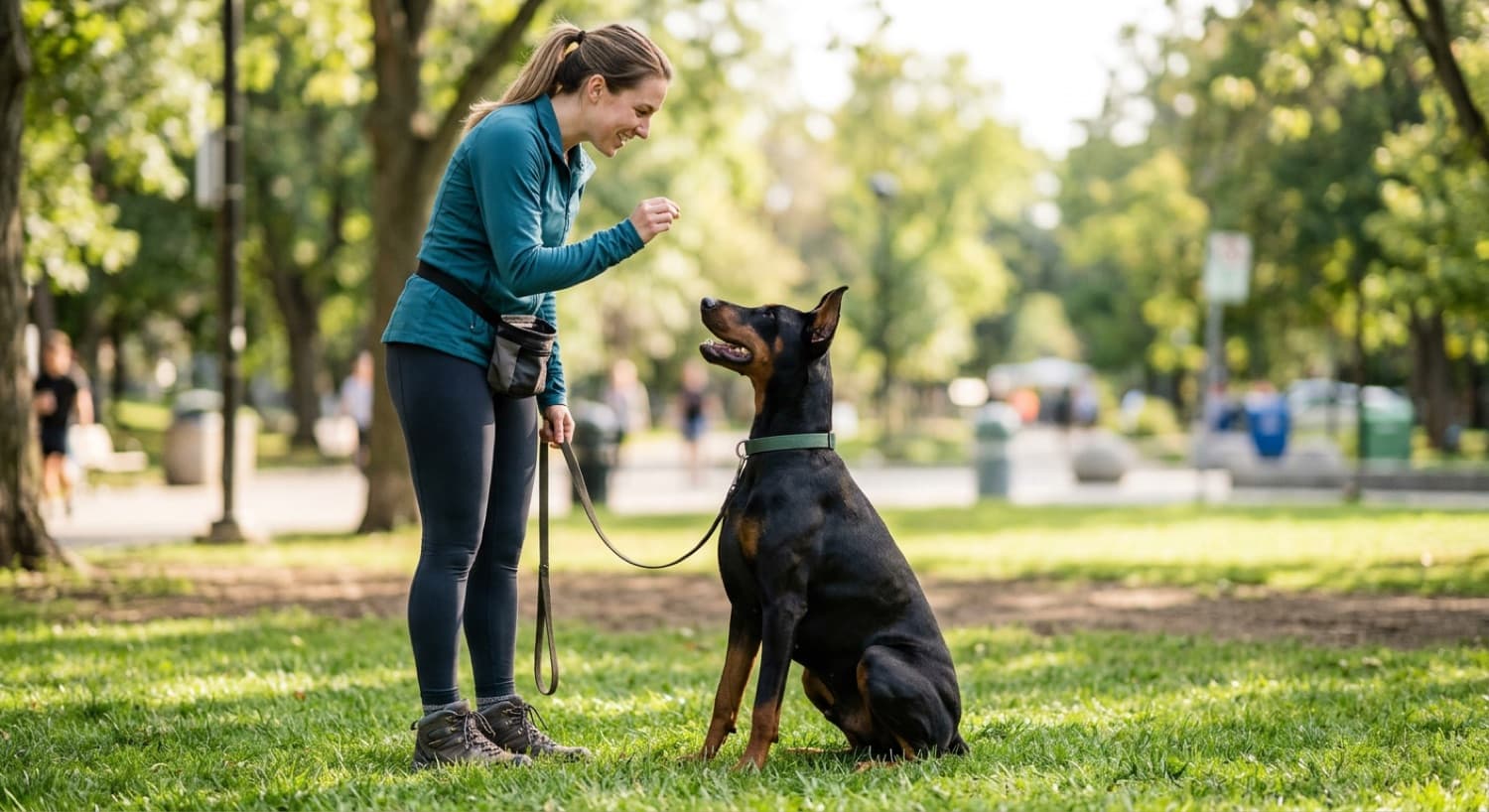
The Doberman temperament
The Canadian Kennel Club describes the Doberman as affectionate, obedient and loyal to its owner, internationally known as a security dog, and valued for its intelligence and trainability coupled with courage. Its creator wanted a protective, alert and agile dog. It adds that this energetic breed needs regular exercise.
Socialisation
A protective dog needs plenty of calm, positive experience with people, dogs and places so it can tell normal from threatening. The American Veterinary Society of Animal Behavior identifies the first three months as the most important window and supports puppy classes from about 7 to 8 weeks (AVSAB). With an adult rescue, go at the dog’s pace and reward calm watching from a distance.
Browse adoptable Dobermans
Ask the rescue how the dog does with strangers, children and other pets, and how it copes alone.
See Available Dobermans →Training without force
Dobermans learn fast and are often sensitive. The AVSAB humane training statement recommends reward-based methods and advises against prong, choke and shock collars, which are linked to fear and aggression. Teach a solid sit, down, stay, loose-lead walking and polite greetings with food and play.
Exercise and company
Plan for daily vigorous exercise plus mental work: training games, scent work and dog sports such as obedience, rally or agility. Most Dobermans want to be with their people and do poorly shut away. Build alone-time gradually from the start, and keep young dogs on moderate exercise while they grow.
Children and other pets
Many Dobermans are gentle with their own children. Supervise because of size and speed, teach children to respect the dog’s space, and give the dog a quiet retreat. Introduce other dogs and cats slowly.
Frequently asked questions
Are Dobermans good family dogs?
Many are affectionate, loyal family dogs. They need socialisation, reward-based training and daily exercise.
Are Dobermans aggressive?
They are naturally protective, not aggressive by default. Good socialisation and force-free training keep them confident and stable.
Are Dobermans easy to train?
The Canadian Kennel Club highlights their intelligence and trainability. Use rewards; many are sensitive to harsh handling.
How much exercise does a Doberman need?
Regular, vigorous daily exercise plus mental work. The CKC calls the breed energetic.
Can Dobermans be left alone?
Many find long absences hard. Build alone-time gradually and plan help for long days.
Should I use a prong collar on a Doberman?
Veterinary behaviour experts advise against prong, choke and shock collars. Use a harness and reward-based training.
Sources
- Canadian Kennel Club: Doberman Pinscher: affectionate, obedient, loyal; security dog; trainable; needs regular exercise
- American Veterinary Society of Animal Behavior: Position Statement on Humane Dog Training: reward-based training; aversive collars to avoid
- American Veterinary Society of Animal Behavior: Position Statement on Puppy Socialization: first three months most important
General information, not a substitute for a qualified trainer or behaviour professional. For growling, snapping or sudden behaviour change, start with your veterinarian.
Related guides
New dog? Start with these care guides
Everything a new adopter needs to set up a safe, happy home.