The short answer
Keep a Frenchie lean and cool, use a harness and treat heat as dangerous. Treat back pain, wobbling or weak hind legs as an emergency, because disc disease is the most common spinal problem in the breed. See a vet for itchy skin, ear odour or a squinting eye. Remind your vet before anaesthesia that your dog is flat-faced. Price pet insurance in your first week.
Breathing and heat
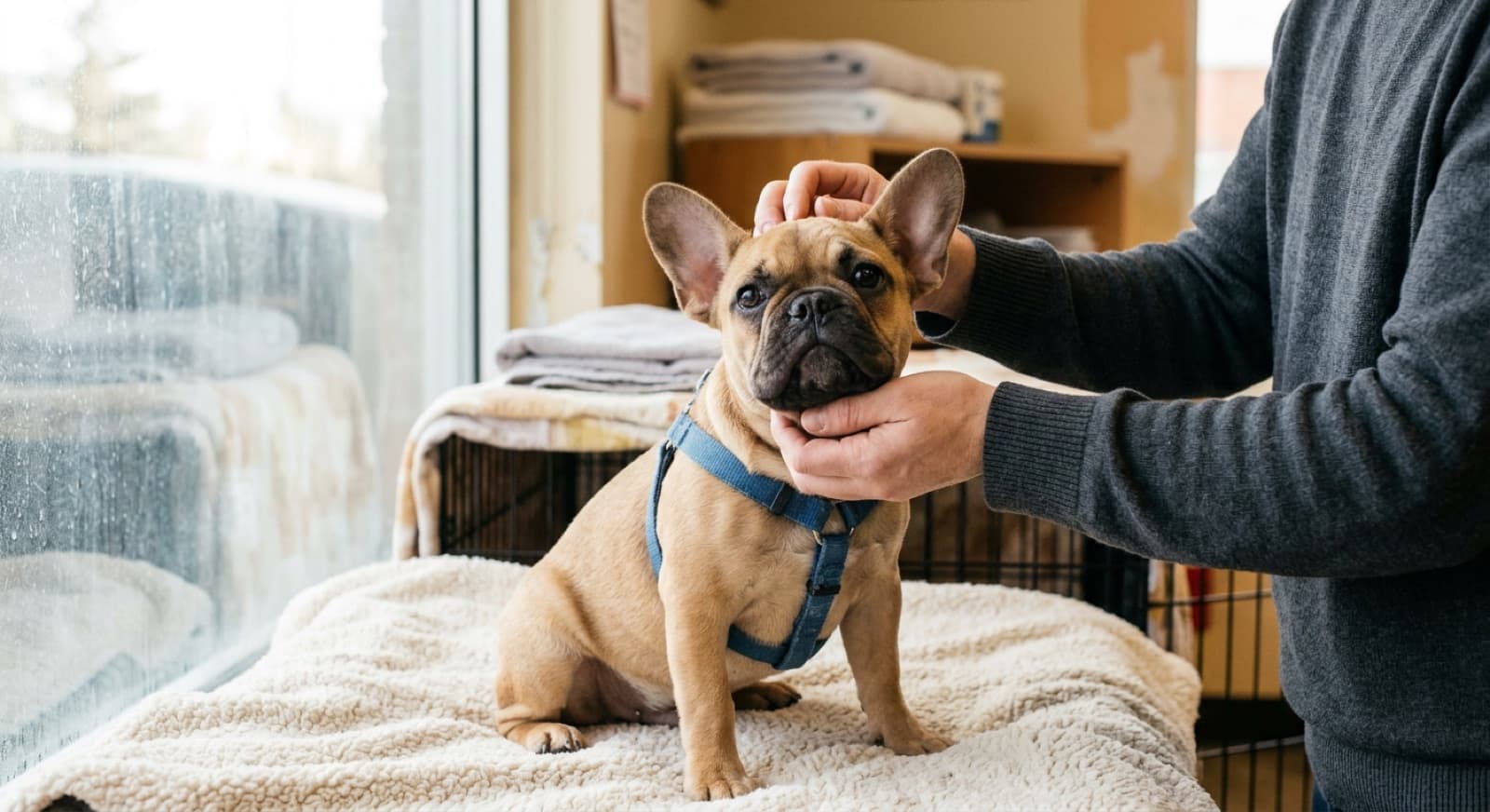
The French Bulldog is on VCA Animal Hospitals’ list of breeds with brachycephalic airway syndrome. Snoring, noisy breathing, gagging, regurgitation and tiring quickly are common, and Frenchies overheat easily.
Keep the dog lean, exercise in the cool part of the day, use a harness and stop at heavy panting. Blue-tinged gums, collapse or extreme breathing effort is an emergency. Airway surgery helps many Frenchies and works better earlier. Always remind your vet before sedation or anaesthesia that your dog is flat-faced.
Back disease and malformed vertebrae
In a 2025 study of French Bulldogs with spinal signs, acute disc extrusion was by far the most common diagnosis, at 84% of cases. The breed also has a high rate of congenital vertebral malformations such as hemivertebrae.
Back or neck pain shows as a hunched posture, trembling, yelping when picked up or refusing stairs. Wobbling, knuckling of a paw or weak hind legs is an emergency, because fast treatment improves recovery. Keep the dog lean, use ramps instead of jumps and lift it with the back level.
Browse adoptable French Bulldogs
Foster notes often mention breathing, back sensitivity or itchy skin, which is exactly what to raise at your first vet visit.
See Available French Bulldogs →Allergies, skin and ears
French Bulldogs are on VCA’s list of breeds prone to environmental allergies, which show as itchy skin, licking and recurring skin and ear infections. Allergies are managed, not cured, so work with your vet on a long-term plan.
Facial folds trap moisture; wipe and dry them regularly. Narrow ear canals are prone to infection, and VCA advises a vet exam before any ear drops, since some are unsafe if the eardrum is damaged.
Eyes
Prominent eyes are easy to scratch. Squinting, tearing, pawing at the face or a cloudy spot can mean a corneal ulcer and needs a vet the same day. A red lump in the inner corner of the eye (cherry eye) is common in short-nosed breeds and is usually repaired surgically.
The first vet visit after adoption
Ask for an airway and breathing check, a back and gait assessment, a skin, fold and ear check, an eye exam and a body condition score with a target weight. Note in the file that the dog is flat-faced. Bring the rescue’s records.
Price pet insurance the same week. Every Canadian provider excludes conditions documented before enrolment, and spinal surgery, airway surgery and allergy care are common costs in the breed.
Frequently asked questions
What are the most common French Bulldog health issues?
Short-nose breathing problems, disc disease and vertebral malformations, allergies, skin fold and ear infections, and eye injuries.
Do French Bulldogs get back problems?
Yes. Disc extrusion is the most common spinal disease in the breed, and malformed vertebrae are also common. Treat wobbling or weak hind legs as an emergency.
Why does my Frenchie snore and gag?
The flat face narrows the airway. Keep the dog lean and cool, use a harness and ask your vet whether airway surgery would help.
Why is my French Bulldog always itchy?
Allergies are common in the breed and often show as itchy skin, licking and ear infections. Your vet can build a long-term management plan.
Is anaesthesia risky for French Bulldogs?
Flat-faced dogs need extra airway care around sedation and anaesthesia. Remind your vet before any procedure so the team can plan for it.
Should I get pet insurance for a rescue French Bulldog?
It is worth pricing in your first week. Canadian pet insurance excludes conditions documented before enrolment, and spinal and airway surgery are common, costly problems.
Sources
- VCA Animal Hospitals: Brachycephalic Airway Syndrome: French bulldog named; weight, heat, harness; earlier surgery better
- Prevalence and breed predisposition for spinal diseases in pugs and French bulldogs (PMC): disc extrusion 84.3% of French Bulldog spinal diagnoses; high rate of vertebral malformations
- VCA Animal Hospitals: Atopy in Dogs: French bulldog named; managed, not cured
- VCA Animal Hospitals: Ear Infections in Dogs: vet exam before drops
General information, not veterinary advice. Diagnosis and treatment decisions belong with your veterinarian.
Related guides
New dog? Start with these care guides
Everything a new adopter needs to set up a safe, happy home.