The short answer
Expect a dog that bonds deeply with its family and is polite but reserved with strangers. Socialise early and keep it up, train with rewards rather than force, and give daily mental work as well as exercise. Leash reactivity is the most common problem; prevent it with distance and rewards rather than corrections. Supervise with young children, as with any large, strong dog.
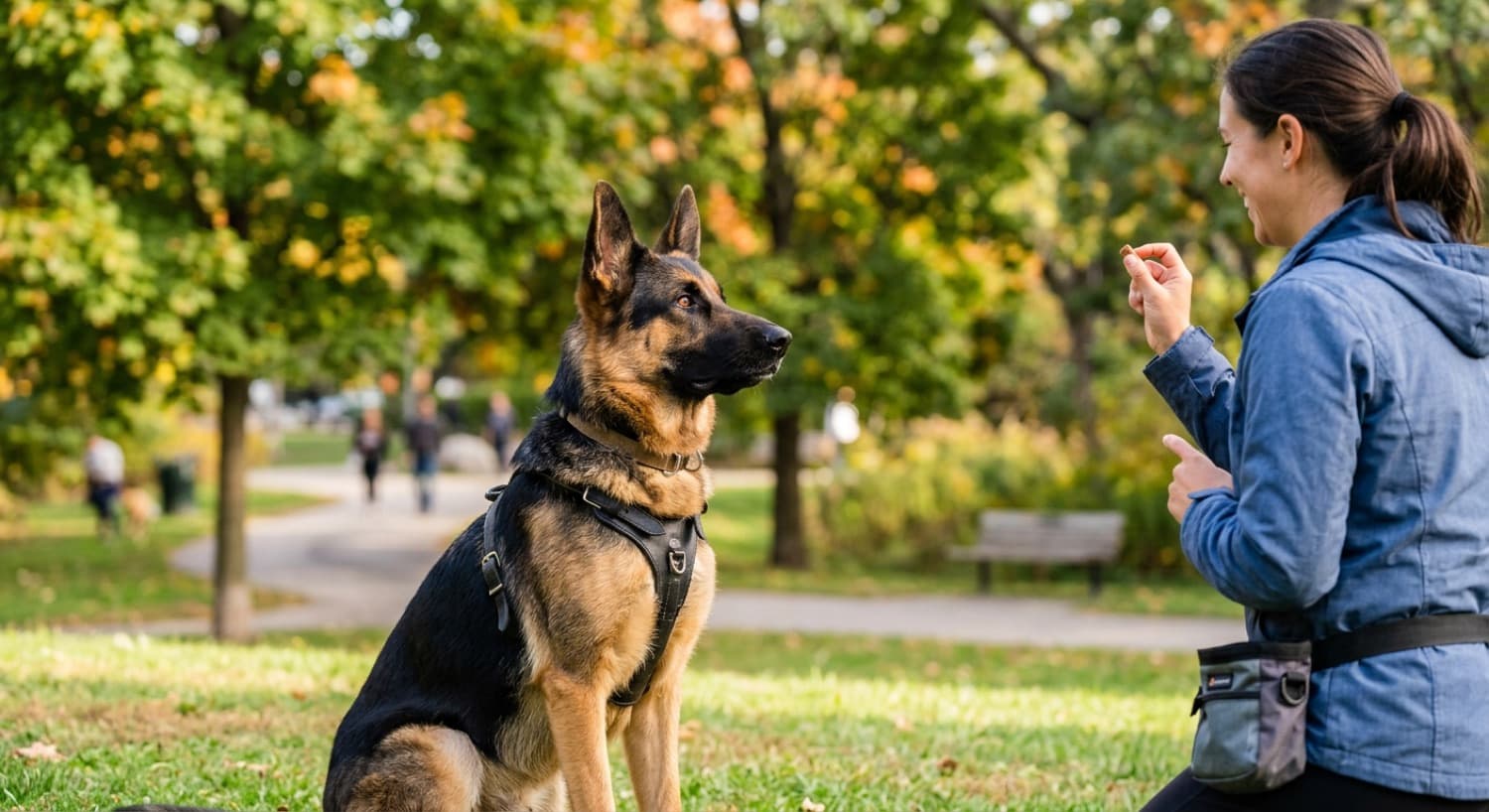
What the breed is meant to be
The Canadian Kennel Club breed standard describes a direct and fearless but not hostile dog, with self-confidence and a certain aloofness that does not lend itself to immediate friendships. It should be approachable, standing its ground calmly rather than fawning on every newcomer.
That is the target, and it explains a lot. A well-adjusted Shepherd is calm and watchful with strangers, not friendly with everyone. A poorly socialised or anxious one can tip from reserved into fearful or reactive, which is why early, positive exposure matters so much.
Socialisation
The American Veterinary Society of Animal Behavior identifies the first three months as the most important window for safe, positive exposure to people, animals and places (AVSAB). Keep going well past puppyhood: Shepherds often go through cautious phases as adolescents.
With a rescue adult, let the dog watch the world from a distance where it stays relaxed, reward calm looking, and move closer gradually.
Browse adoptable German Shepherds
Ask the rescue how the dog behaves on lead, with strangers and with other dogs, and what training it has had.
See Available German Shepherds →Preventing leash reactivity
Barking and lunging at dogs or people on lead is the most common Shepherd complaint. It is usually frustration or worry, made worse by tension on the lead and by corrections. The AVSAB humane training statement recommends reward-based methods and links prong, choke and shock collars to fear and aggression.
- Keep enough distance from triggers that your dog can still take a treat.
- Every time a trigger appears, mark and reward; the trigger starts to predict good things.
- Walk on a front-clip harness and keep the lead loose.
- Avoid crowded dog parks while you work on this.
- If your dog has bitten or the reactivity is intense, bring in a qualified reward-based trainer or veterinary behaviourist.
Kids and other dogs
Many Shepherds are devoted family dogs. Size, strength and herding instincts (chasing or nipping at running children) mean supervision with young kids is essential, along with house rules for the children too. Most get on well with other dogs they know, especially when socialised early; introduce new dogs slowly and on neutral ground.
Give the brain a job
Shepherds were bred to work, and a bored one finds its own work: chewing, digging, barking and pacing. Combine daily exercise with training sessions, scent games, food puzzles and structured activities such as obedience, rally, tracking or herding. Keep exercise moderate for young dogs while their joints grow.
Frequently asked questions
Are German Shepherds good family dogs?
Many are loyal, devoted family dogs. They need socialisation, reward-based training and daily mental work, and supervision with young children.
Why is my German Shepherd reactive on lead?
Usually frustration or worry, made worse by lead tension and corrections. Work at a distance where the dog stays calm and reward each time a trigger appears.
Are German Shepherds aggressive?
The breed is meant to be confident and reserved with strangers, not aggressive. Poor socialisation and harsh training raise the risk of fear-based reactivity.
Are German Shepherds good with other dogs?
Many are, especially when socialised early. Introduce new dogs slowly and on neutral ground.
Do German Shepherds need a lot of exercise?
Yes, and they need mental work too. Training games, scent work and dog sports keep a Shepherd settled better than running alone.
Should I use a prong collar on a German Shepherd?
Veterinary behaviour experts advise against prong, choke and shock collars because they are linked to fear and aggression. Use a front-clip harness and rewards.
Sources
- Canadian Kennel Club: German Shepherd Dog breed standard (Group VII): direct and fearless but not hostile; self-confidence and aloofness
- American Veterinary Society of Animal Behavior: Position Statement on Humane Dog Training: reward-based training; aversive tools linked to fear and aggression
- American Veterinary Society of Animal Behavior: Position Statement on Puppy Socialization: first three months most important
General information, not a substitute for a qualified trainer or behaviour professional. For growling, lunging or sudden behaviour change, start with your veterinarian to rule out pain or illness.
Related guides
New dog? Start with these care guides
Everything a new adopter needs to set up a safe, happy home.