The short answer
Keep a Greyhound on lead anywhere that is not securely fenced. Sighthounds chase movement, and their speed means one missed recall can end on a road. Use a properly fitted martingale collar or a secure harness, since slim heads slip ordinary collars. Give your dog regular sprints in a fully enclosed area, and still train recall: it makes fenced play and emergencies safer.
Built to chase
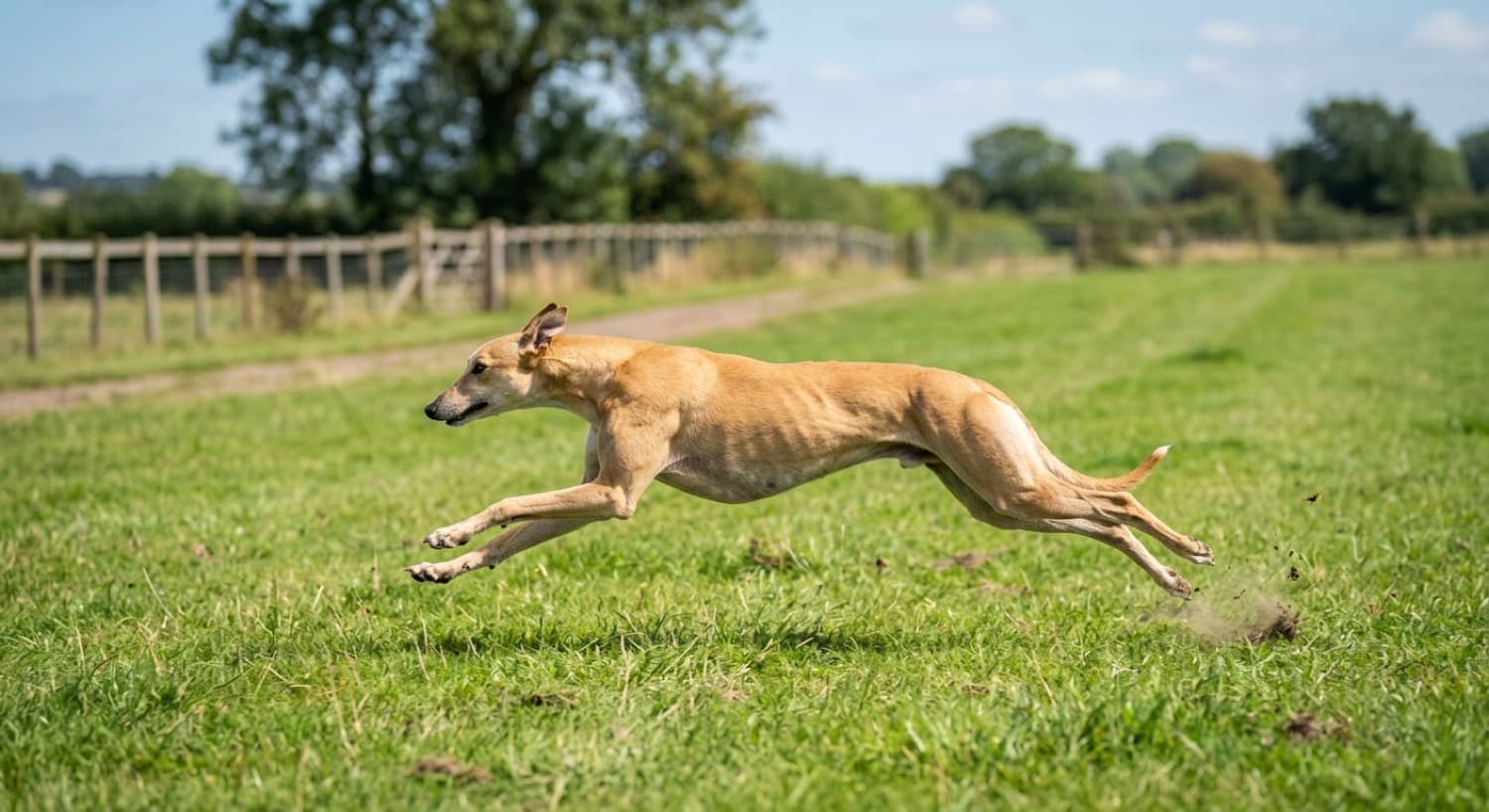
The Canadian Kennel Club describes the Greyhound as a clean and quiet family pet that is calm in the home, historically valued as a hunter of stag, gazelle, fox and hare, capable of speeds in excess of 40 mph, and in need of plenty of safe running room.
Sighthounds react to movement before they think. A rabbit, a squirrel or a cat bolting across a field can trigger a chase that no cue will interrupt. At that speed, a dog that was beside you a moment ago can be several blocks away before you have finished calling.
Where off-lead is safe
A safe area is fully enclosed, with fencing tall and sound enough that a Greyhound cannot clear it or slip through, and no open gates. Check the whole perimeter before letting your dog go. Many dog parks are only partly fenced or open onto paths, which is not enough for a sighthound.
- Securely fenced dog parks and private yards, checked for gaps.
- Rented enclosed fields where available.
- Sighthound play groups and lure coursing events, which channel the chase safely.
- Avoid running with small dogs the Greyhound does not know until you have seen them together calmly.
Browse adoptable Greyhounds
Ask the adoption group whether the dog has been tested with cats and small dogs, and what collar or harness it wears.
See Available Greyhounds →Collars, harnesses and ID
A Greyhound’s head is narrower than its neck, so a standard flat collar can slip off when the dog backs up or bolts. A properly fitted martingale collar tightens just enough to prevent that without choking. A well-fitted harness is a good backup, especially for nervous dogs. Keep ID tags on and the microchip registration current; it is the best chance of getting a runaway home.
Recall is still worth training
Even though you will not rely on it in open spaces, recall makes fenced play safer and helps in an emergency. Train with high-value food in quiet places, then on a long line, then in a fenced area with mild distractions. The American Veterinary Society of Animal Behavior recommends reward-based methods; Greyhounds are often sensitive, as the CKC notes, and respond poorly to harsh handling.
Retired racers
Former racing dogs may never have lived in a house, met a cat or walked on a slippery floor. Many settle remarkably fast, but give them time, keep them on lead outdoors, and introduce small pets carefully and only with the adoption group’s guidance on whether the dog is cat-safe.
Frequently asked questions
Can a Greyhound be off leash?
Only in securely fenced areas. Greyhounds chase what they see and can exceed 40 mph, so a missed recall in an open space can be deadly.
Why does my Greyhound need a martingale collar?
Their heads are narrower than their necks, so ordinary flat collars can slip off. A properly fitted martingale or a secure harness prevents that.
Do Greyhounds need a lot of exercise?
They need safe sprints and daily walks but are calm and quiet indoors. Many are happy lounging between outings.
Are Greyhounds good with cats?
Some are and some are not. Ask the adoption group whether the dog has been cat-tested, and introduce carefully on lead.
Can I train a Greyhound to come back?
Yes, with rewards, and it helps in fenced areas and emergencies. Just do not rely on it in unfenced spaces.
Are Greyhounds good apartment dogs?
Often yes. They are quiet and calm indoors, as long as they get walks and access to safe fenced running.
Sources
- Canadian Kennel Club: Greyhound: quiet family pet; hunting history; speeds over 40 mph; needs safe running room
- American Veterinary Society of Animal Behavior: Position Statement on Humane Dog Training: reward-based training recommended
General information, not a substitute for a qualified trainer or behaviour professional. For limping or injuries after running, see your veterinarian.
Related guides
New dog? Start with these care guides
Everything a new adopter needs to set up a safe, happy home.