The short answer
Brush a Havanese several times a week, right down to the skin, with a slicker brush and a metal comb; a long coat may need daily work. Check behind the ears, the armpits and the legs, where mats form first. Many owners keep a shorter puppy cut trimmed by a groomer every few weeks. Never bathe a matted coat, check ears and eyes regularly, and trim nails often.
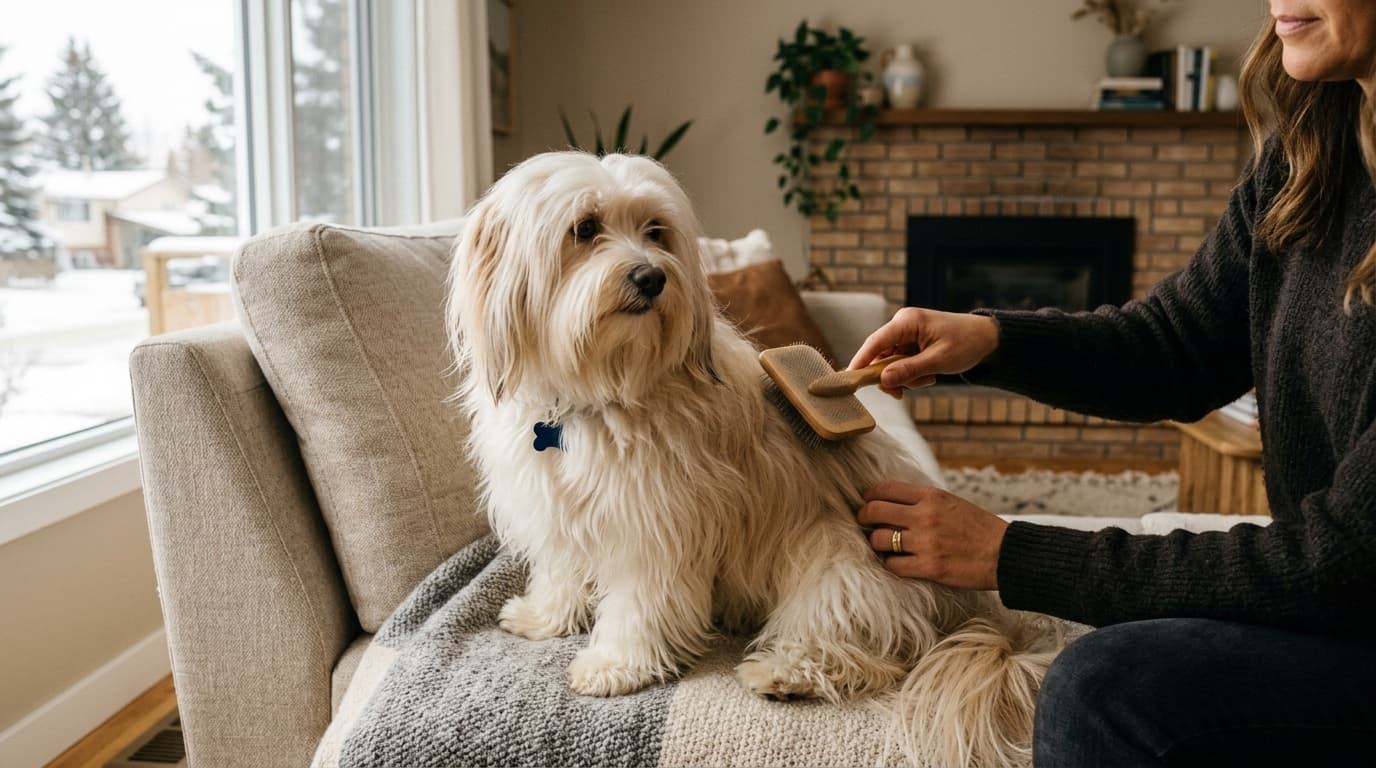
The Havanese coat
The Canadian Kennel Club describes the Havanese coat as non-shedding, long, soft and wispy, with curls or tufts at the ends, and says regular brushing is needed to keep it from matting. The same page calls the breed happy, outgoing, quite trainable and affectionate.
Non-shedding does not mean low-maintenance. Loose hair stays in the coat and knots around living hair, especially where the dog moves or rubs.
How to brush properly
Surface brushing leaves mats underneath. Line brushing works through the coat in layers:
- Part the hair with one hand and brush a small section from the skin outwards.
- Move up the body a row at a time, then follow with a metal comb.
- If the comb catches, work that spot gently with your fingers and a slicker brush.
- Focus on hot spots for mats: behind the ears, armpits, collar or harness line, belly and the back of the legs.
- Keep sessions short and rewarding, especially with puppies and rescues new to handling.
Browse adoptable Havanese
Ask the rescue how the dog handles brushing and nail trims, and when it was last groomed.
See Available Havanese →Long coat or puppy cut
A full-length coat looks beautiful but needs near-daily brushing. Most pet Havanese are kept in a puppy cut, an even, shorter trim all over that a groomer refreshes every several weeks. It halves the brushing and makes winter salt, snow balls and summer burrs far easier to deal with.
If your dog arrives badly matted, do not try to brush it all out. Pulling mats is painful; a groomer will usually shave down and start fresh.
Baths, eyes and ears
Brush and comb before every bath, because water tightens mats. Use a dog shampoo and dry thoroughly, brushing as you dry. Wipe the eye area gently with a damp cloth; tear staining is common in pale coats, and sudden increases in tearing deserve a vet visit.
Check ears weekly. Merck advises keeping ear canals dry and seeing a vet promptly when changes appear, and says to consult your vet before removing hair near the canal (Merck Veterinary Manual).
Nails, feet and teeth
Trim nails every few weeks and keep the hair between the pads short so your dog has grip on floors. Small breeds are prone to dental disease, so brush teeth often and keep up with dental checks; see our Havanese health guide.
Frequently asked questions
Do Havanese shed?
The Canadian Kennel Club describes the coat as non-shedding. Loose hair stays in the coat instead, which is why it mats without regular brushing.
How often should I brush a Havanese?
Several times a week for a puppy cut and close to daily for a long coat, brushing right down to the skin.
How often does a Havanese need a groomer?
Many owners book a trim every several weeks to keep a puppy cut short and manageable.
What is the best brush for a Havanese?
A slicker brush plus a metal comb. The comb tells you whether you have actually reached the skin.
Should I shave a matted Havanese?
For heavy matting, a groomer shaving down is kinder than painful dematting. Then keep a shorter cut you can maintain.
How do I clean my Havanese’s ears?
Check weekly and keep them dry. Ask your vet before removing ear hair, and see a vet for redness, smell or scratching.
Sources
- Canadian Kennel Club: Havanese: non-shedding long soft coat; regular brushing prevents matting; temperament
- Merck Veterinary Manual: Ear Infections and Otitis Externa in Dogs: keep ears dry; consult vet before removing ear hair; prompt vet attention
General information, not veterinary advice. Red, sore or smelly skin or ears need a vet, not just a groom.
Related guides
New dog? Start with these care guides
Everything a new adopter needs to set up a safe, happy home.