The short answer
Introduce swimming gradually in calm, shallow water, use a well-fitted dog life jacket on boats and in open water, and keep sessions short with rest breaks. Check for local algae advisories and avoid any water with a visible bloom; if your dog touches one, rinse it with tap water right away and call your vet if it seems unwell. Dry the ears after swimming, and never let a tired dog keep retrieving.
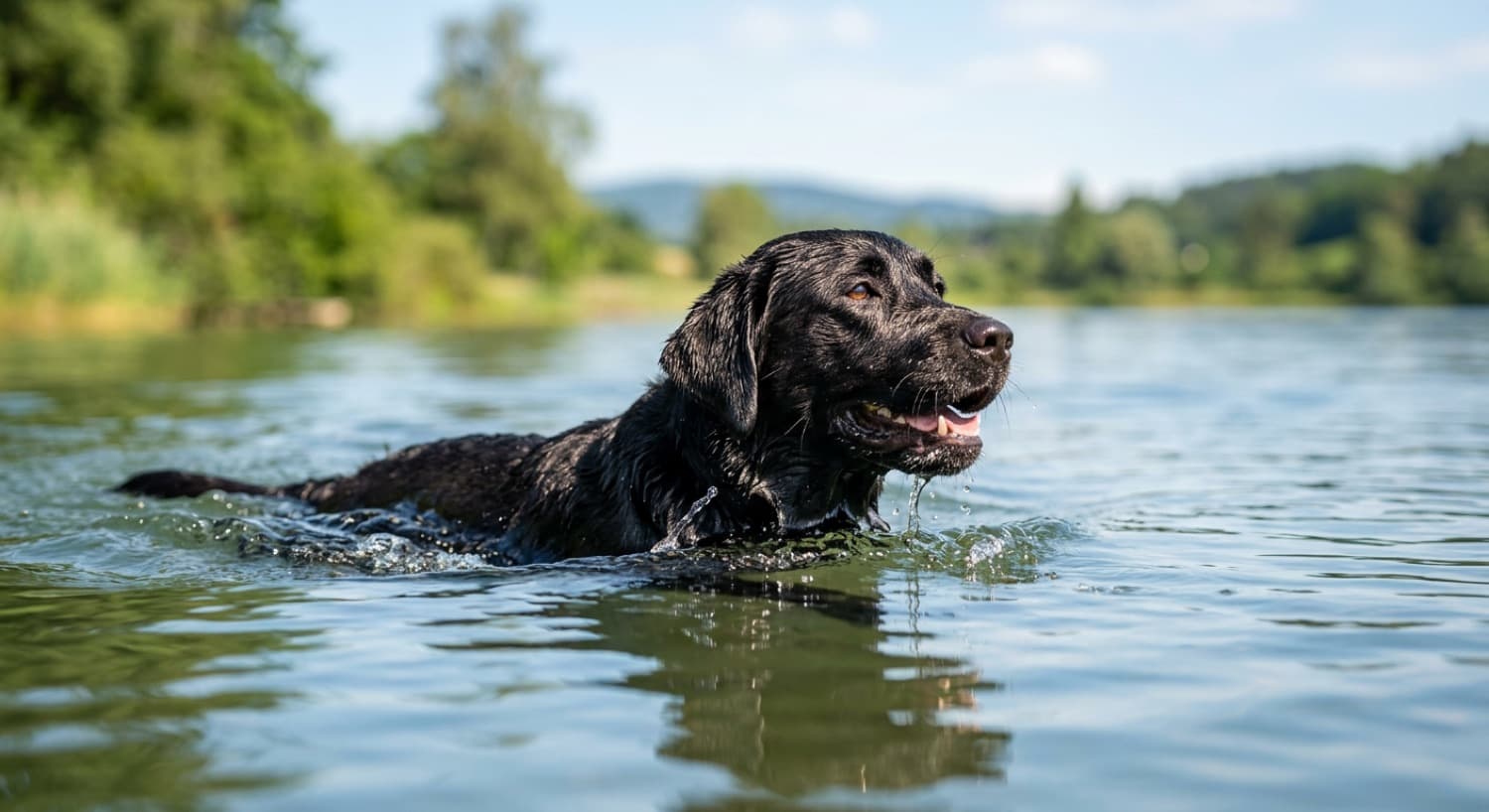
A water dog by design
The Canadian Kennel Club notes the Labrador was once known as the black Water Dog, worked as a fish and game retriever, enjoys outdoor exercise, is especially fond of swimming, and will happily retrieve until your arm gives out.
Teaching a Lab to swim
Not every Lab is a natural swimmer, especially rescues that have never seen a lake. Start in calm, shallow water where your dog can touch bottom, let it wade in at its own pace, and reward confidence. Show it the easiest way out, and never throw a dog into water.
- Use a well-fitted dog life jacket for boats, docks, open water and early lessons.
- Avoid strong currents, fast rivers, waves and steep or icy banks.
- Keep cold-water swims short, and dry and warm your dog afterwards.
- Watch for fatigue: slowing down, sinking lower in the water or struggling to climb out.
- Never go in after a struggling dog yourself; call it towards an exit and bring a long line or reaching aid.
Browse adoptable Labrador Retrievers
Ask the rescue whether the dog has swum before and how it handles water.
See Available Labrador Retrievers →Blue-green algae blooms
Health Canada says animals, particularly dogs, have died after drinking water containing cyanobacterial toxins or licking or eating bloom material from their fur or the shore, usually from rapid respiratory failure. Surface blooms are generally green or blue-green and can look like spilled paint or fine grass clippings; mats on the bottom can be black, brown or green.
Health Canada advises not letting pets swim, play in or drink water in areas with a bloom, eat material on the shore, or lick their fur before you rinse them. If your dog contacts a bloom, rinse it with tap water as soon as you can, and talk to your vet if it shows abnormal behaviour or distress. Check local advisories before you go, and bring fresh water so your dog has no reason to drink from a lake.
Ears after swimming
Labs’ drop ears can trap water. The Merck Veterinary Manual advises keeping ear canals dry and well ventilated and using drying agents recommended by your vet for dogs that swim frequently. Watch for head shaking, scratching, redness or a smell, and see your vet promptly if they appear.
Know when to stop
A Lab’s retrieving drive can outlast its body. Set a limit on throws, build in rest breaks on land, offer fresh water, and end the session while your dog still wants more. Older Labs and those with sore joints often love swimming, but keep it gentle and ask your vet what suits your dog.
Frequently asked questions
Do all Labradors know how to swim?
Most love water, but some, especially rescues, need a gradual introduction in calm, shallow water.
Does my Lab need a life jacket?
It is a good idea on boats, docks, in open water and while learning. It adds buoyancy and visibility.
Is blue-green algae dangerous to dogs?
Yes. Health Canada reports dog deaths from cyanobacterial toxins. Keep dogs out of any water with a bloom and rinse them right away after contact.
What do I do if my dog swam in an algae bloom?
Rinse it with tap water as soon as you can, stop it licking its fur, and contact your vet, especially if it seems unwell.
How do I prevent ear infections after swimming?
Keep ears dry after swims and ask your vet about a drying ear product. See a vet for head shaking, redness or smell.
How long should my Lab swim?
Short sessions with rest breaks. Stop before your dog is tired, and keep cold-water swims brief.
Sources
- Canadian Kennel Club: Labrador Retriever: water dog history; fond of swimming; tireless retriever
- Health Canada: Cyanobacteria and their toxins: dog deaths; what blooms look like; keep pets out; rinse; talk to vet
- Merck Veterinary Manual: Ear Infections and Otitis Externa in Dogs: keep ears dry; drying agents for dogs that swim
General information, not veterinary advice. If your dog may have swallowed bloom water or shows vomiting, drooling, weakness, breathing trouble or seizures after a swim, contact a veterinarian immediately.
Related guides
New dog? Start with these care guides
Everything a new adopter needs to set up a safe, happy home.