The short answer
Socialise a Rottweiler early and keep going, so new people and places stay normal rather than worrying. Use reward-based training; force and correction tools tend to raise fear and defensiveness in a powerful dog. Expect a testing adolescent phase, roughly from six months to two years: keep sessions short, manage situations you cannot train yet, and do not take the regression personally. Get professional help early for any guarding or growling.
The guardian temperament
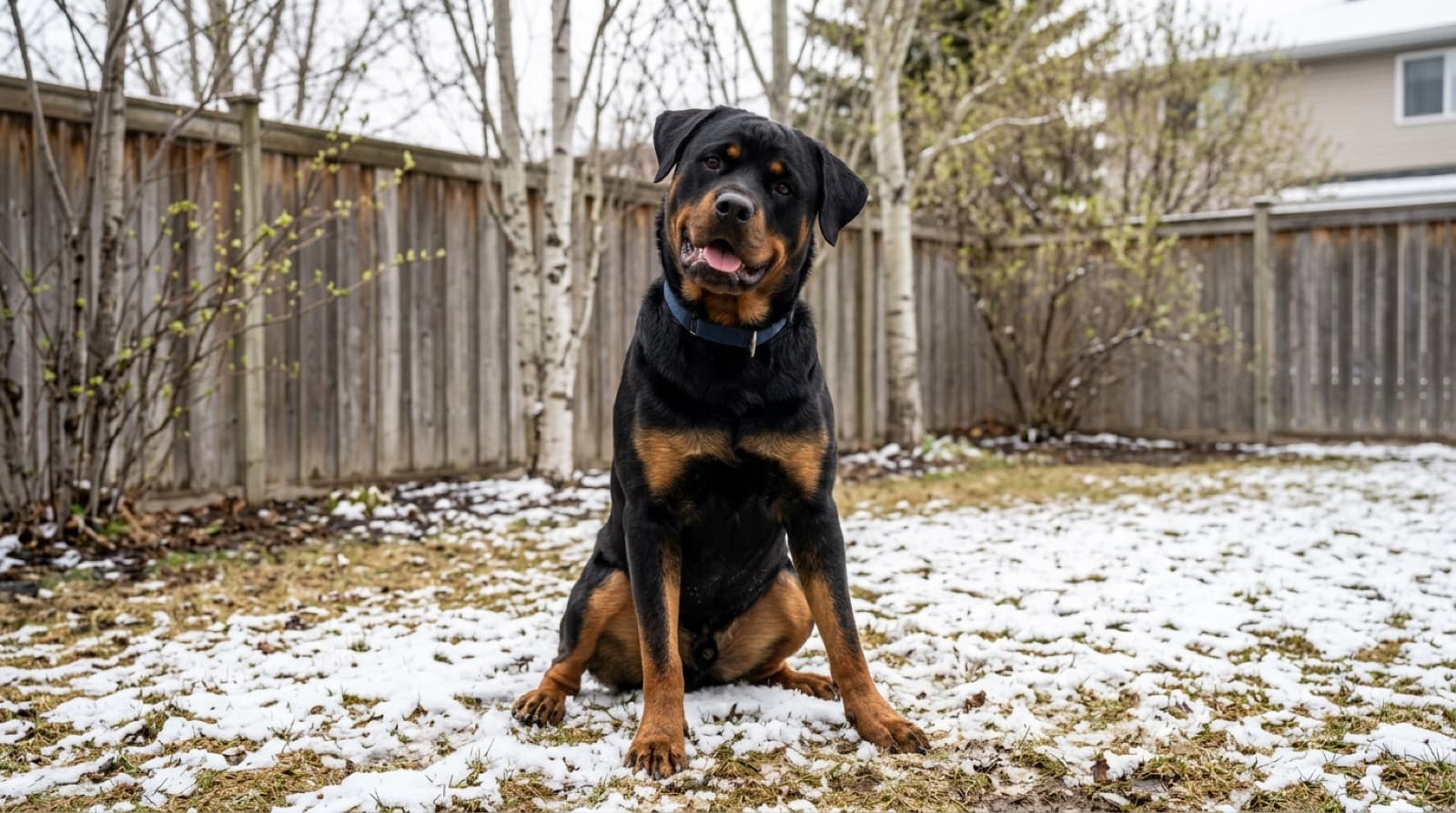
The American Kennel Club describes the Rottweiler as a gentle playmate and protector within the family circle that views the outside world with self-assured aloofness. In practice, most are affectionate, people-focused and often clownish at home, and calm but alert with strangers.
That watchfulness is the reason socialisation matters so much. A Rottweiler that has met plenty of people, dogs and places calmly learns that new things are usually fine. One that has not may treat them as threats, and in a large, strong dog that is a serious problem for the dog as much as for anyone else.
Socialisation: start early, keep going
The American Veterinary Society of Animal Behavior identifies the first three months of life as the most important window for socialisation and supports well-run puppy classes from about 7 to 8 weeks (AVSAB). The aim is calm, positive experiences, not overwhelming ones.
For an adult rescue, socialisation is still worth doing at the dog’s pace. Let it watch new people from a comfortable distance, reward calm looking, and build up gradually. Quality matters more than quantity: a few good experiences beat a crowded dog park.
Browse adoptable Rottweilers
Ask the rescue how the dog does with strangers, other dogs and handling, and what training it has had.
See Available Rottweilers →Training without force
The AVSAB position statement on humane training recommends reward-based methods for all dogs and lists prong collars, choke chains, shock collars and physical corrections among techniques to avoid, because they are linked to fear, anxiety and aggression. With a guardian breed, raising fear is the last thing you want.
Rottweilers are usually food- and praise-motivated and learn quickly. Teach polite greetings, a solid sit and down, loose-lead walking with a front-clip harness, and a reliable "leave it". Short daily sessions work better than long weekly ones.
The teenage months
Somewhere between about six months and two years, many Rottweilers test limits, ignore cues they knew and become more reactive to new things. This is normal adolescence, not a failure of training. Go back a step: practise in easier places, use higher-value rewards and manage situations (a lead in open areas, a gate at the door) while skills catch up.
Watch for growling over food, toys or spaces, or new nervousness around strangers. These are easiest to fix early. Talk to your vet first to rule out pain, then work with a qualified reward-based trainer or veterinary behaviourist.
Exercise and a busy mind
Rottweilers do best with daily walks, play and a job for their brain: training games, scent work, food puzzles and structured activities such as obedience or tracking. A bored, under-exercised Rottweiler is more likely to dig, chew and bark. Keep young dogs on moderate exercise while their joints grow.
Frequently asked questions
Are Rottweilers good family dogs?
Many are affectionate, gentle family dogs. They need early, ongoing socialisation and reward-based training, and supervision with young children because of their size and strength.
Are Rottweilers aggressive?
They are naturally watchful with strangers, not aggressive by default. Poor socialisation and harsh training raise the risk of fear-based defensiveness, so start early and train without force.
Why is my teenage Rottweiler ignoring commands?
Adolescence, roughly six months to two years, often brings a training regression. Go back to easier settings and better rewards, manage situations, and keep practising.
Should I use a prong collar on a Rottweiler?
Veterinary behaviour experts advise against prong, choke and shock collars because they are linked to fear and aggression. A front-clip harness and reward-based training are safer and work well.
How much exercise does a Rottweiler need?
Daily walks and play plus regular mental work such as training games and scent work. Keep exercise moderate while a young dog is still growing.
Can I adopt an adult Rottweiler if I have never had one?
Yes, with a well-matched dog and help. Ask the rescue about the dog’s history with strangers and other dogs, and book a few sessions with a reward-based trainer early.
Sources
- American Kennel Club: Rottweiler: gentle with family; self-assured aloofness with outsiders
- American Veterinary Society of Animal Behavior: Position Statement on Humane Dog Training: reward-based training; prong, choke and shock collars to avoid
- American Veterinary Society of Animal Behavior: Position Statement on Puppy Socialization: first three months most important; classes from 7 to 8 weeks
General information, not a substitute for a qualified trainer or behaviour professional. For growling, guarding or sudden behaviour change, start with your veterinarian to rule out pain or illness.
Related guides
New dog? Start with these care guides
Everything a new adopter needs to set up a safe, happy home.