The short answer
Assume your Shiba will bolt if given the chance. Keep it on lead outdoors unless in a securely fenced area, check fences for gaps, climb points and digging spots, and train calm behaviour at doors. Use a well-fitted harness so the dog cannot back out. Train recall with high-value food on a long line, but do not rely on it near open roads.
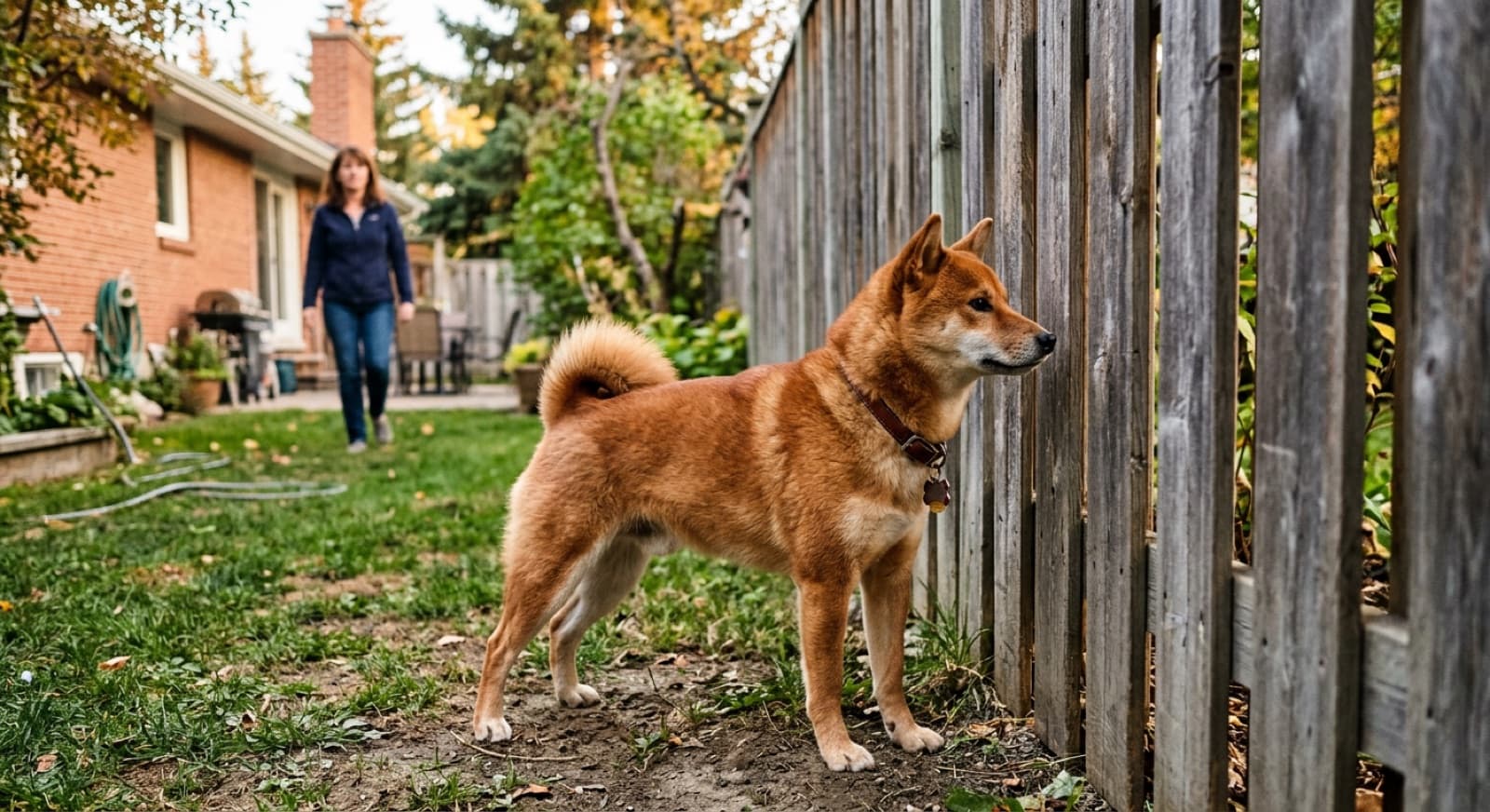
Why Shibas run
Dogs Australia describes the Shiba Inu as independent and strong willed, very loyal and often closely bonded to one person, and originally bred as a hunting dog for small animals and birds. Put an independent thinker together with prey drive and you get a dog that will happily explore the neighbourhood on its own terms.
Escape-proofing the yard
The same breed guide warns that a secure fenced yard is essential and that some Shibas have been known to climb six-foot fences. Walk the whole perimeter and look at it like a small, clever dog would.
- Gaps under gates and fence boards, and spots where the dog has started digging.
- Climb points: bins, wood piles, garden furniture or planters near the fence.
- Gates that do not self-close, and latches visitors forget.
- Supervise yard time until you know your dog’s habits.
Browse adoptable Shiba Inus
Ask the rescue about the dog’s escape history, how it handles doors, and what harness it wears.
See Available Shiba Inus →Doors, cars and harnesses
Door-dashing is the most common way Shibas get loose. Teach a "wait" at doors with rewards, use a baby gate as a second barrier at the front entrance, and get everyone in the household into the habit of checking where the dog is before opening a door.
Choose a harness designed to resist backing out, fitted snugly, and keep ID tags on and the microchip registration current.
Training a strong-willed dog
The American Veterinary Society of Animal Behavior recommends reward-based methods for all dogs. Shibas tend to resist force and pushy handling, so short sessions, high-value rewards and letting the dog choose to engage get far better results. Start handling (feet, nails, brushing) young and make it rewarding.
For recall, practise indoors and on a long line, reward generously, and never call the dog to something it dislikes. Many Shibas never become reliable off lead in open spaces, and that is a normal outcome, not a training failure.
Exercise and enrichment
Daily walks are a must. Dogs Australia notes many Shibas love fetch and advises against over-exercising young dogs in their first 12 months. Food puzzles, scent games and short training sessions help a clever Shiba stay settled indoors.
Frequently asked questions
Can a Shiba Inu be off leash?
Only in securely fenced areas for most Shibas. They are independent and have prey drive, and recall often fails in open spaces.
Why does my Shiba Inu keep escaping?
Independence plus hunting instinct. Check fences for gaps, climb points and digging, add a gate at the front door, and supervise yard time.
Can Shiba Inus climb fences?
Some can. Dogs Australia notes some have been known to climb six-foot fences, so remove climb points and supervise.
Are Shiba Inus hard to train?
They are clever but strong-willed. Short, reward-based sessions work; force tends to backfire.
What harness is best for a Shiba?
One designed to resist backing out, fitted snugly. Shibas are quick to wriggle free of loose gear.
Are Shiba Inus good apartment dogs?
Many adapt well to smaller homes with daily walks and enrichment, but door-dashing needs careful management.
Sources
- Dogs Australia: Shiba Inu: independent and strong willed; hunting origin; secure fence essential; fence-climbing; exercise in first 12 months
- American Veterinary Society of Animal Behavior: Position Statement on Humane Dog Training: reward-based training recommended
General information, not a substitute for a qualified trainer or behaviour professional. For sudden behaviour change, start with your veterinarian.
Related guides
New dog? Start with these care guides
Everything a new adopter needs to set up a safe, happy home.