

Browse tortoiseshell cats by city
Manitoba
Alberta
British Columbia
New Brunswick
Nova Scotia
Newfoundland and Labrador
Get notified when a Tortoiseshell is listed
We will email you the moment a Tortoiseshell becomes available in Canada, from a rescue or an owner rehoming.
Tortoiseshell, calico and torbie: the difference
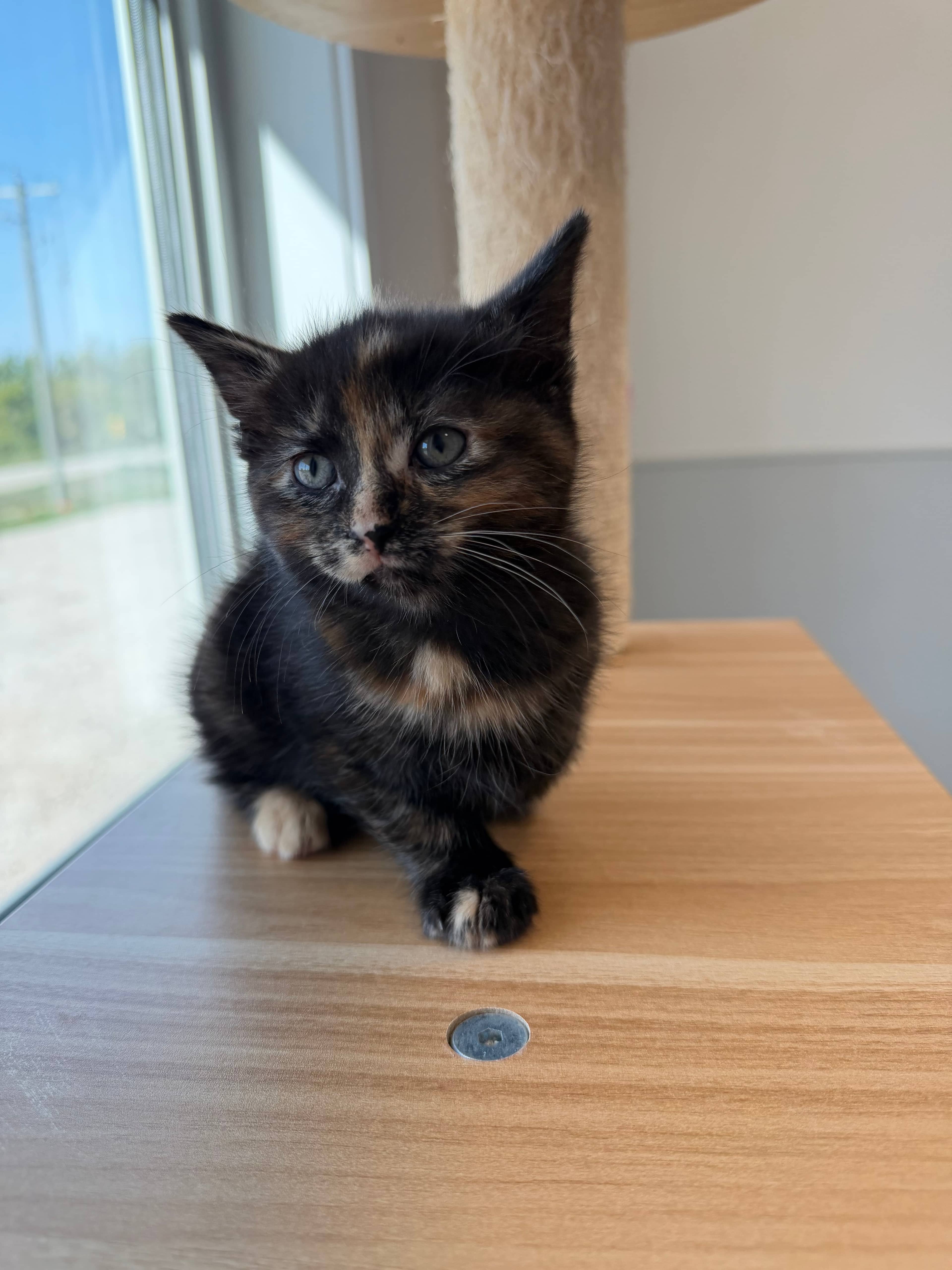
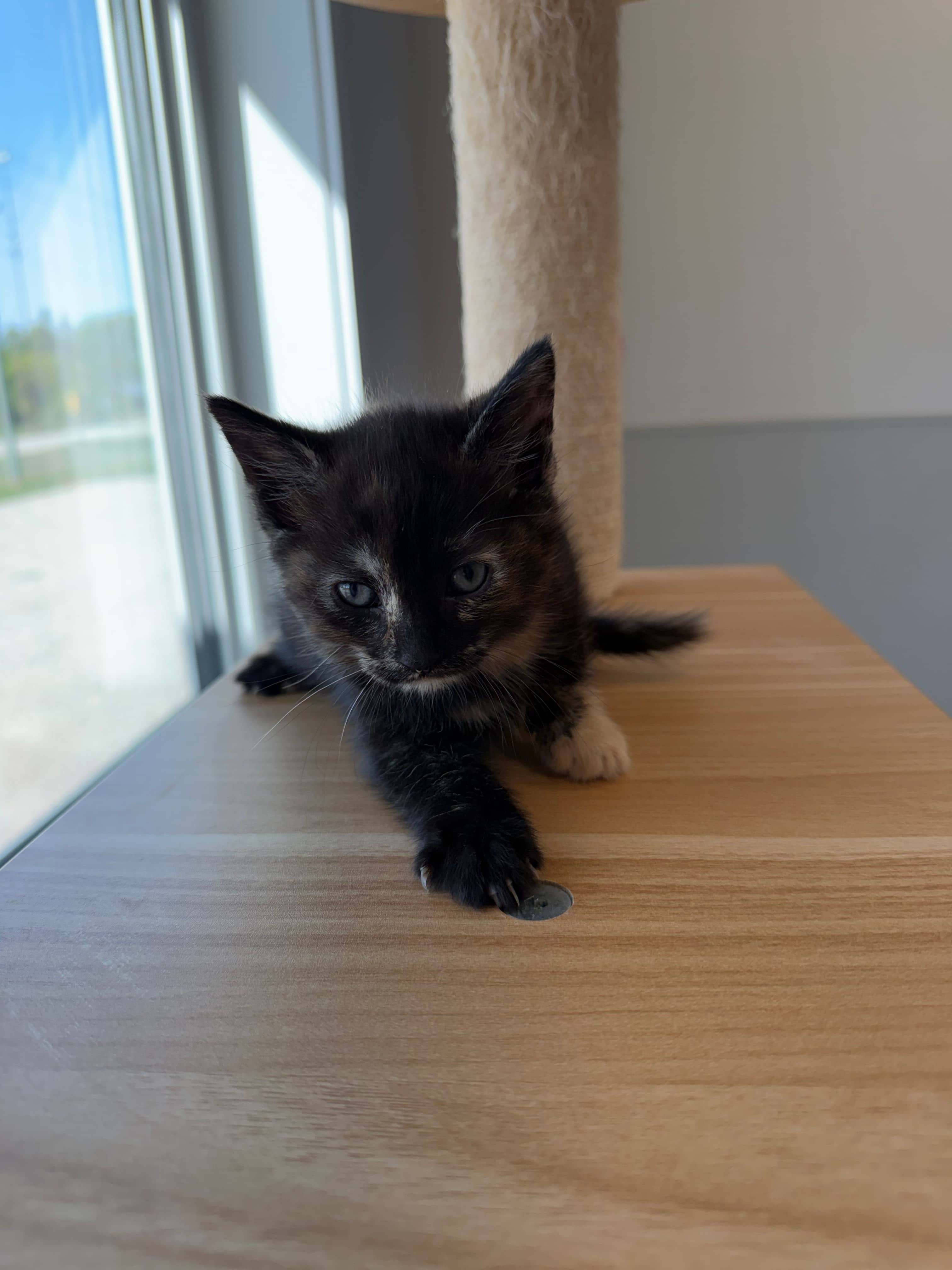
A tortoiseshell has black and orange blended through the coat with little or no white, which produces the mottled look the pattern is named after. A calico has the same two colours broken into distinct patches with clear white areas. The colour genetics are identical in both; what differs is a separate white-spotting gene that decides whether the colours stay blended or get separated by white.
A torbie is a tortoiseshell with tabby striping layered over the top, so you see the mottling and the stripes at once. Rescues use all three words loosely, and the same cat is sometimes listed differently by two organisations. Search the pattern you want, but be ready to look at the photo rather than trusting the label.
Why almost every tortoiseshell is female
The genes for orange and black fur both sit on the X chromosome. A female cat has two X chromosomes and can therefore express both colours at once. A male has one X and one Y, so he can only carry one of the two colours, which is why male torties are so rare.
The exception requires an unusual XXY chromosome configuration. It occurs in roughly one in three thousand male cats, and those males are typically sterile and carry other associated health issues. If you are looking at a tortoiseshell, you are almost certainly looking at a girl.
Is tortitude real?
Tortie owners talk about tortitude constantly: opinionated, chatty, intensely bonded to one person, and quick to tell you when something is not to their liking. It is one of the most persistent beliefs in cat communities.
No study has convincingly linked coat pattern to temperament in cats, so the honest answer is that tortitude is a widely shared owner experience rather than an established finding. Part of it is probably real pattern and part of it is that memorable cats stick in the memory. Judge the cat in front of you, and ask the foster what this particular tortie is actually like.
Dilute torties and other variations
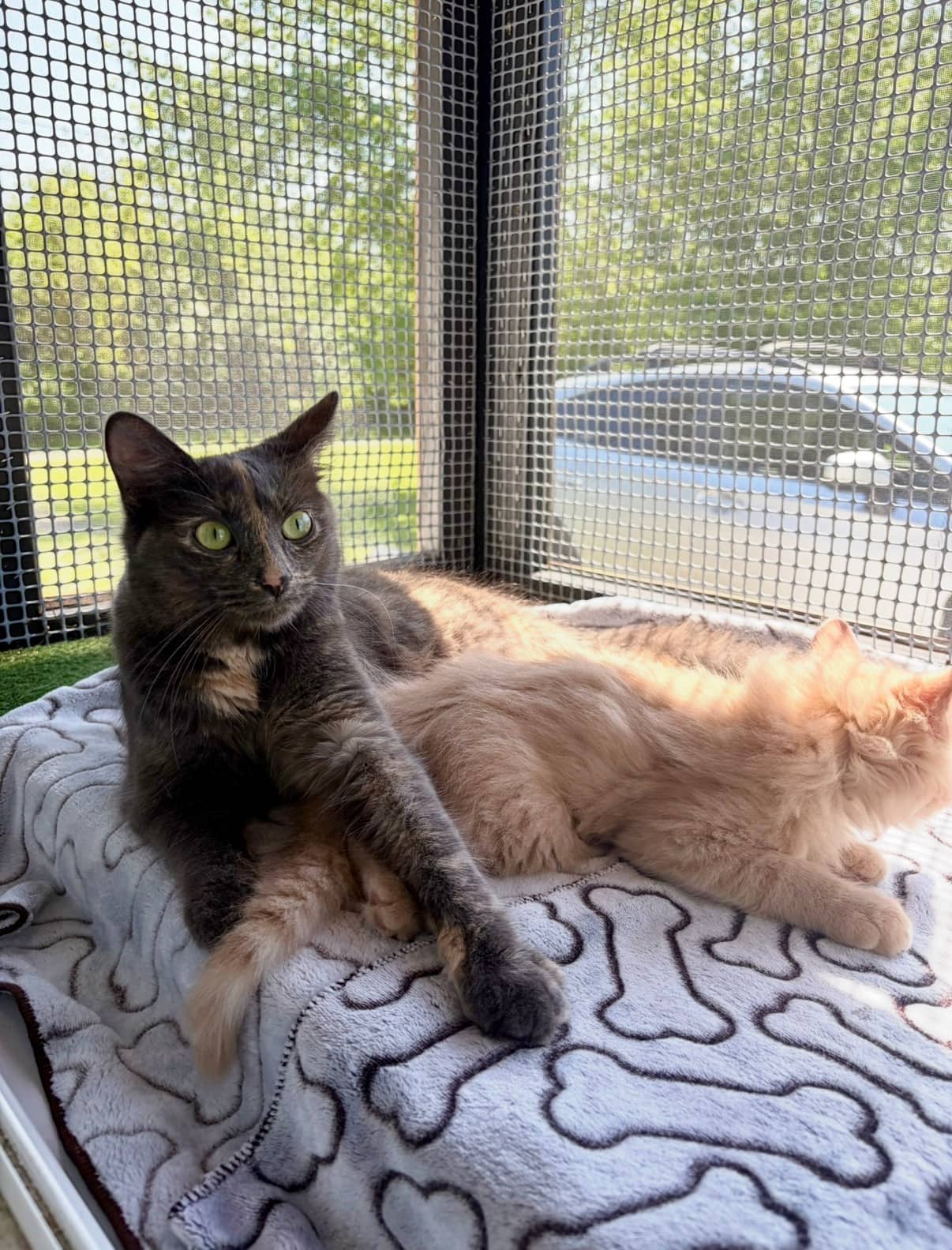
A dilute tortoiseshell replaces the black and orange with softer grey and cream, produced by the same dilution gene that turns black into grey. The mottling pattern is identical, just in muted tones, and rescues sometimes list these as blue-cream.
Because the terminology varies, a dilute tortie can be listed as grey, as cream, as a tortie, or simply as a domestic shorthair. If you specifically want the tortoiseshell pattern, browse by photo and ask the rescue to confirm rather than relying on the written colour.
Adopting a tortoiseshell in Canada
Tortoiseshells are common in Canadian rescues, though less common than plain tabbies or black cats, and they adopt out at ordinary domestic shorthair fees. Because the pattern is visually distinctive, torties tend to get claimed faster than solid-coloured cats, so applying promptly matters more here than it does for a black cat.
- Distinctive patterns move quickly. Have your application details ready before you enquire.
- Ask whether the cat prefers to be the only pet. Plenty do, and it is better to know first.
- Consider a dilute tortie: same pattern, softer colours, and usually less competition.
Tortoiseshell Cat Adoption FAQ
Tap a question to expand
How many Tortoiseshells are available for adoption in Canada?▼
What is the difference between a tortoiseshell and a calico?▼
Are all tortoiseshell cats female?▼
Is tortitude a real thing?▼
Are tortoiseshell cats rare in Calgary rescues?▼
Looking for tortoiseshell cat adoption in a specific city? Each city link above has a city-scoped page with local rescue context and city-specific FAQ. Or browse the Calgary Tortoiseshell cat adoption guide for the most detailed local content we have.