Get notified when a Tortie & Tortoiseshell Cat is listed
We will email you the moment a Tortie & Tortoiseshell Cat becomes available in Nova Scotia, from a rescue or an owner rehoming.
A colour combination rather than a breed
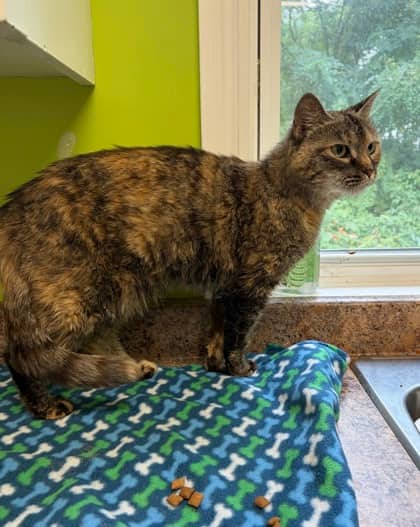
Tortoiseshell describes a coat mixing black and orange without the large white patches that would make it a calico. Nearly every tortie in Nova Scotia rescue is a domestic shorthair or longhair. A tortie whose colours are broken up by tabby striping is often called a torbie, which is the same coat with the tabby pattern showing through.
Torties are almost always female, for the same reason as calicos: the orange and black genes both sit on the X chromosome, so displaying both normally takes two X chromosomes. Male torties occur, usually carrying an extra X, and they are rare and typically sterile. A rescue listing a male tortie is describing something genuinely unusual.
On "tortitude"
Torties have a reputation for being strong-willed, vocal and particular about handling, which owners call tortitude affectionately. Some small survey work has found owners describing tortoiseshell cats that way more often, but it rests on owner perception rather than measured behaviour, and expectation shapes what people report. Worth knowing as folklore, not as a prediction.
What is not folklore is that torties are nearly all female, and that individual history matters. The foster is the better source: ask how the cat takes being picked up, how it greets visitors, and whether it has lived with other animals.
Living with a tortie in Nova Scotia
Ordinary domestic care, shorthaired or longhaired depending on the cat. Indoor living is the Maritime default given coyote pressure, rural traffic, ticks in the warmer months and Atlantic winters, and a longhaired tortie needs brushing several times a week to stay ahead of mats.
Torties photograph well and tend to move faster than black cats. Nova Scotia rescue is concentrated in the Nova Scotia SPCA branch network, so search province-wide rather than by town, and apply promptly when one appeals.
Looking more broadly? Browse every adoptable cat across the province on Cat Adoption Nova Scotia.
The rescues that most often list Tortie & Tortoiseshell Cats across the province are Nova Scotia SPCA.
Tortie & Tortoiseshell Cat Adoption FAQ — Nova Scotia
Tap a question to expand
How many Tortie & Tortoiseshell Cats are available for adoption in Nova Scotia?▼
Where can I adopt a tortoiseshell cat near me in Nova Scotia?▼
Are all tortoiseshell cats female?▼
What is the difference between a tortoiseshell and a calico?▼
How much does it cost to adopt a Tortie & Tortoiseshell Cat in Nova Scotia?▼
Popular cat breeds in Nova Scotia
Tortie & Tortoiseshell Cat adoption by city in Nova Scotia
Each city page lists only the tortie & tortoiseshell cats available from rescues serving that city.