The short answer
One small safe room, the same food and litter the shelter used, and as little pressure as you can manage. Expect hiding for days and possibly a couple of weeks. Book a Brandon vet in the first week or two and ask them right then what their after-hours process is. Learn the emergency signs, particularly a male cat straining in the box without producing urine, which needs a vet immediately.
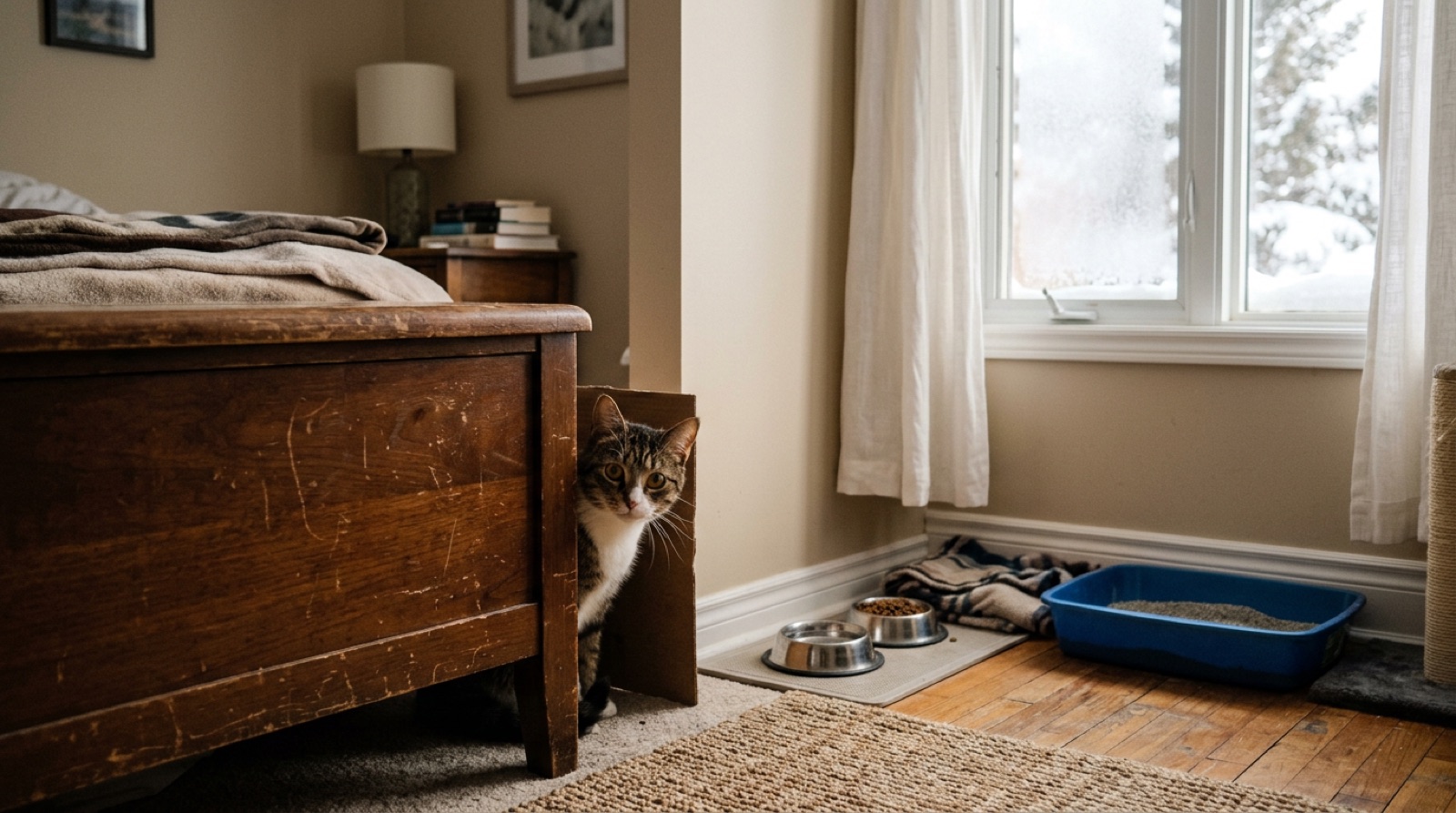
You have brought a cat home and it has vanished behind the dryer. This is the point where most new adopters start worrying they have picked the wrong animal.
You have not. A cat that has just left a shelter has lost every familiar smell, sound and routine it had in a single car ride, and hiding is the sensible response. The cat that emerges in a month is usually so different from the one under the bed that people describe it as a personality transplant.
Here is how to get through week one without making it harder, plus the Brandon-specific pieces: which clinics to register with, what to do about after-hours care, and the city licence you now need. Still choosing? The live Brandon cat listings are refreshed regularly.
The 3-3-3 pattern
| Phase | What it looks like | What you do |
|---|---|---|
| First 3 days | Hiding, barely eating, out only at night | Leave the cat alone. Food, water and a clean box, then go away. |
| First 3 weeks | Starting to explore, testing you, routines forming | Expand access room by room. Book the first vet visit. |
| First 3 months | Settled, confident, showing real personality | Full run of the house. This is who the cat actually is. |
A rough guide rather than a schedule. Confident cats move faster, and a cat that spent a long time in a kennel or came in as a stray may take considerably longer.
Set up the safe room before the cat arrives
Pick one small room you can close: a spare bedroom, an office, a quiet bathroom. Put the litter box at one end and food and water at the other, because cats will not reliably eat next to their toilet.
Add a hiding place the cat can get fully inside, which matters more than anything else in the room. A cardboard box on its side or the open carrier both work, and the carrier does double duty by becoming a normal object instead of the thing that means a car trip.
Include a scratching post and something soft to sleep on. Keep the lights and noise low, and skip the visitors. Nobody needs to meet the cat this week, however much your family wants to.
Then the hard part: leave it alone. Go in to feed, clean the box, and sit quietly for a while without reaching for the cat. Attention offered rather than imposed is what builds trust in the first few days.
Do not change the food or the litter yet
Ask the shelter exactly what the cat was eating and which litter it used, then buy those. This is worth doing even if you already have strong opinions about what you want to feed long term.
An abrupt diet change causes stomach upset in a healthy settled cat. In a stressed cat that has just moved house, it causes stomach upset you then cannot tell apart from illness, and you spend a week wondering whether to call a vet. Keep one variable constant while everything else changes.
Switch after a fortnight, over a week or more, mixing a little more of the new food into the old each day. Same slow approach with litter, since some cats are genuinely particular and will simply stop using a box filled with something unfamiliar.
Register with a Brandon vet in week one
Book a wellness visit within the first week or two, and take the shelter paperwork with you. Brandon has several general practices: Brandon Hills Veterinary Clinic at 733 17th Street on 204-728-2292, Grand Valley Animal Clinic at 304 Pacific Avenue on 204-728-0033, and Wheat City Veterinary Clinic at 1528 1st Street North on 204-728-9262.
Being an existing client matters when something urgent comes up. It is a much easier phone call at 8 a.m. on a Saturday if they already have your cat in the system.
While you are there, sort the city licence. Brandon requires cats over six months to be registered annually, indoor cats included, at $21 a year for a sterilised cat. You need the rabies certificate and proof of sterilisation, which is exactly the paperwork the shelter just handed you.
Symptoms that mean a vet now, not tomorrow
A male cat straining in the litter box without producing urine is a life-threatening emergency. A urinary blockage kills within hours, not days. If you see a male cat going in and out of the box, crying, straining and producing nothing, that is a vet immediately, at whatever hour it is.
Also treat as urgent: laboured or open-mouthed breathing, no food at all for more than 24 hours, repeated vomiting, collapse, seizures, obvious severe pain, or suspected poisoning including antifreeze or a toxic plant.
Sort your after-hours plan this week. Brandon Hills Veterinary Clinic routes after-hours calls through 204-728-2292 to a triage service, and advises calling back at 8 a.m. if the pet can safely wait. For a genuine overnight emergency, the nearest 24-hour hospitals are in Winnipeg, about two hours east. Ask your own clinic what their process is and write it on the fridge before you need it. Never give a cat human medication.
Introducing other pets
Everything happens through a closed door first. The new cat stays in its safe room for at least the first week while the animals swap scent under the door and on bedding you carry between them.
Then feed on either side of the closed door, so each animal learns that the other's smell arrives with dinner. Only after that do you allow a brief look at each other, then short supervised time together.
With a dog, the cat needs an escape route the dog cannot follow: a gate the cat clears easily, or a tall cat tree. Keep the dog on a lead for early sessions and reward calm rather than fixation. Do not leave them alone together until weeks of reliable calm have passed.
Rushing introductions is the most common cause of a permanently bad relationship between housemates. Weeks of patience now saves years of managing conflict.
Browse adoptable Brandon cats
Shelter and foster listings from across Brandon and Westman, with the vet work already done. Listings refreshed regularly.
See Available Brandon Cats →Frequently Asked Questions
How long will my new cat hide?
Days is normal and a couple of weeks is not unusual, especially for an adult cat that has just left a shelter kennel. Hiding is how a cat manages a situation it cannot control, and it is a coping strategy rather than a sign of a problem. The rule most rescues use is the 3-3-3 pattern: roughly three days to stop panicking, three weeks to settle into a routine, three months to become fully themselves. Resist the urge to pull the cat out from under the bed. Sit in the room, read something quietly, and let it come to you.
What is a safe room and do I really need one?
Yes, and it is the single highest-impact thing you can do in week one. Give the cat one small closed room with its litter box, food and water at opposite ends, a carrier or box to hide inside, and a scratching post. A spare bedroom or a quiet bathroom works. A whole house is overwhelming to an animal that has just lost every reference point it had. Starting small and expanding once the cat is eating and using the box reliably gets you to a confident cat faster than giving it the run of the place on day one.
My cat is not eating. Should I worry?
A little reduced appetite in the first day or two is common while a cat settles. What is not fine is a cat that eats nothing at all for more than about 24 hours, and that is a phone call to a vet rather than a wait-and-see. Cats that stop eating can develop serious liver problems relatively quickly, and it happens faster than most owners expect. Try the exact food the shelter was feeding, warm it slightly to raise the smell, and put it somewhere the cat feels hidden. If nothing works within a day, call the clinic.
Should I change the food and litter right away?
No, and this is the most common week-one mistake. Ask the shelter what food and which litter they used, then buy exactly that for the first couple of weeks even if you plan to switch later. A cat is already dealing with a new house, new people and new smells, and an abrupt food change on top of that produces diarrhoea and vomiting you then cannot interpret. When you do switch, do it over a week or more by mixing increasing amounts of the new into the old. Same approach for litter.
When should I take my new cat to a vet in Brandon?
Book a wellness visit within the first week or two, and sooner if anything looks wrong. Brandon has several general practices to register with, including Brandon Hills Veterinary Clinic at 733 17th Street on 204-728-2292, Grand Valley Animal Clinic at 304 Pacific Avenue on 204-728-0033, and Wheat City Veterinary Clinic at 1528 1st Street North on 204-728-9262. Bring whatever paperwork the shelter gave you. Registering with a clinic before you have a problem also means you are already a client when something urgent happens.
What symptoms mean I should not wait?
A male cat straining in the litter box without producing urine is a life-threatening emergency measured in hours, and it needs a vet immediately at any time of day or night. Alongside that: laboured or open-mouthed breathing, a cat that has eaten nothing for more than 24 hours, repeated vomiting, collapse, seizures, obvious severe pain, or a suspected poisoning. None of these are wait-until-morning situations. Everything else is worth a phone call to your clinic for advice, which is free and much better than guessing at midnight.
What are my after-hours options in Brandon?
Thinner than in a big city, so work this out before you need it. Brandon Hills Veterinary Clinic directs after-hours emergency calls through its regular number, 204-728-2292, which reaches a triage service, and its own guidance is that if the pet can safely wait, you call the clinic again at 8 a.m. For a genuine overnight crisis, the nearest 24-hour hospitals are in Winnipeg, roughly two hours east on the Trans-Canada. Phone your Brandon clinic today and ask exactly what their after-hours process is, then write the answer on the fridge.
How do I introduce a new cat to my resident cat?
Slowly, and through a closed door first. The new cat stays in its safe room for at least the first week while the two swap scents under the door and through bedding you move between them. Then feed them on either side of that closed door so each associates the other's smell with something good. Only after that do you allow brief supervised visual contact, and only then time together. Rushing this is how you get a relationship that stays hostile for years. Expect the process to take weeks rather than days.
How do I introduce a cat to a dog?
Same principle, with one extra rule: the cat must always have an escape route the dog cannot follow into. A baby gate the cat can jump and the dog cannot, or a cat tree with real height, does most of the work. Keep the dog leashed during early face-to-face sessions and reward it for calm rather than for staring. Never leave them alone together until you have seen weeks of reliable calm. If your dog fixates hard, get help from a trainer rather than hoping it settles by itself.
Should I let the cat outside once it settles in?
Keep it in, particularly in Brandon. Prairie winters here run well below minus 30, coyotes use the Assiniboine valley as a corridor into residential areas, and cats new to a neighbourhood are the likeliest to get lost or hit. A cat that has been in your home a few weeks has no map of the area yet. If you want the cat to have outdoor stimulation, a catio or harness walks give it the good parts safely. Our indoor and outdoor guide for Brandon covers the options in detail.
Do I need to licence my cat right away in Brandon?
You need to licence it once it is over six months old, and it applies to indoor-only cats too. A spayed or neutered cat is $21 a year within the two-animal limit, an unsterilised one is $57.50, and an unlicensed pet over six months carries a $100 fine. You need a current rabies certificate and proof of sterilisation at renewal, so file the shelter paperwork somewhere you can find it every year. Brandon offers online licensing, and By-law Compliance takes questions at 204-729-2230.
The cat is hiding and hissing. Did I adopt the wrong cat?
Almost certainly not, and this is the question we hear most in week one. A hissing, hiding cat is a frightened cat, not an aggressive one, and fear is the expected response to losing everything familiar in a single afternoon. The cat you meet in month three is usually a different animal from the one under the bed in week one, and adopters are regularly surprised by how much. Give it quiet, routine and time. If you are still genuinely worried after a few weeks, call the shelter you adopted from. They would far rather talk it through than take the cat back.
Related Brandon Guides
Find your cat first
Shelter cats and foster cats from across Brandon and Westman, in a single list.
Browse Available Brandon Cats →New cat? Start with these care guides
Everything a new adopter needs to set up a safe, happy home.